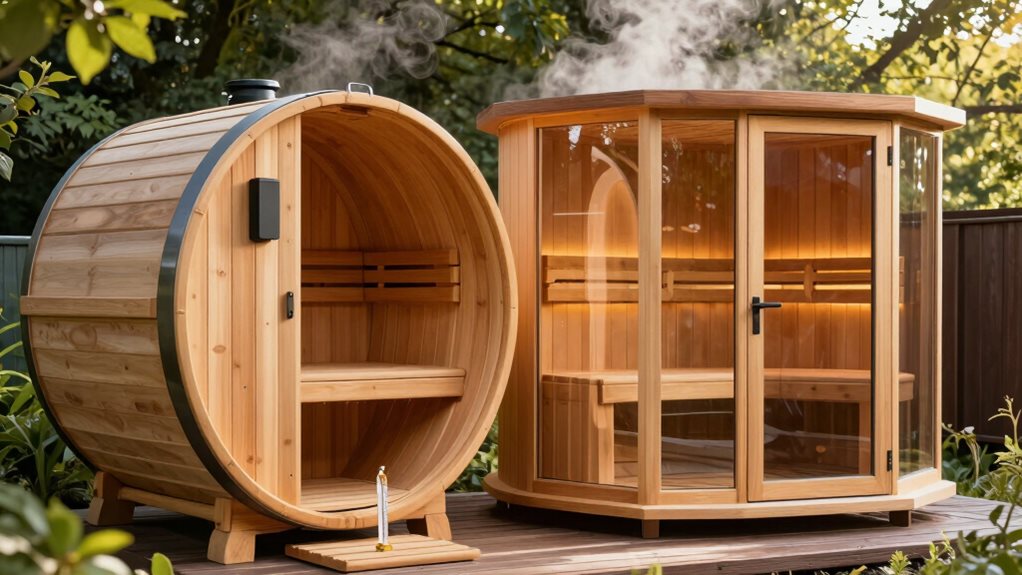

When it comes to heat retention, barrel saunas have a curved design that heats up quickly and evenly, while panel saunas take longer to warm up but hold heat really well. The wood used, like Western Red Cedar, helps trap warmth thanks to its low thermal conductivity. Plus, insulation methods matter—good vapor barriers keep moisture out, improving efficiency. If you’re curious about choosing the best sauna for your needs, there’s more to unravel!
Understanding Sauna Geometry: Barrel vs. Panel Designs
When you step into the world of saunas, you’ll quickly discover that the shape can make a big difference in your experience.
Barrel saunas, with their curved design, encourage heat to flow effortlessly, creating a cozy atmosphere without cold spots. Picture hot air rising along those rounded walls, making you feel warm from head to toe in no time! This efficient design leads to quicker heating times, enhancing your sauna experience significantly. Additionally, their construction from high-quality wood further improves heat retention, making them a popular choice among sauna enthusiasts. Furthermore, many people appreciate how home sauna kits allow for easy installation, bringing the benefits of barrel saunas right into their homes.
Barrel saunas embrace a cozy warmth, allowing heat to circulate naturally for an inviting retreat without any cold spots.
On the other hand, panel saunas offer more interior space and can be customized easily, perfect for fitting in benches or hooks. However, they can trap cooler air in corners, risking uneven warmth.
Ultimately, whether you choose a barrel or panel sauna, each design has its advantages, so think about what fits your needs best for a relaxing retreat!
Thermal Properties of Wood: Impact on Heat Storage
Choosing the right wood for your sauna plays a big role in how well it retains heat and keeps you cozy.
Softwoods like Western Red Cedar have low thermal conductivity, around 0.12–0.14 W/(m·K), which helps to make surfaces feel more comfortable while also keeping the warmth inside. Additionally, natural wood sauna heaters can enhance the overall sauna experience by providing consistent heat.
If you look at thermally modified woods, they measure even lower, around 0.09 W/(m·K), offering cooler surfaces with great heat storage capabilities. Additionally, Thermowood’s increased density contributes to its exceptional durability and ability to retain heat effectively.
Furthermore, carbonized wood’s resistance to decay ensures it maintains its thermal properties over time, enhancing the overall efficiency of your sauna.
Density matters too—denser woods conduct heat faster and store more warmth.
In addition, the moisture content in the wood affects its thermal properties. Wet wood can hold more heat than dry wood, making it crucial to take into account when choosing materials for your sauna.
Insulation Techniques: Best Practices for Heat Retention
When it comes to building a sauna, using wood-only construction can offer some fantastic benefits, like natural insulation. You’ll also want to carefully choose your insulation layer to keep that heat where it belongs, along with an effective vapor barrier to prevent moisture from sneaking in. With the right techniques, you’ll enjoy a cozy, warm sauna experience that feels just right every time! Proper insulation materials can significantly enhance the sauna’s energy efficiency and performance over time. In fact, superior thermal performance is achieved when using insulated walls compared to solid log constructions, making them a smarter choice for modern saunas. Additionally, using a high-quality sauna insulation kit can further optimize heat retention and reduce energy consumption.
Wood-Only Construction Benefits
Building a sauna with wood-only construction offers some fantastic benefits for heat retention, and it’s simpler than you might think! By choosing solid wood, you gain superior thermal mass, which stores and releases heat evenly, keeping your sauna cozy. Additionally, ensuring compliance with local planning permissions can contribute to a safer sauna environment, enhancing your overall experience. Utilizing sauna insulation building materials can further improve your sauna’s efficiency.
Plus, tight joinery methods, like tongue-and-groove detailing, minimize heat loss through seams.
Here are some benefits of wood-only construction:
- Denser woods, like cedar, provide efficient heat storage.
- Thicker planks increase warmth during cooldowns.
- Bamboo or untreated softwoods also offer good heat capacity.
- Precision joinery prevents drafts.
- Air gaps allow moisture equalization, maintaining thermal performance.
With these techniques, you can enjoy a well-insulated sauna that stays warm, making your relaxation time even better!
Insulation Layer Selection
Selecting the right insulation for your sauna can make a huge difference in maintaining that perfect cozy temperature. Consider using mineral wool, which resists moisture and holds up well in hot, humid conditions. If you’re after high R-value, foil-faced rigid foam boards are a fantastic choice since they reflect heat back into the room. Another option is closed-cell spray foam, but make sure to pick the right product to avoid any off-gassing issues. Remember, cellulose and standard fiberglass aren’t the best for moist environments. Additionally, proper material selection is crucial for effective insulation quality. To boost insulation, layering with radiant-barrier aluminum foil can help reflect heat while keeping moisture at bay. With smart insulation selection, your sauna can stay toasty and inviting! Moreover, proper wall assembly with vapor permeable membranes enhances long-term durability and performance against moisture buildup. Always consider incorporating moisture protection products to further safeguard your sauna’s structure from humidity damage.
Vapor Barrier Importance
A vapor barrier mightn’t be the first thing you think of when planning your sauna, but trust me, it plays a huge role in keeping the heat where you want it. This vital component prevents moisture from getting into the insulation and causing nasty rot or mold.
Plus, it reflects radiant heat back, helping you stay warm without cranking up the heat. Incorporating a premium sauna insulation kit can enhance your sauna’s efficiency and heat retention.
Here are key points to take into account:
- Stops moisture penetration and condensation buildup.
- Keeps insulation dry, maintaining its thermal properties.
- Important in cold climates, keeping surfaces warm.
- Works best with high-quality materials like aluminum foil.
- Avoid plastic sheeting to prevent melting risks.
Balancing Heat-Up Time and Warmth Maintenance
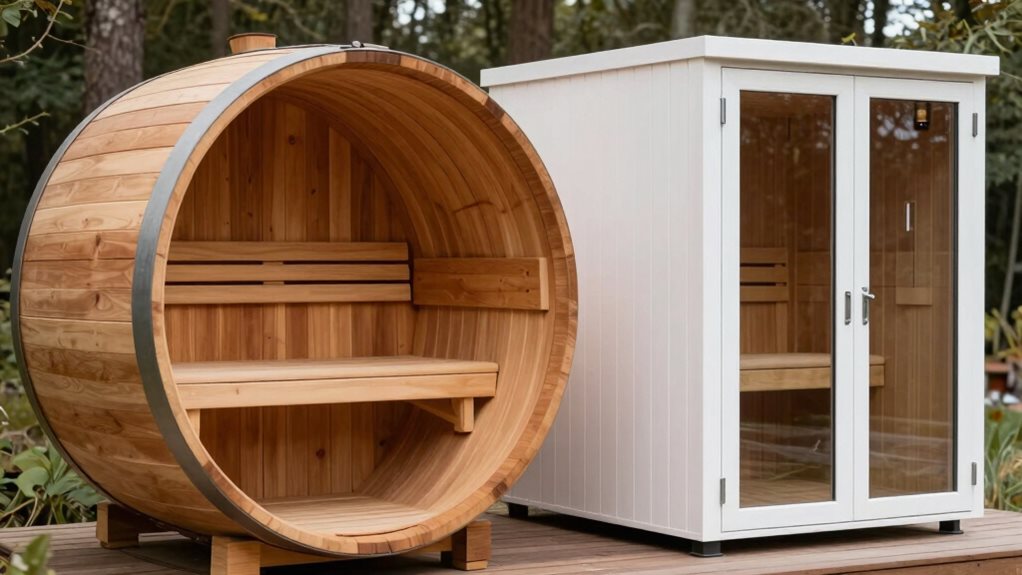
Balancing heat-up time and warmth maintenance in saunas can feel like a tug-of-war, but understanding the differences can help you find the right fit for your needs.
Barrel saunas heat up quickly, usually in just 30-45 minutes, thanks to their curved walls that promote airflow. You’ll enjoy an evenly warmed space faster, making them ideal for spontaneous sauna sessions.
In contrast, panel saunas take longer, around 40-60 minutes, due to their larger design and corners that trap warm air. However, once at temperature, they excel in keeping warmth, especially in colder climates.
Your choice depends on how you prioritize quick heat versus lasting warmth—so consider your needs and climate before deciding! Additionally, infrared saunas can enhance your wellness routine by providing deep tissue heat therapy that penetrates the skin for a more effective experience.
Energy Efficiency: Comparing Operational Performance
When enjoying a sauna, it’s more than how quickly you can get warm; energy efficiency plays an important role in your overall experience.
Barrel and panel saunas vary greatly in their operational performance, impacting your energy costs and enjoyment.
Barrel and panel saunas significantly differ in efficiency, influencing both energy expenses and overall spa experience.
- Barrel saunas heat up faster due to lower air volume, needing less energy.
- They use lower-rated heaters, which cuts down electricity draw.
- The design also allows quicker recovery between sessions.
- Wood-burning options shift costs to fuel, saving you on electricity.
- Manufacturer estimates suggest you could save $200–$400 annually with a barrel sauna.
- Investing in a home sauna heating system can further enhance your energy efficiency.
With thoughtful energy management, both comfort and your wallet can remain protected while you relax in style.
Climate Considerations: Choosing the Right Sauna Type
When picking the perfect sauna, you’ve got to think about your local climate and how you plan to use it.
For snowy environments, a panel sauna might better keep your warmth in, while a barrel sauna could be a star performer in sunny, dry areas.
Climate Suitability Factors
Choosing the right sauna type for your climate isn’t just about personal preference; it’s vital for maximizing your sauna experience and efficiency.
Here are key factors to take into account:
- Thicker walls boost heat retention in cold areas.
- Double or triple-pane windows cut heat losses, perfect for temperature swings.
- Insulated floors fight heat loss in freezing conditions.
- Higher energy capacity heaters are important in colder climates.
- Moisture-resistant materials are a must for humid conditions.
In addition to these factors, incorporating a sauna moisture control system can significantly enhance the sauna environment, especially in humid regions.
Understanding these climate suitability factors helps you select a sauna that truly meets your needs.
Whether you’re in a chilly region needing robust insulation or in a humid area requiring moisture management, making the right choice means enjoying your sauna to the fullest, every time.
Usage Patterns Impact
Understanding how you use your sauna can make a big difference in how much energy it consumes and how enjoyable your experience is.
For instance, if you’re doing back-to-back sessions, you’ll save energy by keeping the sauna warm between users. On the other hand, if you only use it infrequently, you’ll notice your energy bills rise due to long heat-up times.
Group sessions are great too; they share the heat load, making it more efficient. When you plan your sessions with programmable controls, you can reduce wasted energy.
In colder months, panel saunas shine, while barrel saunas are perfect for quick, hot summer sessions. Additionally, incorporating ergonomic outdoor bench heating can enhance your overall comfort while maximizing heat retention.
Ultimately, knowing these patterns helps you enjoy your sauna while saving energy!
Practical Maintenance: Enhancing Longevity and Efficiency
To keep your sauna in top shape, regular maintenance plays a crucial role in improving its longevity and efficiency.
You can easily improve your sauna experience by following these simple steps:
- Apply a UV-resistant stain to protect the exterior wood.
- Check roof seals seasonally to prevent water damage.
- Raise your sauna for better airflow and moisture control.
- Install drip edges to direct water away from walls.
- Monitor and replace corroded fasteners with stainless steel hardware.
Frequently Asked Questions
How Does Sauna Shape Affect User Experience Beyond Heat Retention?
Sauna shape influences your experience considerably. Curved designs promote intimacy and even warmth, while flat panels offer customization and varied acoustics. Your comfort, relaxation, and mood can greatly differ based on the sauna’s geometry.
What Are Common Misconceptions About Barrel and Panel Saunas?
You might think barrel saunas lack insulation or heat retention, but their curved design promotes efficient airflow and warmth distribution. Panel saunas may trap heat unevenly, leading to misconceptions about superiority in energy efficiency and heating speed.
Can I Convert a Barrel Sauna to a Panel Sauna?
You can’t easily convert a barrel sauna to a panel sauna. It involves considerable disassembly, new materials, and increased labor. Retrofitting insulation may be more efficient than attempting that full conversion.
How Do Heating Elements Differ Between Sauna Types?
Heating elements differ as barrel saunas use convection with electric, wood, or propane heaters for warm air and steam. In contrast, panel saunas employ infrared, directly warming your body without increasing air temperature considerably.
What Accessories Improve Sauna Performance and Comfort?
To improve sauna performance and comfort, add ergonomic backrests, heat-resistant cushions, and proper ventilation. Use a sauna thermometer for temperature control, and consider insulated accessories like towels and hats to enrich your experience.
Final Thoughts
To sum up, whether you choose a barrel or panel sauna, understanding their heat retention can make all the difference. Barrel saunas, with their curved shapes, often heat up quickly, while panel saunas offer more insulation. By focusing on the right materials and maintenance, you can enjoy a cozy and energy-efficient sauna experience. So, pick the design that fits your style, and you’ll be soaking in warmth and relaxation in no time! Happy sauna-ing!