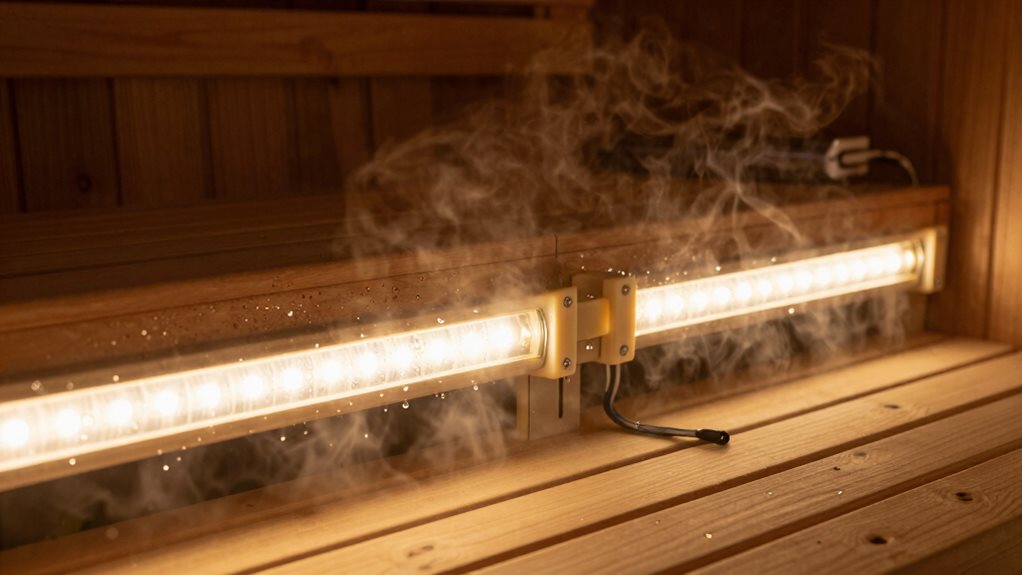

To install LEDs in saunas and steam rooms, you’ll need fixtures with at least IP65 ratings for moisture protection and heat resistance up to 230°F. Position lights under benches to reduce heat exposure, use remote-mounted drivers, and select corrosion-resistant materials like 316 stainless steel. Guarantee all connections are sealed with weatherproof junction boxes, silicone sealants, and proper drainage. These specialized solutions protect against the triple threat of heat, humidity, and direct moisture that quickly destroys standard fixtures.
Understanding Sauna Environment Challenges for LED Systems
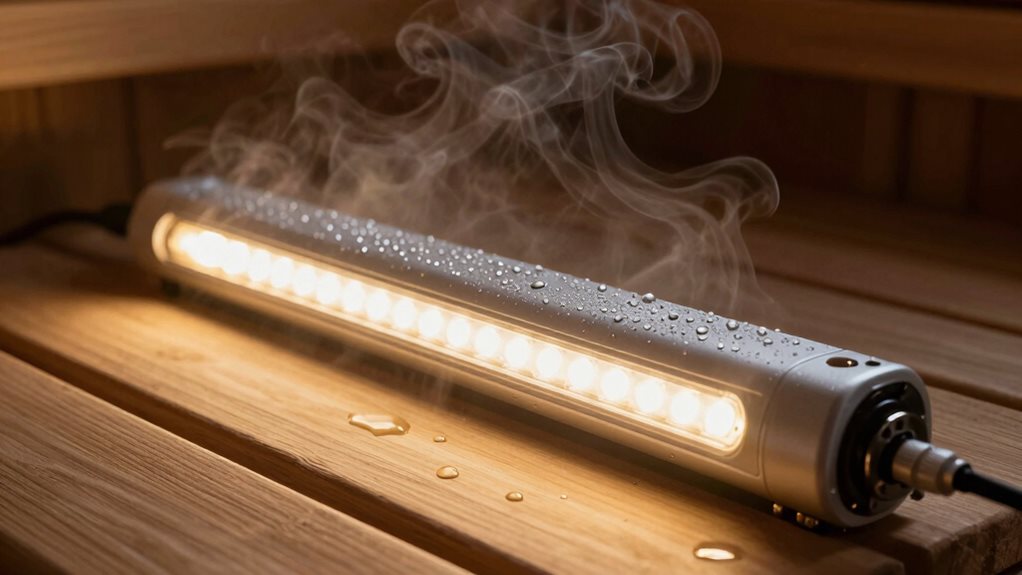
When installing LED lighting in a sauna environment, you’ll immediately face some of the most challenging conditions for any electrical system.
Your LEDs must withstand temperatures ranging from 70°C to 110°C, with ceiling areas experiencing the most extreme heat where standard fixtures quickly degrade.
Standard lighting quickly fails in the extreme ceiling heat of saunas, where temperatures soar to 110°C.
Humidity presents another major obstacle, even in “dry” saunas that maintain 5-20% humidity levels.
Water from sweat and steam creates short circuit risks, especially for lights installed under benches where users sit. The combination of heat and moisture accelerates deterioration of non-specialized LEDs.
Safety concerns can’t be overlooked, as moisture ingress into electrical components poses serious hazards.
Placement matters too – installing LEDs near stoves invites overheating, while ceiling installations must contend with rising heat that collects at the top of your sauna. Experts recommend using vapor-proof fixtures that are specifically designed to protect electrical components from moisture damage.
Selecting Moisture-Resistant LED Products and Enclosures
When selecting LED fixtures for your sauna or steam room, you’ll need to focus on three critical protection elements to guarantee longevity.
First, choose fixtures with water-tight connection techniques, including sealed wire harnesses and properly gasketed junction points that prevent moisture infiltration.
Second, invest in protective IP68+ housings that can withstand complete immersion, as lesser ratings will quickly fail when exposed to constant steam and high humidity.
Third, select fixtures constructed from anti-corrosion materials like 316 stainless steel or specially coated aluminum that resist the aggressive combination of heat, moisture, and cleaning chemicals typically found in sauna environments.
Water-Tight Connection Techniques
Creating water-tight connections stands as the cornerstone of successful LED installations in sauna and steam environments. You’ll need to choose between soldering or solderless connectors based on your skill level and installation needs.
For the most reliable bonds, soldering copper pads with metal solder wire creates secure connections that won’t fail in high humidity. Afterward, seal everything with silicone end caps and waterproof glue, allowing 24 hours to cure completely.
If you’re not comfortable soldering, waterproof clip-on connectors offer a user-friendly alternative—just slide your strips onto the metal prongs and lock the cover.
Don’t forget to protect every connection point with heat shrink tubing or silicone sealant. For hardwiring, use high-temperature PVC wires fed through drilled holes, connecting to an outdoor transformer for maximum safety.
Protective IP68+ Housings
Selecting the right protective housings marks the difference between LED systems that fail prematurely and those that thrive for years in harsh sauna environments.
You’ll need enclosures with true hermetic sealing using overmolded silicone or potting compounds that eliminate moisture-inviting seams.
Don’t just rely on the IP68 rating alone – check that the product specifies tested immersion depths (1-3 meters or higher) and durations.
For temperature management, choose housings with built-in heat sinking paths that won’t compromise seal integrity.
Consider materials carefully – food-grade silicone, UV-stabilized polycarbonate, or marine-grade stainless steel coatings will resist the double threat of heat and chemicals in sauna environments.
These materials won’t yellow or degrade over time, maintaining their protective properties through years of steam exposure.
Anti-Corrosion Material Choices
Beyond protective housings, the materials used in your LED fixtures will determine their survival in punishing sauna environments.
Look for LEDs with thermoplastic polyurethane (TPU) and silicone blends that withstand temperatures from -30°C to 90°C without yellowing or cracking. These flexible encasings provide excellent UV resistance while protecting against moisture.
For ideal corrosion prevention, choose fixtures with double-layered flexible circuit boards that dissipate heat effectively.
NEMA 4X rated lights resist moisture corrosion, while ceramic extensions in wet-rated fixtures improve both heat tolerance and seal integrity. Ensure all fixtures have stainless steel casings for maximum safety and durability in high-moisture environments.
Don’t overlook the importance of powder-coated trim rings and moisture-proof gaskets in recessed fixtures – they’re your first line of defense against humid air penetration.
For steam rooms, aluminum bezels offer superior resistance to both heat and moisture, prolonging your lighting’s lifespan considerably.
Heat Management Strategies for Extended LED Lifespan
While LEDs offer considerable advantages in sauna and steam room applications, their longevity depends heavily on effective heat management strategies.
You’ll get the best results by using remote-mounted drivers that operate fixtures at cooler temperatures, preventing premature LED failure. Consider placing fixtures under seats where they’ll benefit from improved heat dissipation and avoid direct steam exposure.
For peak performance, select LEDs specifically rated for high temperatures—quality options can withstand up to 230°F in sauna environments.
Double-layered circuit boards help balance voltage drop while aiding heat dissipation. Many installers prefer fiber optic systems that keep heat-sensitive components outside the sauna entirely.
Installation Best Practices to Prevent Moisture Damage
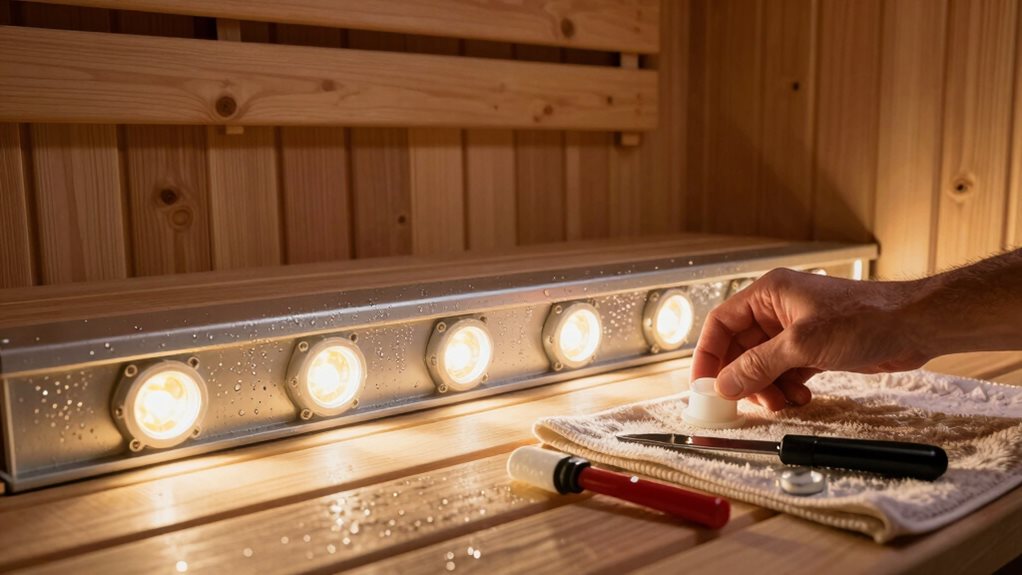
You’ll need specific installation techniques to keep moisture from damaging your LED systems in steam environments.
Proper positioning of waterproof enclosures above steam levels, combined with sealed cable entries using marine-grade silicone, creates your first line of defense against water infiltration.
Strategic drainage channels and slight downward angles in your fixture mounts will direct condensation away from sensitive electrical components, preventing the slow accumulation of moisture that often leads to premature failures.
Moisture-Resistant Wiring Techniques
When installing LED lighting in saunas and steam rooms, proper moisture-resistant wiring techniques become essential for safety and longevity.
Always select THWN/THHN conductors inside conduit, as they’re specifically rated for wet locations and high temperatures. Your wire gauge should match your load requirements—typically #10 AWG for 30A circuits or #8 AWG for 40A circuits.
Don’t use standard NM-B cable where condensation might occur. Instead, run individual conductors through oversized conduit, which reduces moisture buildup and makes future replacements easier.
Seal all wall penetrations with high-temperature, mildew-resistant sealants to prevent steam migration. Be particularly careful with traditional saunas as they require dedicated electrical circuits capable of handling their higher power demands compared to infrared models.
For junction boxes, place them outside the steam space when possible, and use moisture-resistant wire connectors.
When boxes must be inside, choose IP-rated, steam-proof enclosures and seal all seams thoroughly.
Proper Enclosure Positioning
Proper positioning of LED enclosures represents the cornerstone of moisture damage prevention in sauna and steam room installations.
You’ll need to take into account both temperature and moisture exposure when deciding where to place your lighting. Ceiling perimeters offer diffused light while keeping fixtures away from direct contact, while under-bench positioning provides better heat dissipation in the cooler areas of your sauna.
- Mount fixtures at least 12 inches from corners for ideal wall wash lighting, creating a more spacious feel in compact sauna environments.
- Install control switches outside the hot room, opposite the door hinge, for convenient access without exposing electronics to steam.
- Test locations before permanent installation by temporarily holding lit fixtures in place to confirm desired lighting effects.
Strategic Drainage Design
Strategic drainage design serves as the foundation for moisture management in sauna and LED installations. You’ll need to slope your floors at 1/4″ to 1/2″ per foot (about 2%-4%) toward centralized drains to prevent standing water that could damage LED systems.
Don’t overlook secondary drainage options like linear drains under benches where your LEDs might be mounted. These capture condensation before it can reach sensitive electrical components.
Ensure your waterproofing membrane extends up to and integrates with the drain flange, creating an unbroken moisture barrier. For LED protection, route electrical chases away from primary condensate paths and install dedicated drip pans under recessed fixtures.
Always use corrosion-resistant drain materials that can withstand the warm, wet environment of your sauna or steam room.
Electrical Safety Considerations in High-Humidity Settings
Installing LEDs in sauna and steam environments requires careful attention to electrical safety, as the combination of moisture and electricity creates considerable hazards.
You’ll need fixtures with a minimum IP65 rating that provide reliable protection against water and dust ingress. Verify all electrical connections are properly sealed using weatherproof junction boxes with rubber gaskets to prevent corrosion and potential shorts.
- Use wet-rated fixtures that can withstand direct water exposure, not merely damp-rated ones that might fail under steam conditions.
- Install sealed wire entries to block humidity buildup that leads to damaging condensation inside your fixtures.
- Choose fixtures with corrosion-resistant materials like polycarbonate housing and stainless steel clips for long-term reliability.
Maintenance and Long-Term Performance Monitoring
Maintaining your sauna and steam room LED lighting requires regular attention, as the extreme conditions will gradually compromise even the best-designed fixtures.
Establish quarterly inspections for commercial saunas and twice-yearly checks for residential units, documenting the condition of lenses, mounts, and seals.
Regular maintenance schedules—quarterly for commercial, biannual for residential—keep your sauna lighting functioning safely while documenting critical component conditions.
During inspections, check surface temperatures with thermal mapping to identify concerning hotspots, and verify moisture seals remain intact.
Clean fixtures regularly with manufacturer-approved solutions to prevent mineral buildup. Track key metrics like operating hours and color stability, noting when fixtures approach 20-30% of their rated lifetime.
Keep a small inventory of sauna-rated replacement parts on hand, and proactively replace silicone seals every 2-5 years, depending on usage, before they fail and allow damaging moisture inside.
Frequently Asked Questions
How Do Color-Changing LEDS Perform in Extreme Sauna Conditions?
Sauna-rated color-changing LEDs maintain their performance with proper heat management, though you’ll notice potential color drift over time. They’ll operate normally when using immersion-gold PCBs and remote controllers to avoid thermal stress.
Can Solar Power Systems Reliably Operate Sauna LED Lighting?
Yes, you’ll get reliable sauna LED lighting with proper solar sizing. Install enough panels and battery storage to match your usage patterns, keeping electronics outside the hot environment.
Are There Special Certifications Specifically for Sauna LED Lighting Products?
Yes, you’ll find specific “Sauna-rated” certifications from ETL, TÜV, or equivalent bodies that verify LEDs can withstand high temperatures and humidity in sauna environments.
How Do Smart Home Systems Integrate With Sauna Lighting Controls?
You’ll integrate sauna lighting with smart homes via KNX/Modbus protocols, Wi-Fi controllers, vendor APIs, or automation hubs that support dimming, color control, scenes, and scheduling through isolated low-voltage connections.
What LED Color Temperatures Best Support Relaxation in Sauna Environments?
Choose warm white LEDs between 2700-3000K for your sauna. They’ll create a calming atmosphere while complementing wooden interiors. For deeper relaxation, you can add blue or green lighting at moderate intensity.
Final Thoughts
You’ve now got the knowledge to install safe, reliable LED lighting in your sauna or steam room. By choosing moisture-resistant products, managing heat effectively, and following proper installation techniques, you’ll create beautiful illumination that stands up to challenging conditions. Remember, regular maintenance guarantees your system’s longevity. With these strategies in place, you can enjoy the perfect ambiance in your wellness space for years to come.