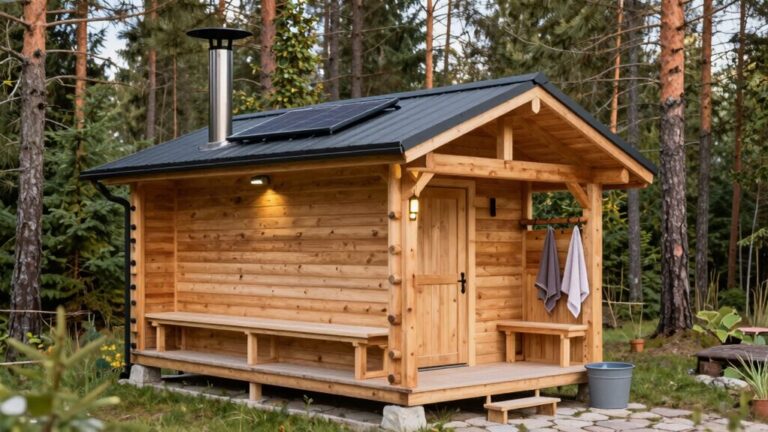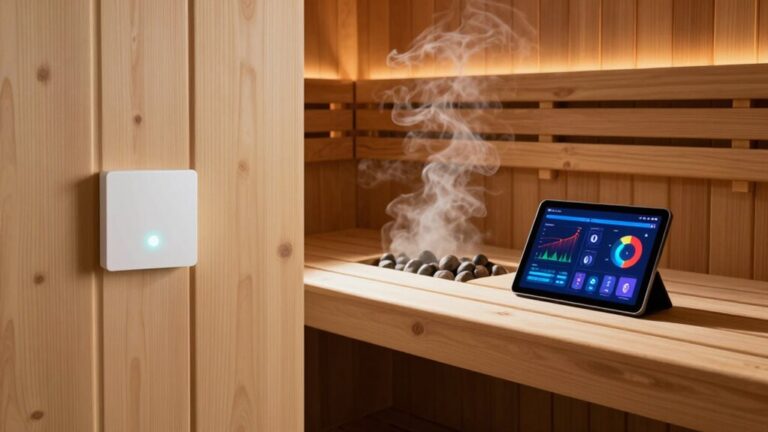
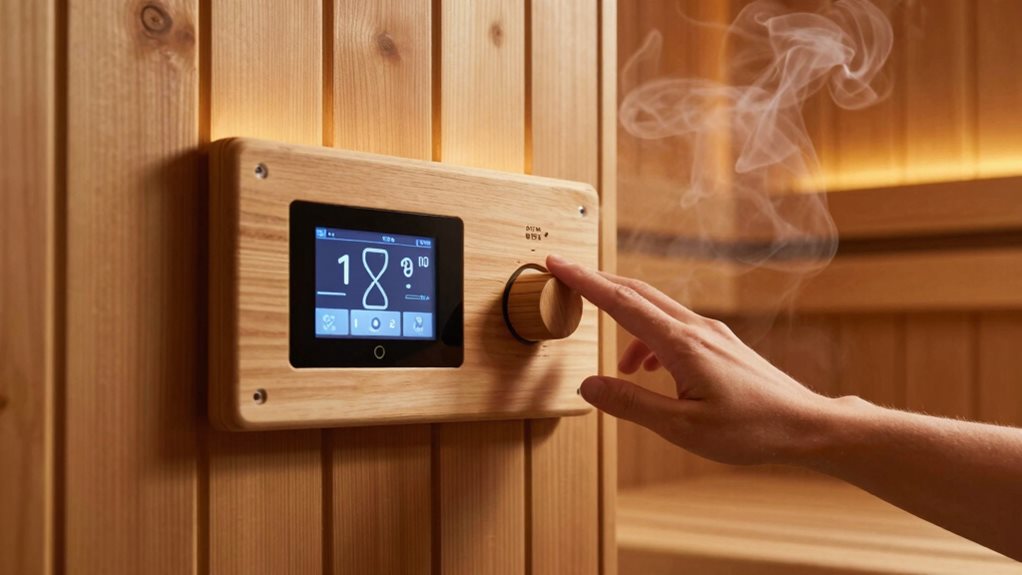

When balancing automation and manual controls in your sauna, consider your lifestyle needs and budget. Manual controls offer reliability without Wi-Fi dependency, lower costs, and straightforward operation with dials and knobs. Smart systems provide remote pre-heating, personalized settings for multiple users, and potential energy savings despite higher upfront costs. Many users opt for hybrid solutions that combine traditional switches with digital panels or smartphone access. The right combination guarantees your sauna improves relaxation while matching your technological comfort level.
The Evolution of Sauna Control Systems
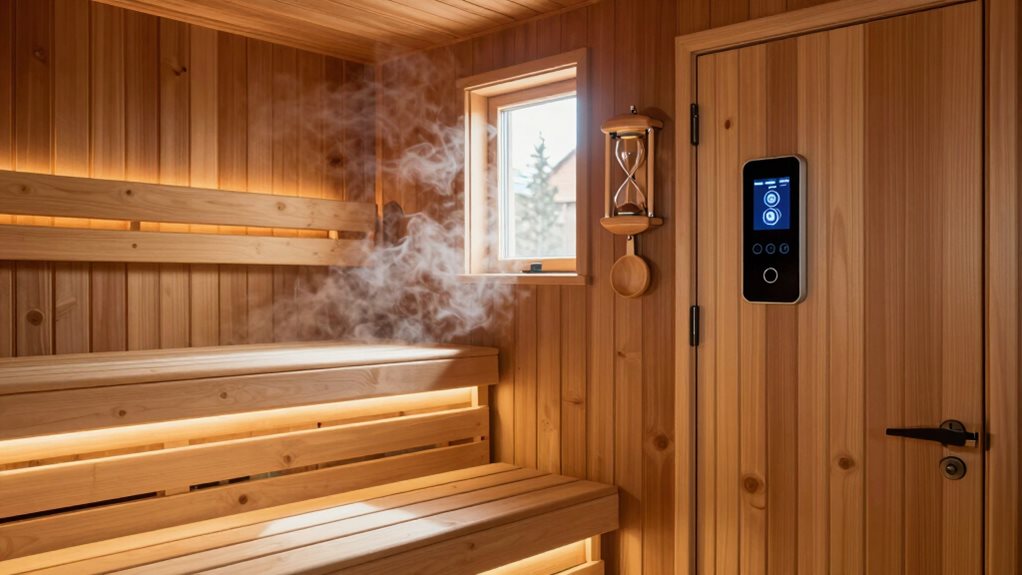
While you might think of saunas as modern spaces with digital interfaces and sleek design, their control systems have a fascinating history dating back centuries.
Early Finnish saunas began as simple earth pits with heated stones, where users manually splashed water to create steam. The evolution continued with smoke saunas, where wood fires heated rocks but filled the space with smoke before dispersing.
A notable leap came in the 18th century when chimney systems emerged, allowing smoke to vent properly.
By 1938, the first electric sauna stove appeared, eliminating the need for wood and fire management.
Today’s saunas feature digital controls, mobile apps, and smart technology that maintain precise temperatures and humidity levels—a far cry from the manual fire-tending of traditional saunas.
Understanding Manual Control Advantages
Despite the modern trend toward digital everything, manual sauna controls offer distinct advantages that many enthusiasts prefer.
You’ll appreciate the personalization that knobs and dials provide, allowing you to adjust temperature and humidity based on how your body responds during each session.
Manual controls shine in their reliability—they don’t depend on Wi-Fi connections or apps that might fail when you’re ready to relax.
They’re invigoratingly simple too; there’s no need to learn complicated interfaces when you can just turn a dial to start heating.
Safety is improved with immediate manual overrides if things get too hot, and you’ll maintain better energy control by directly managing heating cycles.
These local manual controllers are typically wall-mounted and budget-friendly while offering straightforward operation for sauna users.
With manual timers shutting off after your session, you won’t waste electricity while enjoying your perfect sauna experience.
Smart Technology Benefits in Modern Saunas
Modern saunas have adopted smart technology, transforming the traditional sauna experience into something more convenient and personalized. You can control temperature, humidity, and session duration from your phone or even through voice assistants like Alexa.
Sauna evolution meets smart living – adjust your heat experience with a tap or simple voice command.
These smart systems learn your preferences and can store multiple user profiles, so everyone in your family enjoys their ideal sauna experience. Regular firmware updates ensure your sauna system is always equipped with new features and security improvements.
- Wi-Fi connectivity lets you preheat your sauna before you arrive home
- Health monitoring sensors track your biometrics and adjust settings accordingly
- Energy efficiency features like zoned heating save electricity by focusing heat where needed
- Entertainment options including Bluetooth speakers and tablet holders make sessions more enjoyable
Smart saunas also integrate with your existing smart home ecosystem, allowing for seamless control and personalized relaxation routines that adapt to your schedule and preferences.
Hybrid Solutions: Getting the Best of Both Worlds
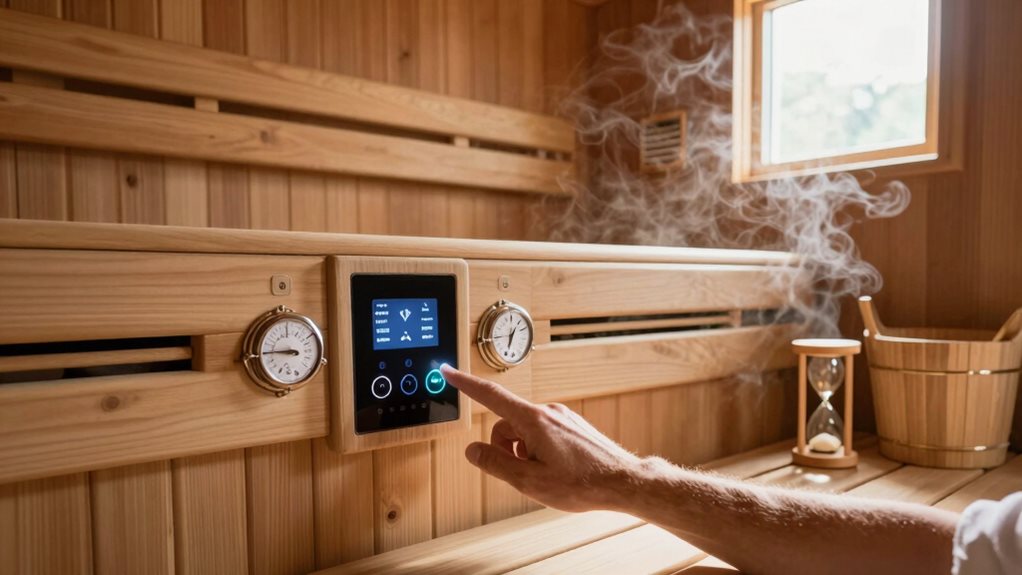
Hybrid sauna solutions represent the perfect marriage between traditional and infrared heating technologies, giving you unprecedented control over your wellness experience.
With intuitive digital panels, you can easily switch between heating methods or use them simultaneously for maximum benefit.
You’ll appreciate the flexibility of controlling your sauna through mechanical switches, touchscreens, or even your smartphone.
Whether you’re seeking intense detoxification from traditional heat (reaching up to 197°F) or deep muscle therapy from full-spectrum infrared, these systems adapt to your needs.
Installation requires professional electrical work with a dedicated 240-volt circuit, but many models offer straightforward assembly in about two hours.
The best part? You’ll enjoy even 360-degree heat coverage without cold spots, plus modern conveniences like Bluetooth sound systems and ambient lighting.
Regular use of these innovative systems supports improved cardiovascular health and better sleep quality while providing comprehensive pain relief.
Key Factors to Consider When Choosing a Control System
When selecting a sauna control system that perfectly suits your needs, you’ll need to evaluate several critical factors that impact both functionality and user experience.
First, check the power compatibility between your heater and controller—systems up to 10.5kW can connect directly, while larger units need contactor units like the S2-30.
Proper power matching ensures seamless operation—connect small heaters directly, while larger systems require dedicated contactors.
Consider where and how you’ll use your sauna. Will you want to control it from your phone while at work, or is a simple wall-mounted panel enough?
Electric and infrared heaters offer the most convenient control options with user-friendly interfaces, making them ideal choices for those prioritizing ease of operation.
- Temperature range and precision (look for systems offering 40-110°C control)
- Safety features like door sensors and automatic shutoff timers
- Interface accessibility (LED displays are easier to read in steam)
- Expandability options for lights, ventilation, and future upgrades
Installation Considerations for Different Control Types
Successfully installing a sauna control system requires careful attention to the specific demands of your chosen technology, whether you’re setting up a traditional electric heater or a modern infrared system.
For traditional electric saunas, you’ll need a dedicated 240V circuit, while smaller infrared units can operate on a standard 15-20 amp outlet. Position your control panel outside the steam room at eye level, and mount the temperature sensor away from disruptive elements. Proper sizing is crucial to ensure your heater can maintain optimal temperatures without wasting energy.
Hybrid systems often require two separate circuits to power both components.
Safety should be your priority—always disconnect power before installation and verify proper grounding. For outdoor installations, GFCI protection is crucial.
Remember that proper ventilation is vital, with unobstructed vents allowing stale air to escape. In cold regions, add extra insulation for outdoor installations.
Match your heater size and style to the sauna space to create the ideal environment for relaxation and therapeutic benefits.
Matching Control Systems to Your Sauna Experience Goals
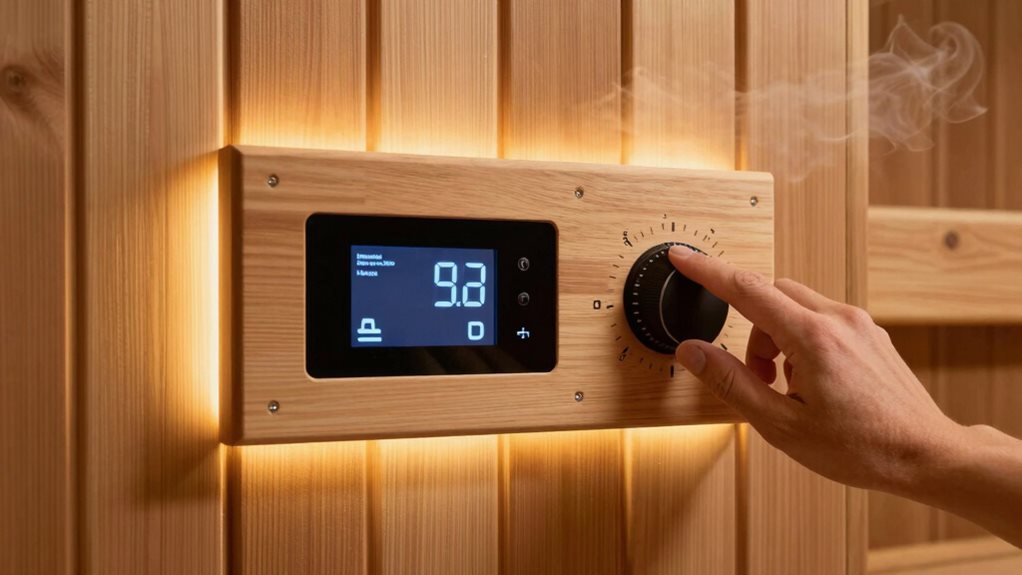
Beyond installation, choosing the right control system directly shapes your entire sauna experience.
Consider how you’ll use your sauna when deciding between automated or manual controls. If convenience is your priority, WiFi-enabled systems allow you to pre-warm your sauna from your phone, reaching ideal temperature in about 30 minutes before you arrive home.
- Lifestyle match – Remote controls suit busy schedules while manual controls offer simplicity
- Budget considerations – Manual systems cost less but sacrifice convenience features
- Safety needs – Child lock features in digital systems protect curious youngsters
- Reliability requirements – Manual controls work during internet outages and don’t need updates
For commercial settings like hotels, programmable timers and remote access save staff time.
Just remember that your controller must match your heater’s power requirements for safe, efficient operation.
Frequently Asked Questions
Can Control Systems Be Retrofitted to Existing Traditional Saunas?
Yes, you can retrofit control systems like HUUM UKU to existing saunas. They include necessary components for upgrading traditional units, and you’ll need basic tools for installation.
How Long Do Digital Control Systems Typically Last in Sauna Environments?
Your digital sauna controls typically last 5-7 years. You’ll face shortened lifespan from humidity exposure, temperature extremes, and electrical fluctuations. Regular maintenance helps extend their functional life considerably.
Are Smart Control Systems Compatible With All Heater Types?
No, smart control systems aren’t compatible with all heater types. Electric heaters work well with them, but wood-burning, infrared, and gas heaters often require brand-specific solutions or lack full smart functionality.
What Power Backup Options Exist for Digital Controls During Outages?
Your digital controls can stay operational during outages with battery backup systems like Homecraft’s 5-year battery, UPS features in Harvia Xenio controls, and system backup functionality in EOS EmoTouch 3.
Do Control Systems Impact Energy Efficiency of Sauna Heaters?
Yes, control systems greatly impact energy efficiency. You’ll save power with programmable timers, automatic shut-offs, smart scheduling, and temperature optimization features that prevent unnecessary heating and reduce consumption.
Final Thoughts
As you explore sauna control options, remember that finding the right balance between manual and automated features is key to your perfect sauna experience. Consider your preferences, budget, and how you’ll use your sauna when making your choice. Whether you prefer traditional hands-on controls, cutting-edge automation, or something in between, the ideal system will improve your relaxation while maintaining the authentic essence of sauna bathing.