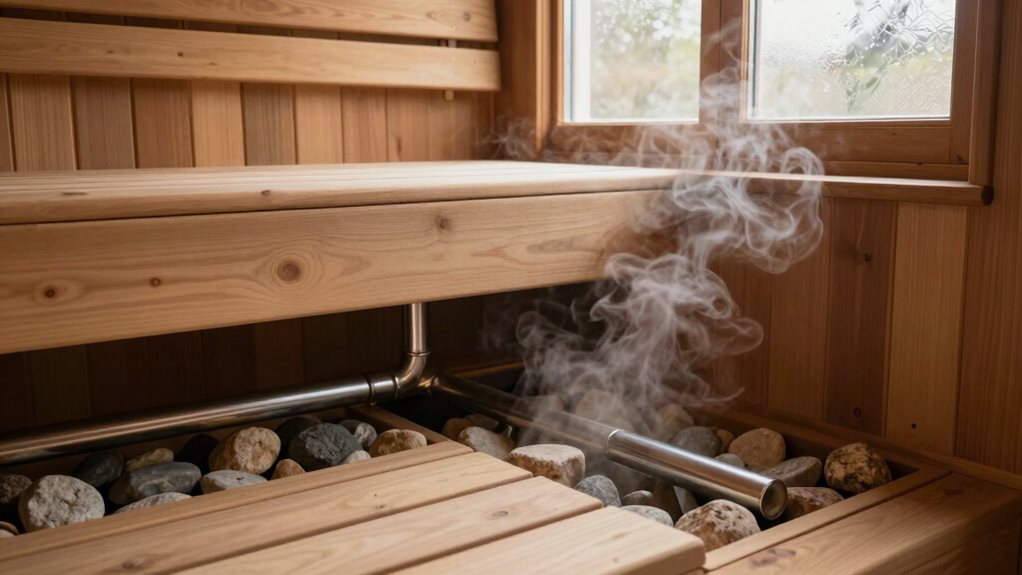

Effective moisture management is key to keeping your sauna long-lasting and enjoyable. Start with sloped flooring to direct water towards drains, preventing puddles. Central drains work wonders for outdoor saunas, while modern features like linear drains look sleek and handle steam efficiently. Don’t forget good ventilation; it guarantees airflow and keeps humidity in check. With these strategies, you’ll enjoy a clean, comfortable environment that lasts. Keep exploring for even more tips to improve your sauna experience!
Importance of Effective Drainage in Saunas
When enjoying a sauna, you mightn’t think about how important effective drainage is, but it plays a vital role in keeping the space comfortable and safe.
Without proper drainage, excess moisture can lead to mold growth, which no one wants to encounter! Additionally, water pooling can warp and damage the wood materials, harming your sauna’s structure. An effective drainage system extends sauna lifespan by protecting wood from warping, rotting, and pests. Moreover, maintaining effective drainage helps ensure proper lymphatic function by creating an environment that supports overall health. A well-designed sauna moisture control system can further enhance the longevity of your sauna by efficiently managing humidity levels.
Effective drainage is essential; it prevents mold growth and protects the wood from water damage.
You’ll feel more at ease knowing that effective drainage keeps the floor dry, preventing slippery surfaces and reducing health risks from bacteria and fungi.
In public saunas where many users gather, good drainage is even more critical. By eliminating standing water, you guarantee a hygienic environment, making your sauna experience both enjoyable and safe.
Keeping moisture in check is key to a great sauna time!
Sloped Flooring Design for Water Management
Sloped flooring design plays a vital role in managing water within saunas, guaranteeing a safe and pleasant experience every time you step inside.
Using methods like the Ben Square Sleeper method creates a gentle slope to direct water toward the drain. You can also lay thin wood staves to build a slope naturally, letting water flow away easily. User engagement enhances incremental sized strips and tiled seams make adjusting slopes straightforward, ensuring water escapes efficiently from where most is used. Even alternative substrates like sloped joists let you avoid messy layers while still directing water correctly. Additionally, incorporating a slight slope towards a trough drain can further enhance water management.
With a well-designed floor, maintenance is simpler, and you can enjoy your sauna without worry about standing water or slippery spots.
Central Drain Solutions for Outdoor Saunas
Central drain systems, positioned beneath the heater or at the center of the floor, become crucial for thorough cleaning and efficient water flow. You’ll want a slight slope to direct water toward the drain. Additionally, installing a drain can be particularly beneficial for indoor installations over wood or finished flooring, ensuring that moisture damage is minimized. Linear drain channels made of stainless steel also work wonders; they run from end to end, handling moisture like a champ without rusting. Being smart about foundation design helps too—using permeable materials like gravel or drainage pits and guaranteeing a slight gradient directs runoff. Think of these systems as your sauna’s best friends, stepping in to keep everything dry and cozy, so you can focus on relaxation instead of water worries!
Preventing Water Accumulation on Sauna Surfaces
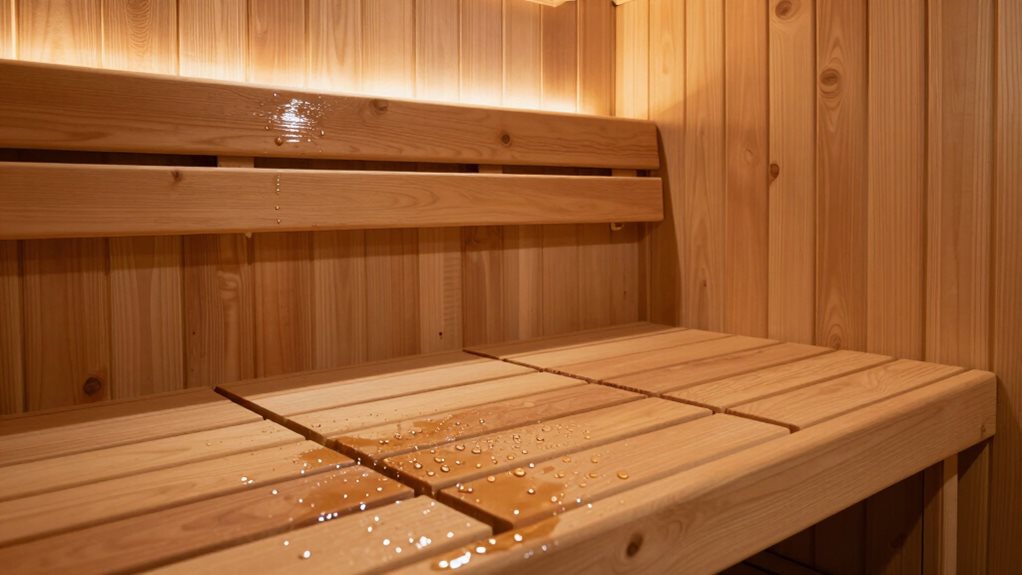
To keep your sauna surfaces dry and mold-free, it’s essential to implement clever design and practice strategies. Here are three effective ways you can prevent water accumulation:
Implementing smart design and maintenance strategies is key to keeping your sauna dry and mold-free.
- Ventilation: Install air intake vents near the heater and exhaust vents near the ceiling. This promotes airflow and reduces humidity, keeping your sauna fresher. Proper ventilation also prevents excess moisture buildup, which can lead to mold growth. Additionally, well-ventilated saunas deny conditions conducive to mold by preventing moisture accumulation. Ensuring weatherproofed accessories can further enhance the effectiveness of your ventilation system.
- Elevated Benches: Use benches with gaps or slats. This allows air to circulate beneath, reducing trapped moisture and making it harder for mold to settle in.
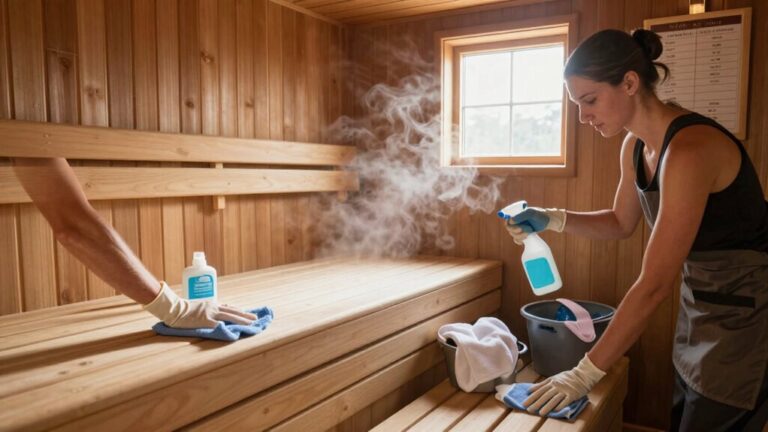
- Post-Session Care: After your sauna session, wipe down benches with a microfiber towel and leave the door slightly open for 30 minutes. It helps dry out the interior, preventing unwanted dampness and keeping your sauna inviting.
These strategies will guarantee your sauna remains a relaxing haven!
Integrating Modern Drainage Features
Keeping your sauna surfaces dry is only half the battle; integrating modern drainage features plays an essential role in maintaining a safe and inviting atmosphere. For sleek designs, consider linear drains at one end to effectively manage water while keeping the look tidy. If your sauna’s busy, point and center drains work wonders by capturing sweat and steam right where it’s needed. For larger spaces, trench drains offer wide coverage, keeping everything clean and hygienic. Pairing these drains with waterproof membranes safeguards against moisture damage, while smart integration techniques—like linking to your existing plumbing—make maintenance easier. Essential components for moisture control include a good vapor barrier and effective ventilation, which is crucial for preventing overheating and ensuring comfort. With these modern features, you’ll enjoy a dry, welcoming sauna every time you step in!
Low-Maintenance Options for Drainage Systems
When it comes to enjoying a sauna experience without the hassle of complicated maintenance, choosing low-maintenance drainage options can make all the difference.
By selecting systems designed for efficiency, you can keep your sauna running effortlessly with minimal effort. Here are three fantastic options to contemplate:
- Floor Sloping Techniques: A slight gradient, like ¼ inch per foot, helps direct water to the drain, preventing pooling and guaranteeing quick drying.
- Durable Drain Materials: Stainless steel and perforated pipes resist rust, while gravel helps redirect water effectively.
- Removable Slat Systems: Raised wood slats with hidden troughs collect water without fuss, allowing easy access for cleaning.
Embracing these low-maintenance solutions will keep your sauna comfortable and enjoyable for years!
Enhancing Airflow to Reduce Moisture
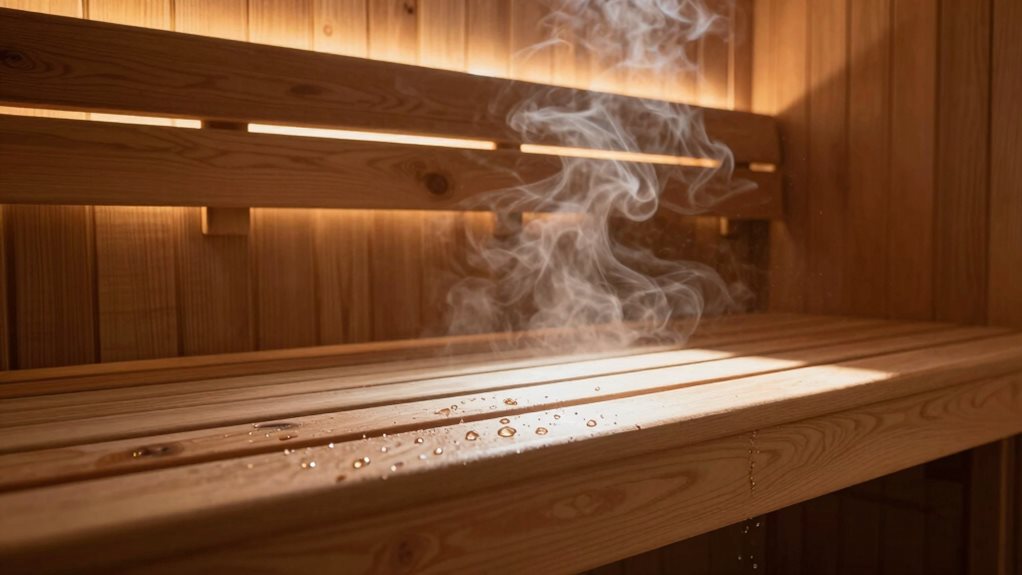
Maintaining a comfortable sauna experience involves more than just efficient drainage; improving airflow plays a key role in reducing moisture buildup and keeping the space inviting.
To refine airflow, place an intake vent low near the heater. This design draws fresh air in and boosts heat circulation, which helps prevent those pesky humid pockets.
Positioning an intake vent low near the heater enhances airflow, bringing in fresh air and improving heat circulation.
On the other wall, position an exhaust vent high to allow warm, moisture-rich air to escape naturally. For ideal performance, size the vent to achieve 1-2 air changes per hour.
You can even use adjustable grilles to customize airflow based on your sauna sessions. Additionally, incorporating a sauna ventilation system kit can enhance the overall efficiency of your sauna’s moisture management.
Long-Term Benefits of Proper Drainage in Saunas
Proper drainage in saunas isn’t just a technical detail; it’s a crucial element that brings a wealth of long-term benefits for both the sauna and its users.
You’ll find that effective drainage keeps the environment cleaner and more enjoyable. Here are three notable advantages:
- Hygiene Maintenance: It prevents standing water, reducing the risk of bacteria and fungi, guaranteeing a safe experience for everyone.
- Structural Longevity: Good drainage protects wood from warping and rotting, prolonging your sauna’s lifespan and saving you money on repairs.
- User Experience Improvement: With proper drainage, you’ll enjoy dry, comfortable conditions post-use, making your relaxation time even better.
Moreover, integrating sauna moisture protection products can further enhance the effectiveness of your drainage system. Investing in drainage truly pays off, creating a healthier and more enjoyable sauna experience.
Frequently Asked Questions
How Do I Choose the Right Drainage System for My Sauna?
Choose a drainage system based on your sauna’s size and layout. For larger spaces, opt for linear drains, while small rooms can use point drains. Always consider durable materials to guarantee longevity and ease of maintenance.
What Materials Are Best for Sloped Sauna Flooring?
For sloped sauna flooring, you’ll want to contemplate thermally-modified wood for durability and moisture resistance, or ceramic tile for easy cleaning. PVC mat tiles also work well, offering drainage and comfort underfoot. Choose what fits your needs!
Can I Install Drainage Systems in Existing Saunas?
Yes, you can install drainage systems in existing saunas. You’ll need to evaluate your current setup, consider minimal-cut options, or make structural changes to guarantee proper water flow and compliance with local plumbing codes.
How Often Should I Clean My Sauna Drainage System?
You should clean your sauna drainage system monthly. Regular cleaning prevents clogs and guarantees proper water flow. Always check for blockages after heavy use, and don’t hesitate to call a professional if needed.
Do I Need a Professional for Sauna Drainage Installation?
Yes, you’ll need a professional for sauna drainage installation. They guarantee proper sloping and integration, preventing issues like pooling and structural damage. It’s vital for compliance with building codes and maintaining your sauna’s longevity.
Final Thoughts
By using effective drainage strategies in your sauna, you can guarantee it stays in great shape for years to come. Whether it’s sloped flooring or smart drain solutions, managing moisture is key. Don’t forget about airflow, too; it helps keep everything dry and comfy. Taking these steps not only averts damage but also makes your sauna experience more enjoyable. Remember, a little planning today means a sauna that’s ready for relaxation tomorrow!