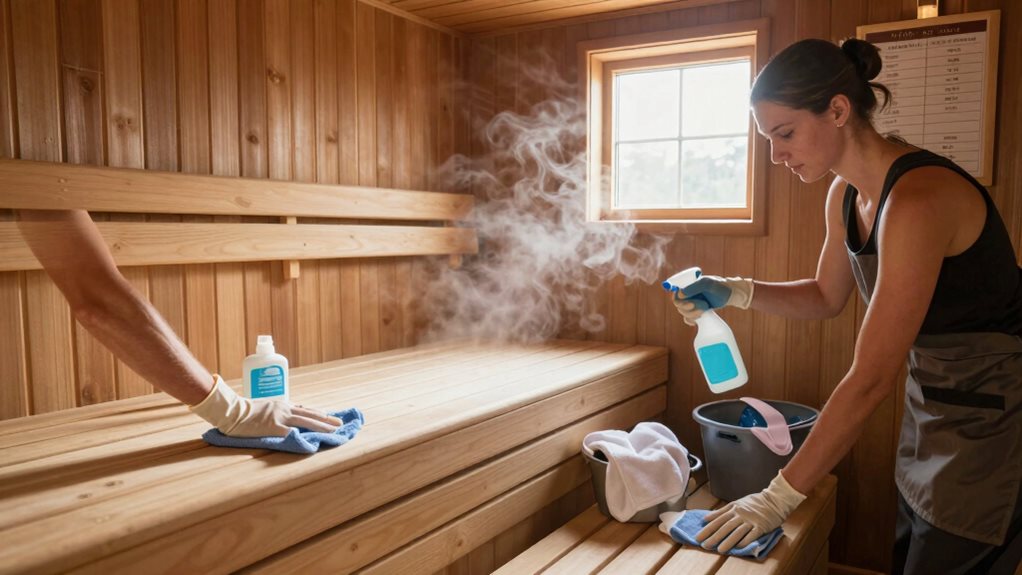

To maintain sauna cleanliness in busy gyms, you’ll need a tiered cleaning schedule with hourly wipe-downs during peak times and deep cleaning during off-hours. Train staff thoroughly on proper protocols and create clear rotation charts. Use specialized sauna-safe cleaners and provide sanitizing stations for members. Implement visible etiquette guidelines and consider occupancy sensors to track usage patterns. The right balance of staff procedures, member cooperation, and technology will transform your sauna maintenance approach.
Developing High-Traffic Cleaning Schedules
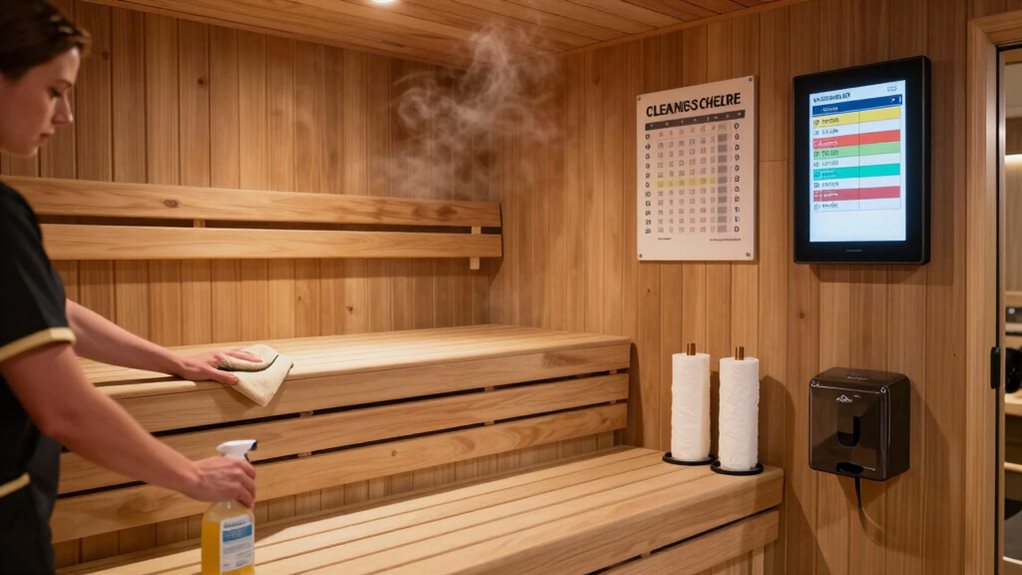
Five essential components make up an effective sauna cleaning schedule for busy gyms.
First, you’ll need to adjust your cleaning frequency based on foot traffic—high-volume periods might require up to eight cleanings daily, especially with 180 guests using the facility.
Second, create layered schedules that combine daily wipe-downs, weekly refreshes, and monthly deep cleans.
Third, implement repeatable staff checklists so everyone knows their responsibilities.
Fourth, focus on high-touch surfaces like benches, door handles, and walls, wiping them down after each use with appropriate non-toxic cleaners.
Finally, track humidity levels with a hygrometer near moisture-prone areas to prevent mold growth.
With these elements in place, you’ll maintain a clean, inviting sauna environment even during your busiest hours.
Essential Products for Sauna Sanitation
While maintaining a clean sauna demands diligent effort, choosing the right cleaning products makes the job considerably easier.
You’ll want to invest in specialized sauna cleaners like Sauna Clean, which neutralizes bacteria without damaging wood surfaces. Unlike harsh bleach, these solutions are 100% biodegradable and designed specifically for sauna woods.
For daily maintenance, keep a supply of mild detergent solution (just a drop in warm water) and soft brushes nearby.
EPA-registered disinfectants or a hydrogen peroxide-water mixture will eliminate pathogens when used correctly.
Don’t forget crucial tools: buckets, mops, absorbent towels, and possibly a handheld steam cleaner for deeper sanitizing.
In high-traffic areas, sanitizing wipes in dispensers provide convenient options for quick cleanups between scheduled maintenance sessions.
Training Staff on Proper Cleaning Protocols
You’ll need a structured approach to training your gym staff on sauna cleanliness, starting with cleaning certification programs that establish consistent standards.
Assign role-specific responsibilities so everyone understands their cleaning duties, from front desk staff who enforce towel policies to maintenance teams handling deep cleaning.
Regular monitoring and quality control checks, such as weekly inspections and feedback systems, will guarantee your sauna cleaning protocols remain effective even during peak gym hours.
Cleaning Certification Programs
Training staff through proper certification programs guarantees that saunas remain pristine even in the busiest gym environments.
You’ll find several valuable options for your team, including the Fitness Center Cleaning Certification, a 5-hour course covering sanitization of athletic facilities and equipment. This program requires an 80% exam score and offers 5 IICRC CEUs upon completion.
For broader credentials, consider ISSA’s cleaning industry certifications, which provide thorough training across various career levels.
The GBAC STAR Accreditation Program demonstrates your facility’s commitment to occupant health and hygiene standards.
Don’t overlook sauna-specific training that integrates proper cleaning protocols like weekly deep cleaning regimens and avoiding harsh chemicals.
Role-Specific Responsibilities
Successful sauna maintenance in busy gyms depends on clearly defined staff roles and extensive training protocols.
You’ll need to assign specific cleaning tasks to each team member based on your facility’s usage patterns, with detailed schedules specifying when each duty should be completed.
Train your designated staff thoroughly on proper sauna cleaning techniques, including the correct use of EPA-registered disinfectants and appropriate dwell times.
Staff should also learn conflict resolution skills to handle situations when customers aren’t following sauna etiquette.
Schedule regular 15-30 minute walk-throughs with extensive checklists to monitor conditions and address issues promptly.
Make certain your team understands their specific responsibilities – from daily bench wiping and floor mopping to weekly deep cleaning tasks that target areas beneath benches and high-traffic zones.
Monitoring Quality Control
While creating a pristine sauna environment depends heavily on proper techniques, the true cornerstone of cleanliness is establishing robust quality control protocols for your staff.
Implement scheduled 15-30 minute walkthrough inspections using documented checklists that cover high-touch points, ventilation status, and visible cleanliness.
Your quality assurance program should include daily operational checks, weekly deep-clean audits, and monthly management reviews of cleaning logs.
Track measurable indicators like log completion rates and instances of mold or staining to identify trends over time.
When audits reveal problems, follow a corrective action workflow that includes re-training, re-cleaning, and documenting the root cause of issues.
Don’t forget to establish feedback channels for members to report cleanliness concerns, creating a complete loop of accountability that keeps your sauna consistently clean.
Implementing Member Etiquette Programs
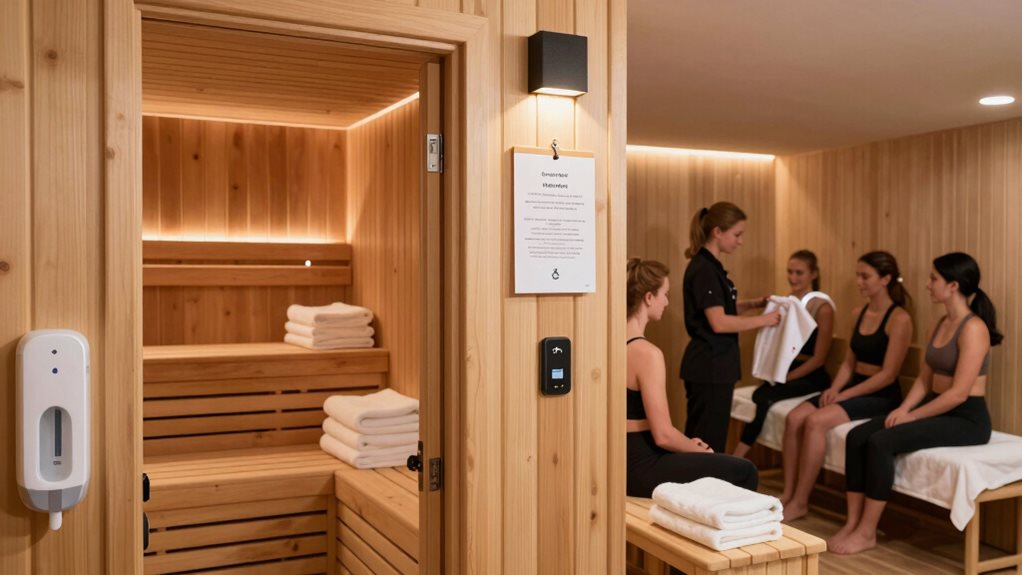
Effective member etiquette programs form the backbone of maintaining sauna cleanliness in busy gym environments.
At the heart of pristine sauna facilities lies thoughtful etiquette training for all members.
You’ll want to start with a mandatory orientation for new members, explaining hygiene expectations through brief tours and clear handouts. Install prominent multilingual signage with pictograms that highlight key rules: shower before entering, place towels on benches, and observe time limits.
Create accountability by leveraging social norms—try displaying compliance rates or designating “sauna ambassadors” who model proper behavior.
Educational materials about health risks can justify your rules; posters explaining how pre-sauna showers reduce infection risk make requirements more meaningful.
Don’t forget to train your staff with standard procedures for addressing violations using non-confrontational language.
When members understand both the “why” and “how” of sauna etiquette, they’re much more likely to comply.
Tracking and Documenting Cleanliness Efforts
Your digital cleaning logs provide a clear audit trail that demonstrates your commitment to maintaining hygienic saunas and helps identify problem patterns before they escalate.
Staff rotation charts guarantee accountability by assigning specific cleaning responsibilities to team members throughout operating hours, preventing the common problem of assumed coverage.
These documentation systems not merely satisfy health inspectors but also build member confidence when you openly share cleanliness protocols and completed maintenance records.
Digital Cleaning Logs
Digital cleaning logs represent a modern solution to the age-old challenge of tracking sauna maintenance in busy gym environments. Platforms like Xenia and ABM’s Digital Cleaning Log offer centralized systems where you can document all cleaning activities, schedule maintenance, and generate reports.
With these tools, your staff can scan QR codes to record who performed work and when it was completed. You’ll receive real-time notifications about task progress and alerts for overdue maintenance.
The benefits extend beyond organization—you’ll reduce equipment failure risks, prevent unexpected downtime, and save both time and money.
These digital solutions work effectively across multiple locations, making them ideal for gym chains managing several saunas. Weekly data-driven discussions about servicing become easier when you have robust analytics at your fingertips.
Staff Rotation Charts
Staff rotation charts provide the backbone for maintaining consistent sauna cleanliness in busy gym environments.
You’ll want to create a system that divides your cleaning staff into balanced teams, typically using four teams for 12-hour rotating schedules like the Pitman or 2-2, 3-2 patterns.
Color-code your teams (blue for Team A, red for Team B) to make tracking visual and intuitive. Document your rotations using printable templates in Excel or Word, filling cells with shift patterns and team assignments.
For saunas specifically, this approach guarantees cleaning tasks happen reliably throughout the day, even during peak times.
The beauty of well-designed rotation charts is that they create fairness by distributing weekend and evening shifts equally while maintaining 24/7 coverage – keeping your sauna consistently clean and your staff satisfied.
Addressing Common Problem Areas in Gym Saunas
As regular use intensifies in gym saunas, certain areas consistently become problematic without proper maintenance.
Benches absorb sweat and require daily wipe-downs with clean towels, while floors need regular inspection for moisture accumulation, especially where they meet walls.
Meticulous bench cleaning and floor moisture checks prevent damage where sweat meets wood in high-traffic sauna environments.
Don’t forget to prop up floor boards to check for clogged drains.
Heaters often suffer from user interference, like unauthorized water pouring, requiring thorough cleaning.
You’ll need to replace cracked stones monthly and remove elements for deep cleaning with vinegar solutions.
After sessions, leave doors open for 30 minutes to facilitate natural drying, and consider using a portable fan to improve airflow.
Remember to clean ventilation grilles monthly to prevent mold growth and stale air buildup.
Balancing Deep Cleaning With Operational Hours
Maintaining sauna cleanliness while keeping facilities available for members presents a considerable challenge for busy gyms.
You’ll need to layer your cleaning schedule strategically to minimize disruption while guaranteeing proper hygiene.
Schedule deep cleaning sessions during your quietest hours—typically early mornings or late evenings—and maintain daily upkeep throughout operating times.
Staff should be trained to quickly wipe down surfaces between user cycles.
For effective balance between cleanliness and availability:
- Implement a tiered approach with daily wipe-downs, weekly refreshes, and monthly deep cleans
- Train staff to perform quick cleaning during shift changes
- Adjust cleaning frequency based on your gym’s specific foot traffic patterns
- Keep cleaning visible to members, reinforcing your commitment to health standards
This layered approach keeps your sauna both clean and accessible to members throughout the week.
Creating Preventative Maintenance Systems
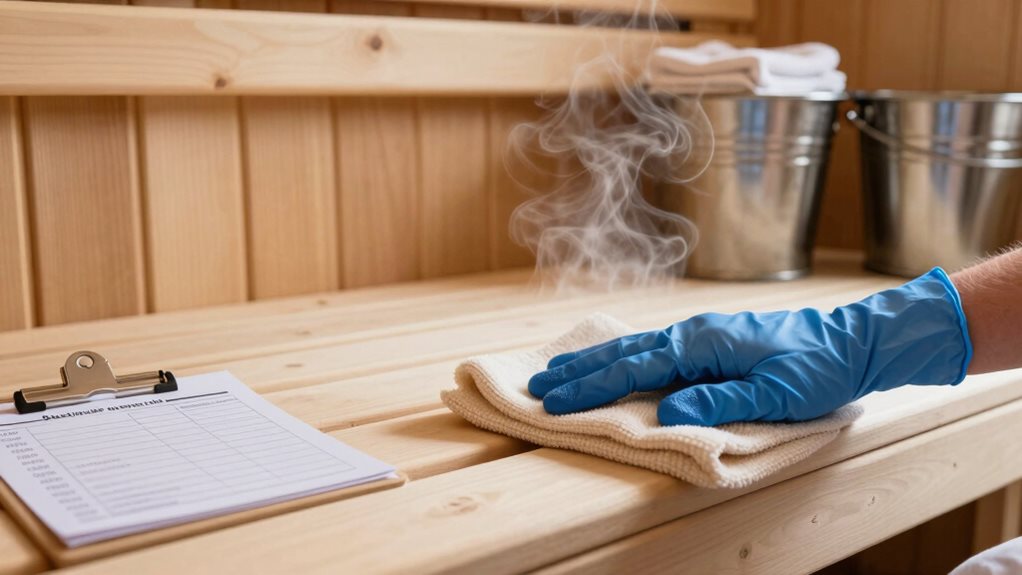
Effective sauna maintenance begins with clear staff responsibility charts that outline who handles daily, weekly, and monthly cleaning tasks.
You’ll want to implement scheduled component checks for critical elements like heater stones, ventilation systems, and wooden surfaces to catch potential problems before they require costly repairs.
Creating a simple audit trail through digital or paper logs helps you track maintenance history, guarantee accountability, and identify patterns that might indicate underlying issues needing attention.
Staff Responsibility Charts
The cornerstone of any well-maintained gym sauna lies in clearly defined staff responsibility charts that eliminate guesswork and confusion.
These charts should assign specific tasks to individual staff members, with clear instructions on how and when each duty should be performed.
Effective staff responsibility charts include:
- Color-coded visual boards showing task status (Pending/In Progress/Complete)
- Daily shift breakdowns with specific time blocks for sauna maintenance
- Cross-training requirements guaranteeing at least two staff per shift can handle each task
- Escalation paths showing exactly who to contact when issues arise
Scheduled Component Checks
Successful sauna maintenance hinges on vigilant component checks that prevent breakdowns before they disrupt service.
You’ll need to create a prioritized inventory of all sauna elements—from heaters and stones to benches and vents—with clear criticality levels to guide your inspection frequency.
Develop a matrix that scales check frequency based on your gym’s usage volume. High-traffic saunas (over 50 sessions daily) require more frequent inspections than those with lighter use.
Don’t forget to implement short 15-30 minute walk-throughs for public saunas during busy periods.
Create standardized checklists with specific pass/fail criteria for each component, and use a scheduling system to track completions.
When staff document their findings with timestamps and photos, you’ll build a maintenance history that helps predict and prevent future issues.
Audit Trail Implementation
Implementing a reliable audit trail guarantees your sauna maintenance doesn’t fall through the cracks during busy periods when cleanliness matters most.
Your daily inspection logs should include details like date, time, staff name, and any issues discovered, creating accountability throughout your team.
Digital checklist systems offer notable advantages for maintaining thorough records:
- They automatically track completion status and send alerts for overdue tasks
- You can easily generate real-time compliance reports in PDF or Excel format
- All corrective actions are stored centrally for quick reference
- Photos can be attached to document conditions before and after maintenance
Retain these records for future audits and use them during staff training to demonstrate proper inspection protocols.
This systematic approach guarantees your sauna remains clean and safe, even during peak gym hours.
Adapting Cleaning Intensity During Peak Seasons
When gyms experience seasonal surges in membership and activity, sauna cleaning protocols must adapt quickly to match the increased demand.
You’ll need to shift from standard daily wipe-downs to hourly surface cleaning of benches and door handles during these busy periods.
Base your staffing adjustments on historical attendance data, scheduling overlapping handovers to maintain cleaning continuity during peak hours.
It’s smart to use fast-acting, wood-compatible disinfectants that won’t damage your sauna timber while increasing cleaning frequency.
Don’t forget to enforce visible towel use for every sauna user, which greatly reduces bench contamination.
For multi-day busy stretches, insert targeted mid-day deep cleans to prevent buildup, and consider implementing timed sessions to allow brief cleaning windows between groups.
Leveraging Technology for Cleanliness Monitoring
Beyond manual cleaning protocols, modern gyms are now turning to technology as their silent cleaning ally.
You’ll find innovative systems that monitor and maintain sauna cleanliness with minimal human intervention. These technologies provide objective data about hygiene conditions, allowing you to make informed decisions about cleaning schedules. AI-powered monitoring systems have revolutionized sauna maintenance by leveraging real-time sensors that continuously detect changes in the environment.
- Surface verification systems like Hygiena EnSURE Touch offer rapid testing that goes beyond what your eyes can see.
- Occupancy sensors track usage patterns, helping you optimize cleaning when your sauna needs it most.
- Smart water quality sensors monitor chemical levels hourly, guaranteeing your water remains fresh and balanced.
- AI-based monitoring systems can adjust ventilation and temperature automatically when abnormalities are detected.
With these tools working alongside your staff, you’ll maintain consistently clean saunas even during your busiest periods.
Frequently Asked Questions
How Does Chlorine From Pool Water Affect Sauna Wood?
Chlorine from pool water discolors your sauna wood, destroys lignin causing defibration, weakens wooden fibers, and accelerates corrosion of metal components. It’ll reduce wood lifespan and pose health risks when heated.
Should Sauna Cleaning Differ Between Infrared and Traditional Saunas?
Yes, your cleaning approach should differ. Use gentler products on infrared saunas to protect electronics, while traditional saunas tolerate stronger cleaners and require more frequent moisture management to prevent mold.
Are Aromatherapy Oils Harmful to Sauna Surfaces?
Yes, undiluted aromatherapy oils can harm sauna surfaces. They’ll penetrate wood pores causing discoloration, create residue on stones, and may ignite at high temperatures. Always dilute and use proper application methods.
How Long Should a Sauna Air Out After Disinfection?
You’ll need to air out your sauna for at least 30-60 minutes after disinfection. Leave the door open and vents cracked to guarantee all surfaces dry completely before closing up.
Can UV Light Sterilization Replace Chemical Cleaning in Saunas?
No, UV light can’t replace chemical cleaning in saunas. You’ll still need manual cleaning to remove organic material before UV treatment can effectively reach and kill remaining pathogens.
Final Thoughts
By adopting these strategies, you’ll create a cleaner, healthier sauna environment that members appreciate. Regular cleaning schedules, proper staff training, and member cooperation form the foundation of successful sauna maintenance. Remember, cleanliness isn’t just about appearance—it’s about health and safety. With consistent effort and the right systems in place, you can keep your saunas pristine even during your busiest periods.