
Premium materials like cedar and hemlock increase your sauna’s longevity, while energy-efficient systems cut operating costs. Smart controls with remote management improve convenience, and proper ventilation prevents moisture damage. Strategic placement and multi-functional designs maximize usability, while professional installation guarantees code compliance and warranty protection. Adding glass walls or outdoor integration creates visual appeal that attracts buyers. These features don’t just enhance your experience—they’re investments that pay dividends when it’s time to sell.
Premium Materials and Craftsmanship
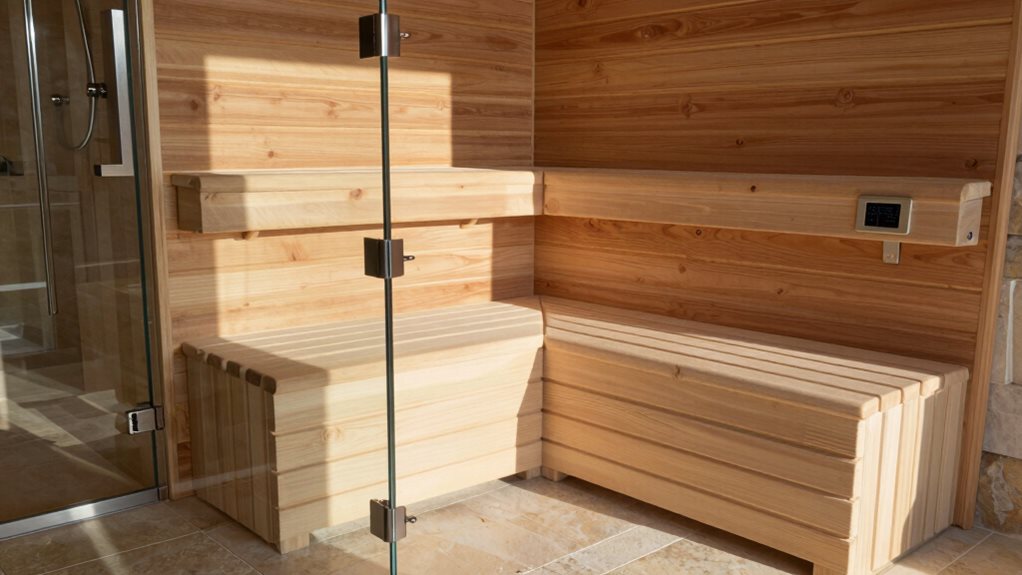
When selecting materials for a sauna that will truly boost your home’s value, premium woods like cedar and hemlock stand out as top choices for discerning homeowners.
Cedar’s exceptional moisture resistance and natural insulation properties help your sauna last beyond 20 years, while hemlock offers similar durability with impressive rot resistance.
Premium woods like cedar and hemlock create saunas that resist moisture, insulate naturally, and deliver decades of durability without compromise.
You’ll find that high-end construction features, such as glass walls and custom builds with bespoke touches, greatly improve your property’s perceived value.
These meticulous craftsmanship elements attract health-conscious premium buyers willing to pay more for quality.
The commercial-grade construction prevents deterioration over time and reduces maintenance needs, making it a wise investment.
When these premium materials blend seamlessly into your home’s setting, they create a sophisticated atmosphere that positions your property as spa-ready, potentially leading to faster sales at higher prices.
Energy Efficiency and Smart Controls
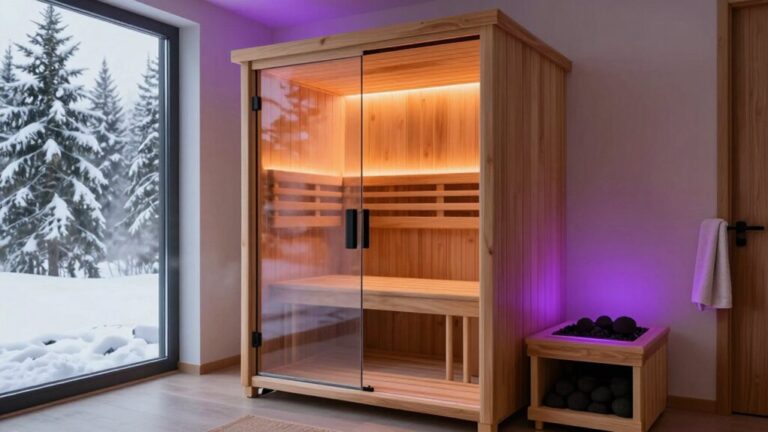
You’ll considerably cut monthly costs with infrared saunas that use up to 75% less electricity than traditional models, resulting in potential savings of $500+ annually for regular users.
Smart control systems let you monitor energy consumption in real-time, adjust session timers remotely, and create presets that optimize performance while keeping utility bills manageable.
These energy-efficient features, combined with proper insulation and strategic placement within your home, not just reduce environmental impact but also make your sauna a more attractive selling point for energy-conscious homebuyers. For the average 2-person infrared sauna, you can expect to pay only about 2.0 kW per hour, making it the optimal choice for balancing space and energy efficiency.
With Arizona’s 16 cents per kilowatt-hour electricity rate being higher than many states, investing in an energy-efficient sauna becomes even more financially beneficial for homeowners in this region.
Low-Cost Operation Systems
While luxury features often steal the spotlight when discussing saunas, the low-cost operation systems represent one of the most practical benefits for homeowners.
You’ll find that infrared saunas cost considerably less to run than traditional models, with sessions averaging just $0.72 compared to $1.44 for conventional units.
- Infrared technology uses only 1.6-1.9 kilowatts versus the 6-9 kilowatts traditional saunas demand
- Daily infrared sauna usage translates to minimal monthly expenses compared to spa visits
- Smart control panels with timers prevent unnecessary extended heating periods
- Optimized usage patterns can reduce annual energy consumption by over 500 kilowatt-hours
- Programmable systems allow you to schedule sessions during off-peak electricity rates, further reducing costs
These efficiency features aren’t just convenient—they’re investments that continue paying returns through lower utility bills.
Remote Temperature Management
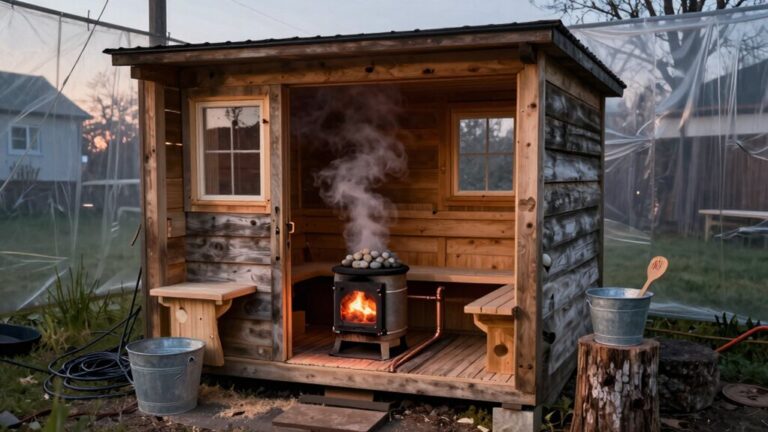
Modern sauna ownership extends far beyond the traditional wood-fired experience, with remote temperature management representing a significant leap forward in both convenience and home value.
You’ll appreciate the ability to preheat your sauna from anywhere using smartphone apps like HUUM or MyHarvia 2, eliminating wait times when you arrive home. Wi-Fi smart controllers deliver precision temperature management between 40°C to 110°C for an optimal sauna experience. These intelligent systems don’t just offer control—they provide insights through continuous usage tracking and temperature monitoring that helps optimize your energy consumption.
The safety features are equally impressive, with automatic shutdown capabilities if temperatures exceed safe thresholds or if motion sensors detect potential emergencies.
With customizable settings that store preferences for up to 14 different users, you’re investing in technology that adapts to your household’s specific needs while simultaneously boosting your property’s appeal to tech-savvy homebuyers.
Strategic Placement in Home Layout
Strategic placement of your sauna within your home’s layout dramatically impacts both its daily usability and its contribution to your property’s overall value.
When deciding where to install your sauna, consider locations that balance convenience with practical considerations.
- Position near bathrooms or spa areas to create an integrated wellness zone and reduce plumbing costs
- Choose ground-level or basement locations for easy access that encourages regular use
- Transform underutilized spaces like basements or converted sheds for maximum property value
- Guarantee enough space for at least a 2000mm bench to accommodate comfortable reclining
- Select indoor locations that benefit from existing insulation, extending sauna lifespan and reducing operational costs
Proper Ventilation and Air Quality Systems
Your sauna’s ventilation system doesn’t just clear steam—it greatly impacts your home’s value and creates a healthier bathing environment.
Continuous airflow designs maintain ideal humidity levels and prevent moisture damage to surrounding walls, while removing impurities that could affect your breathing during sessions.
Heat recovery systems, which capture and recirculate warm air, can reduce your energy costs by up to 30% compared to standard ventilation, making your sauna more attractive to energy-conscious buyers.
Continuous Airflow Design
A properly designed continuous airflow system stands as the unsung hero of any high-value sauna, silently maintaining both your comfort and the structure’s longevity.
When you’re selecting or upgrading your sauna, look for designs that facilitate 4-6 complete air exchanges hourly, guaranteeing you’ll never experience that stuffy, oxygen-depleted feeling that can turn relaxation into discomfort.
- Prevents moisture damage to wood and insulation, saving thousands in potential repairs
- Distributes heat evenly throughout the space, eliminating cold spots
- Removes odors, bacteria, and carbon dioxide for a cleaner sauna experience
- Reduces energy costs by optimizing heating efficiency
- Extends the life of heating equipment by preventing moisture-related damage
With proper airflow, you’ll enjoy consistent temperatures while your sauna maintains its structural integrity and value for years to come. Strategic placement of intake vents above the heater and exhaust vents below seating creates a balanced convective loop that ensures even heat distribution from floor to ceiling. The diagonal air movement pattern from properly positioned inlet and outlet vents on opposite walls creates efficient air circulation throughout the sauna environment.
Heat Recovery Systems
Heat recovery systems take your sauna’s efficiency to the next level, building upon the benefits of continuous airflow while recapturing valuable warmth that would otherwise escape.
These ingenious systems capture heat from exhaust air and use it to warm incoming fresh air, markedly reducing energy costs over time.
With proper heat recovery ventilation, your sauna maintains consistent temperatures without overworking the heater. The system creates a harmonious airflow that distributes warmth evenly throughout the cabin, eliminating hot and cold spots that compromise comfort. By supporting proper oxygen and moisture balance, these systems enhance both the sauna experience and user health benefits.
You’ll enjoy more pleasant sessions while your energy bills stay lower.
Beyond cost savings, these systems protect your investment by controlling moisture levels that can damage wood and other materials. Proper ventilation prevents mold and mildew buildup that could compromise your sauna’s structural integrity and air quality.
Your sauna won’t just perform better but last longer, making heat recovery a smart addition that pays dividends in comfort and value.
Multi-Functional Design Elements
When designing a multi-functional sauna space, homeowners can substantially boost their property’s appeal and value by thinking beyond traditional single-purpose installations.
Today’s buyers appreciate versatile wellness areas that adapt to different needs and seasons.
Modern wellness spaces that flex with lifestyle changes speak volumes to discerning property investors.
- Combine your sauna with a hot tub or cold plunge pool to create a complete contrast therapy experience that improves circulation.
- Transform outdoor space by integrating a BBQ entertainment hub with your sauna for year-round social gatherings.
- Install concealed saunas behind foldable panels in multipurpose rooms to maximize limited square footage.
- Add smart technology like Wi-Fi controllers that let you preheat your sauna remotely before arriving home.
- Design accessible layouts with tiered or floating benches that create visual interest while accommodating different heat preferences.
Thoughtful planning of proximity to your home balances convenience with the feeling of a private retreat, ensuring your sauna becomes a frequently used amenity that potential buyers will value.
Outdoor Integration With Natural Surroundings
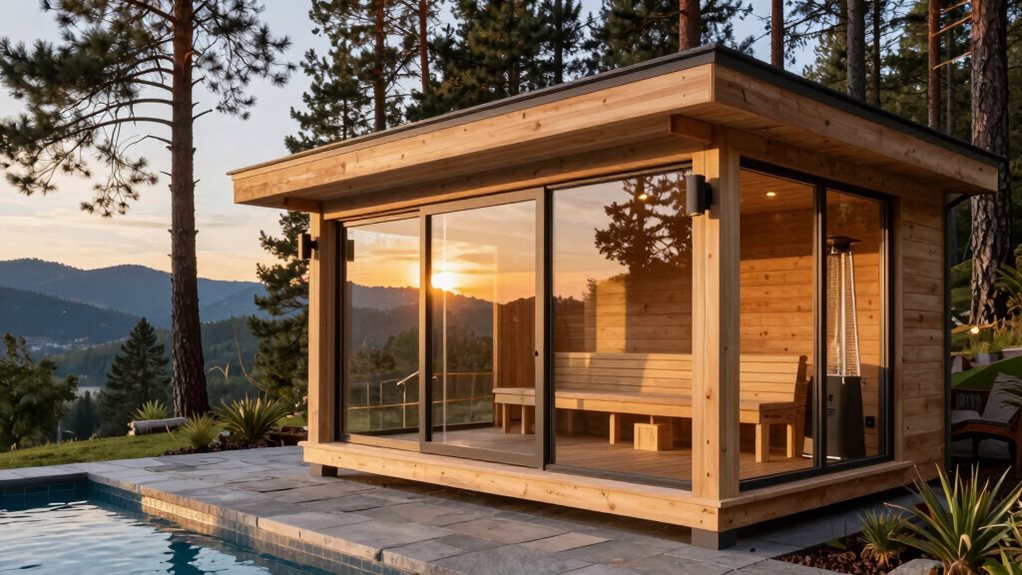
Outdoor saunas achieve their highest value potential through thoughtful integration with natural surroundings, transforming ordinary backyards into serene wellness retreats.
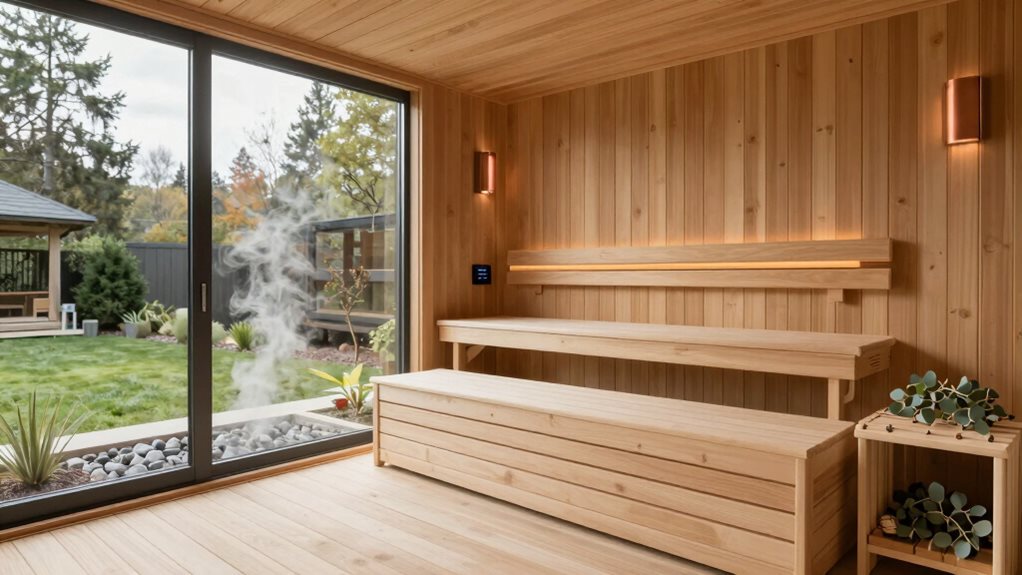
Position your sauna to maximize views of gardens or forests through large windows that maintain heating efficiency while connecting you to nature. You’ll create a natural boundary between everyday living spaces and your wellness sanctuary.
Strategic landscaping with trees, bamboo, or tall grasses provides privacy without sacrificing beauty. Your sauna can become a centerpiece that works with existing garden layouts rather than requiring extensive site preparation.
Year-round accessibility through covered pathways guarantees you’ll enjoy your sauna in every season.
When thoughtfully integrated, outdoor saunas become highly sought-after luxury amenities that boost your home’s market appeal without costly indoor renovations, making them a practical investment for increasing property value.
Professional Installation and Warranty Coverage
Professional installation represents a critical investment that greatly enhances your sauna’s value and longevity, delivering peace of mind that simply can’t be matched with DIY approaches.
When you choose expert installers, you’re protecting your investment while boosting your home’s value.
- Licensed electricians guarantee proper 240V circuits, preventing safety hazards
- Professional installation validates manufacturer warranties, protecting against defects
- Expert workmanship assures structural integrity and building code compliance
- Installation costs ($500-$3,000) are offset by increased property values
- Professional setups offer warranties on both parts and labor for complete protection
You’ll find that professional installation pays for itself through durability, safety, and resale value.
With proper installation, your sauna will operate efficiently for years while costing just $1 per session – much less than the $40-$100 you’d spend at commercial facilities.
Professional installers complete your sauna project in a time-efficient manner, allowing you to enjoy your wellness retreat sooner than with a DIY approach.
Frequently Asked Questions
How Long Does a Sauna Last Before Needing Replacement?
Your sauna can last 10-50 years depending on type, materials, and maintenance. Indoor saunas typically endure 20+ years, while outdoor models last 15-25 years if you maintain them properly.
Can Saunas Be Safely Installed in Older Homes?
Yes, you can safely install saunas in older homes, but you’ll need to upgrade electrical systems, assess structural support, and guarantee proper ventilation to prevent moisture damage and fire hazards.
Do Building Codes Require Permits for Residential Sauna Installations?
Yes, you’ll need permits for most residential sauna installations. While small outdoor saunas under 120 square feet may be exempt, electrical permits are always required for electric heating systems.
How Does Sauna Type Impact Resale Value Across Different Regions?
Cabin saunas outperform barrels in resale value nationwide, but regional impact varies greatly. You’ll see better returns in the Pacific Northwest, Colorado, and Minnesota where sauna culture is well-established.
Are Traditional or Infrared Saunas Better for Long-Term Investment?
Infrared saunas offer better long-term investment value with lower upfront costs, reduced energy consumption, easier maintenance, and simpler installation, saving you $3,000-$8,000 over 10 years compared to traditional models.
Final Thoughts
You’ve discovered how a thoughtfully designed sauna can greatly boost your home’s value. By investing in premium materials, energy-efficient features, strategic placement, proper ventilation, multi-functionality, outdoor integration, and professional installation, you’re creating both a wellness retreat and a valuable home asset. When you’re ready to sell, these carefully chosen sauna features won’t just impress potential buyers—they’ll justify a higher asking price and potentially speed up your home’s sale.