
An off-grid sauna might be perfect for you if you value both wellness and independence from utility companies. These standalone heat therapy spaces offer impressive health benefits—from toxin removal and calorie burning to improved immunity and mental clarity—while letting you control your energy source completely. Whether you choose wood-burning, propane, or solar power, you’ll enjoy year-round stress relief and relaxation wherever you place your sauna. The right location and regular maintenance will guarantee your wellness sanctuary thrives for years to come.
Health Benefits Beyond the Spa Experience
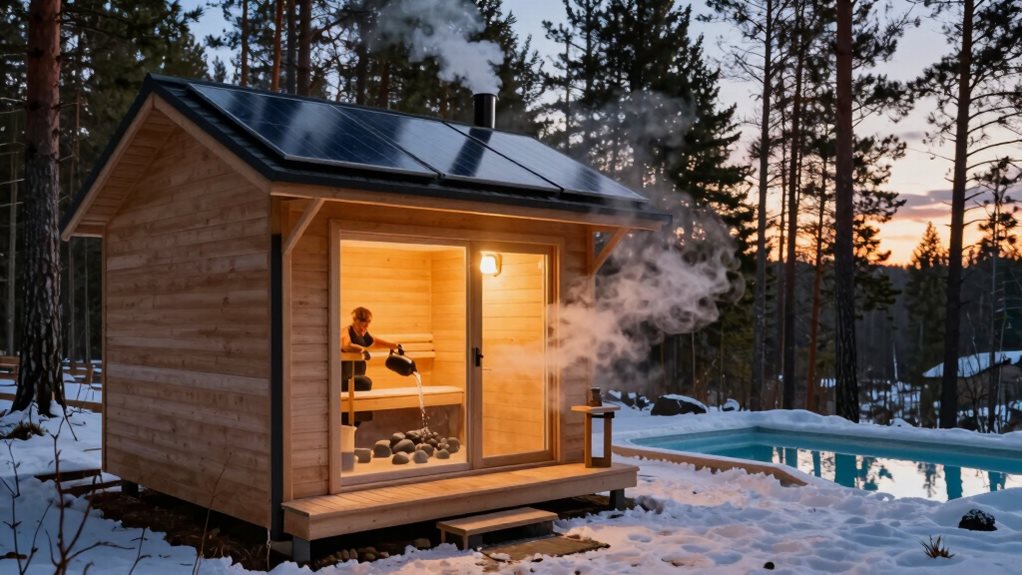
While many people view saunas as luxury relaxation spaces, they’re actually powerful tools for improving your overall health.
When you spend time in a sauna, your body undergoes remarkable changes. The deep heat penetrates your skin—your largest organ—flushing out toxins like pesticides, heavy metals, and nicotine through sweat.
You’ll burn up to 600 calories just sitting still, and regular sessions can reduce your body fat by 4% over four months.
Your immune system gets a boost too, with increased white blood cells that help fight off colds and infections. Your heart benefits as well, with reduced blood pressure and improved cardiovascular function.
The stress-melting effects lower cortisol levels and decrease inflammation, creating calm that extends well beyond your sauna session.
Self-Sufficiency in Wellness: The Off-Grid Advantage
Your off-grid sauna gives you complete independence from utility companies, allowing you to enjoy wellness rituals without worrying about power outages or rising electricity costs.
By harnessing solar energy through panels and battery systems, you’re creating a sustainable wellness practice that aligns with environmental values while reducing long-term expenses.
You’ll gain full control over your sauna environment, from temperature to steam quality, creating your ideal healing space anywhere from remote cabins to backyard retreats.
Independence From Utilities
Achieving true independence from utility companies represents one of the most compelling advantages of an off-grid sauna setup.
You’ll never receive another sauna-related electricity bill, freeing you from rising energy costs and grid outages.
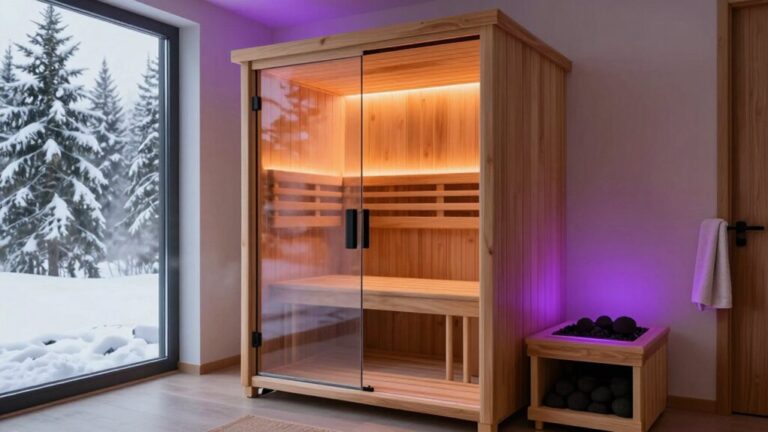
Infrared saunas offer the most practical off-grid solution, consuming just 1-3 kWh per hour compared to traditional electric saunas’ 6-9 kWh.
A small infrared unit might draw only 1.5 kW, while traditional electric heaters demand 3-10 kW—a notable difference when sizing solar panels and batteries. A 2-person infrared sauna with its balanced efficiency profile requires approximately 2.0 kW per hour, making it ideal for off-grid applications.
For complete independence, consider your options: a 2-4 kW solar array with batteries works well for regular infrared sessions, while wood-fired saunas eliminate electrical needs entirely using 10-15 kg of wood per session.
Propane heaters offer another alternative that doesn’t rely on the grid.
This energy independence is particularly valuable in places like Arizona, where the high electricity rates of 16 cents per kilowatt-hour make conventional sauna operation costly.
Sustainable Wellness Practice
Self-sufficiency in wellness becomes a reality when you create an off-grid sauna experience. By choosing sustainable materials like FSC-certified wood and natural stone, you’re building a retreat that respects the environment while nurturing your health.
Your off-grid sauna combines the best of both worlds: eco-friendly design with powerful wellness benefits. Solar panels can power electric models, while wood-fired options use renewable fuel and create that authentic heat that eases muscle pain and improves circulation.
You’ll find that proper insulation keeps heat in longer, reducing your overall energy needs.
The experience goes beyond just sweating it out. Surrounded by nature, your sauna sessions become multi-sensory healing experiences. The sounds of wildlife, fresh air, and natural light create a deeper level of relaxation than indoor facilities ever could.
Control Your Environment
When you step into the domain of off-grid sauna ownership, you gain complete control over your wellness environment.
You’re no longer tied to electric companies or limited by grid access; instead, you decide when and where to enjoy your sauna experience.
Modern systems like the Kirami FinVision® with its triple-pane glass and solar panels let you harness the sun’s power while maintaining privacy.
With smart controllers like the Xenio Combi CX110C or Saunum AirIQ, you can adjust temperatures precisely through a mobile app, even from a distance.
The beauty of off-grid designs is their versatility.
Whether you’re using solar panels, wood-burning options, or a combination with battery packs, you’ll enjoy consistent heat without utility bills.
Heat recovery systems even recycle warmth, making your sauna more efficient in remote locations.
For those seeking a middle ground, off-grid saunas can incorporate precision temperature management from 40°C to 110°C using quality controllers while remaining independent from traditional power grids.
Comparing Energy Options for Remote Sauna Use
Selecting the ideal energy source for your remote sauna involves weighing several factors that will impact both your experience and the environment. Each option offers distinct advantages depending on your situation.
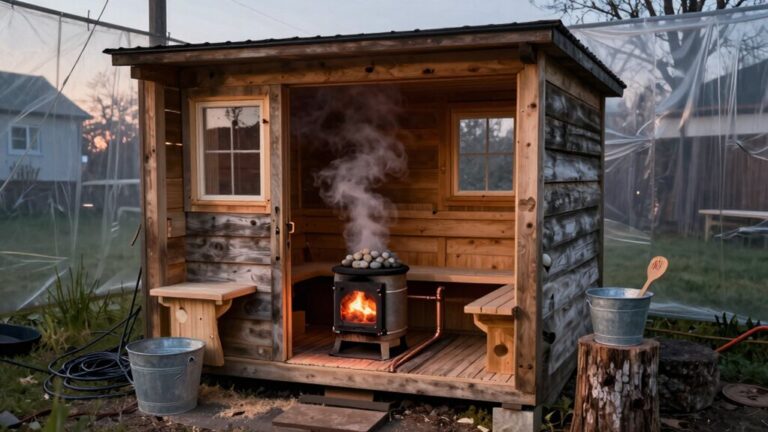
Wood-burning heaters provide that authentic sauna experience with natural aromas and intense heat, perfect for truly off-grid locations. However, you’ll need to manage wood supplies and clean ashes.
Propane delivers consistent performance with quick heat-up times without electricity, but requires safe storage and ventilation.
Electric heaters offer convenience and steady heat but aren’t suitable for locations without power access.
For eco-conscious sauna enthusiasts, solar power provides sustainability, especially in sunny regions. However, it is often best paired with wood or propane backup.
Consider hybrid systems that combine multiple energy sources for maximum flexibility and reliability through changing seasons and conditions.
From Box to Bliss: Assembly and Installation Overview
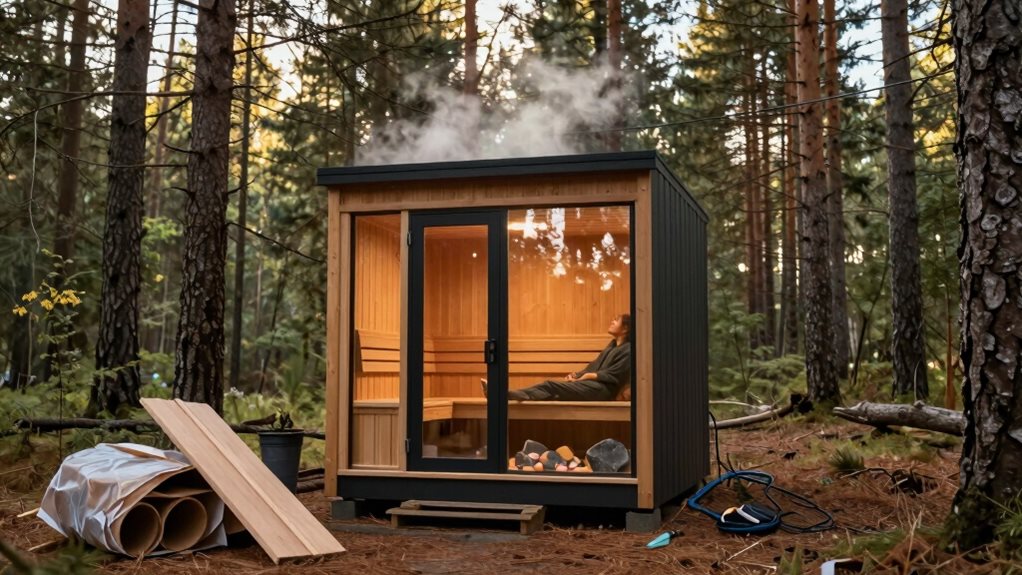
Building your off-grid sauna doesn’t need to be intimidating, even if you’re starting with just a kit and basic tools. Start with proper site preparation—either a concrete slab or crushed stone base with a vapor barrier extending beyond your sauna’s footprint.
For insulation, lay 2-inch rigid foam boards and seal gaps with expanding foam.
When assembling the barrel structure, maintain 1/8-inch spacing between cedar staves to allow for wood expansion. Your heater should be mounted 4 inches from any wood, 12 inches from seats, and 6 inches above the floor.
Remember, electrical connections must meet local codes—hire a professional if you’re unsure.
With two people working together, you can expect to complete your sauna in 6-10 hours, transforming a pile of parts into your personal relaxation retreat.
Connecting With Nature Through Outdoor Heat Therapy
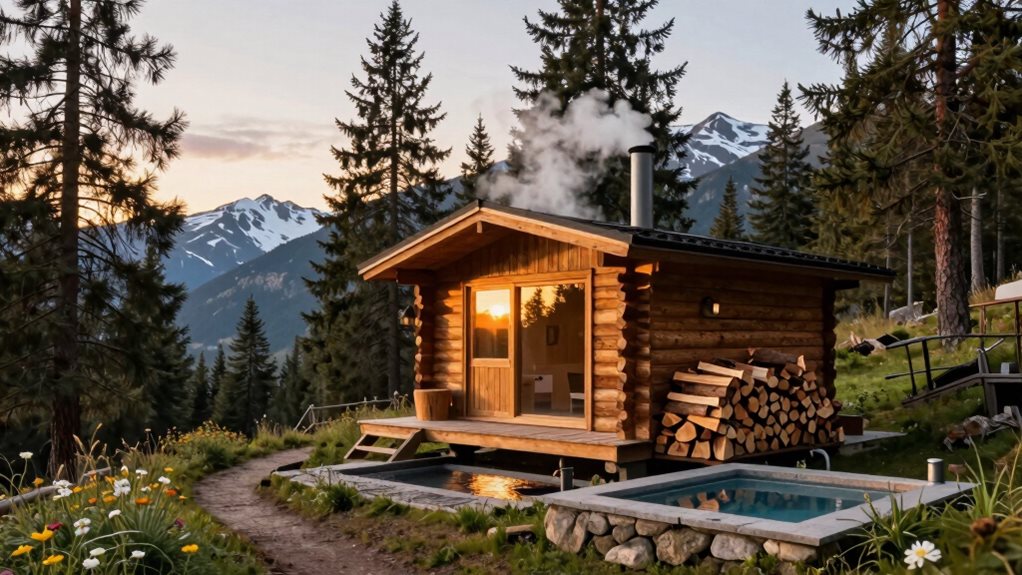
You’ll experience a unique healing connection when your sauna sits in nature’s hold, allowing all your senses to engage with the surrounding environment as you sweat.
The contrast between hot sauna sessions and cool outdoor air creates therapeutic benefits that vary with each season, from winter’s invigorating snow plunges to summer’s gentle evening breezes.
Your off-grid sauna becomes a natural observation point, where you can watch wildlife, listen to rainfall on the roof, or gaze at stars while your body recovers and rejuvenates. Temperatures typically reach 150°F or higher in traditional saunas, promoting increased blood circulation and muscle relaxation. Regular use of an outdoor sauna can significantly reduce your risk of death from cardiovascular disease while you reconnect with the natural world.
Sensory Healing Outdoors
While modern life often separates us from the natural world, outdoor saunas reconnect us through a powerful sensory experience that indoor facilities simply can’t match.
Stepping from intense heat into the open air creates a contrast that improves your body’s natural responses, boosting circulation and energy levels.
This immersive experience triggers a cascade of beneficial effects, including endorphin release that creates feelings of euphoria and remarkable pain reduction.
Your brain shifts into more relaxed theta and alpha wave patterns, improving mental clarity and cognitive performance.
The combination of heat therapy and nature exposure acts as a complete reset for your nervous system, dropping stress you’ve been carrying.
Many users report reaching a “totonou state” – a profound relaxation where physical tension dissolves and positive emotions flourish, creating a private wellness retreat in your own backyard.
Seasonal Therapeutic Contrasts
As the seasons shift throughout the year, outdoor saunas offer uniquely powerful therapeutic experiences that change with the natural environment around you.
In winter, your sauna becomes a sanctuary against seasonal depression, with the contrast between intense heat and crisp outdoor air boosting your mood naturally. This hot-cold protocol mimics the benefits of exercise, particularly helpful if you have mobility limitations.
Come summer, evening sauna sessions can deepen your sleep quality by supporting melatonin production. The regular practice of heating your body outdoors connects you with nature’s rhythms while activating longevity pathways in your cells.
Just 2-3 weekly sessions totaling about an hour in 80-100°C heat can markedly improve your resilience against stress and inflammation year-round.
Practical Considerations for Different Locations
Finding the perfect spot for your off-grid sauna requires careful planning that varies depending on your location’s unique characteristics.
The perfect off-grid sauna location demands thoughtful assessment based on your property’s distinct environmental features.
Whether you’re building on a remote cabin property or in your backyard, proper site preparation guarantees your sauna stands the test of time.
When selecting your sauna location, consider these crucial factors:
- Drainage – Choose higher ground with a natural slope away from the structure.
- Accessibility – Confirm 12-foot pathways for installation and maintenance.
- Foundation options – Select between concrete slabs, crushed stone, or pressure-treated joists.
- Power source – Plan for wood-burning heaters in truly remote areas or solar options with battery backup.
Remember that flat, stable ground capable of supporting at least 1,000 pounds is non-negotiable.
Your foundation should extend 12 inches beyond the sauna dimensions, creating a buffer against the elements.
Year-Round Use and Maintenance in Varying Climates
Your off-grid sauna requires specific maintenance throughout the changing seasons to guarantee its longevity and peak performance.
In winter, inspect stones for cracks, tighten stainless steel bands against snow loads, and regularly check electrical connections.
Spring calls for a gentle exterior wash-down to remove winter residue, while summer demands protection from sun damage through regular oil treatments.
Don’t forget to ventilate daily to prevent moisture buildup during humid months.
Fall preparation includes quarterly structural inspections for loose boards and checking electrical components before cold weather returns.
Year-round, you’ll need to clean after each use, deep clean weekly, and maintain proper ventilation.
Monthly wood inspections with fine-grit sanding will prevent splinters, while quarterly checks of the entire structure will catch potential issues before they worsen.
Frequently Asked Questions
What Permits Are Required for Installing an Off-Grid Sauna?
You’ll need building permits for permanent structures over 120 sq. ft., zoning approvals as an accessory building, and possibly chimney or stove permits if installing a wood-burning heater.
How Long Do Wood-Fired Sauna Stoves Typically Last?
Wood-fired sauna stoves typically last 15-20 years. You’ll get more longevity from your stove if you maintain it properly by replacing stones, cleaning ashes regularly, and using quality hardwood.
Can Children Safely Use Outdoor Saunas?
Yes, children can safely use outdoor saunas with proper supervision. Keep sessions shorter (5-10 minutes), temperatures lower (140-160°F), and never leave them unattended. Kids under 6 should avoid saunas entirely.
What’s the Resale Value of Portable Off-Grid Saunas?
Portable off-grid saunas retain 40-60% of their value. You’ll get better resale for premium brands with steel framing. Top-tier models originally costing $27,900 may fetch $11,000-$16,700 used.
Are There Insurance Implications for Outdoor Sauna Installations?
Yes, your homeowners insurance may require a custom rider for outdoor saunas. You’ll likely face higher premiums, and you must follow local regulations to maintain coverage validity.
Final Thoughts
You’ll find that an off-grid sauna offers both wellness benefits and a deeper connection to nature. Whether powered by wood, solar, or propane, your choice depends on location, budget, and environmental preferences. Consider your climate, available space, and maintenance commitment before investing. If you’re ready for self-sufficient relaxation that works year-round regardless of utility access, an off-grid sauna might be the perfect addition to your wellness routine.