
To prevent mold and odors in your sauna, focus on proper ventilation and controlling humidity. Position intake vents low and exhaust vents high to guarantee good airflow. Keep humidity between 5-30%, using a hygrometer to monitor levels. Choose moisture-resistant wood, like western red cedar, and clean regularly with mild cleaners. Also, guarantee good drainage to avoid water pooling. By following these tips, you can create a fresh and enjoyable sauna experience. There’s more to explore!
Proper Ventilation Techniques
When it comes to enjoying your sauna, proper ventilation is crucial for keeping the air fresh and mold-free. You’ll want to place the intake vent near the floor, close to the heater, to draw in cooler air efficiently. This setup encourages natural convection, which helps maintain a fresh airflow. For the exhaust, position it high on the opposite wall to let stale air escape easily. To balance pressure and guarantee seamless airflow, make certain the exhaust is larger than the intake. Proper ventilation also enhances comfort by ensuring efficient and even heat distribution. Additionally, using a sauna ventilation system can significantly improve overall air quality and reduce humidity levels. You can also use adjustable vents to control the air exchange during your sauna sessions, as proper airflow design enhances both comfort and sustainability.
Effective Humidity Control Measures
To keep your sauna fresh and mold-free, monitoring humidity levels is crucial. You should invest in a good digital hygrometer to track humidity accurately, aiming for that sweet spot between 5% and 30%. Plus, drying off surfaces right after your session can help prevent moisture buildup, making for a more enjoyable experience next time you step inside. Proper humidity levels are essential for enhancing comfort and preventing mold growth in your sauna, as humidity control protects the wooden structure from warping and mold growth. Additionally, incorporating a reliable sauna moisture control system can further enhance your humidity management efforts, ensuring a consistently pleasant environment.
Humidity Level Monitoring
Effective humidity level monitoring in a sauna is crucial for preventing mold and unpleasant odors, especially since nobody wants to step into a damp, musty space after a long day.
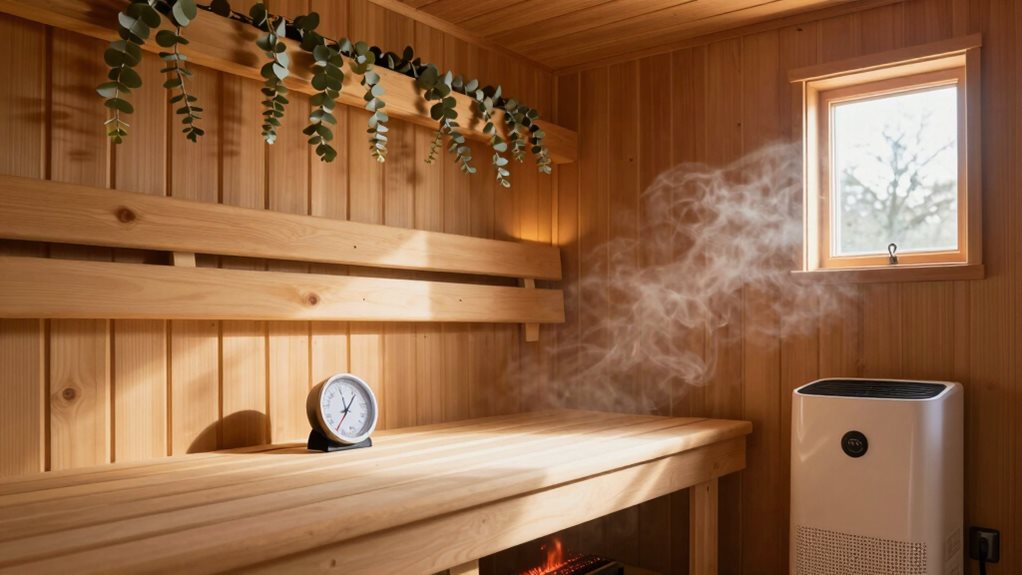
Start by choosing a sauna-rated hygrometer, placing it at eye level around 150 cm and away from steam jets, so it accurately reads the air. Continuous logging of relative humidity helps you spot trends, while regular calibration keeps your readings precise. Monitoring temperature and humidity is essential for comfort and can enhance your overall sauna experience. Additionally, maintaining the ideal humidity levels ensures that excessive moisture does not create a breeding ground for mold. A reliable sauna ventilation system kit can greatly assist in managing humidity effectively.
Integrating sensors with automated controls can adjust ventilation when humidity climbs too high. Establish action thresholds for humidity levels—like aiming for 5–25% in traditional saunas.
This proactive approach, coupled with thoughtful monitoring, guarantees a fresh and enjoyable sauna experience every time you step in.
Immediate Surface Drying
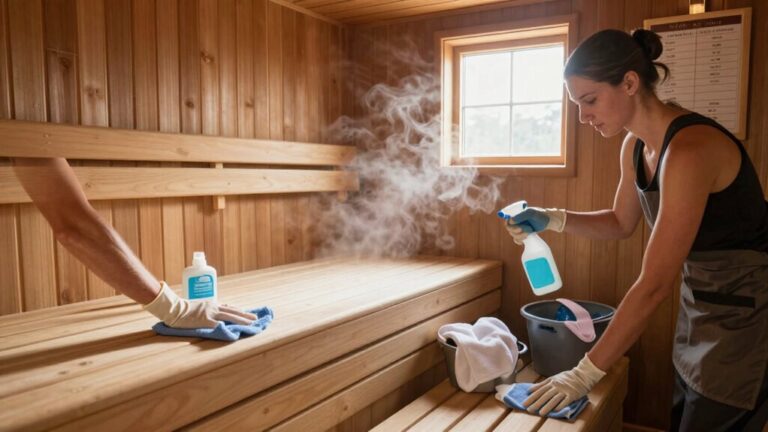
Sweaty benches and puddled floors are the final things you want to see after a relaxing sauna session. To keep your sauna dry, act quickly! Wipe down benches, backrests, and floors using absorbent towels right after you finish.
Squeegee any standing water promptly; this prevents lingering moisture, which can lead to mold. Don’t forget to inspect the heater area for excess water. Maintaining optimal humidity levels in your sauna is crucial to preventing mold growth and enhancing comfort. Proper installation of flashing in key areas can further protect your sauna from external moisture intrusion. Investing in sauna moisture protection products can also provide an additional layer of defense against humidity.
Run an exhaust fan for about 30–120 minutes after your session to speed up drying. If you have a dehumidifier, use it outside or in the anteroom.
Ultimately, choose high-quality wood for your benches to minimize water absorption. Following these steps guarantees a fresher sauna experience and keeps that mold away!
Choosing the Right Materials
When you’re setting up a sauna, choosing the right materials can make a big difference in preventing mold and unpleasant odors. Start with wood like western red cedar or hemlock, which have natural oils to fend off fungi and won’t off-gas when heated. Consider selecting wood with natural decay resistance to ensure longevity and prevent mold development. Avoid high-resin woods, like pine, near heaters, as they can trap moisture and cause odors. Additionally, it’s essential to maintain humidity levels between 30-50% when the sauna is not in use to further prevent mold growth. Using a natural wood sauna heater can also help regulate heat effectively, minimizing moisture buildup. Use breathable finishes, like wood wax oil, instead of thick varnishes that can seal in moisture. Also, don’t overlook insulation; opt for materials that resist mold without holding onto moisture. Finally, use stainless steel for hardware to prevent rust. By selecting wisely, you can create a sauna that’s not just cozy but also mold-free!
Importance of Regular Cleaning
Regular cleaning isn’t just a chore; it’s vital for keeping your sauna in top shape.
By sticking to a consistent cleaning schedule and using effective solutions, you can prevent dirt and odors from taking over.
Imagine your sauna as a cozy retreat; a little maintenance goes a long way in making it inviting and enjoyable every time you use it! Additionally, incorporating a sauna air purifier can greatly enhance the air quality and further reduce the presence of mold and odors.
Cleaning Schedule Consistency
Consistently cleaning your sauna is vital for keeping it fresh and inviting. When you stick to a regular cleaning schedule, you prevent mold and odors from taking root.
Here are some key practices you should follow:
- Wipe down benches, walls, and floorboards after each use to eliminate sweat and oils.
- Vacuum or sweep every few sessions to keep dust and debris at bay.
- Perform a thorough clean weekly, scrubbing surfaces with a gentle brush and mild detergent.
Effective Cleaning Solutions
To keep your sauna feeling fresh and inviting, using effective cleaning solutions is crucial.
Start with white vinegar; mix a cup with a gallon of warm water, which gently disinfects your sauna wood without harming it. Apply this solution to any moldy spots, let it sit for two minutes, then rinse.
For a deeper clean, try mild wood cleaners like Murphy Oil Soap, which keeps the wood’s integrity intact. If you need an extra kick, tea tree oil cleaners can penetrate wood pores to tackle mold and odors.
Remember, periodic deep cleaning, like sanding discolored areas, helps prevent mold recurrence.
With these solutions at hand, your sauna stays clean, hygienic, and ready for your next relaxation session!
Implementing Drainage Solutions
Have you ever wondered how important proper drainage is in preventing mold and odors in your sauna? Good drainage is crucial to guarantee water flows away quickly, protecting your sauna from pesky mold growth.
Here are key things to keep in mind:
- Confirm your floor slopes at least 1–2% toward the drain to prevent pooling.
- Place the drain at the lowest point, ideally near the door, for easy access and efficient draining.
- Use a corrosion-resistant drain made of materials like stainless steel to withstand the wet environment.
Additional Prevention Strategies
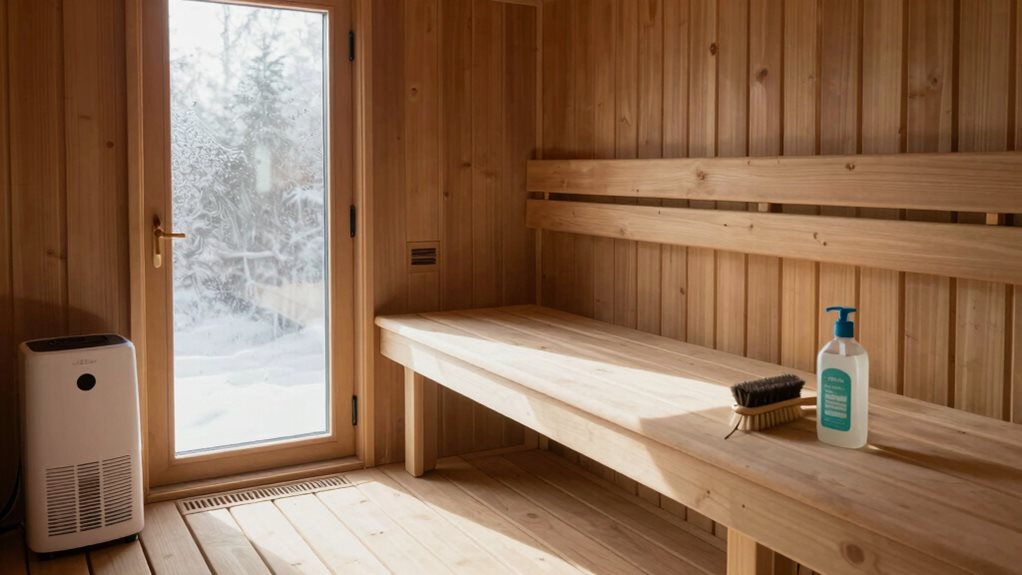
While you may think proper drainage is the only key to keeping your sauna free from mold and odors, there are several additional strategies that can make a big difference.
Start by optimizing ventilation; a well-ventilated sauna prevents stale air, which keeps mold at bay. Install vents at both the floor and ceiling, and always leave the door open for about 30 minutes after you’re done.
Monitor humidity levels with a hygrometer, aiming for 10-20% when in use and 30-50% otherwise. Use untreated woods like cedar or spruce to naturally resist mold. Additionally, consider using quality sauna insulation building materials to enhance moisture resistance and thermal efficiency.
Clean regularly with mild soap and consider natural remedies like tea tree oil, which can effectively combat unwanted growth. Your sauna will thank you!
Frequently Asked Questions
How Often Should I Inspect My Sauna for Mold?
You should inspect your sauna for mold after each use, weekly for vents and hidden areas, monthly for thorough checks, quarterly for detailed documentation, and annually for professional assessments, especially after heavy usage or water intrusion.
Can I Use Essential Oils in My Sauna?
Yes, you can use vital oils in your sauna. Just remember to dilute them properly and avoid direct skin application. Always prioritize safety to enjoy the benefits without any risks or irritation.
Are There Specific Plants to Avoid in Sauna Areas?
Yes, avoid dense foliage plants, deciduous species, and those that produce strong odors or attract pests. Steer clear of high-humidity plants and any that can harbor mold or degrade air quality in sauna areas.
What Are Signs of Poor Ventilation in a Sauna?
You’ll notice signs of poor ventilation in your sauna when air feels stale, you experience dizziness or headaches, temperatures unevenly distribute, or persistent moisture leads to odors and visible condensation on surfaces.
Is Mold Harmful to Health When Exposed?
Yes, mold can be harmful to your health. When exposed, you might experience respiratory issues, allergic reactions, and other symptoms like headaches or fatigue. It’s essential to address mold to protect your wellbeing.
Final Thoughts
By following these tips, you can keep your sauna free from mold and odors, guaranteeing a pleasant experience every time you use it. Remember, good ventilation and humidity control are your best friends. Choose the right materials, stay on top of cleaning, and don’t forget about drainage! With a little effort and these simple strategies, you can create a welcoming, fresh space to relax. Enjoy your sauna time—breathe easy and soak in the warmth!