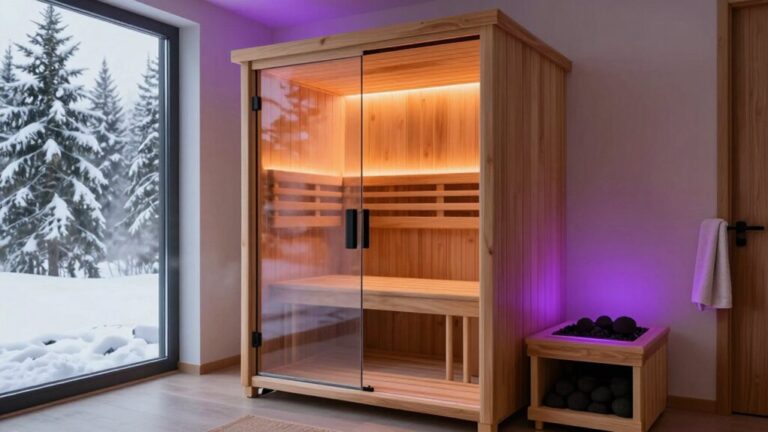
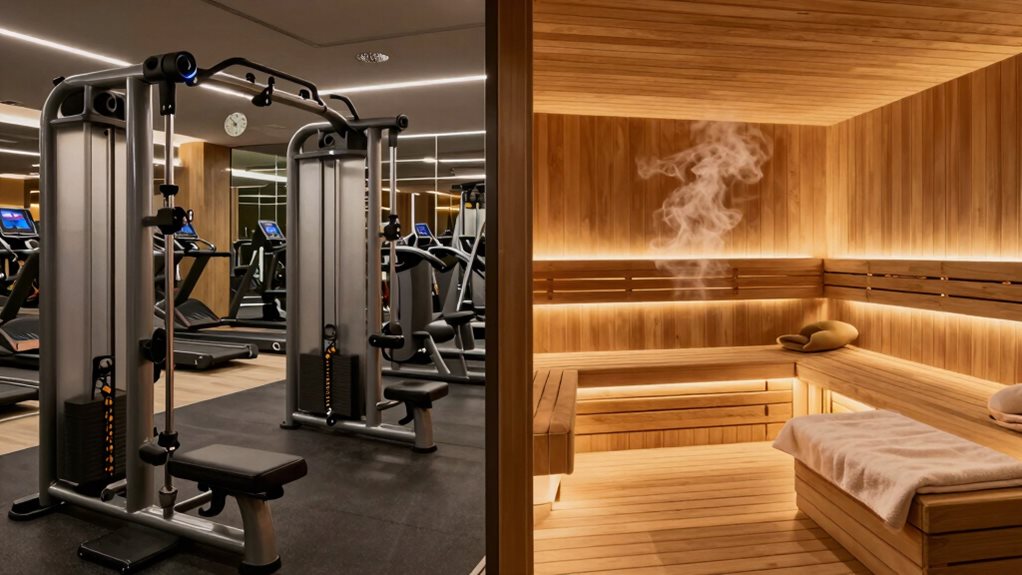

In today’s fitness scene, the choice between 24/7 gym access and sauna amenities is all about personal preference. You can hit the gym whenever it fits your schedule, perfect for night owls or busy parents. On the flip side, saunas offer fantastic recovery benefits, like easing muscle soreness and reducing stress. Plus, gym memberships often cost less than standalone spa visits. Want to know more about how these options stack up? Keep exploring the exciting world of fitness!
The Allure of 24/7 Gym Access
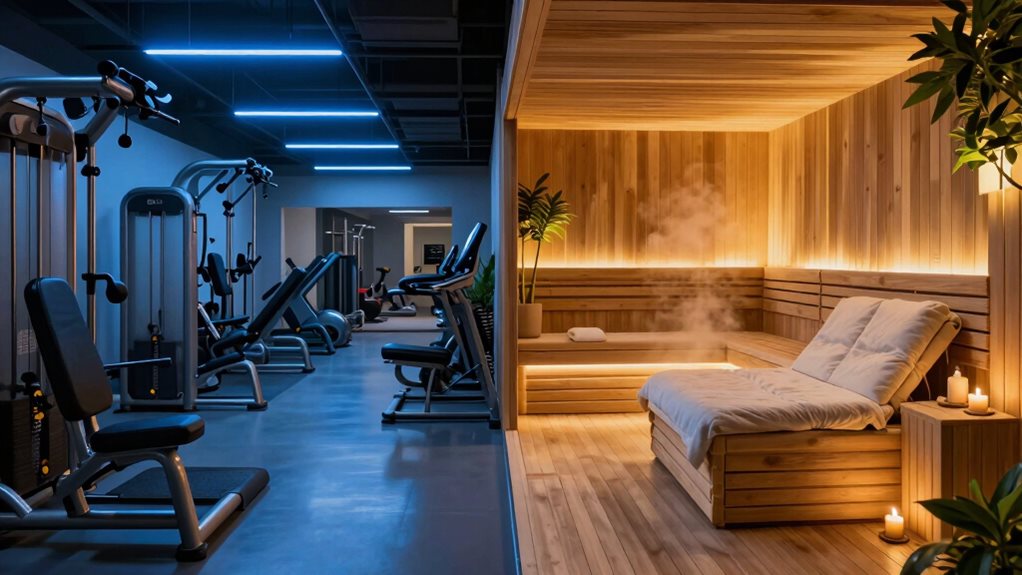
When you think about fitting exercise into your busy life, having access to a gym 24/7 can feel like a game changer.
Imagine being able to work out right after your shift ends or fitting in a session while the kids nap. It allows you to tailor your workouts to when you feel most energized, whether you’re an early bird or a night owl.
You won’t have to worry about crowds either, as off-peak hours mean less waiting for machines, helping you stay efficient and focused.
Plus, with the option to book personal training sessions at unconventional times, you can get specialized guidance when it suits you best.
This flexibility makes staying fit a breeze, no matter your schedule!
Understanding Member Preferences: Sauna Usage
While you might think of saunas as just a spot to unwind after a tough workout, they’re much more than that for many gym members.
For some, saunas are a key part of their recovery routine, especially after strength training. You might notice that people use them anywhere from once a month to several times a week.
Curiously, middle-aged men tend to use saunas more often, possibly due to their health benefits, like stress relief and muscle soreness reduction.
Middle-aged men particularly benefit from saunas, enjoying stress relief and reduced muscle soreness.
Plus, many enjoy combining sauna sessions with cooling off, making for a revitalizing experience.
Your preferences might vary, but knowing how popular saunas are can help you appreciate the many reasons members flock to them!
Health and Recovery Benefits of Sauna Sessions
Sauna sessions offer a variety of health and recovery benefits that can improve your workout routine and overall well-being.
Regular visits to a sauna can lower your risk of heart issues and help you live longer—research shows that those who use saunas four to seven times a week cut their risk of sudden cardiac events by up to 83%! Plus, regular sauna use may correlate with a lower cardiovascular risk. Additionally, sauna bathing mimics the effects of low to moderate exercise on the heart, enhancing your overall fitness levels.
After working out, a quick sauna break can ease muscle soreness and boost your recovery. It helps relax tense muscles and flush out metabolic waste.
You might even notice improvements in your blood pressure and lipid levels!
Cost Comparisons: Gyms vs. Standalone Spas
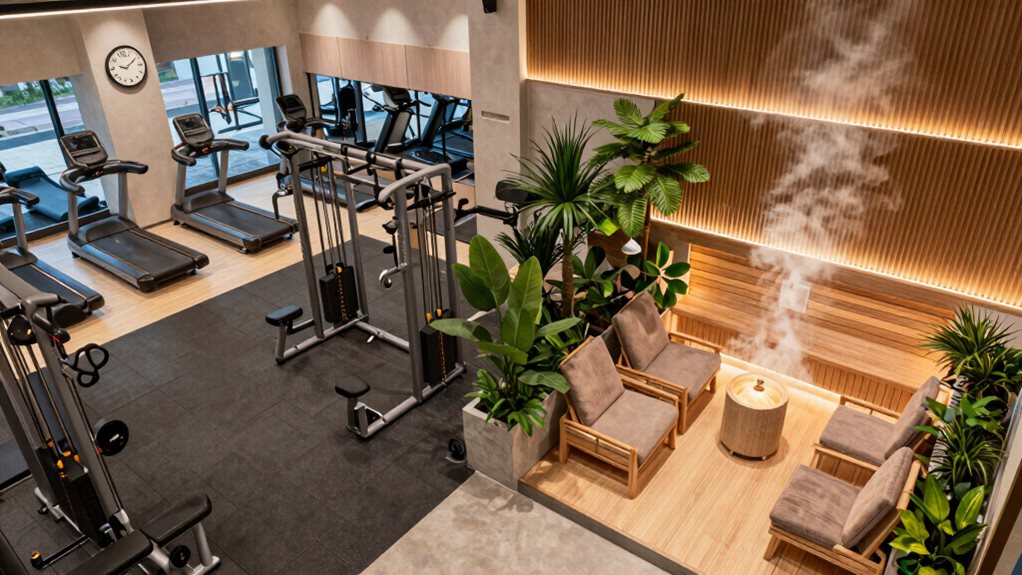
Choosing between a gym and a standalone spa can feel a bit like picking between apples and oranges; both have their perks, but they serve different needs.
At a gym, memberships typically range from $40 to $70 per month, which often includes sauna access.
On the other hand, standalone spas charge around $15 to $50 for a single sauna session, but you pay each time you visit. This can add up quickly, limiting how often you go.
Plus, if you fancy swim spas, they start at $15,000, and that doesn’t include installation costs!
While gyms offer budget options, standalone spas can get pricey if you want regular access.
It’s all about what fits your lifestyle and budget best!
Enhancing the Member Experience Through Amenities
When you think about what makes a gym membership truly worthwhile, amenities play a crucial role in improving your overall experience.
Having access to spa-like features can keep you coming back for more. Here’s how these amenities elevate your gym life:
- Increases Value: Facilities with saunas and spas often attract members looking for value in wellness services.
- Encourages Visits: Amenities like steam rooms boost incidental visits, making it easier to form a habit of exercising regularly.
- Boosts Satisfaction: A clean, well-maintained environment makes your time at the gym more enjoyable, driving you to return.
With these thoughtful touches, your gym can transform into a haven for relaxation and rejuvenation, ultimately leading to a more satisfying fitness experience.
Frequently Asked Questions
What Types of Saunas Are Commonly Available in Gyms?
You’ll commonly find traditional saunas, infrared saunas, steam saunas, and hybrid saunas in gyms. Each type offers unique benefits, from intense sweating to warmth and relaxation, catering to various preferences and recovery needs.
How Can I Maintain Sauna Hygiene at Home?
To maintain sauna hygiene at home, shower before use, sit on a fresh towel, wipe surfaces after sessions, ventilate afterwards, and regularly clean benches and rocks to prevent buildup and guarantee safety.
Are There Specific Safety Guidelines for Sauna Use?
Yes, there are safety guidelines for sauna use. Limit sessions to 15-20 minutes, stay hydrated, avoid alcohol, and consult a physician if you have any medical conditions. Exit immediately if you feel dizzy or unwell.
How Often Should I Use the Sauna for Best Results?
You should use the sauna 2-3 times a week for ideal benefits. Gradually increase your sessions, starting with 15-20 minutes, to improve cardiovascular health and overall well-being without overwhelming your body.
Can Saunas Be Used With Other Recovery Tools Like Ice Baths?
Yes, you can definitely use saunas with ice baths! Alternating between them boosts recovery, circulation, and muscle repair. Just make sure to follow proper protocols for maximum benefits and always consult a doctor beforehand.
Final Thoughts
In the end, choosing between 24/7 gym access and amazing sauna and spa amenities really depends on what you value most. If you love working out whenever you want, a gym open all day is fantastic. But if relaxation and recovery call to you, those spa features can improve your experience. Ultimately, striking a balance between convenience and comfort can help you stay motivated and enjoy your fitness path. So, what’s your priority—flexibility or relaxation?