
Whether you take clothes off in a sauna depends on where you’re located and the facility’s rules. In Finland and Sweden, complete nudity is the norm, while North American public saunas typically expect swimwear or towel wraps. For best health benefits, wearing minimal, breathable clothing aids thermoregulation. Always check posted guidelines, shower before entering, and sit on a clean towel regardless of your attire choice. Different sauna types and temperatures influence what clothing options will keep you most comfortable.
Cultural Differences in Sauna Attire Around the World
Anyone who’s traveled internationally might be surprised to discover that what you wear (or don’t wear) in a sauna varies dramatically depending on where you’re in the world.
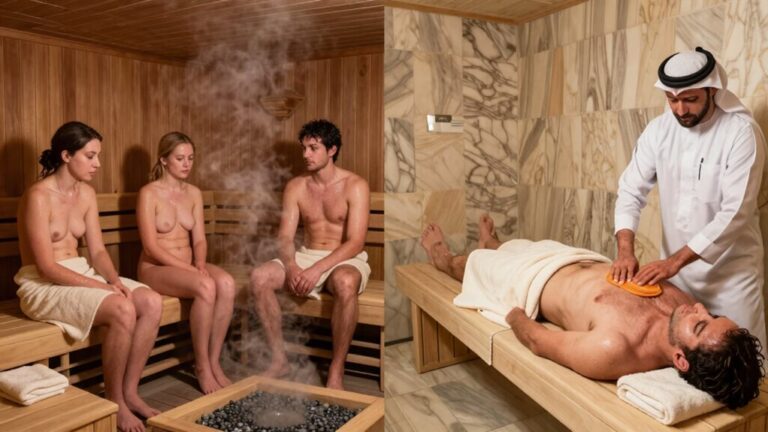
In Finland and Sweden, complete nudity is the cultural norm, with towels used for hygiene rather than coverage. Germans and Austrians often prohibit swimwear entirely, considering it unhygienic in their “no-textile” saunas. German sauna etiquette specifically requires visitors to sit on a towel while using the facilities.
Head east to Japan or Korea, and you’ll find nudity required in gender-segregated bathing areas, with special uniforms provided for mixed spaces.
Meanwhile, Russian banyas emphasize heat protection with felt hats rather than clothing.
If you’re from North America or traveling to tourist destinations, you’ll likely encounter more conservative policies where swimwear is expected or required, especially in mixed-gender settings. In Eastern Europe, particularly Estonia, traditional saunas are deeply connected to national identity and feature specific rituals for important life events.
Standard Practices in Public vs. Private Sauna Facilities
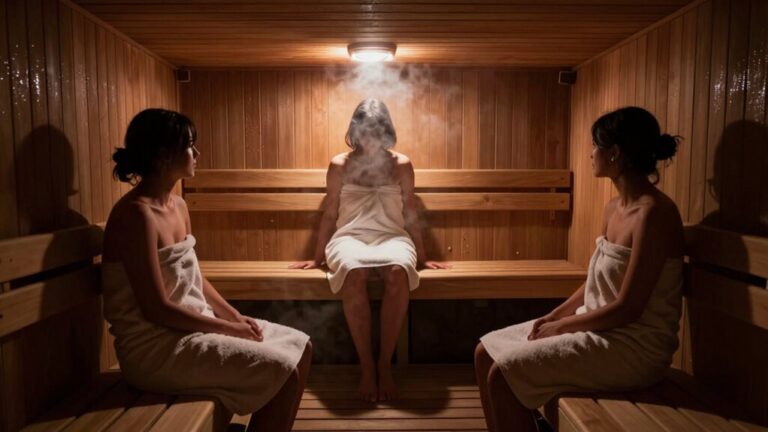
You’ll find that public saunas typically enforce clear dress codes requiring swimwear or towel wraps, along with posted rules about hygiene and proper sauna etiquette. Remember to shower before entering to maintain cleanliness and respect for others using the facility.
In contrast, private saunas or rental facilities often allow more flexibility with attire, sometimes permitting nude use when renting the entire space for yourself or your group. Scandinavian traditions particularly emphasize nude sauna bathing as part of their cultural practices for complete relaxation and authentic experience.
Gender-segregated saunas follow their own norms, with men’s facilities more commonly allowing nude use while women’s sections might offer both clothed and unclothed options depending on the specific establishment’s policies.
Public Facility Requirements
Three key factors distinguish public sauna facilities from private ones: established dress codes, hygiene protocols, and cultural adaptations.
When you visit a public sauna, you’ll need to follow posted rules about attire—most North American and mixed-gender facilities require swimwear or towels, while Scandinavian or gender-separated saunas may permit nudity. Many traditional Finnish saunas embrace nude bathing as standard practice. Excessive jewelry should be removed before entering as metals can heat up and potentially cause burns.
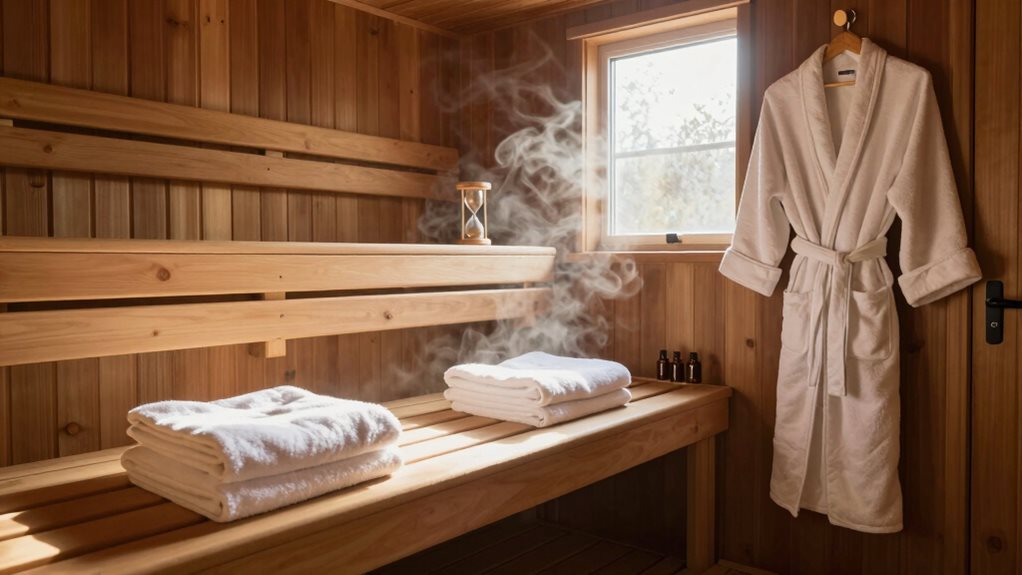
You’ll always need to sit on a clean towel to prevent sweat transfer, regardless of what you’re wearing. Most facilities require showering before entry and prohibit street clothes, heavy fabrics, and footwear for hygiene and safety reasons.
Remember that the rules vary geographically—European spas might allow nudity during same-sex sessions but require swimwear during mixed sessions. Always check facility policies online or on-site before your visit to avoid any awkward situations.
Private Rental Rules
While public saunas follow standardized policies, private rentals operate with a distinct set of rules that offer more flexibility but require clear communication.
When booking a private sauna, you’ll often find options for “clothing-optional” or “swimsuit-required” sessions, allowing you to choose what feels most comfortable. Many hosts require you to acknowledge their specific policies during reservation. Temperature settings may also vary, with traditional wood-paneled saunas reaching higher temperatures than infrared options. Infrared saunas typically operate at 110°F – 150°F but follow the same attire guidelines as traditional saunas.
- Hygiene expectations: Always sit on a towel to protect surfaces, shower before entering, and handle provided linens according to instructions.
- Privacy boundaries: No photography is permitted, sexual activity is prohibited, and all guests must consent to the attire policy.
- Booking considerations: Pay attention to occupancy limits, optional add-ons like towel kits, and potential cleaning fees that may apply if rules aren’t followed.
Gender-Segregated Norms
Gender-segregated norms in sauna facilities vary considerably across cultures, reflecting deep-rooted traditions and social expectations about modesty, hygiene, and communal bathing.
In Korean spas, you’ll experience strict separation of men and women in wet areas where nudity is required, while providing uniforms for co-ed spaces.
This contrasts with German practices, where mixed-gender nude saunas are standard, though some venues offer swimwear options.
Many modern spas are increasing options for gender-specific spaces to address concerns about comfort and safety, particularly for female guests.
Finnish facilities often accept nudity as non-sexual, with varying policies on mixed sessions, while Swedish saunas frequently maintain gender separation, particularly in waterside facilities.
Japanese tradition has consistently maintained gender segregation since their sauna culture began.
Traditional Korean philosophy views the practice of communal bathing as culturally significant, emphasizing the healing powers of water and heat.
When traveling abroad, you’ll want to research local customs beforehand, as expectations about clothing and gender mixing differ greatly between countries and even between individual facilities.
Health and Hygiene Benefits of Proper Sauna Clothing Choices
Choosing the right clothing for sauna use can dramatically impact your health benefits beyond simple relaxation.
The clothing you choose for sauna sessions directly influences health outcomes, extending far beyond mere comfort.
Wearing breathable, minimal clothing allows your body to properly thermoregulate, improving cardiovascular enhancements similar to moderate exercise. Studies show that proper sauna use correlates with a remarkable 40% reduction in all-cause mortality risk and notable improvements in blood pressure.
For maximum health benefits from your sauna experience:
- Opt for cotton or natural fiber towels rather than synthetic materials to allow proper sweat evaporation.
- Remove jewelry and watches that can heat up and potentially burn skin while also blocking full-body sweating benefits.
- Consider using a clean, personal towel beneath you for hygiene purposes, as this prevents direct contact with surfaces used by others.
What to Wear Based on Different Sauna Types
When choosing what to wear in a sauna, you’ll need to reflect on whether you’re entering an infrared or traditional Finnish sauna, as the temperature differences considerably impact your clothing choices.
In infrared saunas, which operate at lower temperatures (104-140°F), you can comfortably wear light cotton clothing or athletic wear, while traditional saunas reaching up to 195°F typically call for minimal coverage like a towel wrap or swimsuit to allow effective sweating.
Always check your facility’s specific rules before entering, as many public and mixed-gender saunas require swimwear, while private or gender-separated facilities might permit nudity with a towel for sitting.
Infrared Versus Traditional
The type of sauna you’re using dramatically affects what clothing options work best for your session.
Infrared saunas require more skin exposure since the rays need to directly penetrate your skin, while traditional saunas heat the air around you, making clothing choices more flexible.
In both environments, natural fabrics work best if you choose to wear anything at all:
- Infrared sauna – Going nude or wearing minimal cotton clothing maximizes the therapeutic benefits as clothing can block the infrared rays from reaching your skin.
- Traditional sauna – A simple towel wrap is standard, though loose cotton shorts or swimwear are acceptable since the hot air will still circulate effectively.
- Both types – Avoid synthetic materials, tight clothing, and anything with metal components that could heat up and cause burns.
Facility Rules Matter
Although personal preferences matter, facility rules will ultimately dictate what you can wear during your sauna session. Different facilities enforce specific dress codes based on their type and local culture.
In traditional Finnish saunas, nudity might be acceptable or even encouraged, especially in single-gender sessions. However, most public facilities, gyms, and spas require you to wear swimwear or wrap yourself in a towel. This is particularly true in co-ed environments where modesty is prioritized.
Pay attention to posted signs – some facilities have different rules for different sauna types. Dry saunas often permit minimal covering, while steam rooms typically expect swimwear. Infrared saunas may allow light clothing.
Whatever the rule, always sit on a towel for hygiene, and avoid synthetic fabrics that can melt or release fumes.
Understanding Facility Rules and Posted Guidelines
Before stepping into any sauna environment, you’ll need to familiarize yourself with the specific rules posted at each facility, as these guidelines aren’t universal.
Most establishments clearly display their dress code expectations at entrances or changing areas. Pay attention to these signs, as they’ll tell you whether you need a swimsuit, towel, or specific facility-provided garments.
Rules typically vary between gender-separated and coed areas within the same facility.
Here’s what to look for:
- Required attire – Some places mandate swimwear in all areas, while others allow nudity in gender-separated spaces only.
- Towel policies – Many facilities require you to sit on a towel regardless of whether you’re clothed.
- Hygiene requirements – Most places require showering before entry and prohibit oils, lotions, or jewelry.
Sauna Etiquette: Respecting Others While Staying Comfortable
While steering through the world of sauna etiquette, you’ll quickly discover that respecting others’ comfort is just as important as maintaining your own.
Different regions have established varying norms—Scandinavians might be perfectly comfortable with nudity in traditional settings, while North Americans typically expect swimwear in public facilities.
Always follow the lead of locals when visiting unfamiliar places. If you’re in a Central European spa complex, bring a swimsuit or towel as that’s likely required. When in doubt, simply ask staff about expectations or look for posted guidelines.
When in doubt about sauna customs, follow local practices and don’t hesitate to ask staff for guidance.
Remember that personal space matters regardless of attire. Don’t spread out excessively on benches, avoid staring at others, and keep conversation volumes moderate.
The golden rule applies perfectly to saunas—treat others with the same respect you’d appreciate.
The Science Behind Clothing Materials and Heat Exposure
The clothing choice you make for a sauna session directly affects your body’s heat experience through complex physical processes.
Materials like cotton absorb your sweat but retain it against your skin, potentially making you feel clammy. Linen, with its superior moisture transport rate, can help prevent that uncomfortable stickiness while maintaining airflow.
Meanwhile, synthetic fabrics like polyester and nylon offer higher thermal resistance, trapping heat closer to your body.
Here’s what happens with different fabrics in sauna conditions:
- High thermal conductivity fabrics (like linen) help dissipate excess body heat, allowing for a more comfortable experience.
- Materials with low vapor transmission rates (like cotton) create moisture buildup that interferes with your body’s natural cooling.
- Synthetic fabrics often restrict airflow and trap heat, potentially intensifying the sauna experience beyond comfort levels.
Legal Considerations and Privacy Standards in Communal Settings
Different cultures have established vastly different rules about what you’re allowed to wear—or not wear—in a sauna environment.
In the US and North America, most public facilities require swimwear or towels, with strict enforcement of these policies. You’ll need to check specific rules before visiting, as some places like MIT even ban workout clothes and street shoes.
European standards, particularly in Germany, often prohibit swimwear entirely, considering it unhygienic.
Meanwhile, Nordic countries typically expect nudity as the default, especially in Finland and Sweden.
Legal enforcement varies by location, with facilities strictly following local laws.
You’ll find that privacy concerns are addressed through gender-segregated spaces, ladies-only days, and proper towel etiquette.
When in doubt, respect the prevailing customs and ask an attendant.
Frequently Asked Questions
Can Children Use Saunas and What Should They Wear?
Children over 6 can use saunas briefly at lower temperatures with adult supervision. They should wear loose cotton clothes and sit on a towel. Never leave them unattended and make certain they’re properly hydrated.
How Do You Politely Decline a Nude Sauna Invitation?
You can politely decline by saying “I’d prefer to wear a swimsuit/towel” or “Thanks for the invitation, but I’m not comfortable with nudity.” Offer to join later or suggest an alternative social activity instead.
Are There Medical Conditions That Require Specific Sauna Attire?
Yes, you’ll need specific attire if you have skin conditions, fresh tattoos, or radiation-treated skin. Cotton is best for sensitive skin, while protective coverings are crucial for wounds or skin disorders.
Does Sauna Clothing Choice Affect Detoxification or Weight Loss?
Yes, clothing affects both processes. Wearing less promotes natural sweating for modest toxin elimination. Heat-trapping garments increase water loss but don’t improve true detoxification or fat burning—they just accelerate temporary water weight loss.
When Traveling, How Can I Research Local Sauna Customs Beforehand?
You can research local sauna customs by searching “[country] sauna etiquette” online, checking spa websites, reading travel forums, contacting facilities directly, and using travel apps that highlight cultural norms for each destination.
Final Thoughts
You’ll find that sauna clothing practices vary widely around the world. Always check your facility’s rules before entering, as some require swimwear while others permit or even expect nudity. Remember to bring a clean towel to sit on regardless of what you’re wearing. Whatever you choose, prioritize comfort, hygiene, and respect for others. Making informed choices about your sauna attire guarantees you’ll enjoy the health benefits while following proper etiquette.