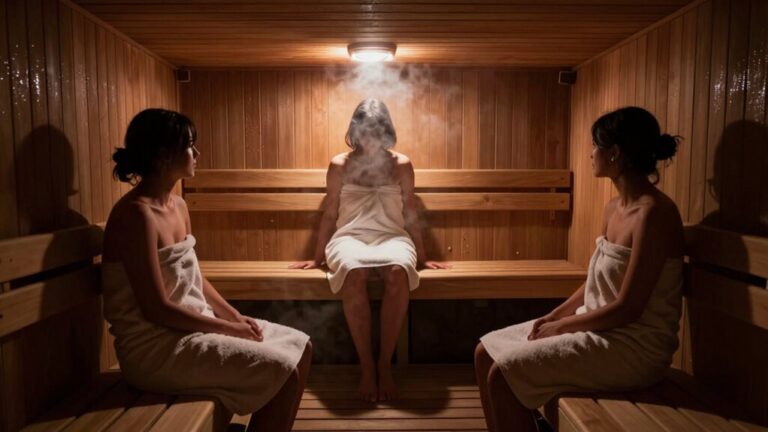
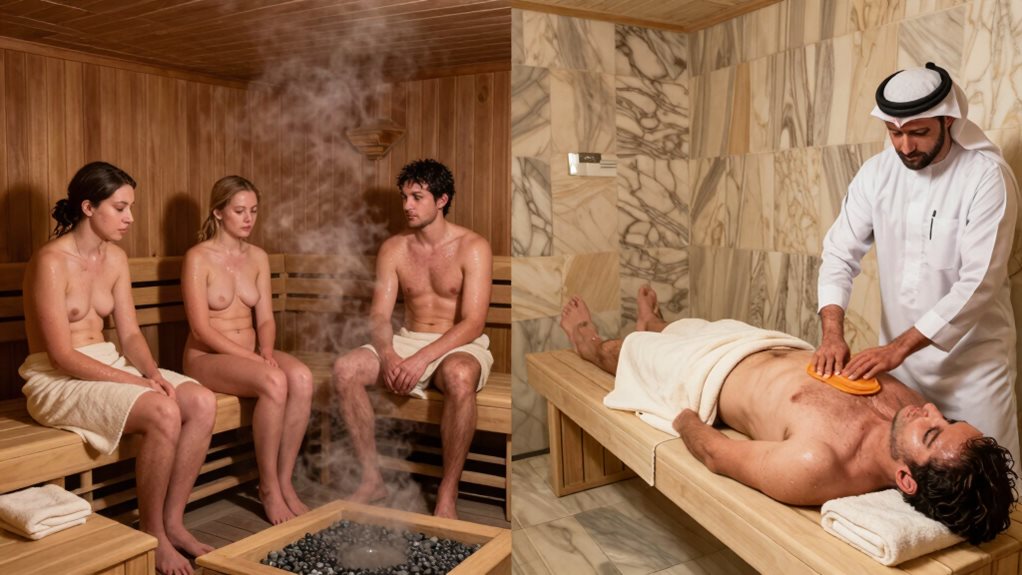

Sauna etiquette varies dramatically across cultures. In Nordic countries, nudity is normal and silence is valued, while Russian banyas emphasize social interaction and venik treatments. Germanic traditions feature formal Aufguss ceremonies conducted by staff, and American customs prioritize modesty with swimwear requirements. Everywhere, you’ll need to shower before entering and respect personal space. Each region’s unique customs reflect deeper cultural values and histories that shape these heated experiences.
Nordic Sauna Traditions: Finland and Estonia
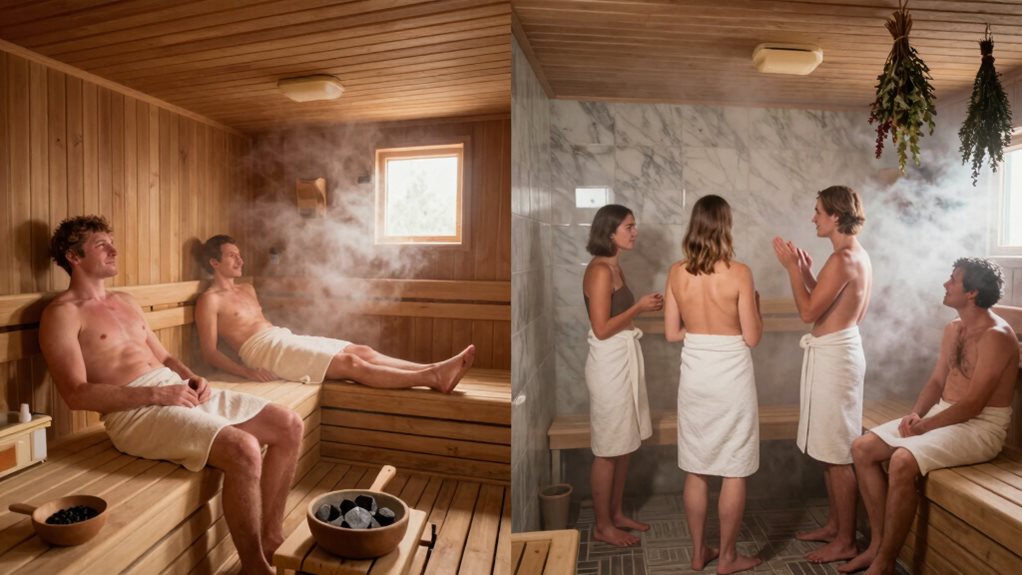
While tracing back centuries through medieval texts and cultural folklore, the sauna traditions of Finland and Estonia stand as living monuments to Nordic heritage.
Sauna traditions embody the soul of Nordic culture, preserved through generations of steam-bathed wisdom.
You’ll find these cultures treat saunas as sacred spaces—Finns describe them as “churches of nature” where both body and mind are cleansed.
In both countries, you’ll encounter wood-heated, smoke, and electric saunas, though the smoke sauna (savusauna) represents the oldest tradition.
When you visit, you’ll experience löyly—the steam released when water hits hot stones.
Temperatures typically range from 65-85°C in traditional smoke saunas.
Russian Banya Culture and Social Practices
In the Russian banya, you’ll experience the therapeutic venik ritual, where bundles of birch or oak branches are used to whip the skin, improving circulation and creating a natural exfoliation.
Unlike the quiet Finnish sauna, the banya encourages lively conversation, storytelling, and even informal business discussions among friends and strangers alike.
When you join a traditional banya session, you’ll follow a rhythm of intense heat, cold plunges, and rest periods, all while participating in a centuries-old social tradition that has remained central to Russian culture.
Venik Ritual Benefits
The traditional venik ritual stands at the heart of authentic Russian banya experiences, offering far more than mere relaxation.
When you lie on the bench after warming in the steam room, the banshik uses branches soaked in hot water to sweep and tap your body, creating a therapeutic symphony of sensation and benefit.
This ancient practice delivers multiple health advantages:
- Improves circulation by dilating capillaries, which helps deliver oxygen throughout your body and removes waste products like lactic acid
- Detoxifies through intense sweating while the birch oils and antioxidants cleanse and rejuvenate your skin
- Boosts your immune system by mimicking fever conditions and lowering stress hormones while releasing feel-good endorphins
The combination of heat, aromatic oils, and rhythmic massage creates a holistic treatment that’s been valued for centuries for its restorative powers.
Steam Socializing Traditions
Russian banya culture extends far beyond mere cleansing, creating a richly textured social institution where relationships flourish amid rising steam.
When you visit a banya, you’ll notice entire families gathering to share stories and local news between steam sessions. In the predbannik (resting area), you’ll find people relaxing, eating snacks, and enjoying tea or sometimes beer.
The experience follows a ritual pattern: warm up, steam in the parilka, cool down, and rest—repeated several times. You’ll hear phrases like “S legkim parom” (“With light steam”) exchanged as people come and go.
While public banyas typically separate by gender, the atmosphere encourages open conversation and mutual assistance. Wearing a felt hat and sitting on your personal towel shows respect for tradition and shared spaces.
Germanic Sauna Etiquette and Protocols
Germanic sauna traditions welcome nudity as both practical and culturally normal, creating an environment where you’ll typically find unisex facilities requiring complete nudity inside sauna rooms.
Unlike other cultures, Germans view swimwear as unhygienic in saunas, preferring a clean, textile-free experience.
When visiting a German sauna, remember these crucial protocols:
- Always shower thoroughly before entering any sauna area to maintain hygiene
- Bring two towels—one to sit on (no bare skin should touch wooden surfaces) and another for drying off
- Keep quiet and respect others’ space; the sauna is for relaxation, not socializing
The typical sauna experience involves multiple short sessions (10-20 minutes) followed by cooling periods.
During Aufguss ceremonies, only staff perform water pouring and scent rituals, directing the experience for all participants.
Western Approaches: American Sauna Customs
You’ll notice American saunas prioritize privacy and modesty, with users typically wearing gym shorts or wrapping towels around their waists.
The experience tends to be more subdued than in European traditions, with lower temperatures and shorter sessions that fit into busy gym routines.
Unlike Finnish or Germanic customs, American sauna culture emphasizes personal space and minimal conversation, creating a more individualistic approach to this wellness practice.
Privacy Over Community
Unlike their European counterparts, American sauna culture places a premium on privacy and personal space rather than communal experience.
When you enter an American sauna, you’ll notice a distinctly individual approach where personal boundaries are carefully maintained. Most patrons follow unspoken rules that preserve the solitary nature of their relaxation time.
- Maintain a comfortable distance from others, choosing spots that maximize personal space when possible
- Keep conversations to a minimum or avoid them altogether, as silence is the preferred soundtrack
- Enter and exit quietly to avoid disrupting others’ peaceful experience
These practices reflect America’s emphasis on individual wellness rather than the social bonding that characterizes traditional sauna cultures.
While Europeans might chat freely in steam rooms, Americans typically prefer to unwind in peaceful isolation.
Modest Heat Experience
American sauna practices reflect a particularly different approach to heat exposure compared to their European counterparts.
You’ll find most U.S. facilities encourage shorter sessions of just 5-15 minutes per round, with cooling breaks in between. This contrasts sharply with traditional Finnish practices where longer, hotter sessions are the norm.
When visiting American saunas, you’ll notice posted guidelines recommending moderate temperatures and emphasizing hydration before and after your session.
Many facilities even provide timers or clocks to help you track your time. After exercising, a sauna session is commonly suggested for muscle recovery rather than as pre-workout preparation.
This conservative approach prioritizes comfort and accessibility, making the experience less intense but more approachable for newcomers and casual users alike.
Asian Bathing Traditions: Korea and Japan
Asian bathing traditions in Korea and Japan represent a fascinating blend of ancient wellness practices and modern social conventions.
When visiting these bathhouses, you’ll need to follow specific etiquette rules that differ from Western practices.
Key points to remember:
- Thorough washing before entering communal baths is mandatory—skip this step and you might get a staff reminder!
- Gender-segregated bathing areas require nudity, while mixed zones (like Korean jjimjilbangs) provide special clothing you must wear.
- Small towels are for walking between areas but should never enter the water—keep the baths clean for everyone.
Remember to speak quietly and respect others’ space.
In wet zones, selfies are inappropriate, and tattoos might limit access to some facilities.
Following these customs guarantees you’ll enjoy these unique wellness experiences while honoring local traditions.
Global Steam Room Variations and Regional Adaptations
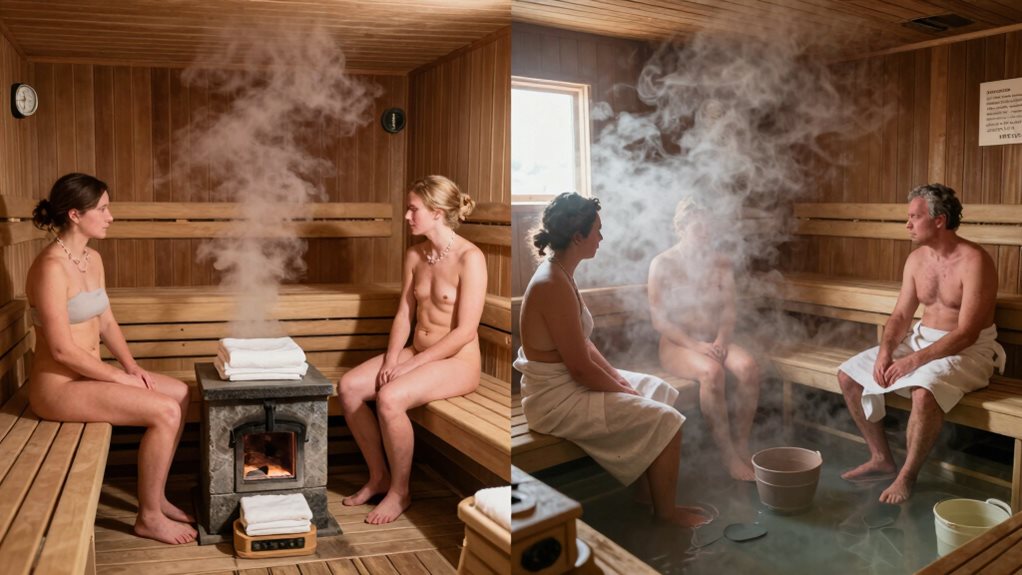
Around the world, steam room traditions reveal fascinating cultural patterns that go far beyond simple relaxation practices.
In Nordic countries, you’ll experience the ritual of alternating between hot steam and cold plunges, often while naked in single-sex areas.
Central Europeans integrate steam rooms into larger thermal complexes, with structured “Aufguss” ceremonies where scented water creates aromatic steam clouds.
The ritualized Aufguss ceremony transforms ordinary steam into a sensory journey through carefully orchestrated scents and traditions.
Russian banyas emphasize socializing and traditional venik treatments, where birch branches gently stimulate circulation. You’ll need to wash thoroughly before entering and might enjoy tea during cooling breaks.
Eastern European saunas play significant roles in cultural traditions, with Estonian pirti even receiving UNESCO recognition for its cultural importance.
Regardless of location, certain principles remain consistent: sit on towels for hygiene, follow posted rules about clothing, respect quiet zones, and stay hydrated.
Frequently Asked Questions
How Do Sauna Temperatures Vary Across Different Cultural Traditions?
You’ll experience different heat levels: Finnish saunas reach 70-100°C, Russian banyas 80-90°C with higher humidity, Korean jjimjilbangs range from 40-70°C, and Turkish hammams stay below 46°C.
Are There Health Conditions That Contraindicate Sauna Use Globally?
Yes, you shouldn’t use saunas if you have unstable heart disease, uncontrolled blood pressure, severe arrhythmias, impaired sweating disorders, acute fever, open wounds, or when taking certain medications.
What Sauna Accessories Are Essential When Traveling Internationally?
You’ll need a quick-drying towel, collapsible silicone bucket, travel thermometer, portable headrest, and lightweight sauna hat. Don’t forget machine-washable seat covers for hygiene in shared facilities.
How Have Modern Designs Modified Traditional Sauna Practices?
Modern designs have transformed traditional sauna practices by integrating digital controls, remote preheating, personalized profiles, and space-saving features. You’ll find infrared technology has shortened heating times while smart connectivity lets you customize your wellness experience.
Can Children Participate in Sauna Cultures Around the World?
Yes, children can participate in sauna cultures, but practices vary. You’ll find Finland welcomes infants, while Germany suggests starting at 4 months. Many countries impose age restrictions of 12-18 years.
Final Thoughts
As you’ve discovered, sauna and steam room traditions vary widely across cultures. Whether you’re visiting Finland’s silent saunas, Russia’s social banyas, or Korea’s communal jjimjilbangs, respecting local customs shows appreciation for these ancient wellness practices. Remember, what’s polite in one region might be inappropriate in another. By understanding these differences, you’ll traverse global bathing cultures with confidence, making your experience more authentic and enjoyable wherever your travels take you.