
Combining a sauna and cold plunge is a fantastic way to elevate your recovery. The sauna heats up your body, improving blood flow and easing tension, while the ice bath cools you down, reducing inflammation and soreness. This process not just improves your circulation but also ramps up your metabolism and supports your immune system. Plus, it could lift your mood! There’s a lot more to discover about how to make the most of this ultimate recovery protocol.
Understanding Contrast Therapy: The Basics
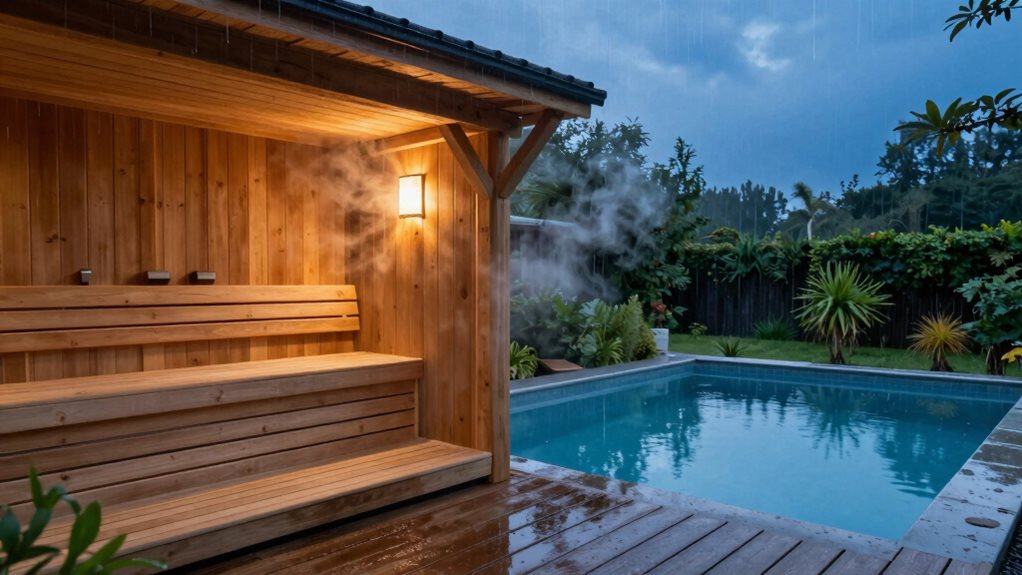
When you think of recovery, you might picture resting on the couch with a bag of ice, but contrast therapy mixes things up by taking you from heat to cold in a revitalizing way.
This approach alternates between heat exposure, like a sauna, and cold immersion, such as an ice bath. The heat phase promotes blood flow and helps clear out waste, while the cold phase reduces inflammation and swelling.
Contrast therapy alternates heat exposure and cold immersion, enhancing blood flow while reducing inflammation and swelling.
By switching between hot and cold, you create a “vascular pump” effect that improves circulation. For beginners, you might start with 5–15 minutes of heat followed by 1–3 minutes in cold water, repeating this a few times.
With practice, you can adjust the timing to match your comfort level.
Cardiovascular Benefits of Sauna and Cold Plunge
Switching from the warmth of a sauna to the chill of a cold plunge isn’t just a fun way to shake up your recovery routine; it actually has some impressive effects on your heart and overall cardiovascular health.
Regular sauna sessions can lower blood pressure and reduce arterial stiffness, making your heart work more efficiently. During a sauna, your heart rate can jump 30-70%, similar to exercising, which improves circulation.
On the flip side, a cold plunge reduces heart rate and blood pressure, flushing out toxins and decreasing inflammation.
When combined, these two methods boost your cardiovascular resilience even more, improving your heart’s function and giving it a solid workout without traditional exercise.
Who knew recovery could be so beneficial?
Enhancing Metabolic Function Through Temperature Changes
As you immerse yourself in the world of temperature changes, you’ll discover that alternating between hot and cold can do wonders for your metabolism.
Cold plunges activate brown fat, which burns calories instead of storing them. This exciting process helps you shed extra weight while boosting your energy levels.
When you hop into a cold plunge after the sauna, your body works hard to regulate its temperature, ramping up your calorie burn even more.
Plus, regular exposure to these temperature shifts can improve insulin sensitivity, making it easier for your body to manage glucose.
Recovery and Inflammation Reduction: How It Works
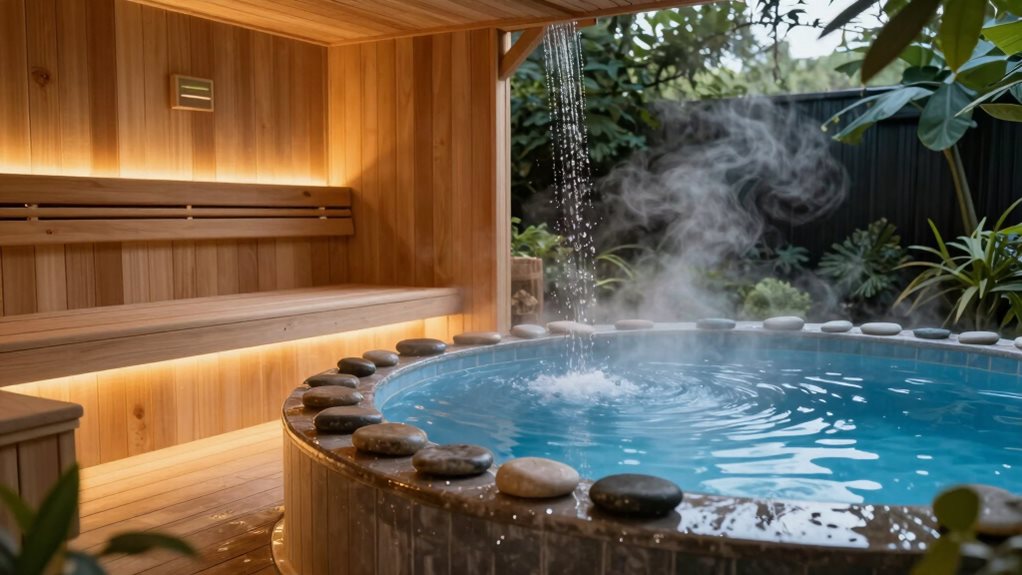
After experiencing the invigorating rush of cold plunges and sauna heat, you’re not just boosting your metabolism; you’re also setting the stage for better recovery and less inflammation.
Here’s how this dynamic duo works its magic:
- Vasoconstriction: Cold exposure constricts blood vessels, reducing swelling in inflamed areas.
- Cytokine reduction: Cold immersion lowers damaging pro-inflammatory cytokines, aiding quicker recovery.
- Norepinephrine boost: Cold stimulates norepinephrine release, which helps manage inflammation and promotes relaxation.
- Lymphatic drainage: Cold plunges boost lymphatic flow, clearing metabolic waste and speeding muscle repair.
Together, these elements create a powerful recovery protocol, minimizing soreness, and letting you bounce back quicker after workouts.
You’ll be ready for more adventures in no time!
Immune System Support: The Role of Heat and Cold
When you think about boosting your immune system, you might picture vitamins and sleep, but what if I told you that heat and cold can pack a powerful punch, too?
Sauna sessions raise your body temperature, mimicking a natural fever response that helps fight infections. Heat also increases white blood cells, which are key players in your immune defense.
On the flip side, cold plunges trigger even more white blood cell production and keep you feeling energized. Together, these practices create a synergy that improves your immune response while reducing inflammation.
By alternating between heat and cold, you can supercharge your body’s defenses, helping you stay healthier and feel great all year round.
Why not give it a try?
Boosting Mental Health and Mood With Temperature Therapy
Temperature therapy isn’t just about feeling hot or cold; it’s a powerful tool to improve your mental health and lift your mood.
When you expose yourself to heat or cold, you’re influencing your brain in exciting ways. Here’s how it works for you:
- Heat exposure increases serotonin and endorphins, leading to happier feelings.
- Cold plunges can reduce stress hormones, helping you manage anxiety better.
- Both therapies improve your body’s ability to fight inflammation, supporting emotional stability.
- Regular temperature shifts may promote neuroplasticity, which helps your brain adapt and recover.
Creating Your Own Sauna and Cold Plunge Routine
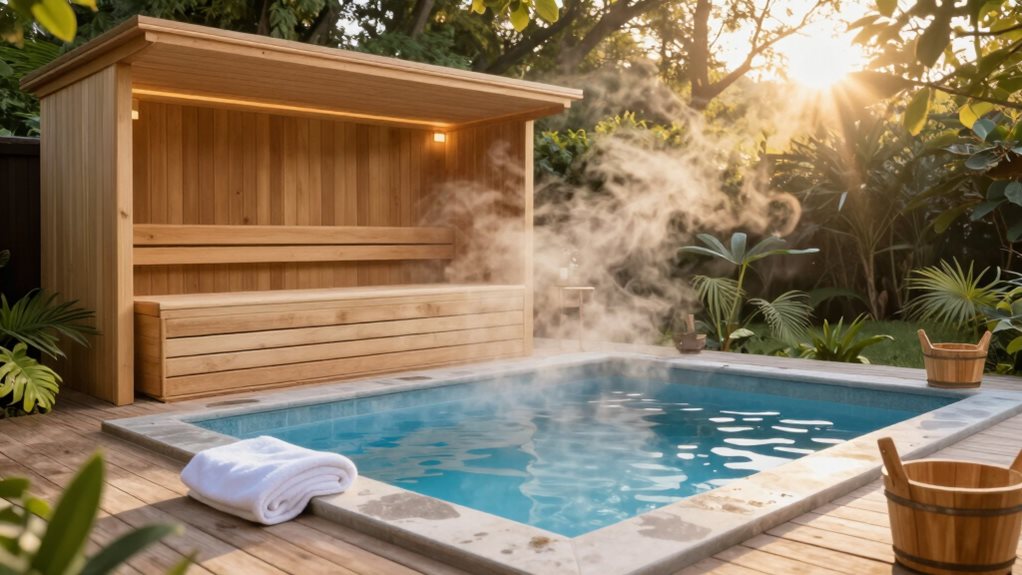
Creating your own sauna and cold plunge routine means finding the right session length, frequency, and timing that works best for you.
Imagine starting with a cozy sauna for about 10 minutes, then taking a quick plunge into crisp, invigorating cold water for a couple of minutes—that can really energize your body!
Aim for two to four sessions a week to keep it fun and avoid burnout, and remember, it’s all about listening to your body and enjoying the process.
Ideal Session Length
To establish an effective sauna and cold plunge routine, you’ll want to find the right session lengths that suit your recovery goals and comfort level. Aim for the following:
- Sauna sessions: 10–30 minutes, with 10–15 minutes as a good warm-up before a cold plunge or up to 20 minutes for a balanced contrast.
- Cold plunge duration: Start with 30 seconds to 2 minutes, gradually increasing to 3–5 for those who are acclimated.
- Rest times: Don’t forget to rest between cycles! About 3–10 minutes of low activity will help you recover.
- Overall sessions: A complete contrast therapy session usually falls between 25–60 minutes, including both sauna and cold plunge bouts.
Stick to these guidelines, and you’ll feel the benefits!
Frequency and Timing
How often should you incorporate sauna and cold plunge sessions into your routine? For beginners, aim for 2-3 times a week. As you build tolerance, you can ramp that up to 3-4 sessions weekly.
Advanced users can try 4-7 times. Just remember to give yourself at least one recovery day between sessions.
Timing is key, too. If you want to boost your workout recovery, try these after your exercise sessions. Evening sessions can help you sleep better, while morning or noon use aligns with your daily goals.
Always start with the sauna, then immerse yourself in the cold plunge. Create a routine that feels good for you; listen to your body! Consistency will transform your recovery experience.
Frequently Asked Questions
Can I Use a Sauna and Cold Plunge Every Day?
You can use a sauna and cold plunge daily, but moderation’s essential. Experts recommend limiting cold plunges to 11 minutes per week split into sessions to optimize benefits and prevent potential risks to your body.
What Temperature Should the Sauna and Cold Plunge Be?
For saunas, aim for 180-200°F to optimize recovery. Your cold plunge should range from 30-50°F, adjusting as needed based on your personal tolerance. Enjoy the benefits of both wisely!
How Long Should Each Session Last?
Each sauna session should last 10–30 minutes, while cold plunges typically range from 30 seconds to 5 minutes. Aim for 2–4 cycles per session to maximize recovery benefits and adapt gradually over time.
Are There Any Contraindications for Using Sauna and Cold Plunge?
Yes, there are contraindications. If you have cardiovascular issues, respiratory conditions, or are pregnant, consult a healthcare professional before using a sauna or cold plunge. These factors can increase risks to your health and safety.
Can I Combine Contrast Therapy With Other Recovery Methods?
Yes, you can combine contrast therapy with other recovery methods like active recovery, nutrition strategies, or manual therapies. Just verify you monitor safety, limit exposure times, and adjust for any personal health conditions you may have.
Final Thoughts
Incorporating sauna and cold plunge sessions into your routine can supercharge your recovery and overall well-being. By switching between heat and cold, you can boost circulation, reduce inflammation, and even lift your mood. Think of it as a workout for your body’s systems! So why not give it a try? You might discover that this contrast therapy leaves you feeling refreshed and rejuvenated, ready to tackle whatever comes next. Enjoy the path to better health!