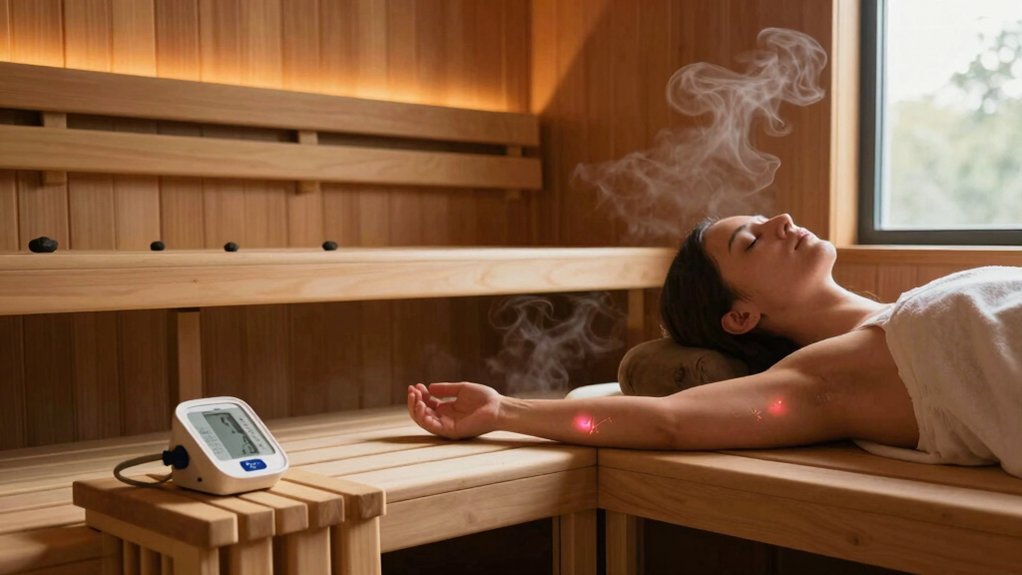

Yes, saunas can lower your blood pressure, and research backs this up impressively. During a session, your heart pumps harder, but afterward your vessels relax, often dropping pressure 4–7 mmHg below where you started.
Regular use trains arteries to stay flexible, and Finnish studies show 2–3 weekly sessions cut hypertension risk dramatically.
Pair sauna with exercise and the benefits multiply, creating a one-two punch for your cardiovascular system.
There is much more to uncover about how heat therapy transforms heart health.
What Happens to Your Blood Pressure During a Sauna Session?
So, what exactly happens to your blood pressure when you step into that steamy sauna? Your blood pressure actually rises at first, like your body is gearing up for moderate exercise. Both your systolic and diastolic numbers climb progressively as you sit there sweating.
Interestingly, you might experience a tiny dip around the two-minute mark, think of it as your body catching its breath before the real work begins. Your heart joins the party too, pumping 34% faster by the end of your session.
Meanwhile, your blood vessels widen like garden hoses expanding, letting blood flow more freely despite that increased pressure. It’s a complex dance: your heart works harder, vessels relax, and somehow everything stays stable even if you already have high blood pressure.
Research from the Institute of Sport Science, Martin-Luther-University Halle-Wittenberg found that this cardiac load during sauna use corresponds to moderate physical load of 60-100 watts, suggesting sauna bathing may mimic the effects of moderate exercise on the cardiovascular system.
However, the real payoff comes after you leave. Studies show that vasodilation reduces peripheral resistance, leading to a measurable decrease in blood pressure that can last for at least 30 minutes following your session.
Does Sauna Actually Lower Blood Pressure Long-Term?
Why does something that temporarily spikes your blood pressure end up lowering it for good? It sounds backwards, but your body adapts to the heat in ways that stick around.
Regular sauna use trains your blood vessels to stay more open and flexible, even when you’re not sweating. Think of it like stretching a rubber band. Do it often, and it stays stretchy. Research indicates that combining sauna bathing with exercise enhances these blood pressure benefits even further.
Sauna use trains your blood vessels to stay open and flexible—like a rubber band that stays stretchy with regular use.
Here’s what happens when you make sauna bathing a habit:
- Your arteries get springier, reducing the stiffness that drives high blood pressure
- Your heart works more efficiently, pumping with less strain over time
- Your stress levels drop, cutting the tension that tightens blood vessels
Studies show 2–3 weekly sessions of 10–15 minutes can drop your systolic pressure by up to 10 mm Hg. That’s real, lasting change from something that feels like relaxation.
A 20.7-year follow-up study of over 2,300 middle-aged men found that those who used a sauna 4–7 times per week had significantly lower risk of fatal cardiovascular events compared to once-weekly users, suggesting these blood pressure benefits translate to measurable long-term heart protection.
How Often Should You Sauna? Evidence From the 20-Year Finnish Study
You’ve seen how regular sauna use can train your blood vessels to stay flexible and lower your pressure over time, but now you’re probably wondering how often you actually need to go.
The Finnish study gives you a clear answer: aim for four to seven sessions per week for the biggest benefits. Think of it like brushing your teeth, once a week helps, but daily care works wonders.
Men who saunaed this often cut their hypertension risk by 47% compared to once-a-week users. Even two to three weekly sessions helped, dropping mortality rates from 49% to 38%. However, men with elevated systolic pressure still faced higher cardiovascular death risk even with frequent sauna use, though the risk was somewhat reduced compared to infrequent sauna users.
The sweet spot mirrors moderate exercise, raising your heart rate safely. For high blood pressure specifically, three to seven weekly sessions protected against dangerous spikes. The typical session in the study lasted 14 minutes at 175°F, making this duration and temperature a practical benchmark for your own routine.
Start where you can, then build up, your cardiovascular system rewards consistency.
Why Post-Workout Sauna Lowers Blood Pressure More Than Exercise Alone
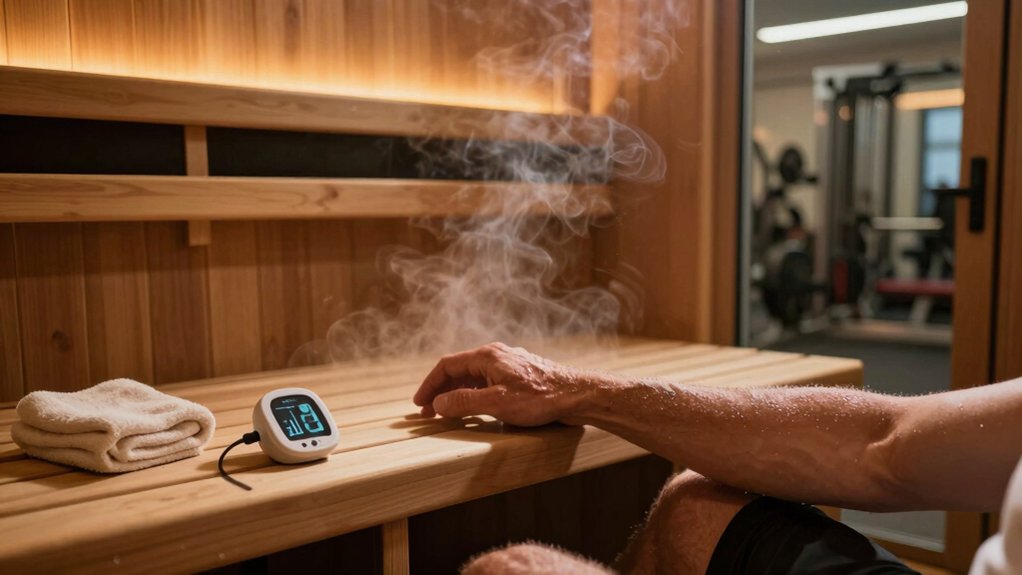
When you step out of a workout and into the sauna, your body doesn’t just relax, it kicks into overdrive, increasing the blood flow benefits you’ve already earned. Your muscles are warm, your heart is pumping, and adding heat triggers a powerful one-two punch: improved circulation response and amplified nitric oxide production that keeps your blood vessels relaxed long after you towel off.
This prolonged vasodilation effect means your blood pressure stays lower for hours, not minutes, giving you results that exercise alone simply can’t match. Research shows that regular post-exercise sauna sessions provide long-term protection against heart disease and stroke, with heart rate rising to 100-150 bpm to simulate additional cardiovascular conditioning. However, blood pressure rises during the actual sauna session rather than dropping, with the acute cardiovascular load being comparable to moderate exercise on a bicycle ergometer.
Enhanced Circulation Response
How exactly does stepping into a sauna after your workout create a blood pressure drop that exercise alone can’t quite match? You’re essentially stacking two powerful vasodilation triggers back-to-back, and your blood vessels respond by opening wider than either stimulus could achieve solo.
Here’s what’s happening inside your body:
- Your heart pumps faster, reaching 100-150 beats per minute, like continuing moderate exercise without moving a muscle
- Your blood vessels stay relaxed for up to two hours after, keeping resistance low and flow smooth
- Oxygen delivery ramps up, feeding your recovering tissues exactly when they need it most
Think of it like opening highway lanes during rush hour: exercise adds one lane, heat adds another, and together you’ve got serious traffic flow.
Your systolic pressure can drop 8 mmHg more than exercise alone, and that benefit sticks around even 30 minutes after you’ve toweled off.
Research on patients with untreated hypertension showed these positive hemodynamic effects can last up to 120 minutes after heat exposure, giving you an extended window of cardiovascular benefit.
Amplified Nitric Oxide
Why does adding a sauna after your workout pack such a bigger blood-pressure punch than exercise alone? The secret lies in nitric oxide, your body’s natural blood vessel relaxer.
When you exercise, your blood vessels already open up, but stepping into a sauna afterward keeps that party going. The heat acts like a workout for your blood vessels, creating a double dose of nitric oxide production. Think of it like opening a stuck jar: you twist, then someone else helps you twist more. That’s your blood vessels getting extra help. This amplified effect is often paired with short, intense workouts specifically designed to stimulate nitric oxide production.
Research shows this combo lowers systolic blood pressure more than solo exercise. Your veins and arteries relax further, blood flows easier, and your heart doesn’t work as hard.
The sauna essentially mimics cardiovascular stress, amplifying those nitric oxide pathways for lasting benefits.
Prolonged Vasodilation Effects
That extra nitric oxide boost isn’t just a quick flash in the pan, it sticks around, keeping your blood vessels relaxed long after you’ve toweled off.
When you pair exercise with sauna, your blood pressure drops deeper and stays down longer.
Here’s what happens inside your body:
- Total vascular resistance plummets 15 minutes post-session, beating sauna or exercise alone.
- Your stroke volume and ventricular ejection time improve, meaning your heart works smarter, not harder.
- The 7 mmHg systolic drop lasts 30+ minutes, like giving your arteries an extended vacation.
Think of it as your cardiovascular system hitting the snooze button on stress. Regular sessions train your blood vessels to stay flexible, nearly halving hypertension risk when done 4-7 times weekly.
What Heart Benefits Come With Lower Blood Pressure?
The heart benefits of lowering your blood pressure are pretty remarkable, and they’re backed by solid numbers you can actually wrap your head around.
For every 5 mmHg you drop your systolic pressure, you slash your major cardiovascular disease risk by 10%. That’s like turning down a dimmer switch on danger.
Stroke and heart failure risk? Down 13%. Coronary heart disease? Down 8%. Even death from cardiovascular disease drops 5%.
Push harder to under 120 mmHg, and you’re looking at a 27% reduction in primary cardiovascular outcomes versus stopping at 140. Your all-cause death risk falls 25%.
These benefits work whether you’ve had a heart attack before or not, your body doesn’t discriminate when it comes to protection.
How Long Until You See Blood Pressure Results?
You might wonder how quickly sauna sessions start working on your blood pressure, and the answer depends on what kind of results you’re hoping to see.
Your body responds almost immediately during a single session, but those bigger, lasting improvements build up over weeks of regular use.
Think of it like exercise, you feel good right after one workout, but the real transformation happens when you stick with it.
Immediate Session Effects
Step into a sauna, and your body doesn’t waste any time responding. Within the first few minutes of heat exposure, your blood pressure starts climbing as your heart works harder to cool you down. Your heart rate quickly reaches 100-150 beats per minute, matching a light workout on a bike. Systolic and diastolic pressure rise steadily, peaking midway through a typical 25-minute session.
Here’s what happens during your session:
- Your heart pumps faster – Cardiac workload equals 60-100 watts of exercise, boosting oxygen demand.
- Blood vessels expand – Heat triggers vasodilation, preparing you for the post-sauna drop.
- Your core temperature climbs – This drives the cardiovascular response throughout.
Once you step out, the magic flips: your blood pressure drops below baseline almost immediately, often falling 4-7 mmHg lower than when you entered.
Short-Term Weekly Changes
How quickly can a few sauna sessions reshape your cardiovascular system? Research suggests you’ll need patience, but not forever.
After two weeks of daily sauna bathing, heart failure patients saw their systolic blood pressure drop. Their blood vessels worked better, too, like a rusty pipe getting flushed clean.
You don’t need daily sessions, though. Three 15-minute saunas weekly, added after exercise for eight weeks, lowered systolic BP by 8 mmHg, beating exercise alone. Think of it as compound interest for your heart: each session builds on the last.
The magic lies in repetition. A single sauna won’t cut it, but stack those weeks together and your cardiovascular system responds.
Start small, stay consistent, and your blood pressure may thank you within months.
Long-Term Months Required
When can you expect your blood pressure to truly settle into a healthier rhythm? The research points to about two months of consistent effort.
You’ll need patience, but the payoff is real. Here’s what the timeline looks like:
- 8 weeks of post-exercise sauna sessions (15 minutes, three times weekly) delivers significant systolic drops, better than exercise alone
- Months 2-6 bring cumulative vascular improvements as your arteries grow more flexible and inflammation fades
- Years 1-20 show the biggest payoff: Finnish men bathing 4-7 times weekly cut cardiovascular death risk by nearly half compared to once-weekly users
Think of it like training for a sport, your blood vessels adapt gradually. Each session builds on the last, lowering resistance in your arteries and boosting nitric oxide.
Stick with it, and your cardiovascular system rewires itself for lasting health.
Is Sauna Safe With High Blood Pressure?

Why might you wonder if stepping into a hot sauna is a smart move when your blood pressure‘s already running high? The heat makes your heart race like you’re jogging, which sounds risky when your numbers are already elevated.
Here’s the reassuring news: research shows saunas are generally safe for many people with hypertension, and they might actually help you. During a session, your blood vessels widen like opening a highway, reducing resistance.
Afterward, your blood pressure drops, studies show about 7 mmHg lower, and stays down for at least half an hour.
However, everyone’s different. You’ll want to check with your doctor first, especially if you take blood pressure medications. Start slowly, stay hydrated, and listen to your body.
The sauna isn’t a replacement for treatment, but it could become a helpful teammate in managing your health.
Who Should Avoid Sauna? Risks to Discuss With Your Doctor
So, you’re ready to hop into that warm, wooden room, but hold on a moment. Your body mightn’t agree with the heat, and that’s okay. Some folks need to chat with their doctor first, or skip sauna time entirely.
Three groups who should definitely check in with a physician:
- Expecting mothers – Pregnancy, especially early on, means heat stress risks for you and baby. Written clearance is a must.
- Heart condition warriors – Unstable angina, recent heart attacks, or severe heart failure? Your ticker needs professional guidance before temperature spikes.
- Medication users – Blood thinners, beta-blockers, or diuretics can mess with your body’s heat response. Don’t gamble with safety.
Think of sauna heat like a workout for your circulation: great for some, but stressful for vulnerable systems.
When in doubt, ask your doctor.
Frequently Asked Questions
What’s the Ideal Sauna Temperature for Blood Pressure Benefits?
You’ll get optimal blood pressure benefits at 80-100°C. Start with 10-15 minute sessions 2-3 times weekly, then build to daily 15-30 minute sessions.
This routine can lower your systolic pressure by about 10 mm Hg over two weeks.
Does Sauna Type (Infrared vs. Traditional) Matter for BP?
You’ll benefit from either type, but they work differently. Infrared penetrates your skin directly for vasodilation, while traditional heats the air around you.
Both lower your blood pressure similarly, about 4 mmHg on average.
Can Sauna Replace Blood Pressure Medication?
You can’t replace your blood pressure medication with sauna sessions. While frequent sauna use complements treatment and may help prevent hypertension, you’ll need to keep taking prescribed medications and consult your doctor first.
How Does Sauna Compare to Hot Baths for BP?
Both lower your BP short-term, but hot baths drop it more dramatically. You’ll see greater core temperature rise, blood flow boost, and hydrostatic pressure benefits from hot tubs, though your BP returns to normal faster afterward.
Should You Hydrate Differently Before Sauna for Heart Health?
You should hydrate normally before sauna, don’t overdo it. Drink water beforehand, replace fluids after, and skip alcohol.
Proper hydration supports your heart’s compensation for fluid shifts without stressing your cardiovascular system unnecessarily.
Final Thoughts
You now know saunas can truly help your blood pressure, both during sessions and over time.
The Finnish research proves regular use matters, and pairing sauna with exercise gives you extra benefits. Start slowly, stay hydrated, and check with your doctor if you have health concerns.
Your heart will thank you for this warm, relaxing habit.