
You’re aiming for a door that blends function with atmosphere, so consider glass for light and wood for warmth, with outward swing to hold in heat and a tight seal for efficiency. A Clear Tinted Glass door or a left-hanging Aspen option can showcase durability and style while keeping maintenance manageable. Choose materials and frames that endure thermal stress, then weigh privacy versus illumination—your spa’s next level hinges on this choice, and there’s more to weigh.
| Clear Tinted Glass Sauna Door Left-Hanging Aspen 24×73 |

| Premium Pick | Type: Clear & Tinted Glass Sauna Door, Prehung Left-Hanging | Frame Material: Black Alder / Thermo-Aspen / Aspen | Glass: Grey Tinted 8mm Tempered Safety Glass; Clear 8mm Tempered Safety Glass | VIEW LATEST PRICE | Read Our Analysis |
More Details on Our Top Picks
Clear Tinted Glass Sauna Door Left-Hanging Aspen 24×73
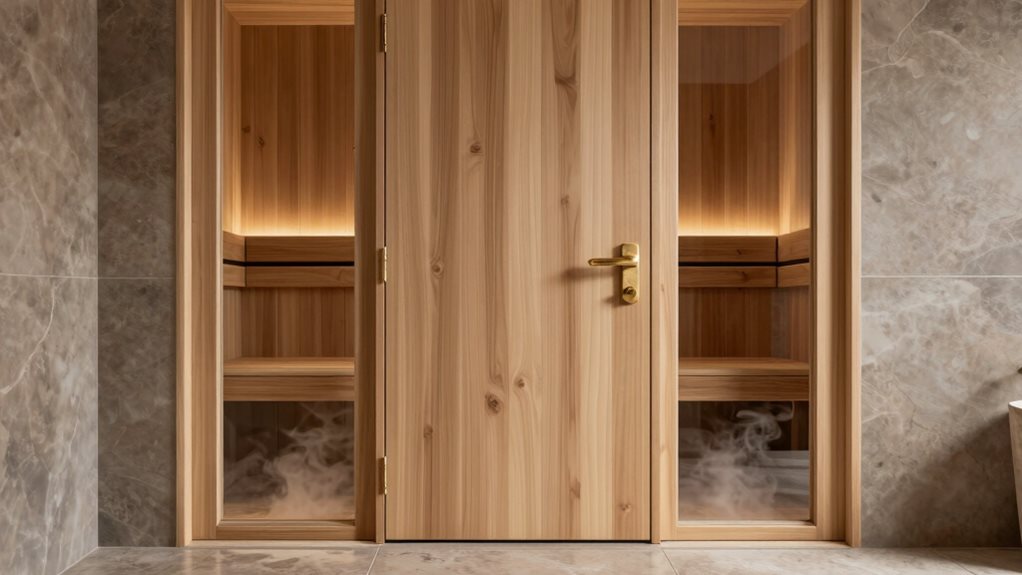
The Clear Tinted Glass Sauna Door, Left-Hanging Aspen 24×73 stands out if you want a clean, modern look without sacrificing light or privacy. This prehung unit arrives on a ready frame with an outward swing, so installation is straightforward. Choose between grey or clear 8mm tempered glass to match your sauna’s mood and light flow. Frames include Black Alder, Thermo-Aspen, or Aspen options, all durable and lightweight. At 24×73, the jamb measures 27x75x3-5/8, and hardware includes three hinges, a ladder pull, and a wooden interior handle for a clean finish. This setup suits homes and commercial spaces alike beautifully.
- Type:Clear & Tinted Glass Sauna Door, Prehung Left-Hanging
- Frame Material:Black Alder / Thermo-Aspen / Aspen
- Glass:Grey Tinted 8mm Tempered Safety Glass; Clear 8mm Tempered Safety Glass
- Mounting:Prehung on frame; outward swing
- Hardware:Hinges Aluminum; Ladder Pull Stainless Steel Exterior; Wooden Interior Handle
- Dimensions:24×73 (Jamb/Frame: 27 x 75 x 3-5/8)
- Additional Feature:Exterior stainless ladder pull
- Additional Feature:Three aluminum hinges
- Additional Feature:Wooden interior handle
Factors to Consider When Choosing Sauna Doors
When choosing sauna doors, you weigh material types—from cedar wood to tempered glass—focusing on heat tolerance and moisture resilience. You’ll compare glass versus wood for aesthetics and maintenance, and check frame durability and seals to prevent warping or leaks. Finally, match size, fit, and hanging style to your enclosure—whether left- or right-hanging, single or double doors—so installation is straightforward and the door operates seamlessly.
Door Material Types
Wood, glass, and metal each bring distinct vibes and practical traits to sauna doors, so your choice should hinge on how you value insulation, light, and maintenance. Wood doors—Aspen or Alder in particular—offer natural insulation, a warm appearance, and are lightweight and water-repellent, making them comfortable for longer sessions. Glass doors, especially tempered safety glass, invite natural light and keep safety at the forefront, helping modern designs feel open yet controlled. Metal doors provide durability and insulation, though they may not match wood or glass for aesthetics. Consider maintenance: wood requires finish refreshes; glass cleans easily; metal resists wear but can show fingerprints. Your decision influences ambiance, energy efficiency, and upkeep, guiding you toward a door type that fits your spa’s vibe and routine.
Glass Vs Wood
Glass doors bring in natural light and a modern vibe, making your sauna feel open yet controlled. With tempered safety glass, you’ll enjoy a bright, airy atmosphere that heightens the space’s ambiance. Wood doors, often Aspen or Alder, bring natural insulation, helping maintain temperature and adding a rustic touch. The durability of tempered glass resists warping or cracking in humidity and heat, a practical win for busy baths. Glass creates openness and light exposure, while wood offers privacy and can reduce heat loss when sealed well. Your choice hinges on style, light preferences, and insulation needs suited to your sauna environment. If you prioritize visibility and a contemporary mood, glass wins; if you crave coziness and efficient heat retention, wood delivers. Choose accordingly today.
Frame Durability
Frames set the durability baseline for any sauna door, especially in humid, heat-rich environments. When you choose frame material, consider water-repellent options like Black Alder or eco-friendly choices such as Thermo-Aspen, because resilience starts there. A durable frame, ideally Grade A wood, resists warping and damage from humidity and temperature swings, keeping the door aligned. You’ll appreciate lighter materials that ease installation without sacrificing strength, improving handling in tight saunas. The thickness and type of wood matter too; thermally modified woods are treated to boost longevity in extreme conditions. Finally, guarantee proper sealing and treatment of the frame, since moisture infiltration and heat exposure are inevitable adversaries. With thoughtful selection, your door remains stable, secure, and low-maintenance. That choice pays off comfort and durability.
Size and Fit
When you choose a sauna door, start with precise measurements to confirm a proper fit. Measure the door frame carefully, noting standard sizes such as 24×73 inches or 36×81 inches for ADA compliance, and verify jamb dimensions are compatible with your sauna structure. The door should swing outward, a safety and space-saving design choice that keeps heat contained while you move in and out. Consider the door’s thickness, with options like 8mm tempered safety glass that adds durability and insulation benefits. Don’t overlook clearances around the frame, which prevent binding and guarantee seamless operation, and account for any 3-5/8 inch jamb depth, as small variances can affect installation. With these checks, you’ll enjoy a precise, sealed fit that performs reliably for years to come.
Hanging Style Options
From size and fit, the next consideration is hanging style. Sauna doors come in left-hanging and right-hanging options, depending on which side you prefer the swing. Your choice affects accessibility and space efficiency, especially in smaller designs. Outward swinging doors require enough clearance outside the room to avoid obstruction. Proper alignment guarantees the seal stays tight, locking in heat and humidity. Also, consider the sauna layout and foot traffic when choosing a hanging style. A thoughtful setup balances usability with efficient airflow and minimal space constraints. If you lean toward a left-hinged door, place the hinge on the left as you face it, and ascertain the handle is convenient. For right-hinged, mirror that arrangement and verify the swing won’t clash with seating or benches.
Temperature Tolerance
Temperature tolerance is a key consideration because sauna doors must perform reliably under heat and humidity, not fail when the room climbs toward 150–195°F (65–90°C). When you choose a door, prioritize materials that endure those temperatures without warping. Tempered safety glass is a smart option, because it resists thermal stress and won’t shatter under sudden heat. For frames, look at Grade A Alder or Aspen wood—lightweight yet durable enough to resist humidity, warping, and deterioration. Insulation matters too: a well-insulated door minimizes heat loss and keeps the interior comfortable. Finally, guarantee a secure fit to prevent drafts, improving temperature consistency and energy efficiency throughout your spa experience. By pairing the right materials with proper sealing, you safeguard performance, comfort, and long-term value for you.
Privacy and Light
Choosing the right sauna door is a balance between letting in just the right amount of light and keeping your space private. The glass you choose matters as much as the frame, since clear glass invites more visibility, while grey tinted tempered glass softens the view and improves privacy without sacrificing brightness. A typical 8mm tempered safety glass maintains durability and safety while still letting in ample light. Frame material shapes what you feel in the room; lighter woods create an open, airy vibe, darker woods feel more enclosed. Outward swinging doors can further boost privacy by reducing exterior visibility when the door is closed, so you stay comfortable without compromising style. Choose combinations that suit your space and daily routines for lasting impact.
Maintenance Needs
Maintenance needs for sauna doors hinge on materials, design, and how often you use the space. The material you choose—Alder or Aspen—affects moisture resistance and longevity, so pick wood with proven durability. Tempered safety glass keeps cleaning simple and reduces ongoing upkeep compared to regular glass. Regular inspection and cleaning of hinges and handles helps prevent rust in humid environments, so include it in your routine. Applying a water-repellent finish on wooden frames cuts the frequency of maintenance and extends door life. Guarantee proper sealing around the door to minimize moisture infiltration, lowering mold risk and related upkeep. With thoughtful selection, your sauna stays functional, inviting, and low-maintenance. Consider professional sealing checks and seasonal cleanings to maintain peak performance and aesthetics over time long.
Final Thoughts
Choosing the right sauna door isn’t just about looks—it impacts heat retention, safety, and routine. Start with the Glass Door for light and durability, then weigh wood options like Black Alder or Thermo-Aspen for insulation and texture. Consider outward-swinging designs to maximize warmth and ease of use, plus sturdy frames and good seals. Keep maintenance simple with cleaning and checks. With the right door, your spa feels more inviting and efficient time you step in.