
To balance glass walls with heat retention in modern saunas, use double-pane tempered glass (8-10mm thick) instead of single-pane options. Limit glass to one wall if possible, and upsize your heater capacity by 15-20% to compensate for heat loss. Frame with quality Scandinavian spruce, seal all edges thoroughly, and consider installing stone or tile walls near the heater. These strategic choices will maximize your sauna’s stunning views without sacrificing the cozy warmth you’re seeking.
The Science Behind Heat Loss Through Glass Surfaces
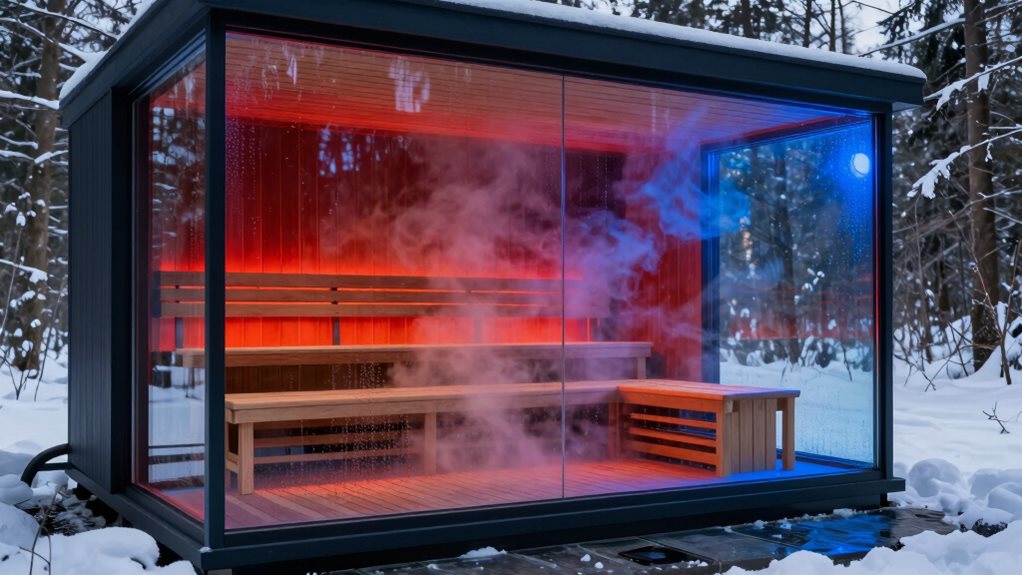
While you enjoy the warmth and relaxation of a modern sauna, there’s a fascinating battle of physics happening all around you, especially through those sleek glass walls.
Your sauna’s heat escapes through three main pathways: conduction, convection, and radiation.
Heat’s three escape artists – conduction, convection, and radiation – constantly work to steal warmth from your sauna sanctuary.
Through conduction, heat passes directly through the glass in proportion to the temperature difference and glass area, but inversely to its thickness. Single-pane glass loses heat rapidly, while double-glazed options with sealed air spaces perform much better.
Convection creates a continuous loop as warm air rises along the glass and cooler air replaces it.
Meanwhile, radiation silently transfers heat from warm surfaces to cooler ones. This is why low-E coatings work so well – they reflect radiant heat back toward you rather than letting it escape outside.
Choosing the Right Glass Type for Optimal Thermal Performance
When selecting glass for your sauna, you’ll need to choose between insulated double-pane options that retain heat better or single-pane glass that offers simplicity and lower cost.
Your glass thickness matters greatly, as 8mm tempered glass provides the ideal balance between durability and thermal performance for most sauna environments.
The right choice depends on your climate, sauna location, and how you’ll use the space, with colder regions benefiting more from insulated options that reduce heat loss during sessions.
Insulated vs. Single-Pane Options
The decision between insulated glass units (IGUs) and single-pane options represents a crucial choice for sauna builders seeking ideal thermal performance. Your selection will impact energy efficiency, comfort, and long-term durability.
When weighing your options, consider these key factors:
- Heat retention – IGUs with their air/gas gap greatly reduce heat loss, especially in larger glass installations where the insulation benefit becomes more pronounced.
- Condensation control – Double or triple-pane units keep inner surfaces warmer, reducing fog and moisture pooling.
- Safety requirements – Always choose tempered glass regardless of configuration to withstand thermal stresses.
- Size considerations – Small windows can function adequately with single panes, while full glass walls benefit considerably from insulated units.
Glass Thickness Matters
Choosing the right glass thickness for your sauna isn’t just about aesthetics—it directly impacts thermal performance, durability, and overall enjoyment.
Most experts recommend 8-10mm tempered glass for ideal results, striking the perfect balance between strength and heat retention.
At 8mm, you’ll get four times the strength of regular glass while maintaining excellent insulation properties. This thickness withstands temperatures up to 200°C, well beyond what you’ll need in a typical sauna.
If you’re building larger walls or seeking improved sound insulation, consider 10-12mm options.
Remember that glass walls act as heat sinks, so proper installation with heat-resistant framing and silicone-filled edge gaps is crucial.
The right thickness guarantees your sauna remains energy efficient while providing the contemporary, open feel you desire.
Strategic Glass Placement for Beauty Without Sacrificing Function
Strategic placement of glass walls transforms ordinary saunas into extraordinary wellness retreats, balancing aesthetic appeal with practical functionality.
When designing your sauna, consider these placement strategies:
- Install glass on the front wall to eliminate feelings of confinement while maintaining heat in the rest of the structure.
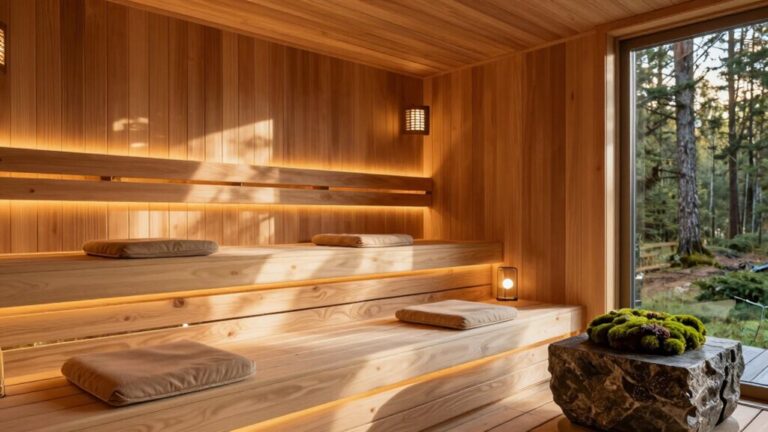
- Position glass walls facing natural environments, creating a seamless connection between indoor relaxation and outdoor beauty.
- Use semi-glass designs with solid wood bottoms when privacy is a concern but you still want natural light.
- Integrate glass walls between your sauna and bathroom or relaxation areas to create a perception of larger, connected spaces.
For small saunas, limiting glass to a single wall maximizes openness while preserving the heat retention that’s essential for your sauna’s performance.
Proper Framing Techniques to Minimize Heat Escape
Properly framing your glass sauna walls serves as the foundation for maintaining heat efficiency while enjoying the beauty of transparency.
Select Scandinavian spruce or C24-rated engineered lumber for consistent strength and thermal properties. Install your framing on 16-inch centers to support all sides and the ceiling securely.
To prevent heat escape, tuck 3.5-inch mineral wool or fiberglass insulation between studs, as these materials maintain performance during high-temperature cycles.
Proper insulation between framing ensures your sauna retains its therapeutic heat through countless steamy sessions.
Always verify frames are level and square to eliminate gaps that allow heat loss. Use foil-backed vapor barriers to reflect heat back into your sauna.
When installing glass, frame it 1/8 to 1/4 inch undersized for the rough opening, and apply high-quality silicone sealant inside and outside to create watertight edges that prevent condensation.
Heater Sizing Considerations for Glass-Walled Saunas
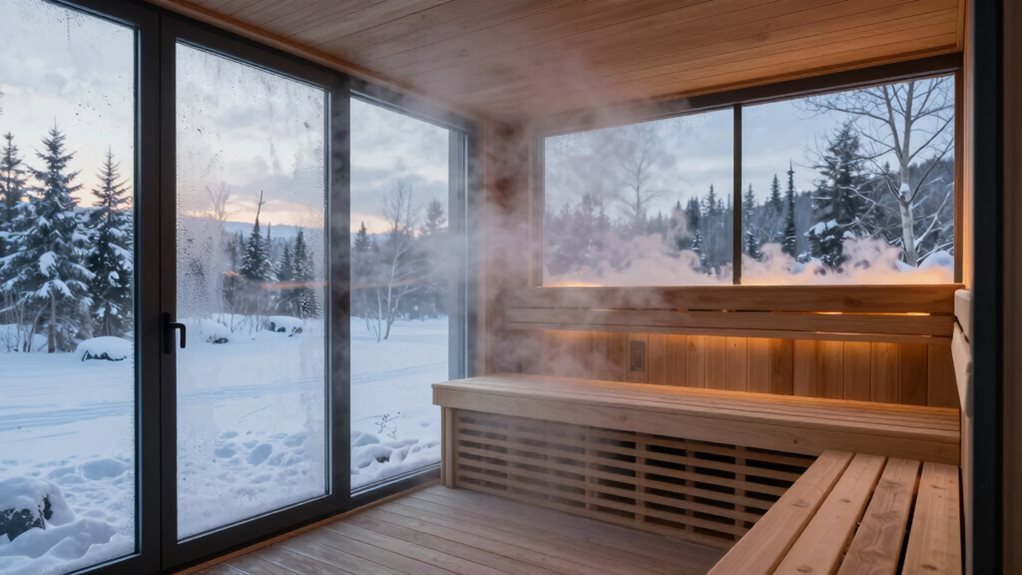
When glass walls dominate your sauna design, standard heater sizing formulas won’t deliver the experience you’re expecting. Glass surfaces dramatically increase heating requirements, with each square foot adding the equivalent of one cubic foot to your calculations.
To properly size your heater for a glass-walled sauna:
- Calculate your basic volume (length × width × height), then add 1 cubic foot for each square foot of glass.
- For considerable glass (like a full wall), add 10-15% to your total heater capacity.
- Consider the 1 kW per 5 square feet of glass surface rule for precise sizing.
- Choose the next size up if you’re between sizes or in a cold climate.
Our authorized dealers can provide expert guidance to ensure you select the perfect heater model for your glass-walled sauna configuration.
Undersized heaters mean frustratingly long warm-up times and poor steam, while oversized units create uncomfortable temperature spikes and reduced efficiency. Improper sizing often leads to premature heater failure and higher long-term maintenance costs.
Innovative Design Solutions for Cold Climate Installations
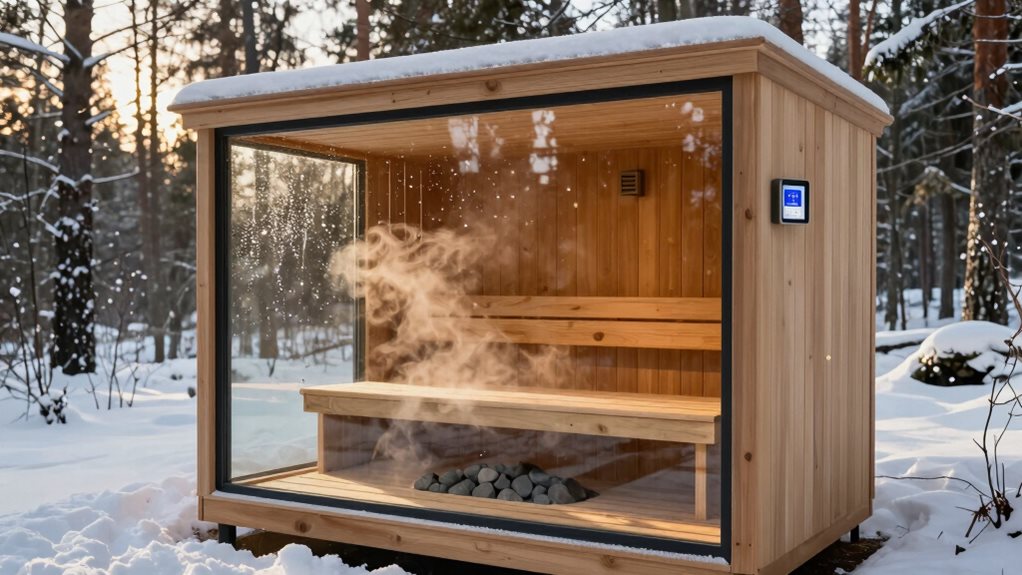
Glass-walled saunas in frigid environments demand specialized design approaches that go beyond standard construction methods.
You’ll find double-panel construction with sheep’s wool insulation works remarkably well, creating a larch vapor cavity that manages moisture while keeping heat inside. This combination lets your sauna heat faster and stay warm longer, even in sub-zero conditions.
For ideal performance in harsh winters, consider barrel-shaped designs that naturally shed snow and circulate heat more efficiently.
Pair these structures with high-temperature sealed edge-to-edge glass windows and powerful wood-burning stoves that generate penetrating heat.
Don’t forget practical additions like covered porch areas made from thermally modified wood, giving you a perfect cool-down space without exposing yourself to extreme temperatures.
The Aesthetic-Performance Tradeoff: Making Smart Design Choices
Choosing between beauty and performance represents the central challenge when incorporating glass walls into your sauna design.
While glass delivers stunning visual appeal, it comes with heat retention compromises that you’ll need to address thoughtfully.
To balance aesthetics with functionality, consider these practical approaches:
- Upsize your heater capacity by 15-20% to compensate for heat loss through glass surfaces.
- Install stone or tile walls around your heater to maximize safety and efficiency.
- Limit glass to one wall, preferably facing a scenic view or interior space.
- Opt for 8-10mm tempered glass that provides durability while maintaining visual elegance.
Your modern glass sauna can deliver both beauty and performance when you make informed design choices that acknowledge glass’s limitations while embracing its aesthetic benefits.
Frequently Asked Questions
Can Glass Saunas Be Safely Installed Near Pools or Water Features?
Yes, you can safely install glass saunas near pools using tempered or laminated glass, stainless steel reinforcement, proper waterproofing, and self-closing mechanisms that meet all safety codes.
How Do Glass Walls Affect the Sound Experience Inside a Sauna?
Glass walls create more echoes and amplify sound inside your sauna. You’ll notice increased reverberation compared to wooden saunas, making conversations less clear and the environment generally louder.
Is Special Cleaning Required for Sauna Glass Compared to Regular Windows?
Yes, sauna glass requires more frequent cleaning due to sweat and oils. You’ll need to wipe it after each use and avoid ammonia-based cleaners that regular windows might tolerate.
How Long Does Tempered Glass Typically Last in Sauna Conditions?
With proper maintenance, your tempered glass will last 5-8 years in sauna conditions. High-quality installations can extend well beyond this timeframe when you regularly inspect and maintain them.
Can Smart Glass Technology Be Incorporated Into Modern Sauna Designs?
Yes, you can incorporate humidity-rated smart glass into your sauna design, using high-IP-rated components for electrical elements and guaranteeing the glass meets temperature tolerances for your specific sauna environment.
Final Thoughts
You’ve seen how glass and heat retention can coexist in your modern sauna design. By selecting the right glass type, positioning windows strategically, using proper framing, sizing heaters appropriately, and adapting to your climate, you’ll create a beautiful, functional space. Remember, every design choice involves balancing aesthetics with performance. With these principles in mind, you’ll enjoy both stunning views and the perfect sauna experience.