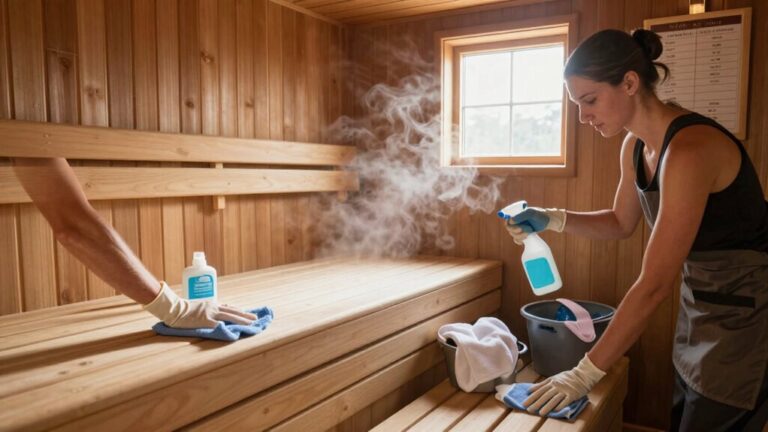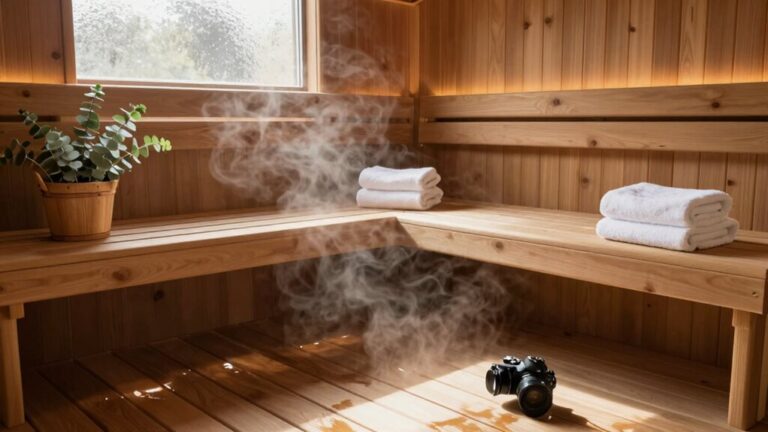
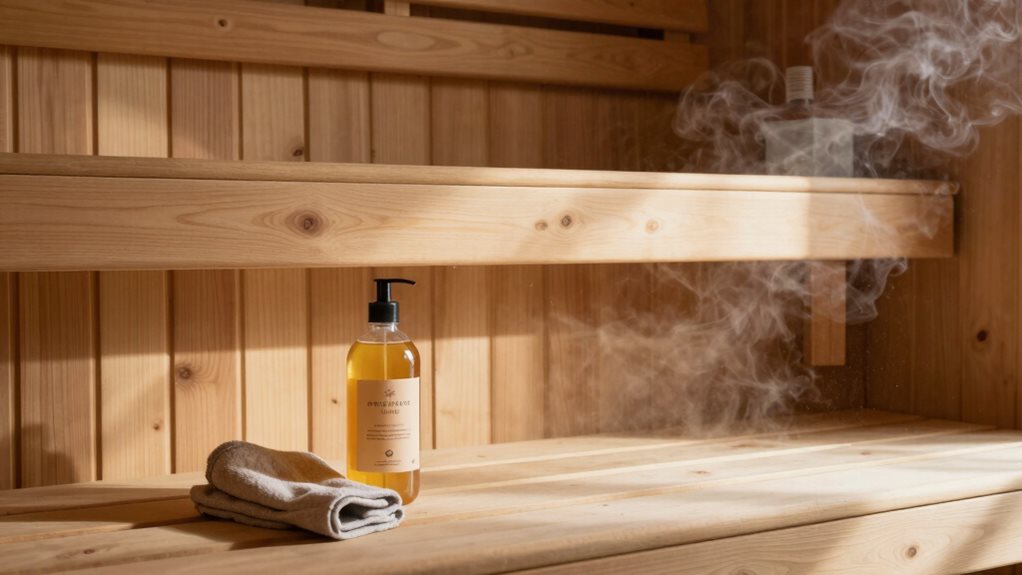

To care for your sauna’s timber, start with a daily routine: keep the door open for airflow and wipe down surfaces with water. Weekly, vacuum or sweep, damp clean the benches, and inspect drains. Use Western Red Cedar for its durability, sand it even, and apply mineral oil before use. For mold, mix vinegar and water for cleaning. Regularly check for loose screws or cracks, guaranteeing everything’s tight and safe. There’s more to discover about protecting your sauna!
Daily Maintenance Routine
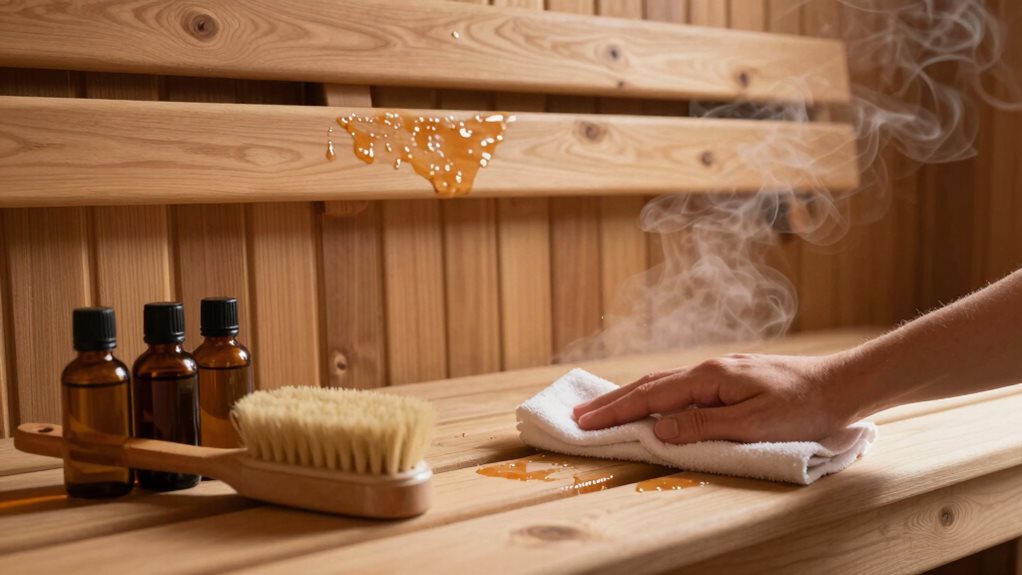
When it comes to keeping your sauna in top shape, establishing a daily maintenance routine is key.
After each session, always leave the door open to allow the wood to dry naturally. Prop it open slightly for air circulation, and consider using a portable fan inside for quicker drying.
After every sauna session, keep the door ajar for natural drying and enhance air circulation with a fan.
Don’t forget to wipe down benches and walls with plain water to prevent mold growth. It’s best to tackle wet spots right away!
Vacuum or sweep the floors regularly, making sure to check under benches and around the stove.
Remember to sit on a towel during sessions to keep your sauna clean.
Following these simple habits helps preserve your sauna’s timber and keeps the experience enjoyable for years to come.
Weekly Cleaning Procedures
To keep your sauna in excellent condition, dedicating time each week to thorough cleaning is vital. Regular upkeep helps prevent unpleasant odors and maintains the beauty of the wood. Here’s what you should focus on during your weekly routine:
- Surface Cleaning: Use a soft-bristle broom or vacuum to remove dust, then wipe down benches and walls with a damp cloth. This gentle approach is essential because cedar is soft and porous, making it vulnerable to damage from harsh cleaning methods.
- Floor Care: Sweep the floor and inspect drains to keep everything flowing seamlessly. Mop non-wood surfaces with a neutral cleaner.
- Benches Inspection: Brush benches lightly before wiping them clean and rotate any removable seats for a proper scrub.
Material Preparation Guidelines
Before you immerse yourself in your sauna project, it’s crucial to prepare your materials properly, guaranteeing a long-lasting and enjoyable space. Start by choosing the right wood, with Western Red Cedar being the top pick for its natural resistance to moisture and rot. You can also consider alternatives like aspen or basswood, which work well if your sauna has good ventilation. Make sure to use kiln-dried lumber with moisture content under 12%—this helps prevent warping later on. Additionally, ensure that the wood is selected for its durability in hot, humid sauna environments and proper insulation is essential for maintaining heat and protecting surrounding structures. Sand the wood with fine-grit sandpaper for a level finish, and always clean the wood with a damp cloth to remove debris. Finally, seal it with light mineral oil or a water-based sauna wax to protect against humidity before installation!
Mold and Stain Removal Techniques
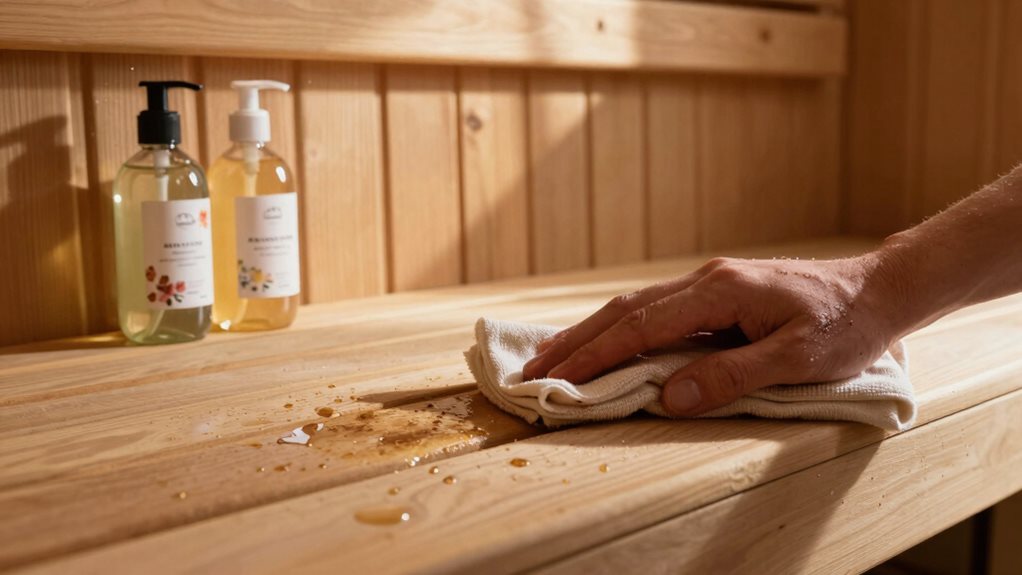
Mold and stains can be frustrating challenges in maintaining your sauna’s beauty and cleanliness, but tackling them doesn’t have to be a headache. There are several effective methods you can use to keep your sauna in tip-top shape:
- Vinegar treatment: Mix equal parts vinegar and water, apply it generously, let it sit for an hour, then scrub away and dry with the heater.
- Baking soda paste: Combine three parts baking soda with one part water, let it sit for a few minutes, scrub gently, and rinse with a damp cloth.
- Chemical cleaners: Use a diluted bleach or specialized sauna cleaner for more stubborn mold and stains. Regularly practicing proper ventilation will also greatly help in preventing mold growth in your sauna.
With these techniques, you’ll not merely remove existing problems but also prevent future ones!
Regular Component Checks
Regularly checking your sauna’s components is vital for guaranteeing its longevity and safety.
Start with the structure: confirm the bench supports and framing are tight, fixing any rusted fasteners you spot.
Next, inspect the interior wood for cracks or softness—these can signal moisture damage.
Don’t forget about the heater; check for any loose parts or damaged stones, swapping out broken ones for even heat distribution.
Ventilation is important too; make sure air can flow freely to prevent dampness.
Finally, look for any gaps in your sauna’s exterior that might let in water.
Treatments and Protection for Longevity
To keep your sauna wood looking great and lasting longer, regular oil application is a must.
Think of it like giving your timber a cozy blanket that protects it from wear and tear while allowing it to breathe.
Plus, if you use breathable wood protectors and stay on top of maintenance, especially in high-use areas, you’ll enjoy a warm and welcoming space for years to come!
Regular Oil Application
Keeping your sauna in top shape is all about regular oil application, which not only protects the wood but also enhances its natural beauty.
Regularly applying the right oil makes a huge difference, and there are a few options you can choose from:
- Use food-grade paraffin oil for benches; it’s hypoallergenic and safe when heated.
- Try sauna-specific waxes like Tikkurila Supi Saunawax if you want a high-heat formula.
- For deeper protection, consider tung oil or boiled linseed oil—just verify they’re sauna-rated.
Don’t forget to prepare the wood by cleaning and lightly sanding it before applying the oil.
This way, you’ll maintain that lovely finish and guarantee your sauna lasts for years to come!
Breathing Wood Protectors
After guaranteeing your sauna’s wood surfaces are well-oiled, it’s time to contemplate breathing wood protectors that can improve the longevity of your sauna.
Consider using thermally modified wood, known for resisting swelling and cracking, and keeping your sauna’s surfaces cool to the touch. This type of wood exhibits improved dimensional stability in various environmental conditions, making it an excellent choice for saunas.
If you’re opting for finishes, food-grade oils like paraffin or breathable sealers let moisture escape while preventing decay.
When you apply them, warm up your sauna first to help the oils soak in better.
Remember to check for any trapped moisture—discoloration can be an early sign.
Maintenance for Heavy Use
While it may be tempting to overlook maintenance tasks in a bustling sauna setting, staying on top of routine care guarantees a long-lasting and enjoyable experience for everyone.
To keep your sauna in prime condition, implement these crucial practices:
- Daily Cleaning: Lightly scrub benches, walls, and backrests after each use to prevent moisture and sweat buildup.
- Weekly Deep Cleaning: Schedule time during low-use periods to scrub hard-to-reach areas and tighten any loose screws.
- Quarterly Treatments: Apply paraffin oil to high-contact surfaces and verify proper airflow by inspecting drains and floorboards.
Adhering to these steps provides protection and helps maintain a fresh atmosphere, letting you enjoy a rejuvenating sauna experience without the worry of unnecessary damage.
Frequently Asked Questions
How Often Should I Completely Empty My Sauna?
You should completely empty your sauna every 6–12 months for heavy use, annually for moderate use, or before and after seasonal usage. This guarantees maintenance and addresses any potential issues that may arise.
Can I Use Essential Oils in My Sauna?
Yes, you can use fundamental oils in your sauna! Just remember to dilute them in water, apply cautiously to avoid skin irritation, and select high-quality oils to improve your sauna experience safely.
What Is the Ideal Humidity Level for Sauna Wood?
The ideal humidity level for sauna wood is between 10-30%. This range protects your sauna’s structure, improves equipment longevity, and balances therapeutic benefits while preventing moisture-related issues like mold and decay.
How Can I Tell if My Sauna Needs a Deep Clean?
If you notice persistent odors, visible stains, or dusty corners, your sauna likely needs a deep clean. Regular use without deep cleaning for weeks also signals it’s time for a thorough scrub and inspection.
Is It Safe to Use a Sauna During Pregnancy?
Using a sauna during pregnancy isn’t considered safe, especially in the first trimester. If you’re in later trimesters, consult your doctor first and verify temperatures stay below 102°F to avoid potential risks.
Final Thoughts
Taking care of your sauna isn’t just about keeping it clean; it’s a way to enjoy its benefits for years to come. By following these tips—from daily maintenance to special treatments—you can prevent problems and improve your sauna experience. Remember, a little effort goes a long way in protecting that cozy retreat. So, grab your cleaning supplies and show your sauna the love it deserves. Happy relaxing, and enjoy your spa-like haven!