
To keep your sauna mold-proof in the long run, focus on proper ventilation, humidity control, and using the right materials. Open windows or install fans to keep air fresh and reduce moisture buildup. Aim for a humidity level of 5-30%, depending on the type of sauna you have. Using kiln-dried wood, like cedar, helps resist mold. Regular cleaning with vinegar solutions and guaranteeing good drainage will also help. Stick around to discover more tips for a healthy sauna experience!
Importance of Proper Ventilation
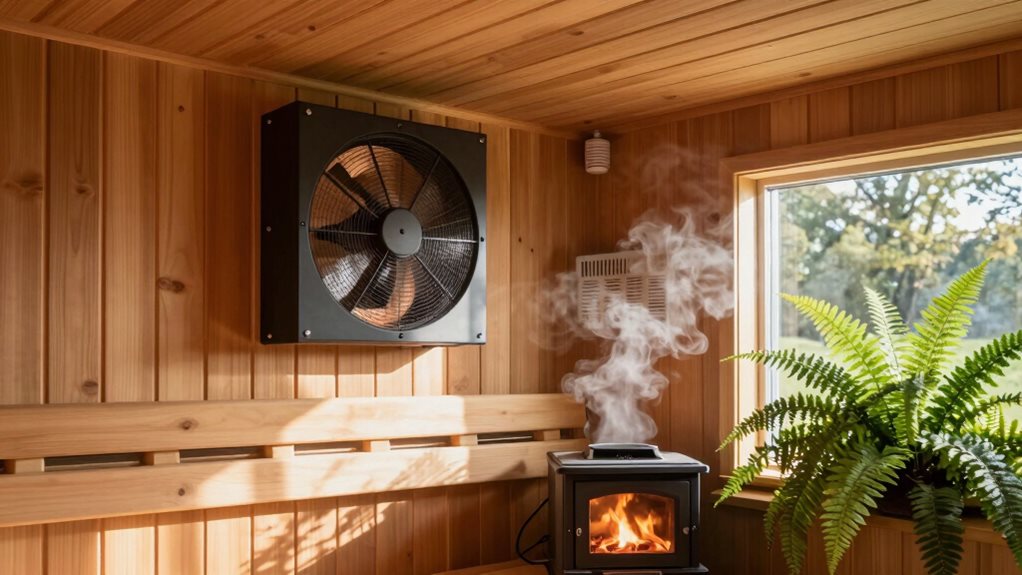
Have you ever wondered how significant proper ventilation is for your sauna? Good ventilation keeps the air fresh, kicking out stuffiness that can cause dizziness or overheating.
It also plays an essential role in mold prevention. By eliminating stagnant air, you’re denying mold the moist, damp conditions it loves. Studies show that fungi can multiply in just 24-48 hours, so keeping humidity around 10-20% is key in preventing spore growth. Moreover, maintaining sufficient oxygen levels through effective ventilation helps prevent feelings of fatigue and discomfort during your sauna sessions. Additionally, well-ventilated saunas deny mold conducive conditions by preventing moisture accumulation.
Plus, when you guarantee a steady flow of air, you’re protecting your sauna’s structure from damage caused by moisture. Fresh airflow not just improves your relaxation experience, but it also supports your respiratory health by managing those pesky bacteria.
Managing Humidity Levels
Managing humidity levels in your sauna is essential for keeping mold at bay. Aim for a relative humidity range of 5–30% when the sauna isn’t in use, and keep an eye on it during sessions with hygrometers to avoid any unpleasant surprises. Effective humidity management is crucial for comfort and safety throughout your sauna experience. Maintaining appropriate humidity levels not only enhances the overall experience but also helps protect the wooden structure of the sauna.
With the right monitoring tools and strategies, you can create a comfortable, mold-resistant environment that makes your sauna experience enjoyable every time.
Optimal Humidity Range
To enjoy the full benefits of your sauna experience, keeping humidity levels in check is essential. Different sauna types thrive in specific humidity ranges that protect both you and your sauna’s structure. Here’s a quick guide:
- Traditional Finnish sauna: 10–20% relative humidity for deep sweating and protection.
- Infrared sauna: 5–15% for comfort and focused radiant heat.
- Bio/soft saunas: 40–55% for gentler heat exposure. Additionally, maintaining optimal humidity levels is crucial for ensuring comfortable breathing while maximizing health advantages. Proper heat and humidity management can enhance health benefits and ensure a safer sauna experience.
Monitoring Tools Available
When it comes to keeping your sauna’s humidity in check, having the right monitoring tools at your disposal can make all the difference. Digital hygrometers give you real-time readings, helping you adjust humidity levels quickly. Some even log data over time, perfect for spotting trends that could lead to mold. To ensure proper functioning and comfort, it’s vital to understand that ideal humidity for traditional Finnish sauna ranges between 5-20%. Additionally, maintaining proper humidity levels supports respiratory health and enhances the overall sauna experience. If you want something battery-free, analog hygrometers work well in high heat, but remember to calibrate them regularly. For tech lovers, remote monitoring systems can alert you via your phone if humidity spikes. Plus, pairing these with ventilation sensors guarantees your sauna stays fresh.
Choosing the Right Materials
When you’re setting up your sauna, choosing the right materials can make all the difference in preventing mold.
You’ll want to look for wood that’s kiln-dried and has natural oils—think Western red cedar or Nordic spruce—to keep moisture in check. Additionally, using proper humidity control measures like maintaining humidity levels between 30-50% will further enhance the effectiveness of your material choices. Furthermore, selecting materials that incorporate weatherproofing strategies will help prolong the life of your sauna and prevent mold growth.
Plus, using proper insulation and vapor barriers guarantees your sauna stays cozy while keeping pesky humidity at bay.
Mold-Resistant Wood Options
Choosing the right wood for your sauna can make all the difference in preventing mold and maintaining a healthy environment.
Here are some mold-resistant wood options to evaluate:
- Western Red Canadian Cedar: This wood is naturally antimicrobial, preventing mold and mildew growth, making it a top choice.
- Thermally Modified Wood: Thermo Aspen and Thermo Radiata Pine are durable and stable, combating moisture and decay effectively.
- Nordic Spruce: Known for its mold-fighting properties, it’s ideal for humid sauna settings.
Suitable Surfaces and Finishes
After selecting the right mold-resistant wood for your sauna, the next step involves picking suitable surfaces and finishes that further improve your sauna’s mold-proofing capabilities.
Consider using naturally oil-rich hardwoods like teak or cedar, as their inherent oils help fight mold. Thermally modified wood is another great choice, boasting improved moisture resistance.
For walls and flooring, non-porous options like ceramic tiles can be fantastic if properly sealed. Duckboards made from solid wood allow for better drainage and air circulation, which helps keep things dry.
When finishing wood surfaces, plant-based wax oils preserve the wood’s breathability, while avoiding heavy coatings that can trap moisture.
These selections make your sauna not only beautiful but also mold-resistant!
Insulation and Vapor Barriers
Insulation and vapor barriers play a vital role in keeping your sauna safe from mold and guaranteeing an enjoyable experience.
Choosing the right materials is imperative. Here’s what you should consider:
- Mineral wool offers great temperature tolerance and fire resistance, making it ideal for saunas.
- Foil-faced insulation boards improve heat retention while acting as an effective vapor barrier when used correctly.
- Natural fibers like hemp or wool are breathable and regulate moisture, but be careful to keep them dry.
Establishing Effective Cleaning Routines
When it comes to keeping your sauna mold-free, establishing effective cleaning routines is essential, so you can enjoy your space worry-free.
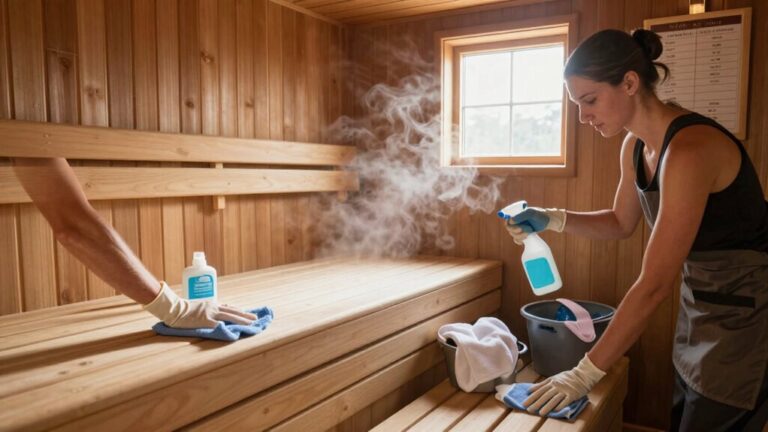
Start by wiping down benches, walls, and backrests with a clean, dry towel after each use. Don’t forget to remove damp towels right away to prevent fungal growth! You should also lift removable mats to air out the floor beneath.
Wipe down surfaces after each use and remove damp towels promptly to keep your sauna fresh and mold-free.
For weekly surface cleaning, mix one cup of white vinegar with a gallon of warm water for a natural cleaner. Use mild soap on benches and floors, and avoid harsh chemicals.
Every 2-3 months, perform a deep clean, gently sand any discolored areas, and always keep an eye out for mold in hidden spots.
Happy sauna-ing!
Drainage Solutions for Moisture Control
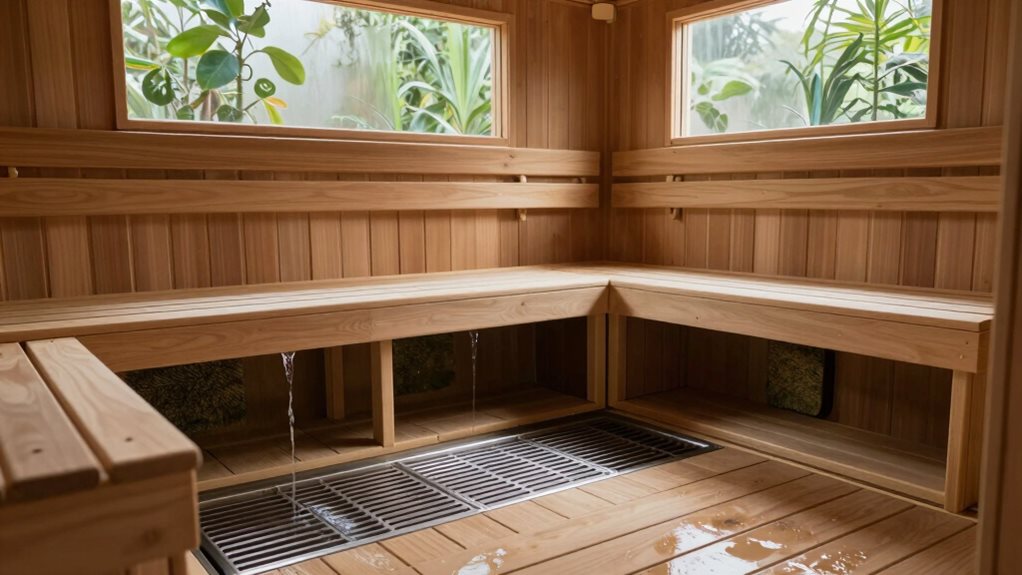
To keep your sauna feeling fresh and inviting, effective drainage solutions are crucial for managing moisture. A well-designed drainage system can be a game-changer in preventing mold.
Consider these key strategies:
- Floor Slope Design: Sloping your floors towards drains helps direct water flow and prevents pooling.
- Drain Placement: Place drains at the lowest points to capture all runoff, using multiple drains for larger spaces.
- Integration with Other Systems: Combine drains with ventilation and vapor barriers to tackle moisture from different angles.
Additional Prevention Techniques
While creating a mold-proof sauna might sound like an intimidating task, it’s all about adopting practical prevention techniques that guarantee a healthier environment.
Start by selecting naturally mold-resistant woods like cedar, which has oils that fight mold. Make sure you use breathable finishes and wash-friendly accessories to keep moisture from hiding.
Choose mold-resistant woods like cedar and use breathable finishes to effectively combat moisture in your sauna.
Design your sauna with proper insulation and air circulation to limit condensation. Don’t forget about routine cleaning! Wipe down surfaces after each session and schedule deeper cleanings with mild cleaners.
Using towels on benches can help capture sweat, reducing direct moisture. Finally, always air out your sauna after use by leaving the door open for a while.
With these steps, you’ll enjoy a mold-free sauna experience!
Monitoring and Adjusting Environmental Conditions
Creating a sauna that stays mold-free involves closely monitoring and adjusting the environment inside it. You can effectively prevent mold growth by guaranteeing ideal humidity and airflow.
Here are some key practices to keep in mind:
- Install hygrometers at both bench level and near the ceiling to track humidity levels.
- Use exhaust fans for 30–60 minutes after each session to eliminate residual moisture.
- Inspect and clean vents regularly to avoid dust and debris buildup.
Benefits of Natural Cleaning Remedies
Natural cleaning remedies offer a fantastic way to keep your sauna mold-free, especially when you prefer eco-friendly options.
Using tea tree oil, for example, can prevent mold thanks to its ability to penetrate wood and combat spores.
Vinegar, a simple staple, makes a great disinfectant, whether you use it undiluted for tough spots or in a lighter mixture for regular cleaning.
Baking soda acts as a gentle scrubber and odor fighter, perfect for those pesky stains.
Lemon juice gives a fresh scent while helping tackle lighter mold, and hydrogen peroxide brightens wood by breaking down organic matter.
These natural solutions not merely keep your sauna safe but also protect the wood and air quality for your enjoyment.
Long-Term Care and Maintenance Tips
Keeping your sauna in top condition goes beyond just using natural cleaning remedies; it involves a consistent approach to care and maintenance.
To keep mold at bay and extend the life of your sauna, follow these crucial tips:
- Guarantee proper ventilation: Always leave the door slightly open after each use to promote airflow and reduce moisture buildup.
- Establish a cleaning routine: Wipe down surfaces with a dry cloth after each session and vacuum regularly to keep dust away.
- Inspect regularly: Check for damp spots, leaks, or mildew weekly to catch problems early.
Frequently Asked Questions
How Can I Prevent Insect Infestations in My Sauna?
To prevent insect infestations in your sauna, seal gaps, maintain low moisture, remove debris promptly, and store supplies in sealed containers. Regularly inspect and use insect-resistant materials for long-lasting protection against pests.
What Are the Signs of Mold Presence in My Sauna?
You’ll notice dark spots, musty odors, and moisture buildup in your sauna. Look for peeling finishes, persistent dampness, and irritation symptoms after use—these all signal possible mold presence that needs addressing quickly.
Can the Sauna’s Design Affect Mold Growth?
Yes, the sauna’s design greatly affects mold growth. Effective ventilation, proper drainage, and moisture-resistant materials help prevent stagnation and moisture accumulation, reducing the chance for mold to thrive in your sauna environment.
How Often Should I Inspect My Sauna for Mold?
You should inspect your sauna for mold after each use and perform weekly checks in hidden areas. Monthly thorough inspections and a deep clean every three months help keep mold at bay for regular use.
Is It Safe to Use Chemical Mold Removers in Saunas?
No, it isn’t safe to use chemical mold removers in saunas. They can release toxic fumes and damage wood. Instead, opt for natural alternatives like vinegar or baking soda to keep your sauna clean and safe.
Final Thoughts
To sum up, keeping your sauna mold-free isn’t just about cleaning; it’s a team effort involving proper ventilation and smart materials management. By monitoring humidity, establishing cleaning routines, and guaranteeing good drainage, you’ll create a cozy retreat that lasts for years. Plus, using natural remedies can make your sauna smell great while keeping it healthy. So, follow these tips, and enjoy a long-lasting, mold-proof sauna experience that makes relaxation even better!