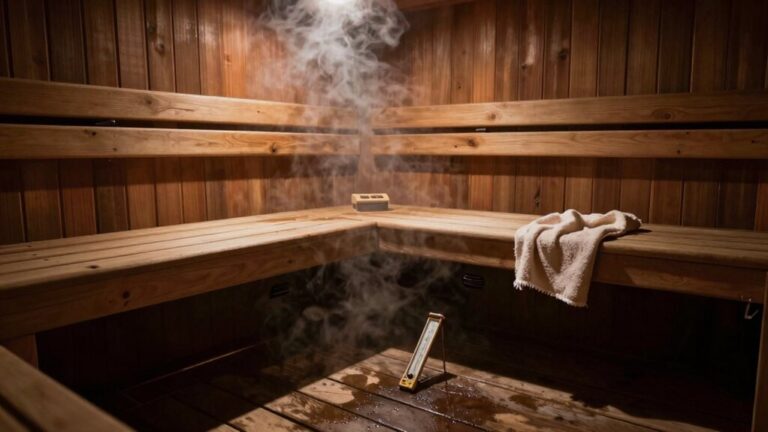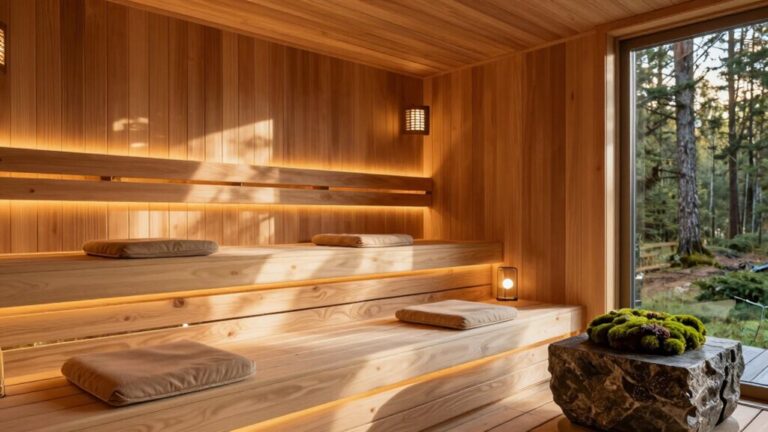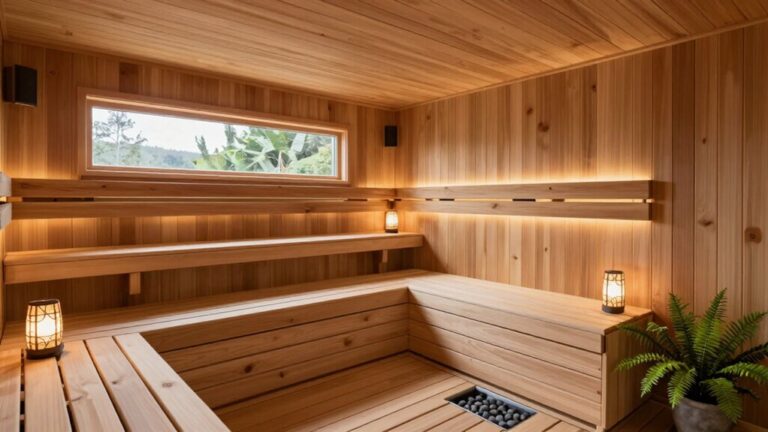
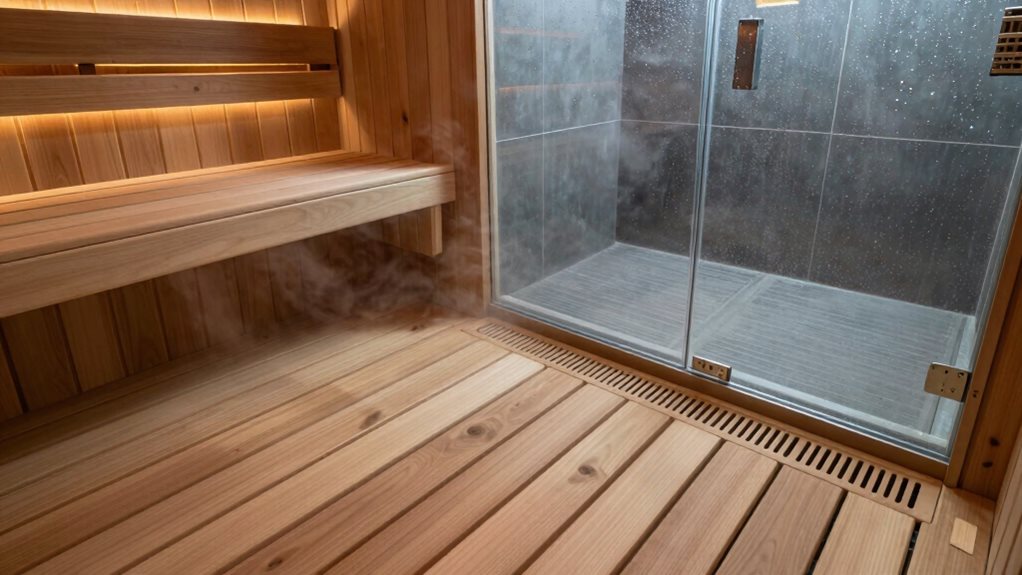

When choosing flooring and drainage for your sauna or steam room, think about options like perforated PVC tiles. They drain water effectively and keep surfaces slip-resistant, making them safe. Ceramic and porcelain tiles offer style and durability, while wooden duckboards provide a warm, inviting feel. Don’t forget about waterproofing techniques and proper drainage systems to keep things dry. With these tips, you can create a comfortable and safe space—learn about more exciting choices to contemplate!
Benefits of Perforated PVC Tiles
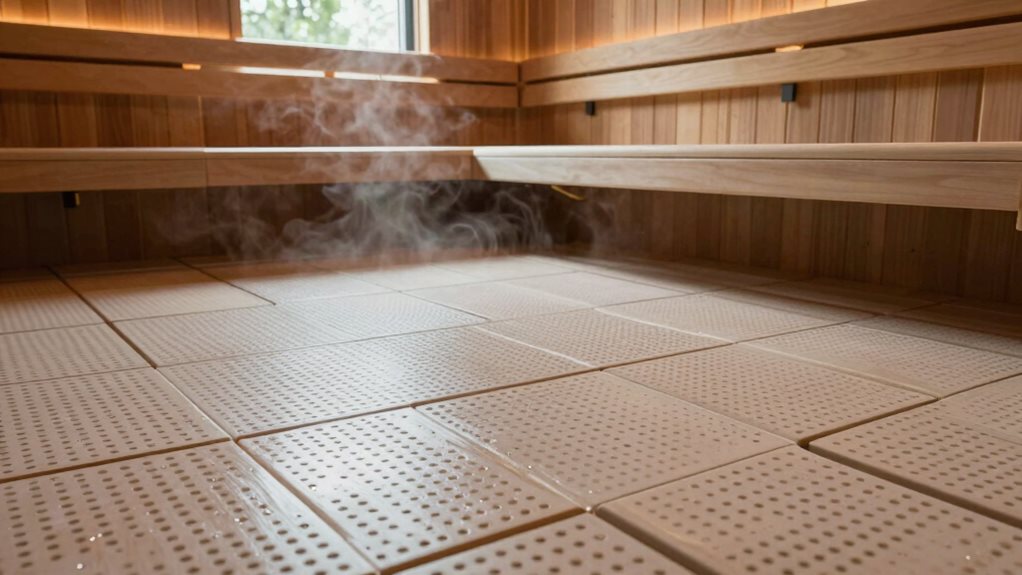
When you step into a sauna or steam room, it’s important to feel secure and comfortable underfoot.
Perforated PVC tiles are a fantastic option because they drain water quickly through their unique holes. This means less pooling and a lower chance of slipping, making your experience much safer. Plus, these tiles promote airflow beneath, reducing moisture that can lead to mold or mildew. They’re lightweight, easy to maintain, and can be installed over flat surfaces without complicated steps. You’ll also appreciate how the textured surfaces provide extra grip, improving your comfort. With these tiles, you get a durable, hygienic, and stylish solution that helps keep your sauna’s environment clean and inviting, guaranteeing your relaxation is worry-free. Additionally, the durable PVC construction ensures these tiles can withstand heat, humidity, and heavy foot traffic.
Advantages of Ceramic and Porcelain Tiles
Ceramic and porcelain tiles offer a fantastic combination of durability and style, making them a top choice for saunas and steam rooms. They’re designed to handle high humidity and heat, helping keep your space warm and cozy. Resistance to moisture ensures these tiles can handle the challenging conditions in a sauna environment without succumbing to damage.
Porcelain tiles, being denser and less porous, excel in heat retention, meaning you save on energy costs for your steam generator. Plus, they’re waterproof when installed correctly, keeping moisture from damaging your structure.
You’ll love that they’re easy to clean and resistant to stains, scratches, and common cleaning chemicals. Whether you’re walking barefoot or hopping in for a relaxing steam, these tiles provide a safe, slip-resistant surface, guaranteeing you enjoy every moment without worry.
Exploring Wooden and Duckboard Flooring
When it comes to choosing flooring for your sauna, cedar wood offers fantastic benefits that you won’t want to miss. Not just does it provide a warm, inviting feel, but it also needs some simple care to keep it looking great. Additionally, it’s important to ensure that the flooring remains slip-resistant to promote safety for all users. With the right maintenance tips, you can enjoy its rich aroma and long-lasting beauty for years to come! Furthermore, many users appreciate the interlocking plastic base of Ipe wood sauna floor tiles, which enhances durability and ensures effective drainage.
Benefits of Cedar Flooring
If you’ve ever stepped into a sauna and taken in that delightful, woodsy scent, you’ve likely encountered cedar flooring in action.
Cedar’s aromatic oils create a soothing environment, improving your sense of relaxation while providing respiratory comfort. Unlike other woods, cedar resists moisture, decay, and pests, making it an ideal choice for humid conditions. Additionally, thermally modified wood offers superior moisture and decay resistance, which can further enhance the longevity of your sauna flooring.
It maintains a consistent, warm feel—keeping your seating surfaces cool to the touch and reducing burn risks. The charming reddish tones and fine grain add aesthetic appeal, while its lightweight nature simplifies installation.
Plus, cedar’s acoustic properties guarantee a peaceful atmosphere, perfect for unwinding after a long day.
With cedar flooring, you’re not merely upgrading your sauna; you’re indulging in an experience!
Maintenance and Cleaning Tips
Cedar flooring not merely improves the experience of relaxing in a sauna but also requires regular upkeep to keep it looking and feeling great.
To maintain your wooden and duckboard flooring, adopt these cleaning routines:
- Vacuum visible debris before mopping to avoid scratches.
- Wipe benches and walls with a damp cloth after each use to eliminate sweat.
- Prop the duckboards off the floor post-use for better drying.
- Use a vinegar solution monthly to fight bacteria and mold.
Don’t forget to maintain proper ventilation by leaving the door ajar after cleaning.
This way, you promote airflow and prevent mold-building.
With a little effort and regular attention, you’ll keep your sauna flooring in excellent shape for a welcoming and relaxing experience.
The Versatility of Vinyl and Composite Options
When it comes to choosing flooring for your sauna, vinyl and composite options really shine with their waterproof and slip-resistant properties. You’ll love how easy they’re to install, making your sauna project simpler and less stressful. Plus, these materials can handle the heat and moisture, guaranteeing you enjoy a comfortable and safe experience every time you step inside. Additionally, their moisture resistance ensures that they maintain durability and hygiene, further enhancing your overall sauna experience.
Waterproof and Slip-Resistant
Choosing the right flooring for your sauna can make all the difference in your experience, especially when it comes to waterproofing and slip resistance.
You want materials that can handle heat and moisture without compromising safety. Here’s why vinyl and composite options excel in this area:
- Advanced vinyl products provide waterproof surfaces, perfect for wet environments.
- Textured vinyl surfaces and composite designs help prevent slips, keeping you safe.
- Urethane concrete coatings improve vinyl’s impermeability in high-steam scenarios.
- Composite options combine a wood look with durability, resisting warping and humidity.
Easy Installation Process
After guaranteeing your sauna’s flooring is waterproof and slip-resistant, it’s time to think about how easy it’s to install those materials.
You’ll love the flexibility of vinyl and composite options! For example, luxury vinyl planks can go over existing floors with a moisture barrier, cutting down on messy demo work. If you choose a click-lock system, you won’t even need glue; just snap the pieces together, and you’re ready to walk on it in no time. Interlocking tiles and modular snaps are perfect for quick, DIY installs. Plus, should a section get damaged, you can replace it easily without ripping out the whole floor.
With these options, installing your sauna flooring is a breeze, ensuring proper drainage and saving you time and effort!
Essential Drainage Features for Saunas
A well-designed sauna isn’t just about the heat and relaxing ambiance; effective drainage features are crucial for keeping the environment clean and safe. Proper drainage keeps bacteria and fungi at bay, which is especially important in shared spaces. Furthermore, maintaining proper drainage is essential for extending the lifespan of the sauna and preventing damage to its structure.
Here are some key drainage features to take into account:
- Sloped Floors: Directs water to drains, preventing pooling.
- Drain Covers: Block debris, maintaining hygiene and preventing clogs.
- Variety of Drains: Choose from linear, point, or trench drains based on space and volume, making sure to consider the need for a drainage system in humid environments.
- Strategic Placement: Verify drains are located at the lowest points for ideal water flow.
Best Practices for Waterproofing Techniques
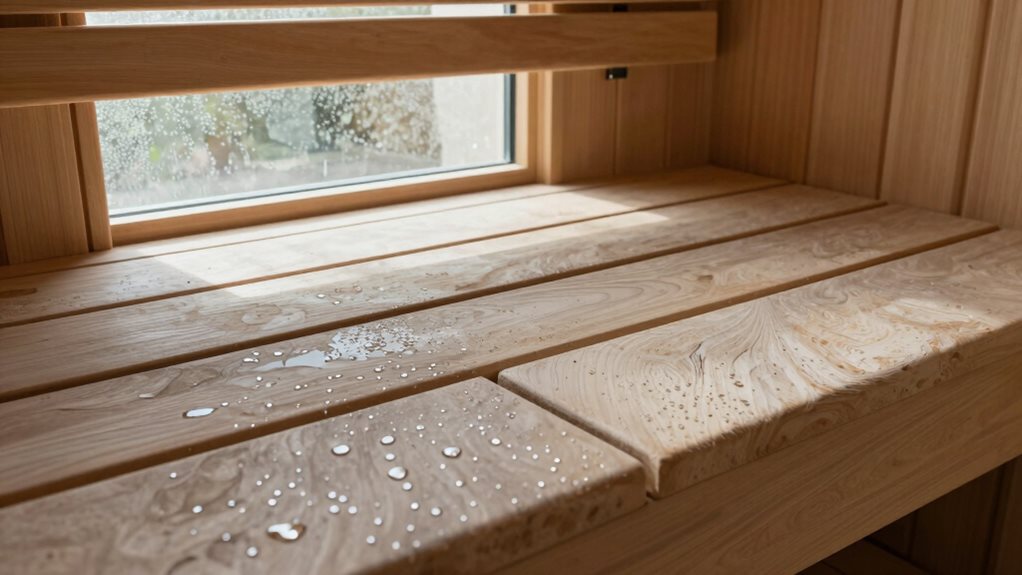
When setting up a sauna, effective waterproofing techniques play a crucial role in guaranteeing the space remains dry and safe.
Start with a good waterproofing membrane like KERDI, which can be used on walls, floors, and ceilings. Make sure to seal all seams and corners using products like KERDI-BAND and KERDI-KERECK-F for a tight fit.
It’s important to use cement sheet substrates instead of timber, as cement handles steam better and resists warping. Don’t forget to apply a secondary vapor barrier behind backerboard where needed.
For added protection, sprinkle in some durable tiles like non-porous porcelain, ready to tackle moisture without worry.
Following these steps will make your sauna a comfy, dry retreat.
Installation Tips for Safe Flooring Solutions
Installing safe flooring solutions in your sauna is essential, as it sets the foundation for both comfort and safety.
Choosing the right flooring for your sauna is crucial for ensuring both comfort and safety.
Here are some tips to guarantee a successful installation:
- Clear and level the area to prevent structural issues.
- Use heat-resistant, non-porous materials like tile or sealed concrete.
- Avoid slippery surfaces and unstable flooring to reduce injury risk.
- Confirm the flooring can support the weight of your sauna and its users.
- Ensure compliance with building codes to avoid potential fines and safety hazards.
Maintaining and Cleaning Your Sauna Flooring
Maintaining and cleaning your sauna flooring isn’t just about keeping things neat; it’s key to guaranteeing a safe and enjoyable experience every time you step inside.
Start by wiping down benches and walls with a damp microfiber cloth after each use to tackle sweat and oils. Brush under benches weekly to keep the air clean and clear drainage pathways.
Don’t forget to lift duckboards after each session – this promotes drying and prevents moisture buildup. Weekly, wet-clean high-traffic areas with a mild detergent.
Address mold immediately if you spot it, using warm water and a diluted bleach solution.
Finally, choose the right cleaner for your flooring material to keep it looking great and lasting longer!
Frequently Asked Questions
Can I Use Heated Floors With These Flooring Options?
You can use heated floors with ceramic, porcelain tiles, and sealed concrete, as well as specific engineered flooring. Just confirm the ratings for high temperatures and moisture resistance with manufacturers to guarantee safety and effectiveness.
What Are the Best Methods for Disinfecting Sauna Flooring?
To disinfect sauna flooring effectively, use diluted hydrogen peroxide or white vinegar. Spray, let sit for the recommended time, then wipe. Regularly sweep and dry surfaces to minimize bacterial growth and maintain hygiene.
Are There Eco-Friendly Flooring Choices Available for Saunas?
Yes, you’ve got eco-friendly options for sauna flooring! Consider Ipe wood tiles, cork flooring panels, thermally modified wood, or bamboo and clay-based tiles. Each choice offers sustainability, durability, and comfort in your sauna environment.
How Do Different Flooring Types Affect Sauna Acoustics?
Different flooring types impact sauna acoustics considerably; wood absorbs sound, while concrete improves clarity. Tile creates reverb, rubber dampens echoes, and vinyl offers a balance. Choosing the right flooring shapes your sauna’s auditory experience.
Can I Install Flooring Over Existing Surfaces in My Sauna?
Yes, you can install flooring over existing surfaces in your sauna, provided they meet moisture and structural requirements. Make certain to choose compatible materials and prepare the surface properly to guarantee durability and safety.
Final Thoughts
To summarize, selecting the right flooring and drainage solutions for your sauna or steam room is key to creating a safe and enjoyable environment. Whether you opt for perforated PVC tiles, elegant ceramic, or warm wooden surfaces, each option has its perks. Don’t forget about effective drainage and waterproofing to keep everything in top shape! By following proper installation and maintenance tips, you’ll guarantee your sauna flooring remains both functional and stylish for years of relaxation.