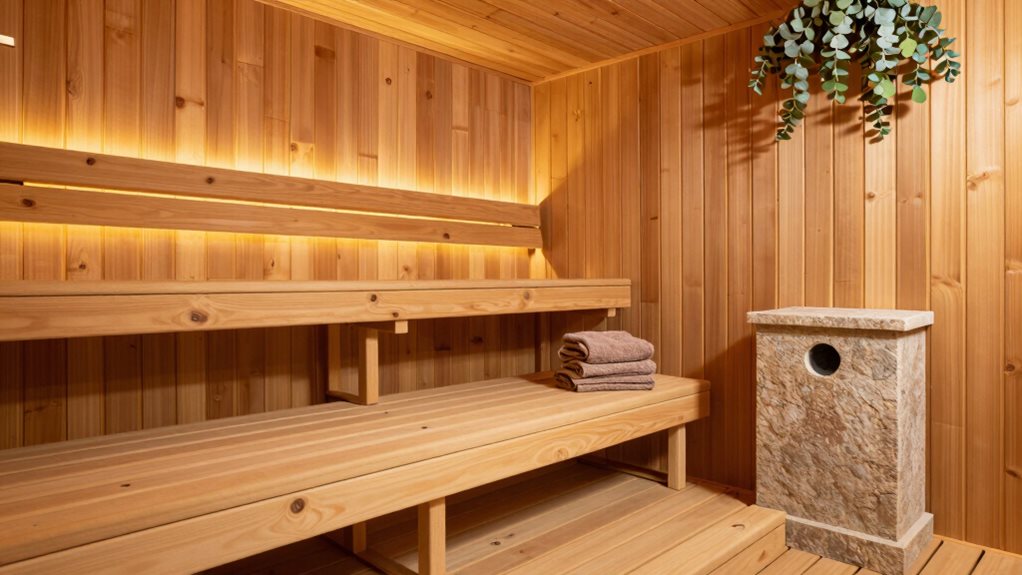

When designing a sauna for your home, you need to think about space, heating options, insulation, and safety standards. Make sure you choose a size that fits your space, and consider whether you want an electric, wood-burning, or infrared heater. Insulation helps keep the heat in while ventilation prevents moisture buildup. Don’t forget compliance with local codes and accessibility for everyone. Exciting choices await when you explore how to make your sauna truly special!
Space and Layout Considerations
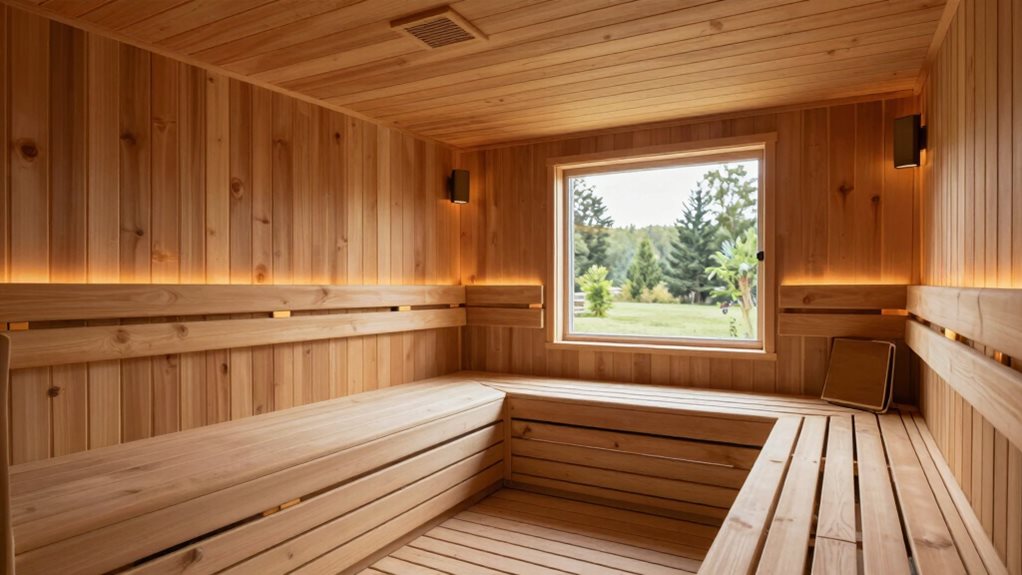
When it comes to designing a sauna at home, space and layout play crucial roles in creating the perfect relaxation spot.
First, consider your sauna’s size. A cozy 1-person sauna needs just 3 feet by 3 feet, while a family can enjoy a 4-person sauna measuring 5 by 6 feet. You’ll need at least 4 to 6 square feet per person for comfortable seating. Outdoor saunas often have higher ceilings, which can enhance heat distribution and overall comfort. Additionally, proper dimensions can significantly improve your overall sauna experience, ensuring that the space feels comfortable and functional for your needs.
When planning your sauna, consider size: 3×3 feet for one or 5×6 feet for a family of four.
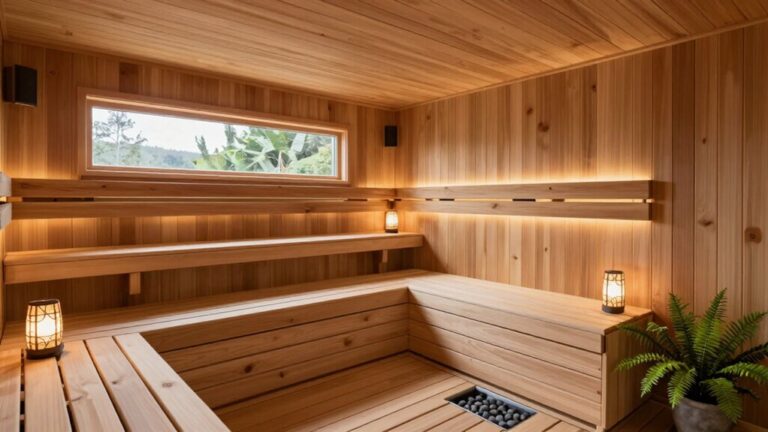
Next, think about layout—square shapes, like an 8 by 8 foot sauna, improve heat distribution, while L-shaped benches can fit snugly in smaller spaces.
Don’t forget clearance needs! You’ll want at least 6 inches around the sides and sufficient room for door swings.
With careful planning, you can create a delightful retreat right at home!
Heating Options and Performance Enhancements
When it comes to choosing the right heating option for your sauna, understanding the various types is key to maximizing your experience. Different types of sauna heaters are available, each with unique characteristics that affect user experience and satisfaction. You’ll want to contemplate everything from efficient heat distribution to the best stones for producing that comforting steam. With the right setup, your sauna can feel like a slice of heaven right in your home!
Heater Types Overview
Choosing the right heater for your sauna can feel a bit overwhelming, but it doesn’t have to be! Each type of heater has unique benefits, making your decision easier based on your needs. Here’s a quick overview:
- Electric Heaters: Easy to use and great for indoor saunas; precise temperature control.
- Wood-Burning Heaters: Offer a traditional experience with intense heat and aroma; perfect for outdoor setups.
- Infrared Heaters: Directly heat your body, saving energy while providing gentle warmth; ideal for small spaces.
- Gas Heaters: Efficient options for large saunas, heating quickly and cost-effectively.
Consider these factors based on your lifestyle and sauna goals to find the perfect match!
Don’t worry; you’ll enjoy the comforting warmth of your sauna soon enough!
Efficient Heat Distribution
Once you’ve picked the perfect heater for your sauna, the next step is making certain that heat gets distributed evenly throughout the space.
Start by placing a supply vent low on the same wall as your heater; this promotes warm air movement and keeps the temperature comfortable. An exhaust vent high on the opposite wall helps remove stale, hot air, guaranteeing a cozy atmosphere. Even heat distribution is essential to ensure that no part of the sauna is too hot or too cold. Proper ventilation can significantly enhance overall comfort, allowing for longer and more relaxing sessions without the discomfort of stagnant air.
Aim for 5–8 air changes per hour to keep air fresh without losing heat. Consider installing ceiling fans for better circulation, mixing warm air downwards.
Smart controls, like timers and thermostats placed near the benches, can tailor heating to your needs. By focusing on airflow and smart ventilation, you’ll enjoy a perfectly balanced sauna experience!
Optimal Stone Selection
Selecting the right stones for your sauna is crucial, as the materials greatly influence heat performance and steam quality.
Here are some stone options to ponder:
- Olivine Diabase: Known for heat retention and soft steam, it’s perfect for home and commercial saunas.
- Peridotite: Offers extreme thermal shock resistance, guaranteeing durability through temperature cycles.
- Basalt and Gabbro: Durable volcanic stones that retain heat well, resisting cracks even at high sauna temperatures.
- Vulcanite: Heats quickly but holds less heat, making it suitable for smaller heaters.
Insulation, Vapor Barriers, and Ventilation Strategies
When it comes to building a sauna in your home, insulation, vapor barriers, and ventilation strategies play a crucial role in guaranteeing a comfortable and efficient experience.
For insulation, mineral wool is perfect for walls and ceilings, while foil-faced rigid foam shines in small or infrared saunas. Aim for a thickness of 2 to 6 inches depending on your climate—more for colder areas. Proper insulation minimizes heat loss and enhances the overall efficiency of a sauna, as it helps achieve the recommended U values for optimal performance.
Next, place a vapor barrier, like aluminum foil, on the warm side of the insulation to block moisture effectively.
Finally, think about ventilation: introduce fresh air near the heater and exhaust near the ceiling. This setup keeps air moving, prevents moisture buildup, and guarantees a pleasant sauna time without becoming a sauna swamp!
Material Selection and Finishes
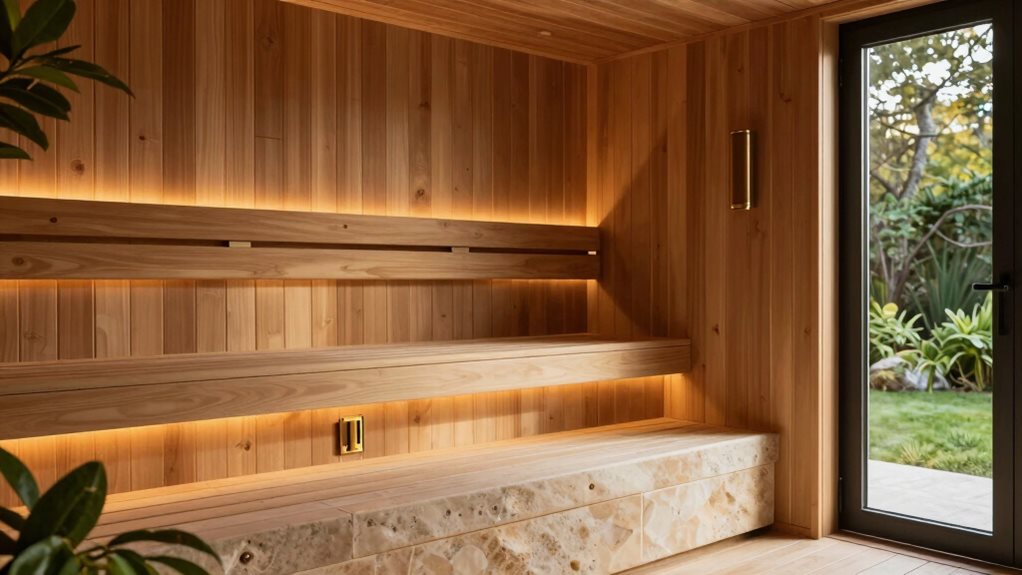
Choosing the right materials for your sauna can make all the difference in both comfort and aesthetics.
Think about how each material affects your experience and look. Here are some options to reflect on:
- Cedar: Antimicrobial with a lovely aroma, plus it’s durable!
- Aspen: Lightweight and hypoallergenic; perfect for a soothing vibe.
- Basswood: Clear grain benches mean no hot spots to ruin your relaxation.
- Flooring: Use heat-resistant tiles or natural stone for ease of cleaning.
When selecting materials, also consider types of home saunas to ensure the best fit for your needs.
Don’t forget about finishes! Water-resistant sealants and oil preservatives can keep your wood looking fresh.
And remember, stainless steel fasteners won’t rust, guaranteeing your sauna lasts for years.
With the right materials, you’ll create a cozy retreat right at home!
Safety, Compliance, and Accessibility Standards
When you’re building a sauna, you can’t overlook safety and compliance standards that keep everyone protected. Familiarizing yourself with building codes and electrical safety requirements means less stress down the line, which is a win for your peace of mind. It’s essential to remember that local building codes may vary, so checking with your local authorities is crucial to ensure compliance. And guaranteeing your sauna is accessible will make it an inviting spot for all—no one wants to miss out on that soothing steam! Ensuring that your sauna includes features for wheelchair access can further enhance its usability for everyone.
Building Code Regulations
Understanding building code regulations is crucial for anyone looking to install a sauna in their home.
These codes help guarantee safety and compliance, making your sauna experience enjoyable.
Here are a few key points to take into account:
- Permits: You’ll need building and possibly electrical permits, especially for hardwired heaters.
- Accessibility: If your sauna’s in a public area, accessible options must meet specific standards.
- Inspections: Both electrical and building inspections are vital to confirm everything’s up to code.
- Documentation: Keep records of permits and inspections for future real estate sales.
Electrical Safety Standards
Have you ever wondered what it takes to keep your sauna safe and compliant with electrical standards?
First, you’ll need a dedicated 240V circuit for traditional saunas, while infrared models might use 120V or 240V, depending on size. It’s vital to have the right amperage—30 to 60 amps for traditional saunas and 15 to 20 amps for infrared.
You should also use moisture-resistant wiring, with 10 AWG for up to 30 amps. Don’t forget about GFCI protection! This cuts power if any current leaks, which is fundamental in damp conditions.
Finally, a disconnect switch should be near your sauna, and licensed electricians must handle all wiring to guarantee everything meets safety codes.
Safety first keeps the heat fun!
Integrating Amenities and Enhancing User Experience
Integrating thoughtful amenities into your home sauna can truly improve your relaxation experience, making it feel like a luxurious retreat.
By including a few key features, you’ll create a calming atmosphere that can transform your sauna sessions.
Consider these improvements:
- Adjustable LED mood lighting: Set the perfect vibe with color and intensity control.
- Soothing scents: Use aromatic oils to fill the air with relaxing aromas.
- Music systems: Enjoy your favorite tunes while unwinding in your peaceful oasis.
- Hydrotherapy jets: Experience a spa-level massage that targets muscle tension.
These elements work together to create a serene and enjoyable environment, encouraging the stress to melt away while you soak up the tranquility.
Budgeting and Financial Planning
After creating a soothing atmosphere with those amazing amenities, it’s time to contemplate how much your dream sauna will cost and how to plan for it.
Budgeting for a sauna generally ranges from $1,000 for entry-level kits to over $30,000 for custom builds. Consider factors like size, type, and materials; choosing cedar or premium wood will boost costs.
Planning your sauna budget can range from $1,000 for basic kits to over $30,000 for custom builds.
You’ll also need to account for installation, which can be 30-50% of your total bill. Don’t forget the ongoing energy and maintenance expenses.
If you’re on a budget, prefabs are great options that keep costs lower. With the right planning, you can create the sauna you’ve always dreamed of without breaking the bank!
Aesthetic Integration With Home Design
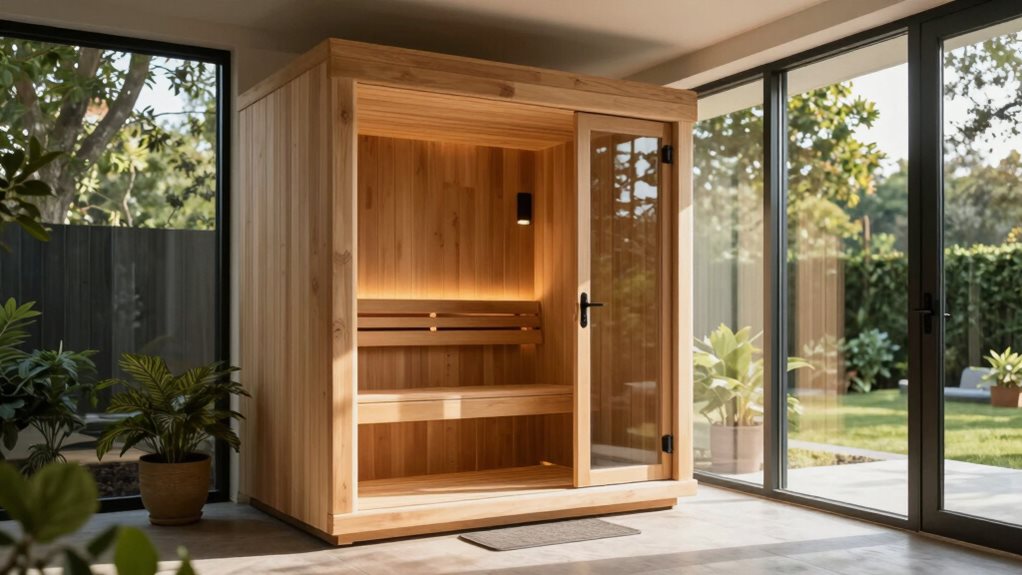
When you think about adding a sauna to your home, it’s more than simply about the heat and relaxation; it’s also about how that sauna fits into your overall home design.
To achieve aesthetic harmony, consider these key elements:
- Materials: Use sauna-grade woods like cedar or hemlock for warmth and moisture resistance.
- Placement: Position your sauna near wellness areas, making it part of a cohesive space.
- Style: Match the sauna’s architectural language with your home for a seamless look.
- Lighting: Integrate ambient and task lighting that complements your home’s existing features.
Frequently Asked Questions
How Long Does It Usually Take to Build a Sauna?
Building a sauna typically takes between 14 to 20 hours for DIY kits, while custom designs can stretch over three weeks. Professional installations usually finish in one to two days, depending on complexity.
What Maintenance Does a Sauna Require After Installation?
After installation, you’ll need to regularly clean surfaces, inspect the heater and wood, replace rocks as needed, and maintain proper ventilation. Keeping a maintenance log helps track your sauna’s service history and guarantees longevity.
Can I Install a Sauna Outdoors?
Yes, you can install a sauna outdoors. Just make sure you choose a suitable location, prepare the site properly, comply with local regulations, and consider weatherproofing materials to protect it from the elements.
What Is the Average Lifespan of a Sauna?
Your sauna’s average lifespan ranges from 10 to 50 years, depending on its type and care. Indoor saunas generally last longer, while outdoor models face more wear from the elements if not maintained properly.
Are There Any Health Contraindications for Sauna Use?
Yes, there’re several health contraindications for sauna use. You should avoid saunas if you have uncontrolled high blood pressure, severe heart conditions, pregnancy without clearance, or certain chronic conditions. Always consult your doctor first.
Final Thoughts
To wrap up, designing your dream sauna is an exciting adventure filled with choices. By considering space, heating options, and materials, you can create a relaxing retreat that fits your home perfectly. Don’t forget about safety and accessibility, too! With careful budgeting and thoughtful design, your sauna can be a beautiful addition to your lifestyle. So plunge into, explore your options, and enjoy every steamy moment of your new haven! Your relaxation starts now!