
To prevent mold in wet sauna and steam environments, keep humidity levels around 95-100% and guarantee good ventilation with low intake and high exhaust vents. Use mold-resistant materials like quartz panels and waterproof boards. After each session, wipe surfaces and promote air circulation. Also, design proper drainage systems to direct water away and consider using bio-graphene sensors to monitor moisture. Staying on top of these practices will help keep your space fresh and healthy, and there’s more to learn!
Maintaining Optimal Humidity Levels
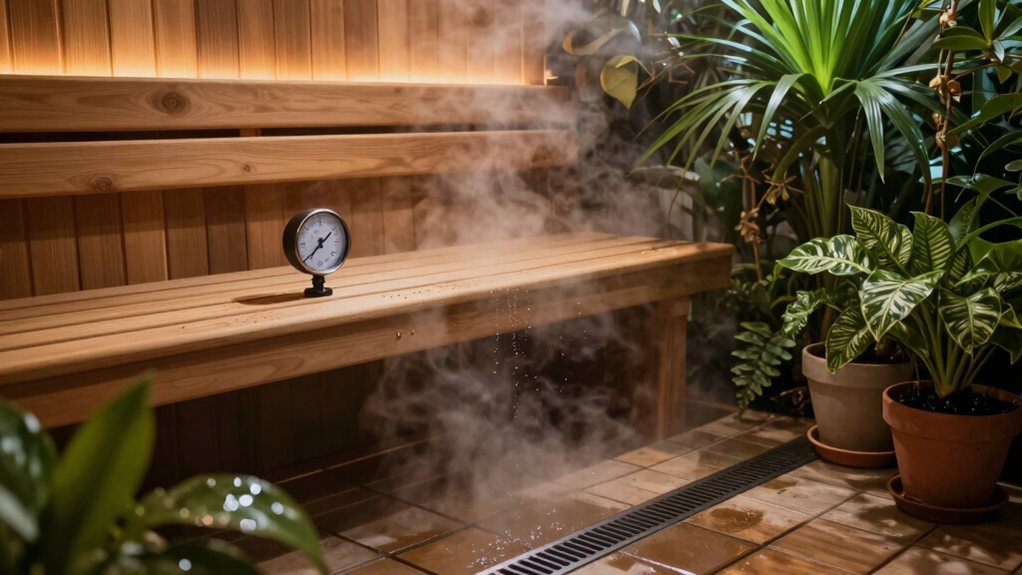
When you step into a sauna or steam room, you might feel the heavy, warm air wrapping around you, but did you know that keeping the right humidity level is crucial for enjoying that experience?
Stepping into a sauna or steam room, the right humidity level is vital for a truly enjoyable experience.
In a steam room, you want nearly saturated air, around 95–100% relative humidity (RH), so water can consistently evaporate and create that soothing steam.
For traditional Finnish saunas, aim for a drier environment, usually between 5% and 40% RH, where 20% to 40% feels most comfortable.
It’s important to match materials to these humidity levels; tiles work well in steam rooms, while kiln-dried wood suits saunas.
Doing this helps reduce the risk of mold, making your relaxation space safer and more enjoyable.
Effective Ventilation Strategies
To keep your sauna fresh and mold-free, effective ventilation is key.
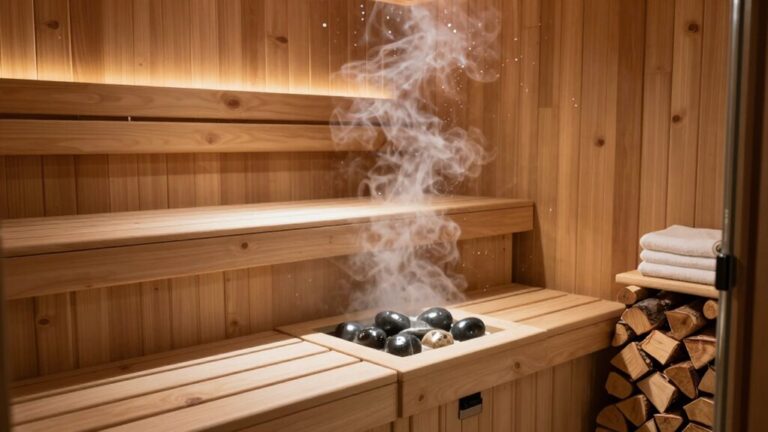
By placing a low intake vent near the heater, you can pull in cool air that helps mix with the warmth, while a high exhaust vent allows hot, humid air to escape. Proper ventilation also ensures consistent airflow throughout the sauna, preventing harmful gas buildup and enhancing your experience. Additionally, incorporating a 1/2” gap at the bottom of the door facilitates fresh air influx, further improving air quality.
Post-use, don’t forget to ventilate! Running the exhaust for a bit after your session helps clear out the steam and moisture, guaranteeing a dry environment that resists mold.
Low Intake Vent Placement
Effective ventilation strategies, particularly regarding low intake vent placement, play a crucial role in maintaining a healthy sauna environment.
Placing the intake vent near or slightly above the heater promotes the mixing of fresh air with heat, creating a warm and comfortable atmosphere. A lower vent can supply cooler air, improving convection and reducing humidity—a win for both comfort and mold prevention! Additionally, a well-designed passive system ensures a proper airflow pattern, allowing for optimal ventilation and minimizing stagnant air zones. Furthermore, proper ventilation is critical for maintaining adequate oxygen levels within the sauna, contributing to a healthier ambiance.
However, be cautious: if the sauna isn’t airtight, low intakes might let in unwanted air from gaps, diminishing effectiveness. Balance is key! Proper sizing of the intake guarantees enough airflow, helping to keep things fresh and dry.
Post-Use Ventilation Techniques
After you’ve enjoyed a relaxing session in your sauna or steam room, managing the lingering humidity is where post-use ventilation techniques can really shine.
First, installing a good exhaust fan is key; choose one made for high humidity to keep it running efficiently over time. Position it high on the wall to capture rising warm air before it condenses. Proper ventilation techniques are crucial to prevent moisture buildup, protecting your sauna materials and ensuring a comfortable environment. Additionally, ensure that effective ventilation systems are in place to maximize airflow and enhance the overall sauna experience.
Utilize automatic timers to keep the fan running for about 15 to 60 minutes after you leave. This helps remove moisture quickly.
Don’t forget to keep the door closed during use, and consider opening a dry room door briefly afterward to encourage airflow.
Selecting Mold-Resistant Materials
When you’re creating a sauna or steam room, choosing the right materials can make a big difference in preventing mold growth. To keep your space mold-free, focus on nonporous surfaces that won’t absorb moisture. Here are a few key tips for selecting mold-resistant materials:
- Use large-format quartz panels to minimize joints where mold likes to hide.
- Opt for waterproof cementitious backer boards to keep moisture away from structural framing.
- Select low-resin, stable softwoods, like Western Red Cedar, for areas that won’t get direct steam exposure. Additionally, it’s essential to maintain optimal humidity levels in the sauna to further prevent mold growth. Proper ventilation also plays a crucial role in denying mold conducive conditions.
Best Practices for Post-Use Drying
After enjoying your sauna session, it’s crucial to jump right into drying off those surfaces to prevent mold growth. Grab clean towels to wipe down benches, walls, and floors, focusing on areas where moisture tends to gather—in those sneaky corners! Remember that high temperature and humidity promote an environment that can lead to mold if not properly managed. Don’t forget to crack open windows or turn on fans, because fresh air circulation is your best buddy in keeping humidity at bay.
Immediate Towel Removal
To keep your towels fresh and mold-free, it’s essential to remove them from the sauna immediately after you’re done using them. This simple action prevents moisture retention that can lead to mold growth.
Wring out your towel thoroughly before hanging it up; doing so can cut drying time by 40-60%. Spread your towels out to promote better airflow, avoiding wrinkles and musty odors.
Here are a few best practices to remember:
- Use a second dry towel for complete body drying before you exit.
- Hang towels flat to allow moisture to escape easily.
- Choose quick-dry synthetic towels that absorb well and dry fast.
Effective Air Circulation
Once you’ve wrapped up your time in the sauna and removed those damp towels, the next step is all about keeping the air moving.
Start by opening the intake and exhaust vents to let warm, moist air escape while drawing in drier air. Place the fresh-air intake low, near the heater, and the exhaust vent high on the opposite wall. This setup helps create a natural circulation loop. Proper airflow design is essential for preventing stagnant humidity that can lead to mold growth.
If you have mechanical fans, turn them on for a while after use to actively expel excess humidity. You might even adjust their speed to manage airflow gently.
Finally, direct this airflow across benches to speed up drying, helping you maintain a mold-free sauna for your next relaxing session!
Regular Cleaning Routines
Regular cleaning routines are essential for keeping your sauna or steam room mold-free and inviting. By following consistent practices, you can greatly reduce the risk of mold growth.
Regular cleaning routines are vital for maintaining a mold-free sauna or steam room and ensuring a welcoming atmosphere.
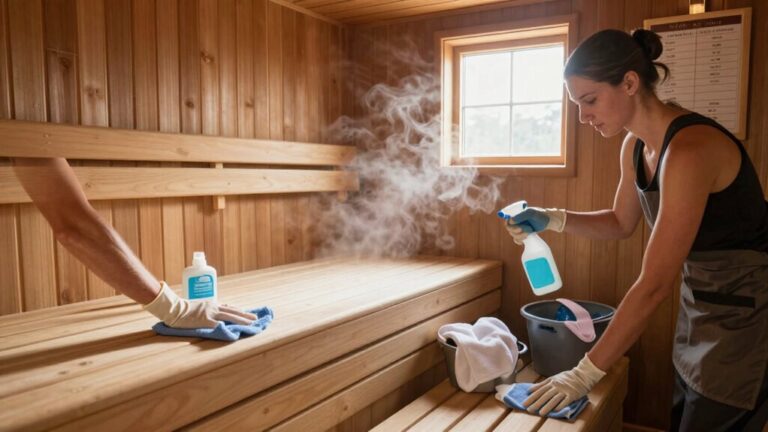
First, dry surfaces after each use by wiping benches and walls with a clean towel. Second, keep up with weekly cleanings using mild soap or a vinegar solution to sanitize surfaces thoroughly. Finally, guarantee proper ventilation by running your exhaust fan post-session.
Here are a few key steps to incorporate:
- Wipe down surfaces post-use to remove moisture.
- Leave the door open for thorough air circulation.
- Check hidden areas weekly to catch potential mold spots early.
Establishing these routines helps create a healthy environment for everyone.
Essential Design Features for Mold Prevention
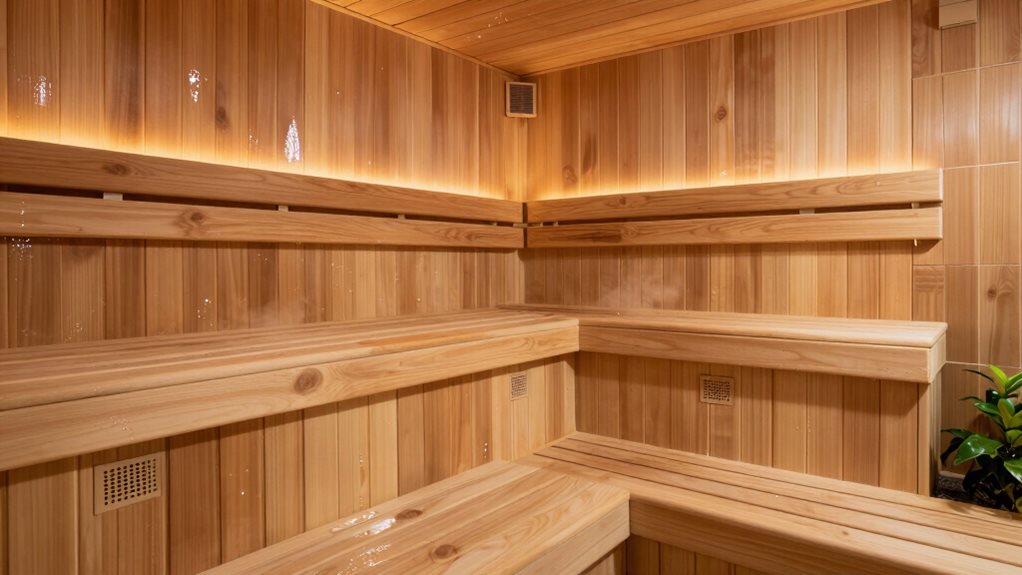
When designing a sauna or steam room, it’s crucial to include features that prevent mold growth while keeping the space comfortable and inviting.
Start with proper ventilation by placing vents low for intake and high for exhaust, creating a cross-flow that swiftly removes humid air. You’ll also want a moisture-resistant vapor barrier to stop condensation in walls.
Choose sleek, non-porous surfaces like glazed ceramic to make cleaning effortless, and keep organic materials to a minimum. Make certain your floors slope toward drains to avoid water pooling.
Finally, include provisions for humidity monitoring, activating ventilation when needed.
These thoughtful design choices not only help you enjoy your sauna but also keep it mold-free for years to come!
Benefits of Bio-Graphene Sensors
Bio-graphene sensors are changing the game in mold prevention, especially in places like saunas and steam rooms.
These innovative devices detect mold threats quickly and accurately, helping you keep your space safe and enjoyable.
With unique features, bio-graphene sensors improve monitoring:
- High sensitivity: They can identify even the tiniest levels of mold indicators, allowing for prompt action.
- Multi-parameter tracking: These sensors monitor humidity, temperature, and harmful VOCs simultaneously, giving a complete picture of your environment.
- Durability and flexibility: They withstand high humidity and condensation, making them ideal for wet environments.
Using bio-graphene sensors means you can enjoy peace of mind knowing you’re armed against mold, creating a healthier experience for everyone.
Importance of Proper Drainage Systems
Effective drainage systems aren’t just a technical necessity; they’re vital for keeping saunas and steam rooms safe and enjoyable. A well-designed drain layout needs a slope of 1–2% to direct water effortlessly toward drain points, preventing nasty puddles.
Placing drains in low spots or adding multiple ones in large areas helps avoid stagnant water. You’ll also want drain covers that keep debris out while letting water flow freely. Using waterproof membranes protects the building structure from leaks, and choosing slip-resistant flooring keeps everyone safe as they walk around.
Adopting a Proactive Approach to Mold Control
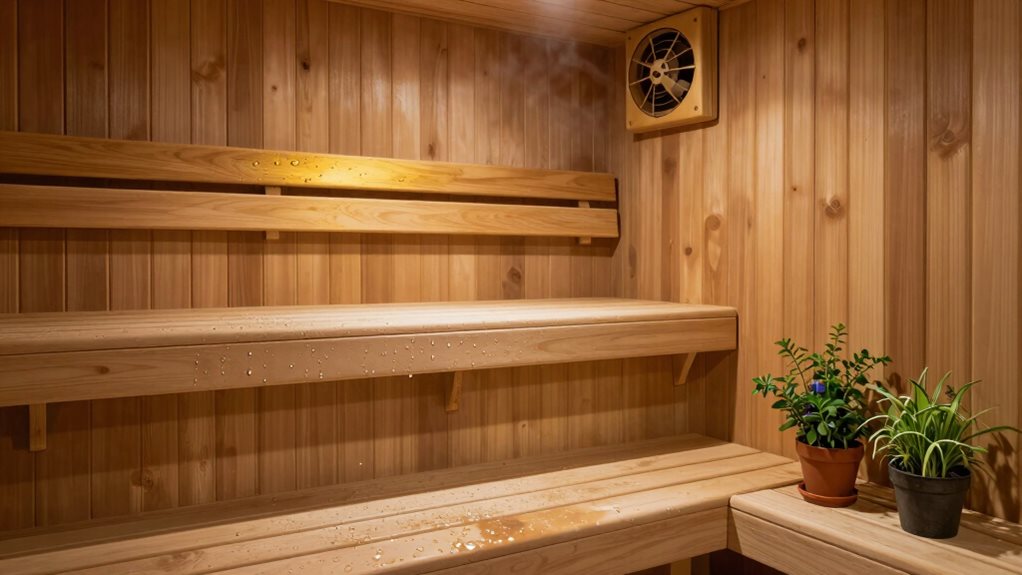
Keeping your sauna and steam environment mold-free isn’t solely about good drainage; it requires a proactive approach to mold control too.
By actively monitoring humidity and ventilation, you can create a space where mold struggles to thrive.
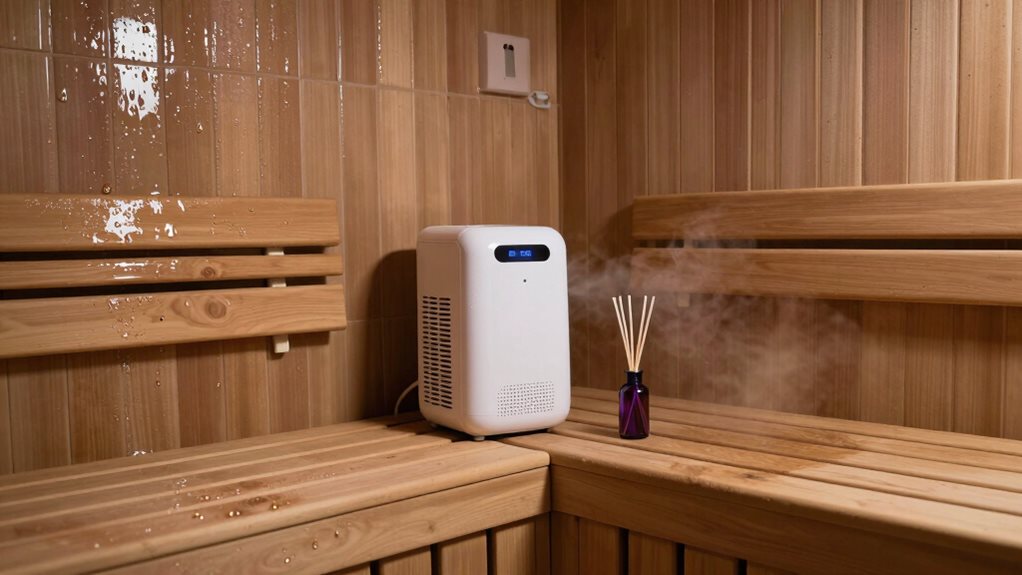
- Aim to keep humidity below 50% using dehumidifiers or air conditioners.
- Regularly check for leaks and address them immediately to prevent moisture buildup.
- Use fans for airflow, and quickly dry wet surfaces within 24-48 hours.
These practices not only help stop mold before it starts but additionally encourage a healthier atmosphere.
Frequently Asked Questions
How Often Should I Replace Sauna Towels for Mold Prevention?
You should replace sauna towels every 1–2 years, or sooner if you notice odors or visible wear. Check smaller towels and washcloths every 6–12 months for deterioration, guaranteeing cleanliness and hygiene in your sauna experience.
Can Essential Oils Help in Preventing Mold in Saunas?
Yes, crucial oils can help prevent mold in saunas. By using oils like tea tree or eucalyptus, you effectively disrupt mold growth, maintain a pleasant aroma, and guarantee a cleaner, healthier sauna experience for yourself.
What Temperature Range Is Ideal for a Sauna to Prevent Mold?
To prevent mold, maintain your sauna temperature between 65–95°C (149–203°F). Aim for around 80°C (176°F) for balance, promoting effective drying and reducing moisture without risking user safety or prolonged humidity.
Are There Specific Plants to Avoid in Sauna Environments?
You should avoid plants with succulent stems, dense leaves, or those requiring moist soil. Toxic species and those that produce excessive pollen or detritus can also escalate mold and allergen issues in sauna environments.
How Do I Safely Handle Mold if It Appears?
If you encounter mold, act quickly. Identify the affected area, apply a suitable cleaning solution, scrub gently, rinse thoroughly, and guarantee proper ventilation. Always wear protective gear and test chemicals on a small spot first.
Final Thoughts
In a wet sauna or steam environment, keeping mold at bay is vital for a healthy space. By maintaining ideal humidity, guaranteeing good ventilation, and using mold-resistant materials, you can make a big difference. Regular cleaning and drying after each use also play significant roles. Plus, incorporating smart design features can help you stay ahead of mold problems. So, explore these best practices and enjoy a cleaner, more enjoyable sauna experience!