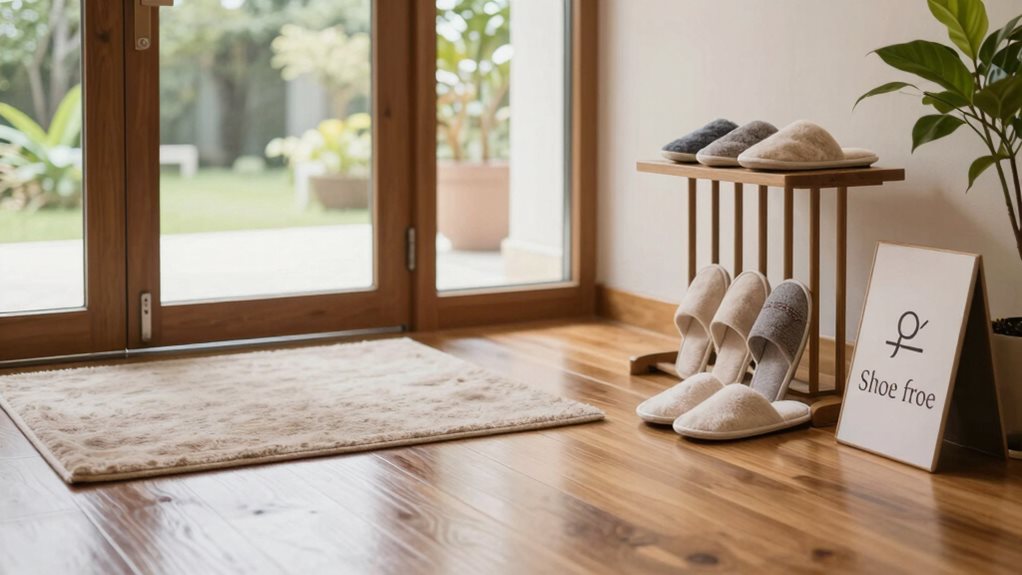

To prevent dirty shoe problems in spa and sauna areas, make certain to establish clear footwear guidelines. Prohibit outdoor shoes and encourage guests to use shower sandals or flip-flops instead. These options keep the space clean and reduce slipping risks. For added comfort, consider providing clean slippers or disposable liners. Don’t forget to implement a regular cleaning schedule and use durable, anti-slip flooring materials. By prioritizing cleanliness, you’ll guarantee a more enjoyable experience for everyone. Curious about more tips?
Effective Entry-Point Controls
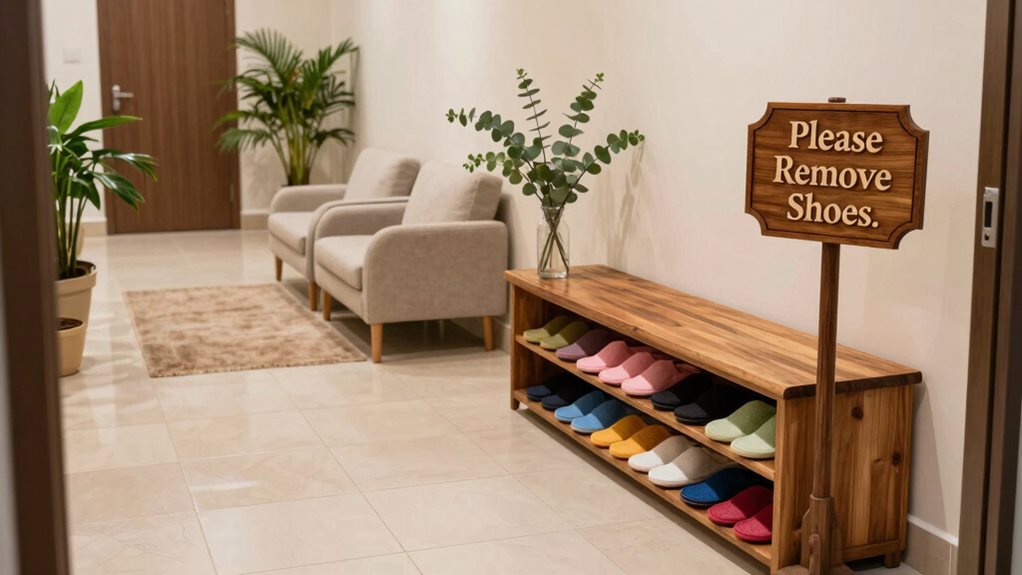
When you walk into a spa or sauna, you mightn’t think about how to keep things clean before you step inside, but effective entry-point controls can help a lot.
Installing external switches, like the Amerec 9208-101, lets you control things without entering the warm room. Imagine preheating your sauna from the outside—so nice! Sauna heater controllers allow for remote operation, ensuring the sauna is at the perfect temperature before you even step in. Mechanical timers make it easy too, letting you set how long the sauna runs while staying safe from heat. If you prefer tech, digital controls can adjust temperature and humidity from a distance, even scheduling when to start.
Installing external switches, such as the Amerec 9208-101, allows for convenient sauna control without stepping in—preheat from the outside!
And for added fun, WiFi smart systems let you manage everything from your phone. These controls work together to create a clean, welcoming environment.
Footwear Guidelines for Guests
Keeping a clean environment in spas and saunas goes beyond just the equipment and air quality; it also involves what you wear on your feet. To keep everyone safe and healthy, you can’t wear outdoor shoes in these areas. Instead, use shower sandals or flip-flops to protect your feet.
If you’re in a traditional sauna, bare feet are often preferred for better heat contact. Be sure to leave flip-flops outside the sauna door to avoid slipping inside. Non-slip shoes can help on wet floors, keeping you steady.
Flooring and Materials Considerations
To create a safe and enjoyable spa or sauna experience, the right flooring and materials play an essential role. Start with naturally decay-resistant softwoods like Western red cedar, which handle heat and moisture well. High Heat and Moisture Endurance is critical for maintaining longevity and safety in these environments.
In wet zones, choose impervious materials like ceramic tiles or sealed stone since they prevent moisture buildup and pesky bacteria. You’ll want anti-slip finishes too, like textured tiles, to keep everyone safe from slips and falls.
Think about drainage and ventilation; a sloped floor with drains helps moisture evaporate quickly. Finally, use sleek, non-porous surfaces in busy areas for easy cleaning.
Comprehensive Cleaning Protocols
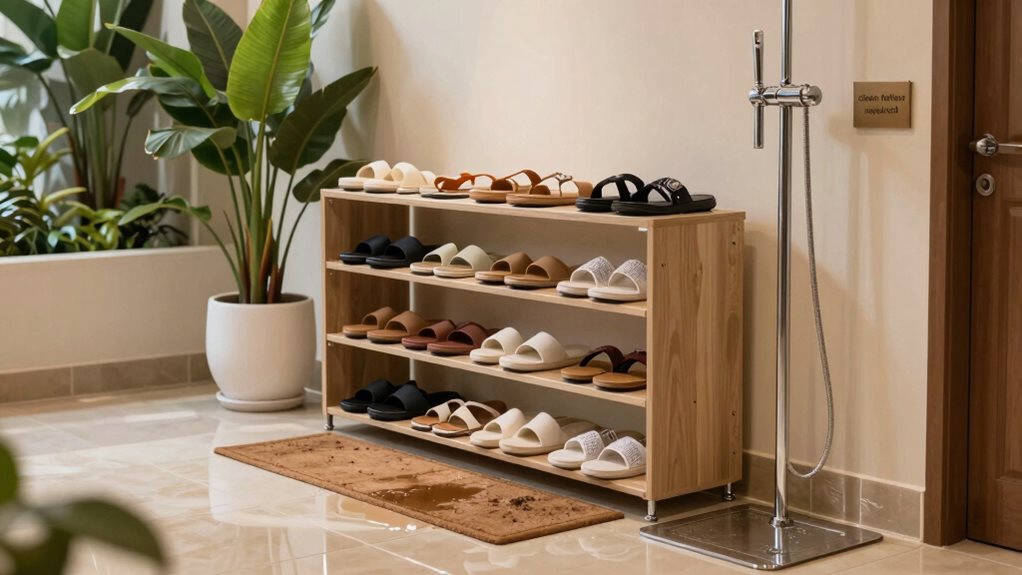
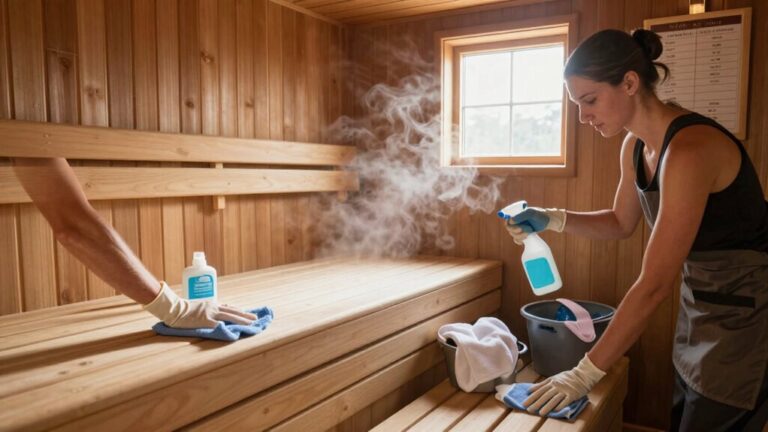
While a spa or sauna is meant to be a relaxing escape, it’s important not to overlook the vital cleaning protocols that keep the environment safe and welcoming.
A spa or sauna offers relaxation, but essential cleaning protocols ensure a safe and inviting atmosphere.
Here’s what you can do to guarantee your space stays spotless:
- Clean floors and benches daily using detergent and warm water.
- Disinfect surfaces with an EPA-registered disinfectant, making certain to keep them wet for the required contact time.
- Sanitize shared footwear regularly and provide disposable liners or clean slippers.
- Conduct deep-cleaning tasks nightly, especially for circulatory equipment.
- Keep a log of all cleaning activities to maintain accountability.
Operational Design and Staffing Strategies
When managing a spa or sauna, your staff plays an essential role in keeping the environment clean and welcoming.
Assigning specific responsibilities to attendants, like checking for dirt-tracking shoes and making certain clean entry areas, can make all the difference.
Plus, seamless booking and scheduling not only maximize guest enjoyment but also help your team stay organized and prepared for a busy day.
Attendant Responsibilities
Attendant responsibilities in spas and saunas play a crucial role in creating a welcoming and clean environment for guests. By staying proactive, you can guarantee a pleasant experience for everyone.
Here’s what you should focus on:
- Conduct regular inspections of saunas and locker rooms to catch dirt or clutter.
- Clean up spills and keep treatment rooms tidy for the next guest.
- Stock towels, robes, and other necessities to make guests feel at home.
- Monitor humidity and chemical levels to maintain safe facilities.
- Provide friendly tours and guidance on equipment use to improve guest comfort.
These responsibilities not only help maintain cleanliness but also contribute to a positive atmosphere, making sure guests leave satisfied and keen to return!
Booking and Scheduling
How can effective booking and scheduling make your spa experience more seamless and more enjoyable? By using smart systems, you’ll reduce dirty shoe issues before they even start.
Imagine booking your session with staggered start times, allowing you to arrive without a crowd. Your spa can set limits on the number of guests, guaranteeing that everyone has space without tracking dirt everywhere.
Clear footwear rules communicated before you arrive help you remember to bring spa sandals instead of outdoor shoes. Plus, with dedicated cleaning times and a mobile floorcare resource right when you need it, you can relax knowing staff are on top of cleanliness.
With these strategies, your experience will be invigorating and free from mud!
Monitoring and Continuous Improvement Techniques
To keep your spa and sauna clean, tracking key performance indicators is essential.
You can measure things like how often shoes bring in debris or the usage rate of your footwear sanitizers.
Regular cleanliness testing helps you catch issues early, guaranteeing a fresh environment for everyone who walks through your doors.
Performance Indicators Tracking
While keeping your spa or sauna clean might seem like a chore, tracking performance indicators can make it a breeze.
By monitoring the right metrics, you’ll guarantee cleanliness and safety while minimizing effort.
Here are some key performance indicators to keep an eye on:
- Chlorine generation for fresh water
- Daily pH and alkalinity checks for balanced chemistry
- Maintenance alerts for filters and water changes
- Remote access via apps like SmartTub
- Continual monitoring of sensor and salt life
Routine Cleanliness Testing
Keeping your spa or sauna pristine definitely involves more than just a quick wipe-down between guests. Regular cleanliness testing is essential to keep everything safe and inviting.
Start by checking the water’s pH levels daily; it should be between 7.2 and 7.8 to prevent skin irritation. Wipe high-touch surfaces like benches and handles with non-toxic cleaners to keep germs at bay.
Weekly, you’ll want to vacuum and inspect heaters for any dust buildup. Monthly, perform deep cleaning, which includes draining your spa and scrubbing surfaces with vinegar solutions.
Keep an eye out for visual signs like dust or sticky wood. By using checklists and a logbook, you can guarantee thorough cleaning routines that maintain a welcoming environment.
Frequently Asked Questions
What Types of Floor Mats Are Most Effective for Reducing Dirt?
For reducing dirt, you should choose perforated rubber mats, ribbed surfaces, and two-zone entry mats. These options effectively trap debris, absorb moisture, and minimize dirt transfer, guaranteeing cleaner spaces and improved safety.
How Often Should the Flooring Be Resealed for Optimal Cleanliness?
You should reseal flooring every 3-6 months for heavy usage, 6-9 months for moderate, and annually for light use. Regular checks for dryness and discoloration can help maintain ideal cleanliness and extend the sealant’s effectiveness.
Can Guests Wear Personal Sandals in Spa Areas?
No, you can’t wear personal sandals in spa areas. Most facilities prohibit outside footwear to maintain hygiene and comfort, allowing only facility-provided slippers or clean shower sandals in designated areas for maximum cleanliness.
What Are the Best Materials for Spa Benches and Steps?
The best materials for spa benches and steps include cedar, aspen, and teak. These woods resist moisture, feel comfortable against your skin, and provide a sleek, durable surface that improves your overall spa experience.
How Are Cleaning Products Selected for Use in Sauna Areas?
You select cleaning products for sauna areas based on pH neutrality, compatibility with wood, and safety. Look for non-bleaching, chlorine-free options that effectively break down grime while preserving the natural beauty of your surfaces.
Final Thoughts
By implementing effective entry-point controls, clear footwear guidelines, and smart flooring choices, you can keep your spa and sauna clean and serene. Plus, maintaining a solid cleaning routine and designing your space thoughtfully makes a huge difference. Don’t forget to regularly evaluate what works best! With these strategies in place, you’ll create a peaceful oasis where guests can relax without the worry of dirt and grime. A tidy environment is a happy environment!