
To keep your sauna stones in top shape, inspect them regularly for cracks, replacing any worn stones as needed. Clean them after each use, gently brushing off debris and soaking them monthly in warm soapy water. Stack the stones properly to guarantee good airflow and safety around the heater. Use clean water for steaming but avoid cold water on hot stones to prevent cracks. Want to improve your sauna experience even more? There’s plenty more to explore!
Inspection and Replacement Schedule
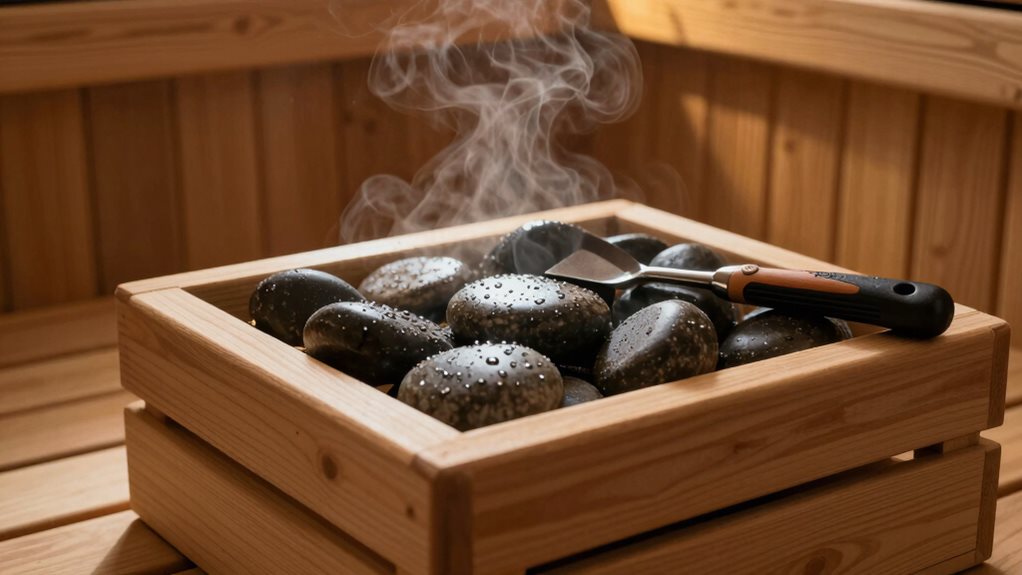
When you think about maintaining your sauna stones, it’s important to remember that regular inspections can keep everything running effortlessly.
Regular inspections of your sauna stones are essential for smooth operation and a more enjoyable experience.
You should check your electric heater stones once a year, replacing any cracked or worn ones, especially if you use your sauna regularly. If you’re using it commercially, inspect those stones every six months.
For wood-fired heaters, inspect stones every one to two years, paying extra attention to the upper stones that get more moisture exposure.
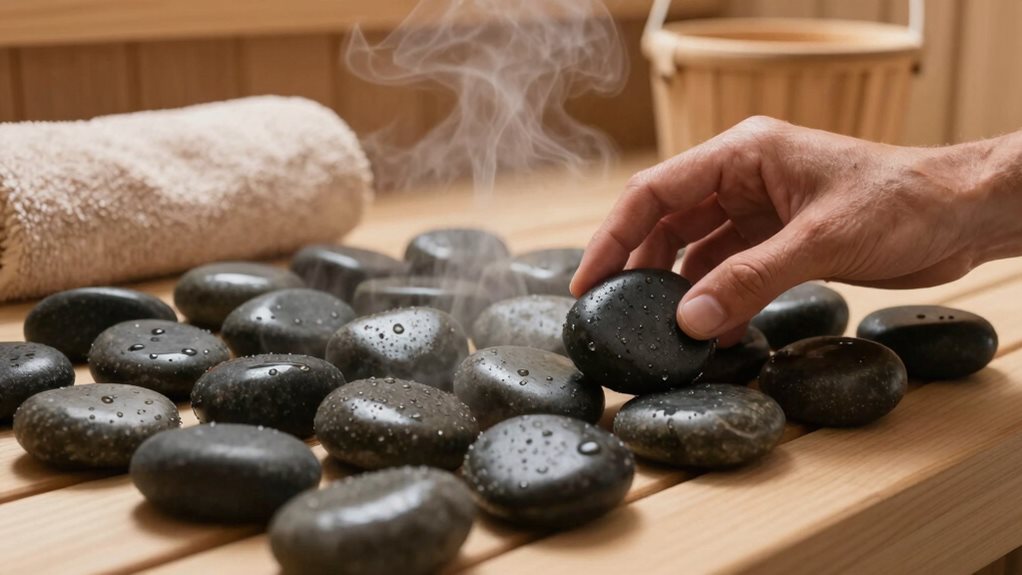
Look out for signs like cracking or decreased size; those mean it’s time to replace some stones. Do this regularly to prevent dust and residue from blocking airflow and making your sauna less enjoyable.
Regular checks can save you future headaches, so get started!
Cleaning Procedures and Frequency
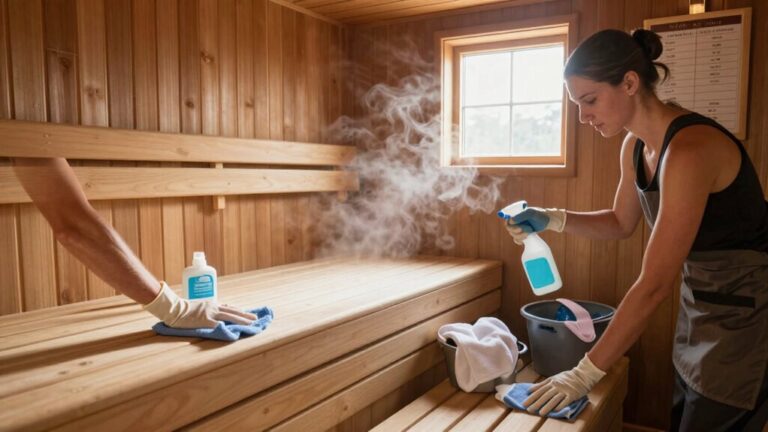
To keep your sauna stones in top shape, you’ll want to develop a routine for cleaning and maintaining them that fits your usage. After each sauna session, give the stones a quick brush to remove any debris. Monthly, soak the stones in warm, soapy water and scrub gently with a soft brush before rinsing with distilled water and air-drying them completely. If you notice white or orange mineral crusts, gently remove them using a diluted vinegar solution. For heavily encrusted stones, it’s best to replace them instead of scrubbing aggressively. Additionally, ensure that your sauna has proper ventilation to prevent excess humidity that can affect the stones’ longevity. Keep a maintenance log to track your cleaning efforts, and adjust your cleaning frequency based on how often you use the sauna—especially if you’re using it frequently!
Stacking, Airflow, and Heater Safety
After confirming your sauna stones are clean and ready to go, it’s time to think about how you stack them for best performance.
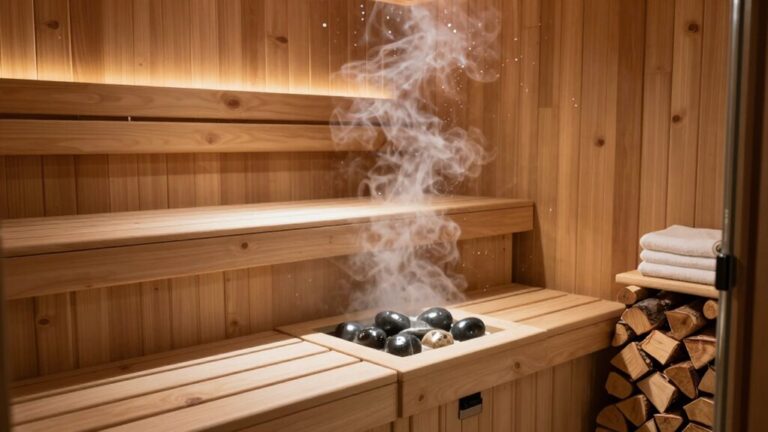
For electric heaters, place smaller stones, about 5–10 cm in diameter, between the heating elements for stability, and avoid wedging them too tightly. Loose arrangements promote airflow, preventing overheating.
If you’re using a wood stove, layer larger stones at the base, with smaller ones on top. Remember to rotate your stones every few months to maintain airflow.
Finally, always keep a safe distance—two to four inches from walls and twelve inches from seating areas—to prevent fire hazards. Your sauna experience will be safer and more enjoyable when you stack wisely!
Water Use and Steam Practices
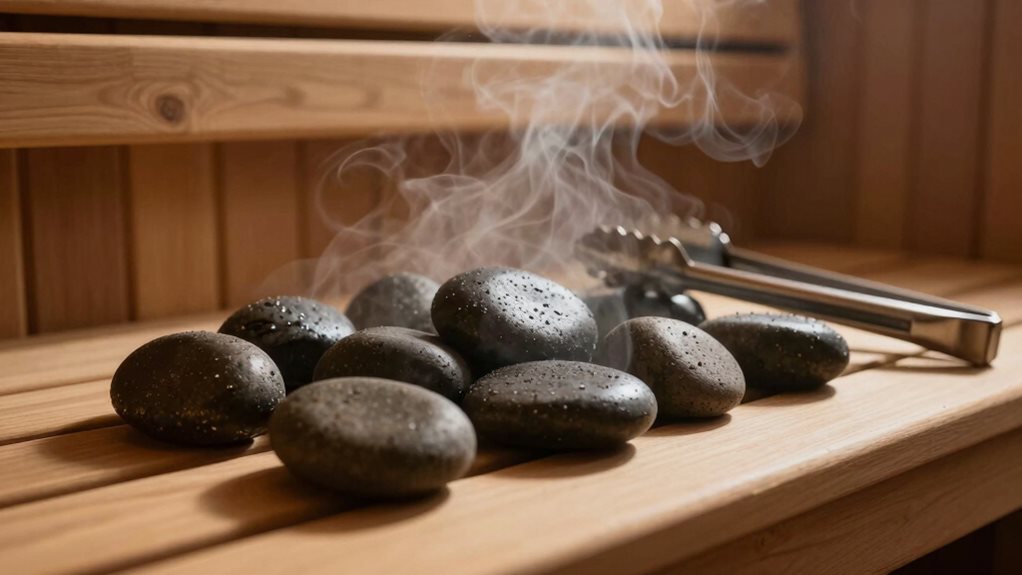
Using clean water in your sauna is key to getting the most from your steam sessions.
If you opt for cold water, be cautious, as it can shock the stones and disrupt your relaxation.
Just remember, using the right amount of water takes practice—too little leaves you dry, while too much can create an overwhelming heat burst.
Clean Water Importance
When you’re prepared to improve your sauna experience, the quality of water you use plays an essential role. Using clean water guarantees you get that perfect löyly—the hot steam that makes a sauna thrilling.
Hard water leaves mineral deposits on stones, making them less effective, while iron-rich water can leave unwanted residues. By opting for distilled water, you’re not merely keeping the stones clean; you’re also protecting your sauna walls from unsightly discoloration.
Start with small ladles for gentle steam, gradually increasing to avoid overwhelming your stones. Remember, the right water practices lead to soft, inviting humidity and elevate a detoxifying sweat session.
Cold Water Risks
While the heat of a sauna feels incredible, mixing cold water with those blistering stones can lead to some serious risks you mightn’t have considered.
Sudden cold immersion triggers a “cold shock response,” making your heart race and raising blood pressure, which can be dangerous, especially if you have heart issues.
Plus, pouring icy water on hot stones can crack them, creating sharp projectiles. You might think it’s invigorating, but you could end up with burns from explosive steam bursts.
To minimize these dangers, stick to room-temperature or warm water. Using a ladle from a safe distance helps avoid burns and keeps everyone safe.
Always prioritize safety to enjoy your sauna experience without worries!
Recommended Water Dosage
Mixing the right amount of water with your sauna stones can really amplify your experience, and it’s easier than you might think!
Start with about 80 ml, or one ladleful, which is roughly half a cup. For larger saunas, you can use two or three ladles, but be cautious not to overload your stones.
Always select warm or hot tap water to prevent any thermal shock. Pour it gently, allowing a few minutes between pours for the stones to regain heat. A nice burst of steam indicates you’re doing it right—no pooling at the heater means you’re on target!
Keep an eye on how it feels; if the air gets dry, don’t hesitate to reapply water for maximum comfort!
Stone Types and Sourcing
When choosing sauna stones, it’s vital to understand their characteristics and sourcing.
High-density stones like basalt and olivine diabase offer great heat retention and durability, making them ideal for your sauna experience.
However, you’ll want to avoid poor-quality stones that can crack or fade quickly, so it’s important to source from reliable suppliers who can guarantee stone quality.
Ideal Stone Characteristics
Choosing the right stones for your sauna is crucial for creating the perfect atmosphere and experience. You’ll want stones that retain heat well, like peridotite and olivine diabase, guaranteeing a warm, inviting environment.
Basalt also works great, radiating heat consistently while gabbro adds durability to your sessions. Don’t forget thermal shock resistance! Peridotite handles temperature swings like a pro, while olivine diabase resists shattering.
For steam production, volcanic rocks offer porous surfaces that create rich, soft löyly, leading to a soothing sauna experience. Aim for dense stones like basalt and diabase, as they hold more heat with low porosity.
Sourcing Quality Stones
To create a truly relaxing sauna experience, sourcing high-quality stones is essential, as the right materials directly impact heat retention and steam production.
For your sauna, consider options like olivine diabase, known for its dense, heat-retaining properties. Basalt is another excellent choice that heats quickly and withstands high temperatures. You might also explore peridotite, which boasts fantastic durability through repeated use.
When sourcing, stick to specialty sauna suppliers or established heater manufacturers for reliable, pre-tested stones. Online retailers offer convenient packages, but always check the size and surface characteristics.
Larger stones store heat better, while rough surfaces create steam quicker. Remember, your sauna deserves the best stone to provide you with that perfect, comforting experience!
Avoiding Poor Choices
Finding the right sauna stones can feel a bit like searching for treasure, but making poor choices can really spoil your experience.
Avoid soft and porous stones like sandstone or limestone; they break easily and can absorb water, risking dangerous explosions. Watch out for reactive minerals, too! Choosing stones with hazardous fibers or those that release nasty odors isn’t worth the gamble.
The shape and size matter just as much! Oversized stones can trap heat unevenly, while tiny gravel might compact too much.
Always check that your stones are sourced correctly; don’t grab random landscaping rocks or recycled materials, as they might contain harmful substances.
Stick to proven, high-quality stones to enjoy a safer and more enjoyable sauna experience!
Troubleshooting and Longevity Tips
How can you guarantee your sauna stones last longer and maintain their performance? Start by inspecting the stones every 3 to 12 months. Look for cracks or discoloration, and give each stone a tap; a clear sound means they’re good, while hollowness signals trouble.
Clean the stones after use, avoiding harsh detergents and thoroughly drying them before restacking. When putting them back, leave gaps for airflow and arrange larger stones closer to the heat.
Additionally, use filtered water to prevent limescale and avoid pouring water on cold stones, which can cause cracks.
Finally, keep a maintenance log. This way, you’ll catch issues early and enjoy your sauna longer. Happy relaxing!
Frequently Asked Questions
How Do I Choose the Right Size of Sauna Stones?
To choose the right size of sauna stones, check your heater’s manual. Generally, use larger stones for stability and heat retention, while smaller stones improve steam production. Aim for a balanced mix to optimize performance.
Can Using Essential Oils Damage My Sauna Stones?
Yes, using undiluted crucial oils can damage your sauna stones by leaving sticky residue and clogging surfaces. Always dilute oils before use to maintain your stones’ performance and avoid fire hazards in the sauna.
What Are the Signs That Stones Need Replacement?
You should replace stones if you notice cracks, fragmentation, discoloration, or a hollow sound when tapped. Weak steam, increased heating times, or visible heater elements also indicate it’s time for new sauna stones.
How Can I Enhance the Aroma in My Sauna Safely?
You can improve the aroma in your sauna safely by diluting vital oils in water and misting the air, or adding drops to sauna stones or a bowl on the stove for gentle evaporation.
Are There Specific Brands Recommended for Sauna Stones?
Yes, top brands for sauna stones include Harvia, HUUM, and Tylo. They recommend olivine diabase for durability and heat retention. Always consider the type of your heater when selecting the right stones for superior performance.
Final Thoughts
To keep your sauna stones in top shape, remember to inspect and clean them regularly. Stack them wisely for good airflow and follow steam practices that improve your experience. Choosing the right stone type matters too, so source them carefully. By staying on top of maintenance and troubleshooting, you’ll enjoy cozy and efficient sauna sessions for years to come. With these tips, you’ll not just prolong your stones’ life but also uplift your relaxation game!