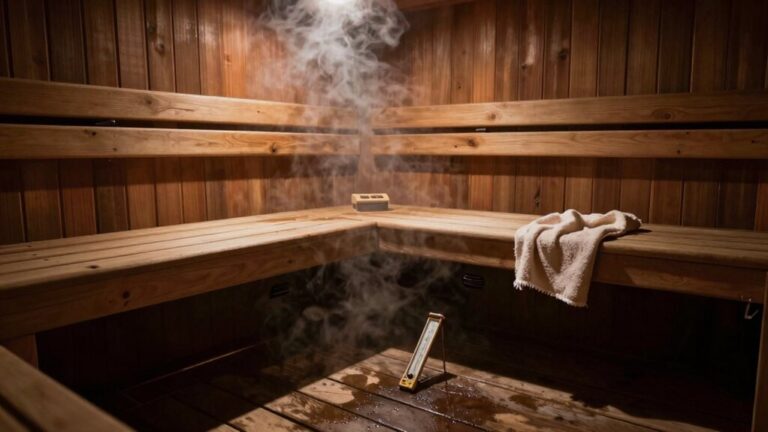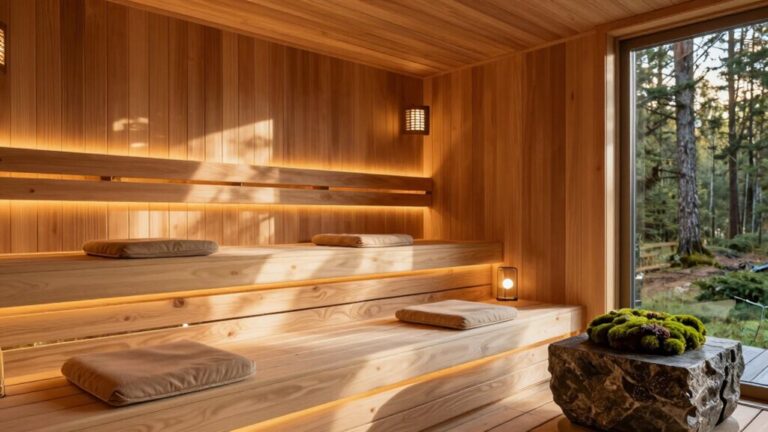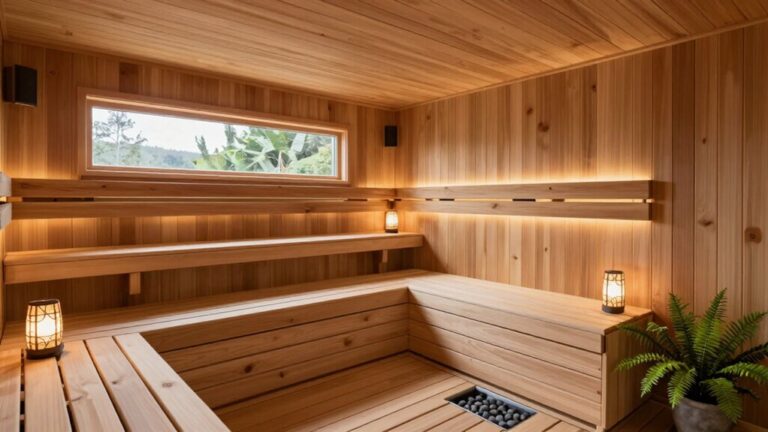
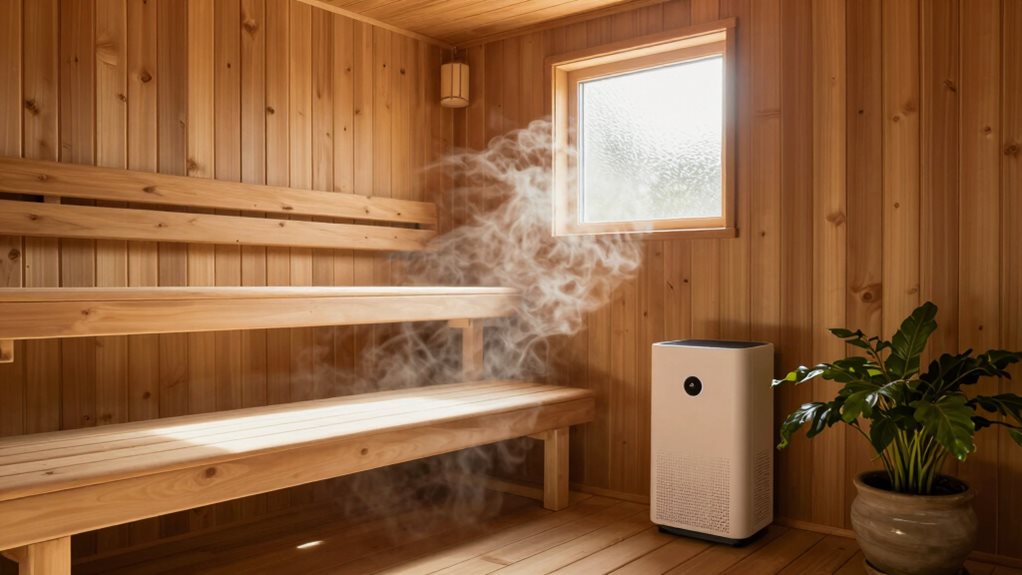

When it comes to saunas, using the right materials is key for clean indoor air. Basswood’s hypoallergenic properties keep airborne irritants at bay, making it a top choice. Mahogany adds durability, resisting moisture and decay while looking great. If you’re into something eco-friendly, ThermoAspen offers lasting strength and comfort. Don’t forget to take into account ventilation and insulation materials too! Stick around, and you’ll discover more tips for creating a fresh and healthy sauna experience.
The Importance of Indoor Air Quality in Saunas
When you step into a sauna, you might expect to feel enveloped by warmth and relaxation, but the air quality inside is just as crucial for your comfort and safety.
Good ventilation keeps fresh air flowing, which is fundamental to avoid high levels of carbon dioxide. Imagine trying to breathe in a crowded room—unpleasant, right? Aiming for 3–6 air changes per hour helps maintain a pleasant atmosphere. Maintaining low CO2 levels is essential for ensuring the health benefits of the sauna experience. A well-designed ventilation system can significantly improve air circulation and overall comfort.
You must also consider sources of contaminants, like sweat, odors, and even materials around you. Keeping surfaces clean avoids that ‘old wet towel’ smell. Additionally, incorporating natural materials can enhance the air quality and create a more inviting environment.
Hypoallergenic Properties of Basswood
If you’re looking for a wood that’s easy on allergies while enjoying the heat of a sauna, basswood is a top contender.
This hypoallergenic wood offers a few standout benefits that make it an excellent choice for sensitive users:
- Low resin and oil content means fewer airborne irritants and odors that can cause discomfort.
- Neutral scent profile helps minimize the release of volatile organic compounds (VOCs) at high temperatures.
- Uniform grain with minimal knots lowers the risk of irritating pockets of resin or sap.
Additionally, its hypoallergenic qualities make basswood particularly appealing, as many sauna experts regard basswood as the most hypoallergenic option. Moreover, its eco-friendly nature ensures that you are making a sustainable choice that grows abundantly and matures in about seven years. Choosing a natural wood sauna heater that incorporates basswood can further enhance your sauna experience.
It’s important, though, to keep your sauna clean and dry, as proper maintenance plays a big role in maintaining indoor air quality.
Enjoy your sauna experience without worrying about allergies!
Benefits of Mahogany for Saunas
While basswood shines as a hypoallergenic choice for saunas, mahogany offers its own unique set of benefits that make it suitable for a steamy retreat.
This dense hardwood not only resists moisture and decay but also keeps your sauna invitingly warm, thanks to its high thermal mass. Mahogany’s heat resistance ensures it withstands high temperatures without warping or cracking, enhancing its suitability for sauna environments. Its impressive dimensional stability also means you won’t have to worry as much about maintenance in extreme conditions.
You’ll love the rich, warm color and elegant grain, improving your sauna’s luxurious feel.
Just remember, mahogany’s surfaces can get hot, so it’s best for walls and accents rather than benches.
Its lovely aroma is mild and won’t overwhelm your senses.
Plus, with proper care, mahogany can last a long time, giving you fewer reasons to replace those sauna materials.
Who doesn’t appreciate a beautiful and durable sauna?
Durability of ThermoAspen in High Heat
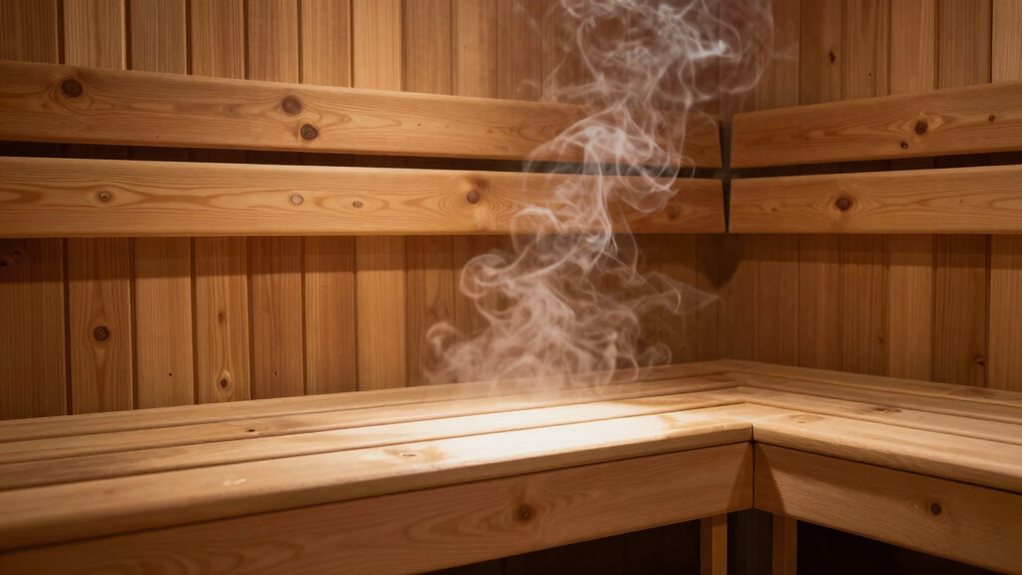
Although many wood types struggle to maintain integrity in high heat conditions, ThermoAspen stands out as a remarkable choice for saunas.
Thanks to a thermal modification process, this wood becomes incredibly durable, making it a smart investment for your sauna experience.
- Dimensionally stable: It resists natural shape changes, guaranteeing a consistent appearance. The extended tongue and groove profile helps minimize any visual discrepancies during humidity fluctuations.
- Water resistance: ThermoAspen keeps decay, pests, and fungi at bay, improving longevity. This is due to its high resistance to decay, which ensures a longer lifespan for your sauna materials.
- Comfortable heat performance: Its low heat conductivity means it won’t overheat, staying pleasant to touch.
The Role of Insulation Mineral Wool
When you’re looking to create the perfect sauna experience, the role of insulation mineral wool can’t be overlooked.
This material boasts a great R-value of about 3.0–3.5 per inch, which means it efficiently keeps the heat in your sauna. Its interlocking fibers trap air, minimizing heat loss, so the sauna warms up quicker and uses less energy. Additionally, its hydrophobic nature prevents water absorption, protecting the sauna from mold and mildew. Proper insulation also reduces heat loss and improves energy efficiency, enhancing your overall sauna experience.
Plus, it remains effective even in high temperatures where other insulations fail. Mineral wool is also fire-resistant, meaning it won’t catch fire like some materials can.
If moisture is a concern, remember to install a proper vapor barrier with it.
Effective Ventilation Strategies
When you’re setting up your sauna, effective ventilation strategies are key to keeping the air fresh and comfortable.
You’ll want to think about the air exchange rate, which controls how often fresh air enters, helping to reduce pollutants and moisture buildup.
Plus, the placement of your vents can make a huge difference, so let’s explore how to optimize these elements for the best sauna experience! Incorporating a sauna ventilation fan system can significantly enhance air circulation and improve overall indoor air quality.
Air Exchange Rate
Effective ventilation is crucial for maintaining a healthy air exchange rate in saunas, guaranteeing that you breathe fresh air while enjoying the heat.
To achieve ideal ventilation, keep these strategies in mind:
- Aim for 4-5 air changes per hour (ACH) for smaller home saunas to prevent stale air.
- Position your intake vent low, near the heater, and place the exhaust vent high, across the room.
- Adjust vent sizes according to the sauna’s needs—intake vents should start at 50–100 cm² while exhaust vents need to be slightly larger.
Pollutant Reduction Techniques
To keep the air inside your sauna fresh and healthy, it’s important to employ effective pollutant reduction techniques that work alongside good ventilation.
Start by placing fresh air supply vents above the heater to efficiently remove CO2, VOCs, and other pollutants. Vents below the benches help mix the air better and keep bathers comfortable.
Make sure your vents are properly sized—about one square inch for each cubic foot of space. Use adjustable exhaust outlets near the ceiling to balance moisture and avoid mold growth.
You can even improve air circulation with heat-resistant fans. Additionally, consider investing in a sauna moisture control system to further enhance your sauna’s air quality.
These simple strategies not just enhance air quality but also create a more enjoyable sauna experience, guaranteeing your relaxation isn’t compromised!
Placement of Vents
Proper vent placement plays a crucial role in maintaining a healthy sauna environment, assuring the air stays fresh and comfy.
By strategically positioning your vents, you can improve airflow and create a more enjoyable sauna experience.
- Position fresh air intake above the heater, at least 31 inches from the floor.
- Place the exhaust vent under the benches, about 18 inches from the floor, on the opposite wall from the intake.
- Use a larger exhaust vent than the intake to guarantee seamless airflow.
Advantages of Carbon Heaters
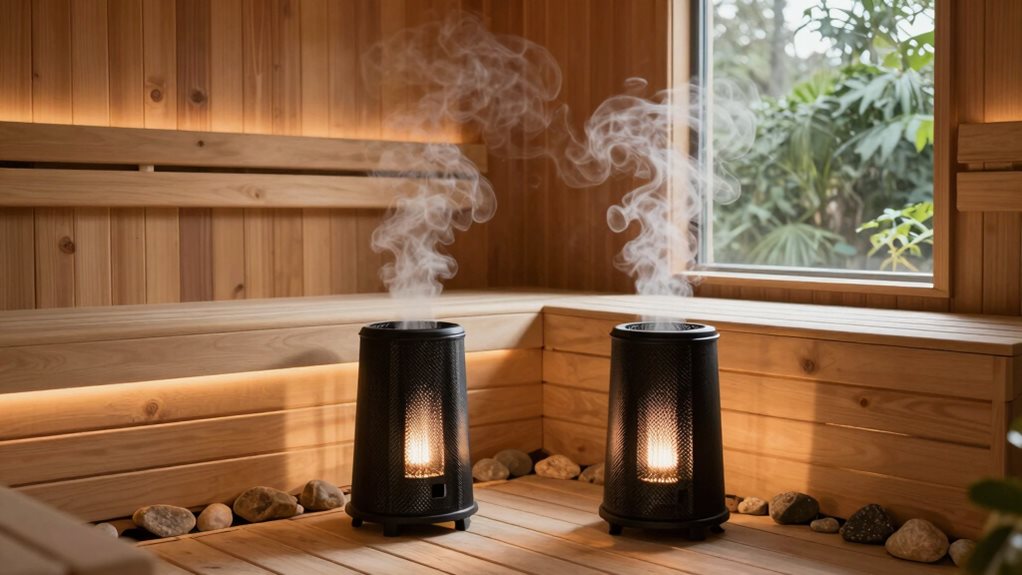
When you think about creating the perfect sauna experience, carbon heaters stand out as a game changer. They use less energy than traditional ceramic heaters due to their lower surface temperatures, which means you save on electricity bills.
With panels that cover large areas, you’ll enjoy even heat without those annoying cold spots. Plus, the longer wavelengths of carbon heaters penetrate deeper into your skin, promoting better detoxification and allowing for longer, safer sessions. They even improve circulation and help with muscle recovery!
And with their flexible panels, they’re more durable, meaning you can kick back and relax without worrying about your heater breaking down. All in all, carbon heaters truly enhance your sauna experience.
Choosing Eco-Certified Materials
Creating a sauna that promotes good indoor air quality goes beyond just choosing the right heater.
You’ll want to select eco-certified materials to guarantee safety and sustainability.
Consider these key certifications:
- Forest Stewardship Council (FSC): Verifies wood from responsibly managed forests, promoting biodiversity.
- Blue Angel: Focuses on low-emission products, guaranteeing healthier indoor air.
- Low-VOC finishes: Natural oils and low-VOC options minimize harmful emissions.
Maintaining Air Quality With Proper Maintenance
To keep your sauna’s air quality fresh and clean, regular maintenance is essential.
First, aim for 4–8 air changes per hour to guarantee oxygen levels stay high and humidity remains manageable. Position a fresh-air inlet near the heater and an exhaust vent at the ceiling to help circulate air effectively.
After each session, leave the door open for 20–30 minutes to speed up drying and reduce moisture. Wipe down benches and walls after use to keep surfaces clean and free from bacteria.
Regularly check for mold or mildew, and clean your heater and stones annually. Additionally, consider incorporating a HEPA air purifier to enhance the overall air quality in your sauna.
With these simple steps, you’ll keep the air in your sauna pleasant and healthy, making each session enjoyable!
Frequently Asked Questions
Can Sauna Materials Affect Allergy Symptoms During Use?
Yes, sauna materials can affect your allergy symptoms during use. Choosing low-VOC, non-allergenic wood, and avoiding harsh finishes minimize irritants, helping reduce respiratory issues and skin reactions while guaranteeing a more comfortable sauna experience.
How Often Should I Replace Sauna Materials for Optimal Air Quality?
You should replace sauna materials based on usage frequency. Wood benches last 10–15 years, towels every 1–3 years, and inspect heater components annually, guaranteeing ideal air quality and preventing issues like mold and VOCs.
Are There Specific Cleaning Products Safe for Sauna Interiors?
Yes, for sauna interiors, use natural cleansers like vinegar solutions or specialized products such as Harvia or Clearlight cleaners. They disinfect effectively without damaging wood or affecting air quality—always avoid harsh chemicals that can harm.
What Common Bacteria and Mold Should I Be Aware of in Saunas?
You should be aware of Staphylococcus, Corynebacterium, and Bacillus bacteria, plus Cladosporium and Aspergillus molds in saunas. These can pose health risks, especially if your skin barrier is compromised or you’re immunocompromised.
How Does Sauna Humidity Impact Indoor Air Quality?
Sauna humidity directly impacts indoor air quality by influencing odors, airborne contaminants, and microbial growth. High humidity can boost off-gassing and irritants, while low humidity generally decreases moisture-related issues, improving overall air quality for you.
Final Thoughts
To wrap it up, creating a healthy indoor air quality in your sauna is all about smart choices. By picking materials like basswood or mahogany, guaranteeing good insulation with mineral wool, and maintaining proper ventilation, you can enjoy a high-quality sauna experience. Plus, using eco-certified materials shows you care about the environment. With a little effort, you can keep your sauna fresh, clean, and inviting, making each visit a truly relaxing escape. Happy sweating!