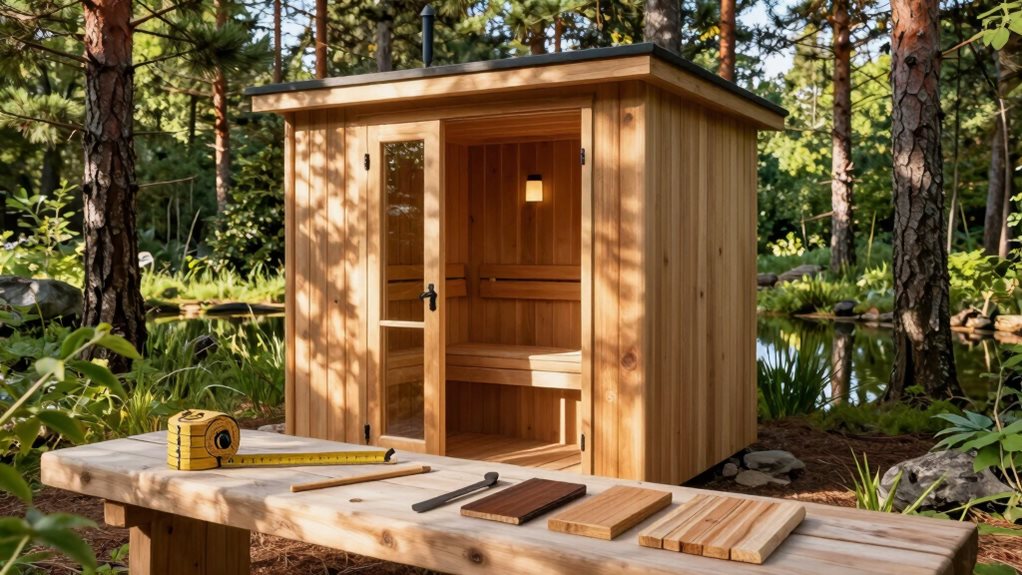

When building a sustainable sauna, focus on eco-friendly sourcing by choosing durable, renewable materials. Go for sustainable wood options like cedar or pine, which resist rot and insulate well. Look for rapidly renewable materials like bamboo and cork, which are strong and moisture-resistant. Non-toxic insulation like sheep’s wool keeps your sauna cozy without harmful chemicals. By sourcing locally, you’ll cut down transportation emissions and support your community. There’s so much more you can do to make your sauna even better!
Choosing Sustainable Wood Options
When you’re choosing sustainable wood options for your sauna, it’s important to contemplate not just how the wood performs but also its environmental impact.
For durability and aroma, Western red cedar is an excellent choice, as it naturally resists rot and insects. If you want a low-resin option, Nordic spruce or pine can keep your sauna’s interiors looking great while performing well in heat. Additionally, cedar’s natural insulation properties ensure a comfortable environment during your sauna sessions. Moreover, Western Red Cedar’s natural antiseptic effects repel bacteria, contributing to a healthier sauna atmosphere. Furthermore, using insulation materials that complement your wood choice can enhance energy efficiency.
For a hypoallergenic experience, consider aspen or alder, which have minimal odors. Hemlock is perfect if you desire dimensional stability with reduced maintenance.
Don’t forget about thermally modified woods like thermo-aspen—these give you great decay resistance without harmful chemicals.
Choosing wisely means enjoying a sauna that’s not just comfy but eco-friendly too!
Embracing Rapidly Renewable Materials
After selecting sustainable wood options for your sauna, you might want to reflect on another layer of eco-friendly materials: rapidly renewable options. Embracing these can boost your sauna’s sustainability while adding unique benefits.
Here are some materials to ponder:
- Bamboo: Grows quickly, offers high strength, and reduces pressure on forests.
- Cork: Harvested without cutting trees, it provides excellent moisture resistance.
- Hemp-Lime Composites: Lowers your sauna’s impact, all while giving a unique touch.
- Natural Textiles: Materials like sheep’s wool help with insulation and moisture management. These choices align with the principles of sustainability and health.
Choosing rapidly renewable options not only aids the environment, but it also improves your sauna’s comfort and longevity. Additionally, natural insulation materials such as sheep’s wool provide sustainable and high-performing insulation, ensuring optimal heat retention in your sauna.
Immerse yourself and discover these sustainable gems!
Selecting Non-Toxic Insulation
Selecting the right insulation for your sauna is crucial, especially if you want to keep it cozy and eco-friendly. Non-toxic options like sheep’s wool, hemp, and cork not only protect the planet but also help you save on energy costs. Energy-efficient design reduces utility bills, making these insulation choices even more beneficial. Sheep’s wool is renewable and naturally mold-resistant, while hemp insulation is carbon-negative and requires minimal energy to produce. Additionally, wool’s thermal insulation properties enable it to retain heat efficiently, enhancing the comfort of your sauna. Cork, harvested safely, offers excellent thermal properties without harmful chemicals. You might even consider cellulose, made from recycled materials, which improves indoor air quality. Finally, recycled denim provides a fun, biodegradable option that keeps things snug.
Understanding Thermally Modified Woods
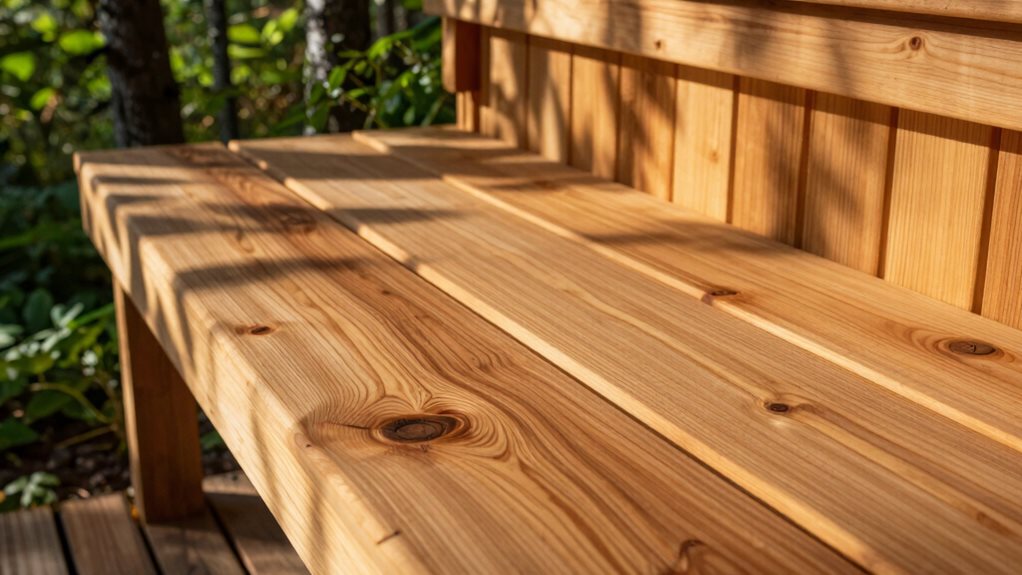
If you’re looking to improve your sauna experience, understanding thermally modified wood can be a game-changer. This innovative wood undergoes a unique heat treatment that transforms its properties. Here are some perks of using it:
- Durability: It’s resistant to rot and pests, extending your sauna’s lifespan.
- Stability: Reduced moisture absorption means less warping in humid conditions. Additionally, this wood is less prone to warping due to its improved strength and durability from heat treatment. Moreover, thermally modified wood offers enhanced bio-resistance against pests and microorganisms, further contributing to its longevity. The natural wood sauna heater pairs perfectly with this type of wood, ensuring a harmonious sauna experience.
- Sustainability: Sourced from sustainably managed forests, it’s an eco-friendly option.
- Thermal efficiency: You’ll enjoy better heat retention, making your sauna more energy-efficient.
Exploring Durable Eco Flooring
Have you ever thought about how the right flooring can improve your sauna experience? Choosing durable eco flooring can really make a difference!
Ipe wood tiles, for instance, are long-lasting, outlasting other options by 10-20 years. Their interlocking base allows for quick installation, so you won’t need tools. Additionally, these tiles are designed to support a four-ton load, making them suitable for both domestic and commercial use. Another great option is interlocking foam mats, which offer a soft, cushioned surface for added comfort and insulation.
If you prefer a softer feel, cork flooring panels provide warmth and natural resistance to mold.
Ceramic tiles are also an excellent choice with their ability to handle heat and humidity while being easy to clean.
Finally, PVC and rubber tiles offer cushioned surfaces that grip well, making them perfect for slippery sauna environments.
Selecting the right flooring not only boosts comfort but also supports a sustainable lifestyle!
Recognizing Performance Benefits of Materials
When you understand the performance benefits of various materials, you can truly improve your sauna experience. Choosing the right components not just boosts comfort but also guarantees longevity.
Here are some key advantages:
- Heat treatment: Thermowood resists warping and decay while maintaining dimensional stability.
- Renewable insulation: Materials like sheep’s wool and hemp regulate humidity and reduce energy costs.
- Wood species: Cedar and hemlock provide excellent heat retention and durability.
- Chemical-free process: Thermowood’s eco-friendly treatment is safer for you and the environment.
- Additionally, opting for an eco-friendly sauna heater enhances energy efficiency, ensuring a more sustainable sauna experience.
Sourcing Locally for Reduced Carbon Footprint

Choosing the right materials for your sauna doesn’t just enhance comfort and longevity; it also plays an important role in reducing your carbon footprint.
When you source wood locally—like Aspen or Alder in Finland—you greatly shorten transport distances, cutting emissions along the way. Plus, using nearby Black Spruce or Cedar not only supports regional economies but also guarantees durability and heat retention.
These locally sourced materials often come from responsibly managed forests, securing a sustainable supply. Think about it: every piece of timber contributes to a healthier ecosystem while giving your sauna a unique character. Additionally, investing in a home sauna kit that prioritizes eco-friendly materials can further amplify your commitment to sustainability.
Frequently Asked Questions
What Certifications Should Wood Materials Have for Sustainability?
For sustainability, you should look for wood materials with FSC or PEFC certifications. These guarantee responsible forestry practices. Consider additional certifications like Blue Angel for further confidence of eco-friendliness and minimal environmental impact.
How Do I Maintain My Sauna’s Eco-Friendly Materials?
To maintain your sauna’s eco-friendly materials, regularly clean and air it out, use low-VOC treatments, inspect for damage, and guarantee proper ventilation. This prevents moisture issues and keeps your materials in excellent condition.
Can I Mix Different Wood Types in My Sauna?
Yes, you can mix different wood types in your sauna. Combining woods allows for unique aesthetics, augmented durability, and improved performance, as long as they’re sauna-compatible and can withstand high temperatures and humidity. Enjoy the creativity!
What Are the Cost Implications of Sustainable Materials?
Sustainable materials can cost more upfront, like Nordic spruce or reclaimed lumber, but they often save on maintenance and energy bills. In the long run, you’ll enjoy lower costs and greater environmental benefits.
How Do I Find Local Suppliers for Sustainable Sauna Materials?
To find local suppliers for sustainable sauna materials, search online directories like Craigslist and Facebook Marketplace, check Google Maps for ratings, and explore regional trade associations for FSC-certified lumber yards near you.
Final Thoughts
Building a sustainable sauna doesn’t have to be an intimidating task. By choosing eco-friendly materials like sustainable wood, rapidly renewable resources, and non-toxic insulation, you can create a relaxing space that’s kind to the planet. Remember, sourcing locally not just supports your community but also cuts down on transportation emissions. With a bit of effort and thought, you can enjoy your sauna while feeling good about your choices—like having your cake and eating it too!