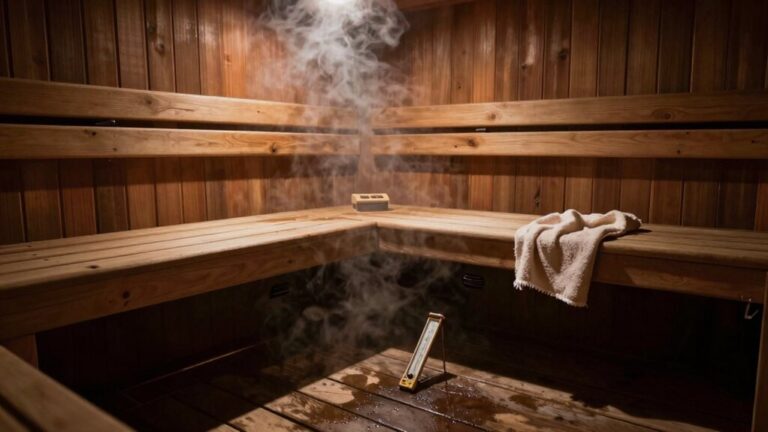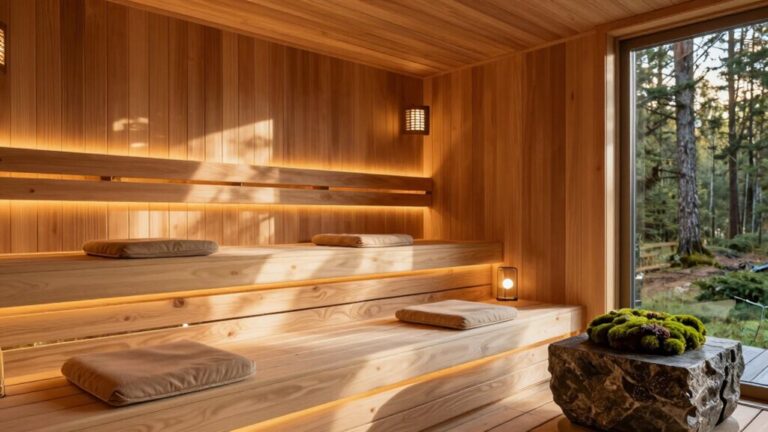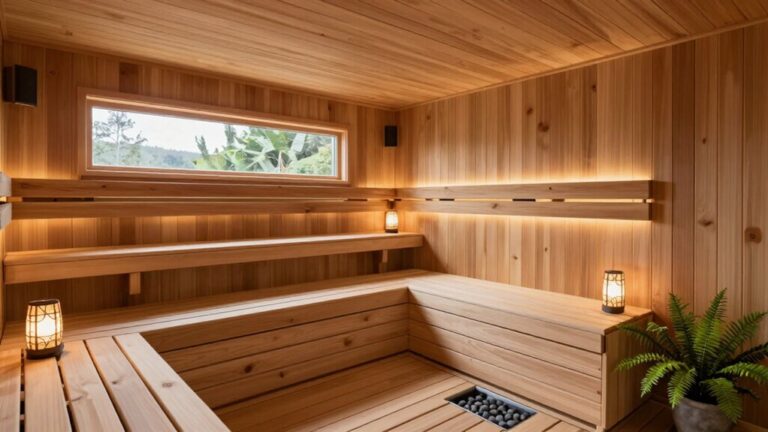
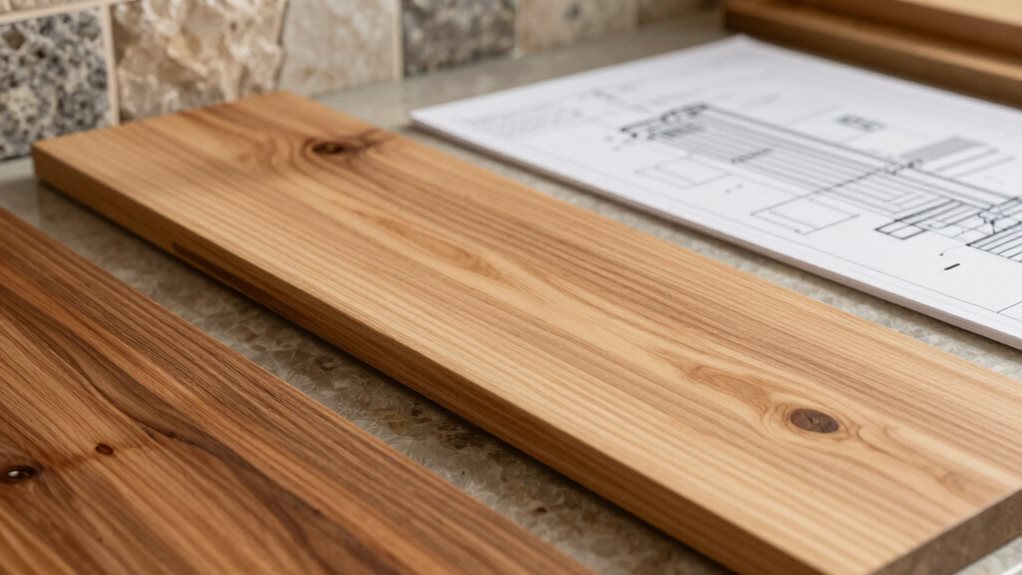

When building the perfect sauna, the right materials make all the difference! Choose wood like Western Red Cedar for its durability and pleasant aroma. For insulation, opt for mineral wool to keep things cozy. Don’t forget about moisture-resistant components like stainless-steel fasteners and smart ventilation. Soft woods for benches, like aspen, guarantee comfort. Plus, aim for eco-friendly options, such as certified lumber, to make a sustainable choice. Discover more tips to enhance your sauna experience!
Choosing the Right Wood for Your Sauna
When you’re planning to build your sauna, choosing the right wood is crucial for both comfort and durability. You’ve got some great options!
Western Red Cedar is popular for its decay resistance and pleasant aroma, making it perfect for interiors. Its natural antiseptic effects help repel bacteria and fungi, contributing to a healthier environment. Additionally, cedar’s moisture resistance makes it particularly suitable for traditional saunas with high humidity levels. Furthermore, many sauna enthusiasts prefer using cedar wood sauna heaters to complement the unique properties of cedar.
Western Red Cedar stands out for its natural decay resistance and delightful scent, making it an ideal choice for your sauna’s interior.
If you lean towards a traditional touch, Nordic Spruce is a classic Finnish choice due to its good stability in humid conditions.
For something sleek and hypoallergenic, consider Aspen; it’s splinter-free and comfortable to sit on.
And, if you’re on a budget, Alder and Douglas Fir offer dependable strength and an inviting look.
Each type of wood brings unique benefits, so choose wisely to create a space that’s cozy, durable, and just right for you!
Insulation and Vapor Control Strategies
After you’ve selected the perfect wood for your sauna, it’s time to turn your attention to insulation and vapor control. You want to keep all that heat inside, right?
Using materials like mineral wool or foil-faced insulation can help. Mineral wool resists moisture and provides excellent thermal performance, while foil-faced insulation reflects radiant heat, acting as a vapor barrier. Proper insulation significantly enhances energy efficiency, allowing your sauna to maintain heat for extended periods. Remember, achieving an optimal U value of 0.10 to 0.15 W/(m²K) for walls ensures that your sauna is effectively insulated. Additionally, investing in a quality sauna insulation kit can streamline your installation process and improve overall effectiveness.
Installing these correctly is key; make sure to have a continuous layer with no air pockets. Don’t forget about sealing seams with tape—this is where moisture sneaks in!
Plus, using aluminum foil as a barrier can further protect your structure. Keep your sauna cozy and efficient by carefully selecting and installing these materials!
Happy building!
Structural and Moisture-Resistant Components
Selecting the right structural and moisture-resistant components for your sauna can make a world of difference in both its performance and longevity.
Choosing suitable structural and moisture-resistant materials for your sauna significantly enhances its performance and durability.
To guarantee your sauna stands the test of time, consider these crucial tips:
- Use softwoods like Western Red Cedar or Hemlock for interior cladding to minimize resin bleed. Additionally, select wood types such as spruce and aspen for comfortable loungers that will complement the sauna experience.
- Opt for thermally modified wood to reduce swelling and decay, as this process enhances the wood’s dimensional stability.
- Choose decay-resistant species for flooring, like Ipe, especially in moist areas. Additionally, ventilation options are critical to maintain optimal air quality and temperature control.
- Utilize stainless-steel fasteners to prevent rust in humid conditions.
These choices not only improve the sauna’s durability but also make your sauna experience more enjoyable.
Selecting Benches, Trim, and Interior Fittings
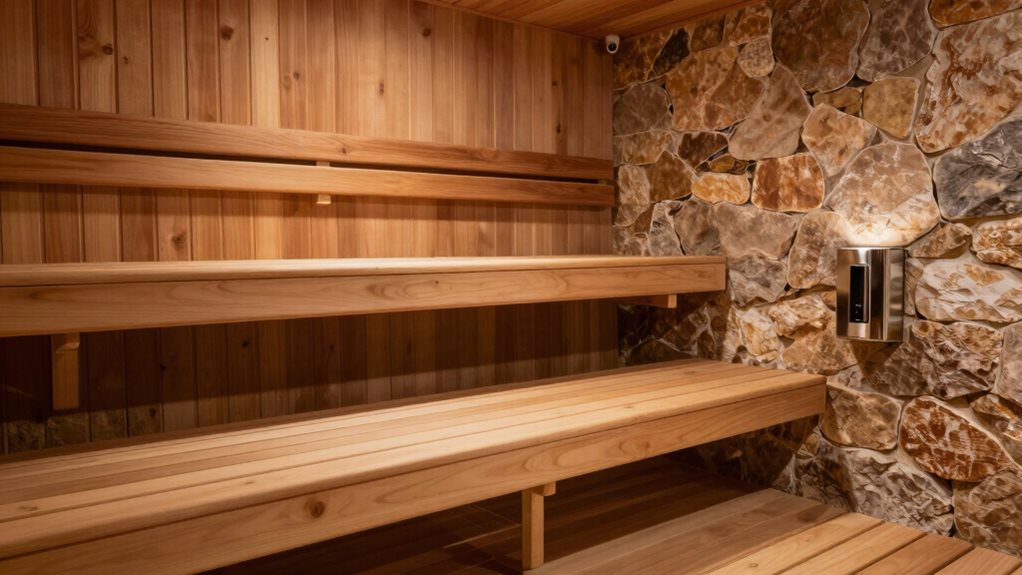
When picking materials for your sauna benches and trim, you want to focus on comfort and safety. Choose softer woods like Western Red Cedar or Aspen, which won’t leave you sweating or stuck to the surface when it gets hot. It’s also crucial to ensure that the wood selected is knot-free to avoid burns and heat concentration. Additionally, selecting durable heat-resistant woods ensures your benches withstand high temperatures while maintaining their appeal. A well-constructed bench can significantly enhance your sauna experience, providing both a comfortable seating option and a beautiful aesthetic. And remember, hidden fasteners not just look nicer but also keep you safe from those sudden metal surprises when you sit down!
Bench Material Choices
Choosing the right materials for your sauna benches can make a huge difference in your overall experience, as the wrong choices can leave you feeling uncomfortable or even burned.
When picking your bench wood, consider these great options:
- Aspen: Stays cool with a knot-free, tight grain.
- Abachi: Moisture-resistant and splinter-free; a favorite of Finnish builders.
- Western Red Cedar: Resists warping and keeps bacteria at bay, and is ideal for sauna benches, skirts, and floors due to its high thermal properties. Additionally, wooden sauna bench kits can enhance your sauna’s aesthetic appeal and functionality.
- Thermo-treated woods: Offers stability and a modern dark color. Additionally, using low-density softwoods like Aspen and Alder can significantly enhance your sauna experience.
Avoid using materials like pine, treated lumber, or metals, which can lead to burns or health risks.
Fastening and Finishing Options
Fastening and finishing options in your sauna project can greatly impact both its appearance and functionality, making it essential to get them right.
For high-heat, high-humidity areas, use stainless steel fasteners—like A2 or A4—to resist corrosion. Select trim heads to minimize heat buildup, and consider countersunk options for a sleek look.
When it comes to trim, match the species to your panels for a seamless finish. For benches, anchor frames securely with stainless steel lag bolts, and use floating attachments that allow movement but keep everything stable.
Finally, opt for wooden backrests that provide cool airflow. Additionally, consider using sauna moisture protection products to enhance the durability of your sauna materials. With these choices, you’ll guarantee both safety and comfort in your sauna sanctuary!
Heater Types and Safety Materials
As you plunge into building your sauna, selecting the right heater can make all the difference in your experience.
You have several options, each with its own charm. Consider these points when choosing:
- Electric Heaters: Easy to install and control, especially in urban areas, but watch for energy costs.
- Wood-Burning Heaters: Deliver that authentic experience with the smell of wood—perfect for outdoor saunas!
- Infrared Heaters: Energy-efficient and warm you directly, making them great for small spaces.
- Gas Heaters: Cost-effective for frequent use but need professional installation for safety.
Whichever you choose, guarantee proper safety materials, like ventilation for wood and gas options, to keep your sauna experience enjoyable and safe! Additionally, selecting the right electric sauna heater can enhance your overall sauna experience.
Ensuring Sustainability in Material Choices
When building your sauna, selecting sustainable materials can really make a difference.
You’ll want to choose certified wood, like FSC-approved lumber, to support responsible forestry practices while guaranteeing your sauna looks great.
Additionally, opting for eco-friendly insulation, such as natural wool or recycled cotton, helps you create a cozy environment while being kind to the planet—now that’s a win-win! Furthermore, using an eco-friendly sauna heater can enhance your sauna’s sustainability while providing efficient warmth.
Certified Wood Options
Choosing certified wood options for your sauna can make a big difference in guaranteeing both quality and sustainability.
By opting for wood that’s responsibly sourced, you’re supporting healthy forests while enjoying a beautiful sauna experience. Here are some great choices:
- FSC-Certified Wood: Supports responsible forest management and protects biodiversity.
- Thermally Modified Wood: Treated to resist moisture and decay, improving durability.
- Sustainable Wood Species: Consider options like Nordic spruce or Western Red Cedar for their natural qualities.
- Reclaimed Wood: Offers a unique aesthetic while reducing the need for new timber.
Using these certified options not only adds character to your sauna but also encourages a healthier planet.
Go ahead, plunge into these eco-friendly choices for an amazing experience!
Eco-Friendly Insulation Choices
After you’ve selected certified wood options to build a beautiful, eco-friendly sauna, it’s time to think about insulation.
You can choose from several sustainable options that not just keep your sauna warm but also help the planet.
Sheep’s wool is a great choice since it’s renewable and absorbs moisture without losing its insulative power.
Hemp is another winner; it’s breathable, non-toxic, and even reduces energy use.
Cork, harvested from trees without killing them, offers excellent heat retention and soundproofing, while cellulose, made from recycled materials, is both budget-friendly and efficient.
Finally, recycled denim insulation is biodegradable and keeps your sauna cozy.
Each of these choices helps create a green oasis for relaxation.
Enhancing Indoor Air Quality
To keep your sauna experience both enjoyable and healthy, improving indoor air quality is key. Good ventilation can make all the difference in your relaxation space.
Here are some tips to improve air quality:
- Aim for 5–8 air changes per hour; this keeps the air fresh and reduces CO2.
- Position a fresh-air inlet near the stove to mix with the heated air for better warmth.
- Use low placement for exhaust vents to remove heavy, moist air effectively.
- Consider fans to control humidity and pollutant loads, guaranteeing a comfortable environment. Additionally, investing in a sauna ventilation fan system can significantly enhance air circulation and overall sauna experience.
Integrating Alternative Materials
When you’re working on building a sauna, integrating alternative materials can boost both its functionality and aesthetic appeal.
Consider using thermally modified wood, like thermo-aspen, which improves moisture resistance without nasty chemicals. This type of wood is low-resin, reducing splinters and odors, making it ideal for your sauna’s interior.
If you’re hunting for a classic touch, western red cedar adds natural aroma and beauty, but check local availability.
For framing, laminated veneer lumber provides strength and straightness, while engineered composites can give you the uniformity you need.
Plus, don’t overlook non-wood options! Stone tiles or stainless-steel details can create a sleek look, just remember they need careful installation to keep everyone safe. Also, incorporating a natural wood sauna heater can enhance your sauna experience by providing efficient and even heat distribution.
Tips for Long-lasting Maintenance and Care
Maintaining your sauna doesn’t have to feel like a chore; in fact, it can be a rewarding part of your sauna experience!
Keeping your sauna in top shape is simple. Here are some tips to make maintenance effortless and fun:
- Wipe down benches and surfaces after each session to keep wood happy and healthy.
- Let the door and vents stay open post-use to fight off humidity and mold.
- Use towels on benches to absorb sweat and protect the wood.
- Do a quick sweep to remove debris, which can attract pests.
Regular care helps your sauna last longer and keeps it fresh and enjoyable.
With just a little effort, you’ll be reaping the benefits of a clean, cozy sauna for years to come!
Frequently Asked Questions
What Is the Ideal Sauna Size for Residential Use?
The ideal sauna size for residential use depends on your needs. For solo use, opt for a 1-person sauna. For couples, choose a 2-person model, while families might prefer a 3-4 person sauna.
How Often Should I Clean My Sauna?
You should clean your sauna after every use, with a thorough weekly cleaning, monthly inspections, and an annual deep maintenance routine. Regular attention keeps it fresh, safe, and comfortable for you and your guests.
Can I Use Reclaimed Wood for My Sauna?
Yes, you can use reclaimed wood for your sauna. Just be aware of the potential challenges, like inconsistent measurements and moisture stability. With proper preparation, it’ll bring a unique character and eco-friendly charm.
What Are the Health Benefits of Regular Sauna Use?
Regular sauna use boosts cardiovascular health, improves cognitive function, reduces inflammation, and alleviates pain. You’ll experience enhanced recovery and respiratory function, along with potential longevity benefits, all while enjoying a soothing relaxation experience.
How Do I Maintain Optimal Humidity Levels Inside the Sauna?
To maintain ideal humidity levels inside your sauna, monitor temperature and relative humidity closely, adjust ventilation, and control water application on hot stones carefully. Regular checks and logging readings help guarantee a comfortable experience for everyone.
Final Thoughts
Building the perfect sauna is all about making smart material choices. By carefully considering the wood, insulation, and heater type, you’ll create a cozy and efficient space. Don’t forget about maintaining air quality and choosing sustainable options, too. Each decision you make impacts your sauna’s comfort and longevity. Remember, it’s not only a project; it’s a retreat where you can relax and unwind. So, gather your materials wisely, and enjoy your soothing sauna experience!