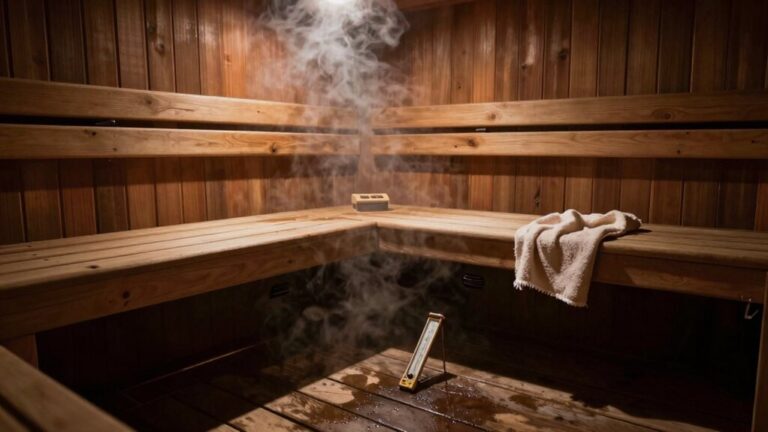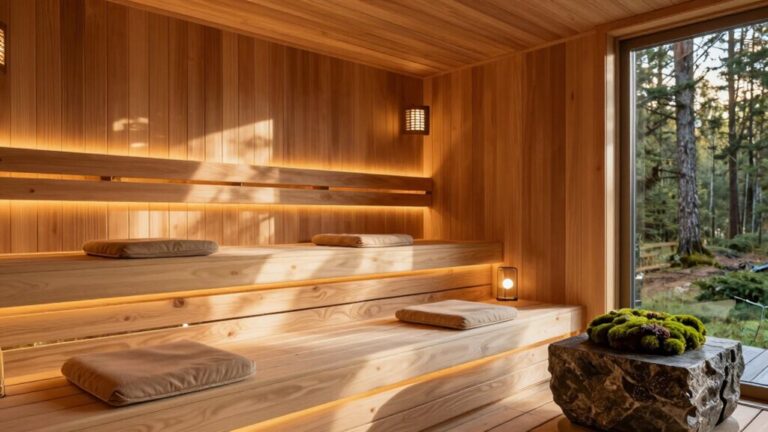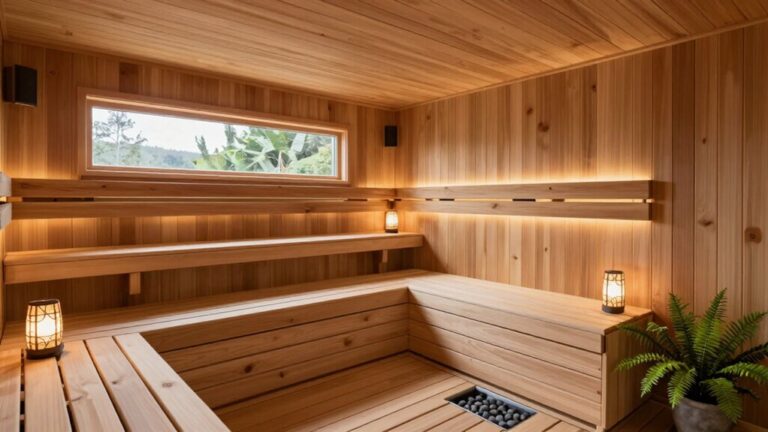
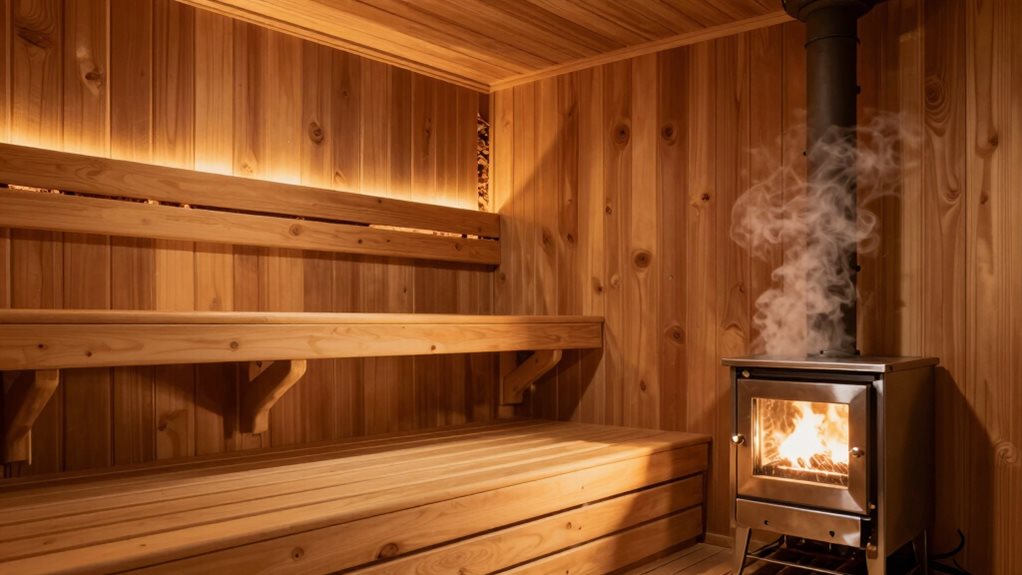

When building your sauna, choosing the right materials is vital. You’ll want to select woods like Western Red Cedar for their durability and pleasant scent. For insulation, eco-friendly options like sheep’s wool help retain heat while managing humidity. Don’t forget vapor barriers to keep moisture at bay and improve energy efficiency. Safety features, such as non-slip flooring and good ventilation, are fundamental for a worry-free experience. Stick around to discover more helpful tips and insights!
Choosing the Right Wood for Your Sauna
When you’re building a sauna, choosing the right wood isn’t just about picking something that looks nice; it’s also about finding materials that will stand up to heat and moisture.
Western Red Cedar is a top choice for its natural resistance to decay and pleasing aroma. It keeps a consistent temperature, feeling cool to the touch despite the warmth inside. Softwoods like cedar are particularly preferred for their heat resistance and low resin content. Additionally, Western Red Cedar has natural antiseptic effects that repel bacteria and fungi, ensuring a healthier sauna environment. Incorporating a natural wood sauna heater can enhance the overall experience by providing consistent warmth.
If you prefer a budget-friendly option, Scots Pine can work, but be prepared for more maintenance.
For something hypoallergenic, think about Basswood, which won’t provoke sensitivities.
You want wood that lasts, so consider the grain and structure, as they affect durability.
Ultimately, the right wood makes your sauna a serene escape from daily stress!
Types of Insulation for Optimal Heat Retention
When it comes to keeping your sauna toasty, natural insulation materials can be great chemical-free alternatives. Options like wool and hemp not just help with heat retention but also manage humidity without harming the environment. These eco-friendly choices might cost a bit more, but they create a cozy and safe sauna experience that you’ll truly appreciate. Additionally, using these high-quality insulation materials can enhance energy efficiency, allowing your sauna to reach the desired temperatures more quickly and maintain warmth longer. Proper insulation is crucial for minimizing heat loss, which ultimately contributes to a more effective and enjoyable sauna experience. Furthermore, the choice of sauna insulation building materials can significantly impact both thermal performance and durability.
Natural Insulation Materials
Natural insulation materials play a crucial role in keeping your sauna warm and cozy, guaranteeing you enjoy your time in this relaxing retreat.
For example, mineral wool offers great thermal performance, resisting heat up to 1000°F without melting. It’s also water-resistant, preventing mold growth if combined with a vapor barrier. Additionally, it provides excellent thermal insulation properties, allowing you to retain heat efficiently during your sauna sessions. Proper installation ensures that a continuous vapor barrier is maintained, which is essential for preventing moisture damage and optimizing heat efficiency. Moreover, using a quality sauna insulation kit can enhance the overall comfort and efficiency of your sauna.
On the other hand, fiberglass insulation is often more affordable and available, but it needs a good vapor barrier to stay effective.
And let’s not forget about natural fibers like sheep’s wool or hemp—they absorb moisture and help maintain a balanced humidity level.
Whichever option you choose, pay close attention to installation details to guarantee your sauna remains energy-efficient and comfortable, making your experience even more enjoyable.
Chemical-Free Alternatives
Saunas can be a wonderful place to unwind, and using the right insulation makes all the difference in keeping that cozy warmth locked inside.
Chemical-free alternatives like mineral wool and sheep’s wool stand out for their effectiveness. Mineral wool handles high temperatures without breaking down, naturally resists mold, and allows moisture to escape. Additionally, these materials help to reduce the risk of inhaling hazardous chemicals in your sauna environment. Proper insulation prevents cold air from contacting warm moist air, further enhancing the sauna experience.
On the other hand, sheep’s wool isn’t just a natural insulator but also excellent at regulating moisture and fire, making it a healthier option.
Hemp fiber is another sustainable choice; it’s biodegradable and doesn’t release harmful chemicals when heated.
Cork, made from tree bark, offers great insulation while resisting mold.
Finally, recycled denim provides good thermal performance without irritants, making your sauna experience even more enjoyable.
Importance of Vapor Barriers in Sauna Construction
As you plunge into the construction of a sauna, understanding the role of vapor barriers is crucial for guaranteeing your investment lasts.
These barriers prevent warm, humid air from sneaking into the walls and ceiling, where it can cause mold or rot—nobody wants that! Using foil-faced materials not just keeps the sauna’s heat from escaping but also reflects it back, making your sauna more efficient. Proper installation not only creates an airtight shield but also enhances energy efficiency, speeding up heat-up times and protecting your insulation. A well-installed vapor barrier can help prevent moisture issues that lead to costly damage over time. Additionally, choosing the right sauna moisture protection products can further enhance the longevity of your sauna structure.
Just remember to use high-quality materials and seal all seams tightly.
This step guarantees a long-lasting sauna that maintains its structure and warmth, letting you relax without worry.
Happy building!
Flooring Options for Durability and Safety
When you start choosing flooring for your sauna, you might feel overwhelmed by the options available, but each has unique benefits that can improve your experience.
Rubber flooring offers excellent traction and is highly resistant to moisture—perfect for those steamy sessions. If you prefer a clean look, ceramic and porcelain tiles are water-resistant, non-slip, and easy to maintain.
For a natural wood feel, Ipe wood tiles provide durability and drainage. PVC perforated mats excel in comfort and slip prevention, while cedar duckboards emit a pleasant aroma and are easy to clean.
Sustainable Material Choices for an Eco-Friendly Sauna
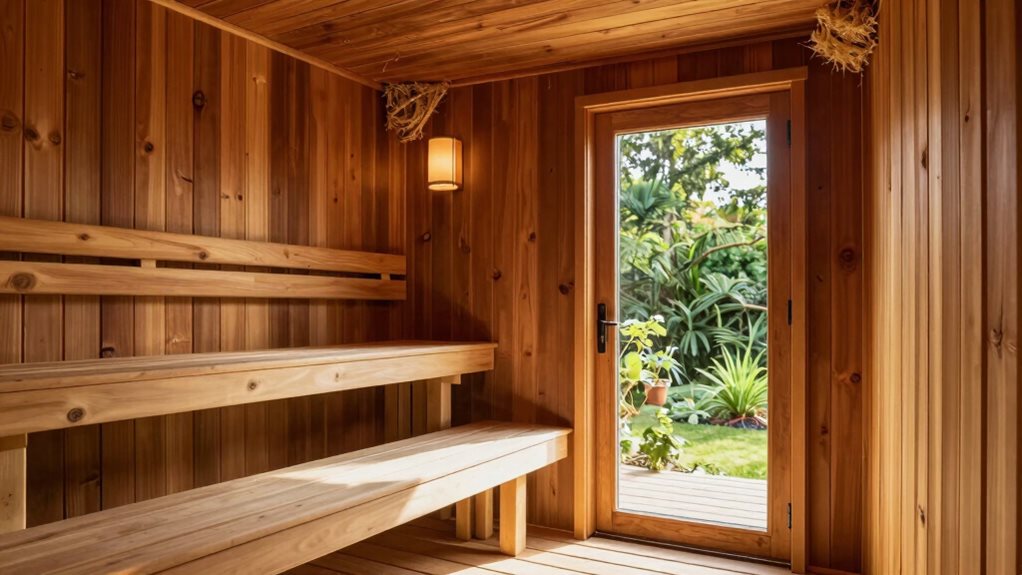
Choosing sustainable materials for your sauna not only assists the environment but also improves your overall experience.
For instance, thermowood is a fantastic choice; it’s treated with heat and steam, making it resistant to decay without harmful chemicals. Plus, using responsibly sourced timber, like FSC-certified wood or reclaimed options, helps protect our forests.
Bamboo is another winner, growing quickly and regenerating effortlessly. Eco-friendly insulation materials, such as recycled denim and sheep’s wool, keep your sauna cozy while being kind to the planet.
By selecting these options, you’re minimizing waste and energy use, so your sauna not just feels great but is also a step toward a greener future.
Now that sounds like a win-win, doesn’t it?
Enhancing Indoor Air Quality With Natural Materials
Your sauna experience can be considerably improved by focusing on indoor air quality, and using natural materials plays a key role in this.
Choosing chemical-free woods, like cedar or aspen, helps eliminate toxic VOCs, reducing respiratory irritation and making breathing easier. These materials provide a hypoallergenic environment, beneficial for those with asthma or sensitivities.
Natural insulation options, such as sheep’s wool or hemp, not just trap heat effectively but also remain breathable and nontoxic.
Plus, using low-VOC adhesives and finishes guarantees your sauna stays free from harmful emissions.
By creating good ventilation with wall inlets and outlets, you can keep the air fresh and enjoyable. Incorporating a sauna moisture control system can further enhance your sauna’s air quality and comfort.
Embracing these natural materials promotes relaxation and a healthier sauna experience!
Maintenance Tips for Wood Sauna Interiors
Keeping your wood sauna interior in top shape is all about regular cleaning and moisture control.
After each session, wipe down the benches and walls while they’re warm to prevent sweat stains and buildup—think of it as giving your sauna a quick shower!
Regular Cleaning Practices
Although maintaining the interior of your wood sauna may seem like a chore, it’s essential for preserving its beauty and functionality.
Start by wiping down benches and backrests with a damp, lint-free cloth after each use to tackle sweat and dirt.
Once a week, give your sauna a light scrub with a soft-bristled brush and plain water.
Don’t forget to vacuum or sweep loose debris beforehand!
For high-contact areas like door handles, use a mild, wood-safe cleaner monthly.
If you spot sweat stains, gently sand them with fine-grit sandpaper to refine things out.
Remember, always test a cleaner on a small area first, and avoid household products that could damage the wood.
Regular care keeps your sauna inviting! Additionally, consider weatherproofing your sauna accessories to ensure durability against the elements.
Moisture Control Techniques
Proper moisture control is key for guaranteeing a long-lasting and enjoyable experience in your wood sauna.
Keeping humidity at bay not just prevents mold but also helps maintain the wood’s charm. Here are some handy techniques to take into account:
- Ventilation: Open doors and windows after use to let moisture escape.
- Protective Treatments: Apply paraffin oil to create a barrier against sweat.
- Drying Techniques: Heat the sauna to 150°F for 30 minutes, then cool it down to expel trapped moisture.
Additionally, consider installing a sauna ventilation fan system to enhance air circulation and improve indoor air quality.
The Role of Thermal Mass in Heat Management
When you enter a sauna, the warmth wraps around you like a cozy blanket, but have you ever wondered how that comforting feeling is achieved? It’s all about thermal mass!
Materials with high thermal mass, like stone or thick wood, soak up heat and release it slowly. This helps keep temperatures stable and makes the heat feel more enveloping.
If you have a sauna with heavy stones or metal heaters, they’ll create a steady warm atmosphere, reducing those wild temperature swings.
Although it may take a little longer to heat up, the energy savings and comfort you gain during your sauna sessions are worth it. Choosing the right indoor sauna heater kit can enhance this thermal experience even further.
Safety Considerations in Sauna Design
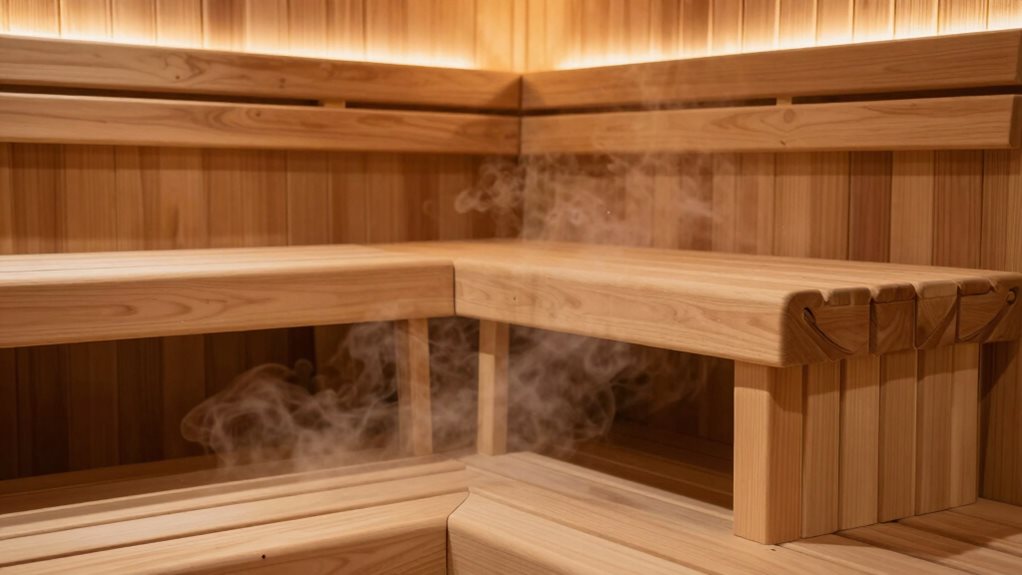
Safety considerations in sauna design are vital to guarantee everyone enjoys their time without worry. Here’s what you need to keep in mind:
Safety in sauna design is essential for ensuring a worry-free and enjoyable experience for everyone.
- Temperature Control: Keep your sauna at 70-100°C, using accurate monitors.
- Ventilation Requirements: Install vents for airflow and consider using small fans. Proper ventilation systems can significantly enhance your sauna experience.
- Electrical Safety: Hire a licensed electrician to handle wiring safely.
Remember to choose non-slip flooring and confirm that doors open outward easily.
Following hygiene protocols and maintaining clear guidelines can improve your sauna experience.
With these safety measures, you can truly relax and enjoy the benefits of your sauna!
Benefits of Natural Aromas in Wood Saunas
Natural aromas in wood saunas not only create a soothing atmosphere but also elevate your overall sauna experience in surprising ways.
The scent of Western Red Cedar, for example, clears your respiratory pathways, promoting relaxation and reducing stress. Its natural oils offer skin benefits, soothing irritation and even acting as an insect repellent.
Alder releases a sweet, earthy scent that connects you to the outdoors, fostering tranquility. Thermo-Aspen adds a subtle sweetness that improves warmth and comfort, while Birch offers a woodsy aroma that stimulates blood flow.
Altogether, these natural aromas not only boost your mood but also aid detoxification, improve circulation, and create a revitalizing retreat from daily life.
Frequently Asked Questions
How Do I Determine the Best Wood Type for My Climate?
To determine the best wood type for your climate, consider humidity levels, temperature fluctuations, and exposure to moisture. Choose decay-resistant woods for humid areas and stable species for varying temperatures to guarantee durability and comfort.
Can I Use Recycled Materials for Sauna Construction?
You can definitely use recycled materials for sauna construction, but make certain they’re free of chemicals and contaminants. Prioritize stable, dense wood and eco-friendly insulation to guarantee safety, performance, and improve indoor air quality.
What Is the Lifespan of Different Sauna Materials?
Different sauna materials have varying lifespans: woods like Western Red Cedar last 25-40+ years, while thermally modified woods can last 15-40 years. Insulation materials typically last 20-50 years, depending on maintenance and exposure conditions.
How Does Humidity Affect My Sauna’s Insulation Performance?
Humidity can drastically reduce your sauna’s insulation performance, causing dampness and mold growth. It affects heat retention, making your sauna less efficient and potentially damaging the materials, so proper ventilation and moisture control are vital.
Are There Non-Toxic Sealants for Sauna Wood Interiors?
Yes, there are non-toxic sealants for sauna wood interiors. Look for options like water-based, VOC-free sealants and natural products, such as beeswax and linseed oil blends, to protect your sauna safely.
Final Thoughts
Building a sauna isn’t merely about heat; it’s about crafting a cozy retreat with the right materials. From choosing the perfect wood to guaranteeing proper insulation, every detail matters. With a focus on safety and air quality, you can create a space that’s both relaxing and inviting. By selecting sustainable options, you’re not just improving your sauna experience, but also helping the planet. So go ahead, plunge into your sauna project, and enjoy the warmth and benefits it brings!