
To keep mold and rot at bay in your sauna, focus on ventilation, humidity control, and wood selection. Make sure vents are strategically placed for good airflow—low for fresh air and high for exhaust. Regularly check humidity levels with hygrometers, aiming for a balance that suits your sauna style. Choose rot-resistant woods like cedar, and wipe down surfaces after each use. These steps not just boost comfort but also extend your sauna’s life. Interested in more tips?
Effective Ventilation and Airflow Management
When you think about using your sauna, you mightn’t realize how important effective ventilation is to your experience and the longevity of the space.
Proper vent placement is key: place the fresh-air intake low and close to the heater for a cozy convection loop. This will help push out humid air while keeping you warm. Passive sauna ventilation relies on gravity to promote airflow, ensuring that hot air rises and escapes effectively. Additionally, maintaining a ventilation rate of 6 ACH (Air Changes per Hour) is essential for safety and preventing mold growth. A well-designed sauna moisture control system can further enhance your sauna’s humidity management.
An exhaust vent, positioned high on the opposite wall, works wonders by removing hot, moist air and balancing temperatures between bench levels.
For smaller saunas, a passive system might do the trick, but if airflow is limited, a mechanical exhaust can guarantee fresh air and quicker drying.
Aim for 5–8 air changes per hour—this helps beat mold and keeps things fresh!
Humidity Monitoring and Control Techniques
To keep your sauna safe from mold and rot, you’ll need to regularly monitor the humidity levels inside. Installing hygrometers helps you track these levels, while maintaining controlled cooldown procedures guarantees moisture doesn’t linger longer than necessary. Plus, implementing routine RH logging provides valuable insights into how well your sauna is handling humidity, so you can make adjustments before issues arise! Regularly checking humidity levels helps ensure they remain within the optimal humidity range, promoting a comfortable and safe sauna environment. This is especially important because maintaining proper humidity levels can maximize therapeutic benefits and comfort during sauna use. Additionally, investing in a quality sauna thermometer hygrometer kit can enhance your monitoring efforts and provide accurate readings for optimal sauna conditions.
Install Hygrometers Regularly
Installing hygrometers regularly in your sauna can greatly improve your ability to control humidity levels, guaranteeing a comfortable and safe environment. To get the best readings, mount the hygrometer about 20–30 cm below the ceiling, avoiding spots above the heater or by the door, where readings might be skewed. If your sauna is large, consider using multiple hygrometers to track humidity across different areas. Choose devices designed for high temperatures, with reliable accuracy. Once you install them, give the hygrometers 10–15 minutes to settle before trusting a new reading. Maintaining appropriate humidity levels is essential for the longevity of the sauna and enhances the overall experience. Moreover, achieving optimal humidity levels can significantly improve comfort and health benefits during your sauna sessions. Additionally, utilizing HEPA air purifiers can help improve air quality, ensuring a healthier environment within your sauna.
Maintain Controlled Cooldown Procedures
Maintaining proper cooldown procedures in your sauna is key to securing a comfortable experience while keeping humidity levels in check.
For ideal enjoyment, aim for 40-60% humidity in aromatic saunas, while traditional Finnish ones thrive at just 5-20%. Invest in smart controls that help automate humidity management; options like the Saunum AirIQ let you track levels directly from your phone! This tool provides user-friendly operation that ensures optimal climate conditions effortlessly. Additionally, monitor the sauna’s temperature adjustment range to maintain the desired atmosphere throughout your session. Installing a proper sauna ventilation system will further enhance air quality and prevent moisture buildup.
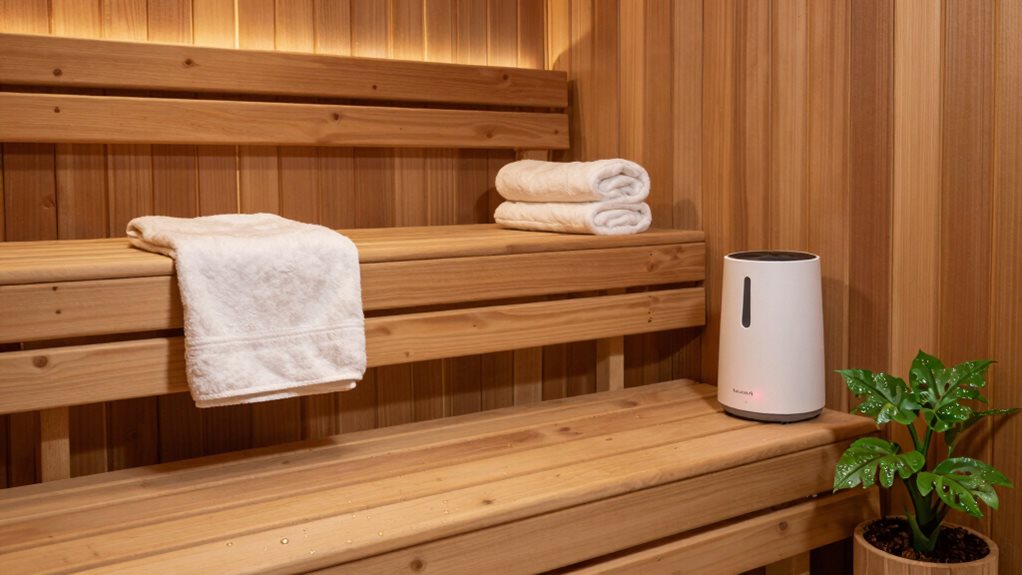
When the session’s over, open the door for a natural airflow boost. Facilitating proper ventilation helps prevent moisture from lingering and keeps your sauna fresh. If you need extra humidity during use, consider a portable or wall-mounted humidifier to maintain that perfect environment.
Implement Routine RH Logging
Monitoring humidity regularly is a vital step in keeping your sauna mold-free and comfortable.
To start, choose a quality digital hygrometer that accurately measures humidity levels, ideally within ±3 percent. Place your device at eye level, away from direct heat or steam, for the best readings. Aim for a relative humidity of 5-20% for traditional saunas and up to 100% for steam saunas. Checking these levels routinely is important—it’s like watering a plant; too much or too little can spell disaster! Regular use of a hygrometer can help ensure you maintain the perfect humidity balance in your sauna. Additionally, consider integrating a reliable temperature monitoring system that can provide precise readings, enhancing your control over the sauna environment.
Consider investing in automated logging systems that track humidity for you, making adjustments easy from your smartphone. This way, you’ll guarantee your sauna remains a safe, relaxing retreat!
Best Wood Selection and Surface Treatment Practices
When it comes to building your sauna, choosing the right wood can make a big difference in preventing mold and rot.
You’ll want to select rot-resistant options like Western Red Cedar, which not just smells great but also stands up well against moisture. Additionally, investing in a quality cedar sauna heater kit can further enhance the durability of your sauna, ensuring a comfortable and long-lasting experience.
On the other hand, untreated wood might save you some cash upfront, but it often requires more maintenance, so think long-term for that relaxing sauna experience!
Rot-Resistant Wood Choices
Choosing the right wood for your sauna is crucial if you want to keep mold and rot at bay, as some types of wood naturally resist decay better than others.
Cedar is a popular choice, packed with natural oils that repel moisture and insects while adding a lovely aroma.
Hemlock’s low resin content keeps it stable and virtually scent-free, great for those with allergies.
If you’re looking for durability, consider thermally modified wood options like Thermo-Aspen and Thermo-Alder which resist warping and mold without chemicals.
They not only look fantastic but also guarantee longevity.
Switching to rot-resistant wood will help you enjoy your sauna without worrying about unwanted guests like mold and rot! Additionally, choosing a sauna heater natural wood can enhance the overall aesthetic and functionality of your sauna experience.
Untreated Wood Benefits
After selecting the right type of wood for your sauna, the next step involves understanding the benefits of using untreated wood.
Choosing untreated wood creates a healthier and more natural sauna experience. Here are three key benefits:
- No VOC Off-Gassing: Untreated wood doesn’t release volatile organic compounds when heated, making for cleaner air and a safer environment.
- Hypoallergenic Properties: It preserves its natural qualities, lowering the chances of triggering allergies, unlike chemically treated alternatives.
- Authentic Aroma: You get to enjoy the genuine scent of wood, enriching your sauna experience and promoting relaxation. Additionally, using untreated wood is essential for optimal sauna insulation building materials, ensuring the structure remains durable and effective.
Routine Cleaning and Maintenance Protocols
To keep your sauna in tip-top shape and ward off mold and rot, establishing a steady routine for cleaning and maintenance is essential.
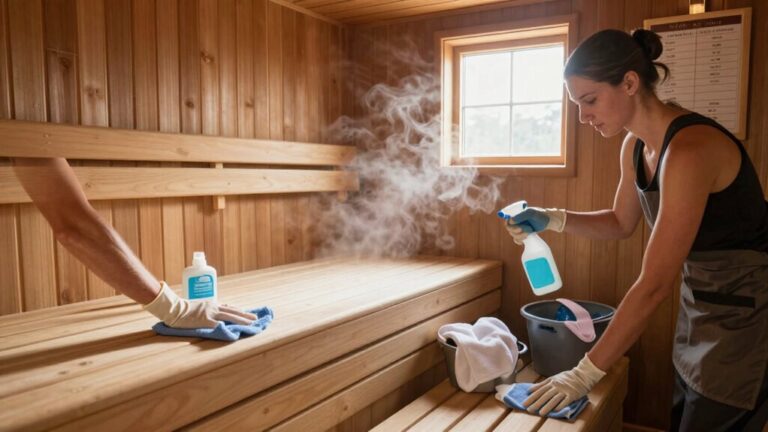
After each use, you should wipe down benches, walls, and floors with a damp cloth to remove sweat and oils. Using seat covers or towels can help absorb sweat and prevent stains.
Wipe down your sauna after each use to remove sweat and oils, and use seat covers to prevent stains.
Weekly, sweep or vacuum to clear dust and scrub surfaces with a soft brush and a sauna-specific cleaner.
Don’t forget to inspect for loose boards and moisture damage monthly or quarterly.
Finally, an annual deep clean including sanding benches and applying protective treatments guarantees your sauna remains pristine.
Just imagine enjoying your sauna knowing it’s well cared for!
Key Design and Construction Considerations
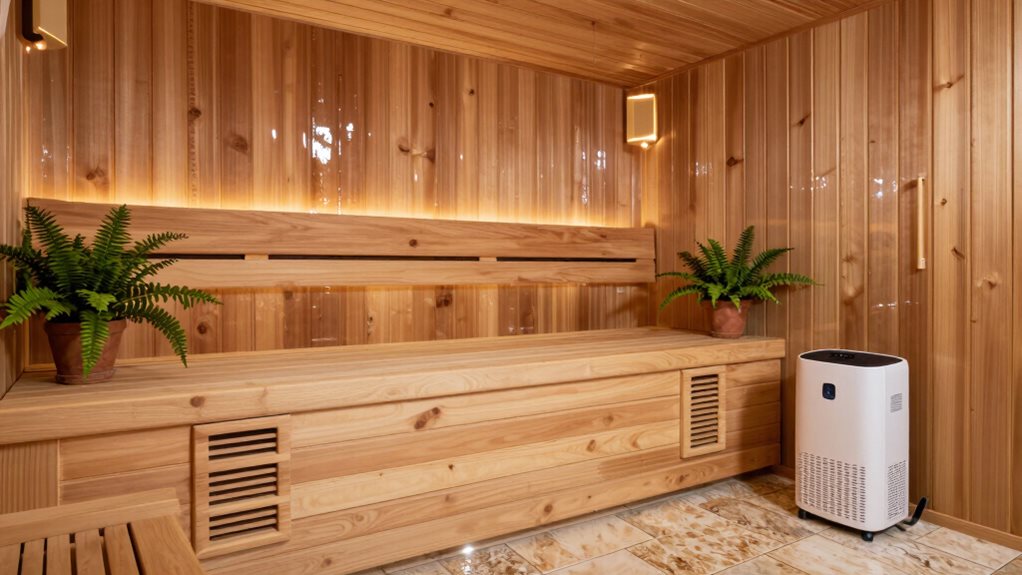
Caring for your sauna goes beyond just cleaning; it starts with how you design and build it. Here are some key design and construction considerations:
- Ventilation Systems: Verify you have vents near the floor and ceiling for natural airflow. Timer-controlled fans help remove excess moisture post-session, keeping humidity below 30%.
- Material Selection: Choose untreated wood like cedar or Nordic spruce for its mold-resistant qualities. Avoid non-kiln-dried panels to prevent warping.
- Flooring and Drainage: Install a drain in the floor to remove water completely. Sloped flooring directs water to the drain, preventing pooling. Additionally, consider using sauna insulation kits to enhance thermal efficiency and reduce moisture accumulation.
Mold Remediation and Safe Treatment Practices
When you spot mold in your sauna, it’s vital to act quickly and safely to prevent any further damage.
Start by mixing 1 part bleach with 10 parts water, applying it to the wooden surfaces with a soft brush. Rinse thoroughly afterward to avoid harming the wood.
Alternatively, a solution of 1 cup white vinegar to 1 gallon of water can effectively scrub away mold. Natural remedies like a tea tree oil mix (10 drops per cup of water) can help, too.
After cleaning, verify you thoroughly dry all surfaces and ventilate the sauna for 30-60 minutes.
With regular inspections and prompt reactions, you can keep your sauna welcoming and mold-free.
Long-term Prevention Strategies for Saunas
While enjoying the warmth and relaxation of your sauna, you mightn’t realize that long-term prevention strategies are essential for keeping it mold-free and in top shape.
Enjoying your sauna? Don’t overlook long-term prevention strategies to maintain a mold-free, welcoming space.
Here are three effective strategies to take into account:
- Ventilation: Maintain proper airflow by using exhaust fans and confirming vents aren’t blocked. This helps to dry the sauna quickly after each use, reducing moisture levels.
- Wood Treatment: Choose rot-resistant wood like western red cedar and apply breathable oils annually. Avoid seals that trap moisture, as they can accelerate deterioration.
- Regular Maintenance: Set a routine for checks and cleanings. Regular inspections of hidden areas can catch mold before it spreads, while a log helps track issues.
Additionally, consider weatherproofing your sauna accessories to further protect your investment.
Following these steps guarantees your sauna stays a cozy, mold-free haven for years to come!
Frequently Asked Questions
How Often Should I Replace Sauna Linens and Headrests?
You should replace sauna linens and headrests every four months if heavily used, or every two years for private use. Regular replacement keeps your sauna hygienic and prevents issues related to wear and moisture.
Can I Use Essential Oils in My Sauna?
Yes, you can use crucial oils in your sauna, but dilute them properly and avoid direct contact with the heater. Choose milder oils, limit concentrations, and ventilate well to prevent irritation and hazards.
What Temperature Is Best for Sauna Use to Prevent Mold?
To prevent mold, keep traditional saunas between 150–190°F, infrared saunas at 120–140°F, and guarantee steam rooms operate below 100% humidity. Regularly monitor temperature and humidity levels to maintain ideal dry conditions.
Do I Need to Treat Sauna Wood Surfaces Regularly?
Yes, you need to treat sauna wood surfaces regularly. High-contact areas require annual treatment, while walls and ceilings should be treated every 2–3 years. More frequent treatment may be necessary for heavy use or visible wear.
Are There Specific Sauna Accessories That Reduce Moisture Retention?
Yes, specific sauna accessories can reduce moisture retention. Consider installing air vents, using powered fans, and choosing moisture-resistant materials like high-quality woods and quick-dry towels to improve airflow and manage humidity effectively.
Final Thoughts
By staying proactive with these mold and rot prevention strategies, you can keep your sauna a safe and relaxing space. Remember, good ventilation is key, and monitoring humidity makes a world of difference. Choosing the right materials and maintaining cleanliness are crucial practices, too. With a bit of attention and care, your sauna can stay mold-free and comfortable. So, grab your favorite towel, enjoy the warmth, and relax without worries!