
To prolong the life of your sauna’s wood, focus on managing sweat and moisture. Install moisture barriers, like foil, to keep vapor out. Keep humidity levels between 10-20% during use, and aim for 30-50% when not in use. Proper ventilation is key—install vents for fresh air and exhaust. Regularly check for mold and treat surfaces with natural oils. It’s all about keeping that wood happy and healthy! You’ll find even more tips for maintaining your sauna’s warmth ahead.
Importance of Moisture Barriers in Sauna Construction
When you think about building a sauna, it’s easy to focus on the wood, the heater, and the steam, but let’s not forget the unsung hero: the moisture barrier.
This essential layer prevents moisture vapor from sneaking into wall and ceiling cavities, protecting structural integrity. It helps keep insulation’s R-value intact, guaranteeing your sauna stays warm and cozy. Proper insulation also reduces energy consumption, ensuring that your sauna heats efficiently and maintains its temperature. Additionally, investing in a quality sauna insulation kit can significantly enhance your sauna’s overall performance.
Without a good moisture barrier, you risk wood rot and mold, which no one wants! You’ve got choice, too: aluminum foil or specialized foil-paper barriers work wonders.
Just make sure you install it on the warm side of insulation and seal those seams tight. A little attention here goes a long way in prolonging the life of your sauna’s wood!
Effective Humidity Control Techniques
To keep your sauna comfortable, you’ll want to monitor humidity levels actively. Proper humidity levels play a crucial role in enhancing sweating, which aids in toxin removal and overall relaxation. Additionally, maintaining moisture management can help prevent mold growth that damages wood surfaces and impacts air quality. Consider investing in essential sauna moisture protection products to further enhance your sauna experience.
Monitor Humidity Levels
Managing humidity levels in saunas might seem tricky, but it doesn’t have to be!
Start by placing humidity sensors near the ceiling to catch rising moist air early, while also adding one near the bench to monitor where users sweat. Avoid positioning sensors too close to the heater, as this can give false readings due to heat spikes. High heat and humidity fluctuations can cause wood fibers to expand and contract, impacting the sauna’s structure and appearance. It’s essential to control humidity to prevent moisture damage that can lead to issues such as mold and rot. Using a dedicated sauna moisture control system can greatly enhance your humidity management efforts.
Aim for a humidity range between 5% and 30% for traditional saunas, and reduce it to household levels 30-60 minutes after use.
Don’t forget to regularly check your sensors; keeping them calibrated guarantees accurate readings.
Use Dehumidifiers Effectively
Humidity control is crucial for keeping your sauna in top shape, and using dehumidifiers effectively can make a world of difference.
First, choose a dehumidifier designed for saunas, capable of handling high temperatures and moisture levels. Place it in corners or near the floor to target moisture-prone areas. Additionally, consider that using carbonized wood can further enhance your sauna’s durability against humidity due to its improved dimensional stability. Maintaining optimal humidity levels is essential for user comfort and health.
Furthermore, integrating a sauna air purifier can help maintain air quality while managing humidity. After each session, run it for at least 30 minutes to kick humidity to the curb. You can even let it work during longer breaks to keep your sauna dry.
Don’t forget: pairing it with activated charcoal or mildew-proof oils can boost effectiveness. Regular maintenance not only prevents mold but also keeps your sauna cozy and inviting.
Ventilation Strategies for Optimal Airflow
When it comes to creating the perfect sauna experience, having the right ventilation strategies is essential for maintaining ideal airflow. Start by placing your lower intake vent near the heater to pull in cool, fresh air, with an upper exhaust vent on the opposite wall for warm, stale air to escape. Ideally, the exhaust vent should be 2-3 feet higher than the intake to use buoyancy. For rooms up to 8×8 feet, use 4-6 inch diameter vents, guaranteeing they’re matched in size for balanced airflow. Additionally, proper ventilation is critical to prevent moisture buildup, which can protect sauna materials and enhance user comfort. This helps maintain air quality, ensuring a more enjoyable sauna experience. Effective ventilation systems can greatly improve air circulation, further enhancing the overall sauna environment. Don’t forget adjustability! Open vents during sessions for fresh air, and close them while heating. With these strategies, you’ll enjoy a comfortable sauna experience that keeps the air fresh and the wood in shape!
Best Practices for Mold Prevention
Keeping humidity in check is just one part of creating your perfect sauna. To prevent mold growth, aim to maintain humidity levels between 10-20% during use with a hygrometer.
When the sauna’s not in use, target 30-50% humidity. After each session, expel excess moisture by leaving the door open for 30-60 minutes. Wipe surfaces with a soft brush and warm water, and clean damp areas within 28-48 hours to stop mold in its tracks.
Consider using natural cleaners like tea tree oil to keep surfaces fresh. Be proactive by checking for musty smells or dark spots, and inspect corners regularly.
Wood Protection Treatments for Longevity
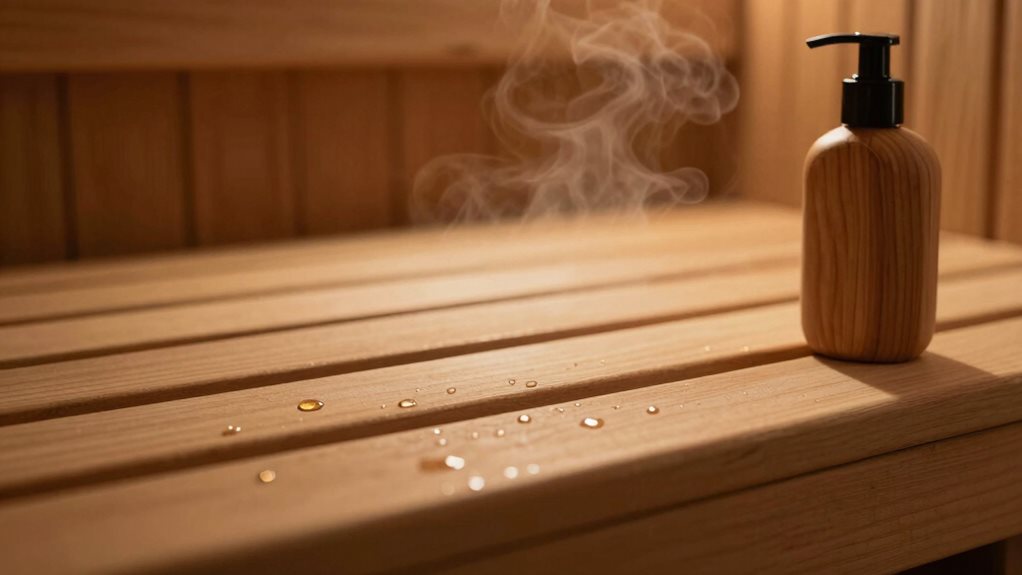
To keep your sauna’s wood looking great and lasting longer, it’s crucial to know the right products and when to apply them.
You’ll want to use specially formulated wood treatments instead of regular paints, as these help the wood breathe while keeping moisture at bay.
Plus, sticking to a regular reapplication schedule, like every 6 to 12 months, can really help maintain that fresh, inviting feel in your sauna.
Application Frequency Guidelines
Applying wood protection treatments is vital for keeping your sauna in top shape, and the right schedule can vary based on how often you use the space.
If you’re in the sauna every day or using it for commercial purposes, you’ll want to reapply treatments to high-contact areas like benches every 1-3 months.
For frequent domestic users, an annual touch-up for benches and every 2-3 years for walls is ideal.
If you only visit occasionally, treat surfaces every 18-36 months.
Always check for discoloration or damage; signs like slick benches or visible stains mean it’s time for immediate care.
Suitable Treatment Products
When you’re choosing wood protection treatments for your sauna, it’s essential to pick the right products to guarantee longevity and performance.
Try food-grade paraffin oil; it’s a non-toxic option that repels water and reduces sweat absorption.
For added flair, sauna-specific penetrating oils combine great stability with aromatic oils.
If you prefer a tidy surface, water-based waxes like Tikkurila Supi Saunawax offer a breathable shield.
Clear sealers with UV inhibitors help protect against sun damage and maintain your wood’s natural color.
Don’t forget about natural oils like coconut or linseed, which can provide moisture repellency.
Always check for food-grade labels—your safety and comfort depend on using the right treatment for your sauna’s wood! Additionally, using sauna insulation materials can enhance the overall effectiveness of your sauna by minimizing heat loss.
Regular Inspections and Maintenance Checklist
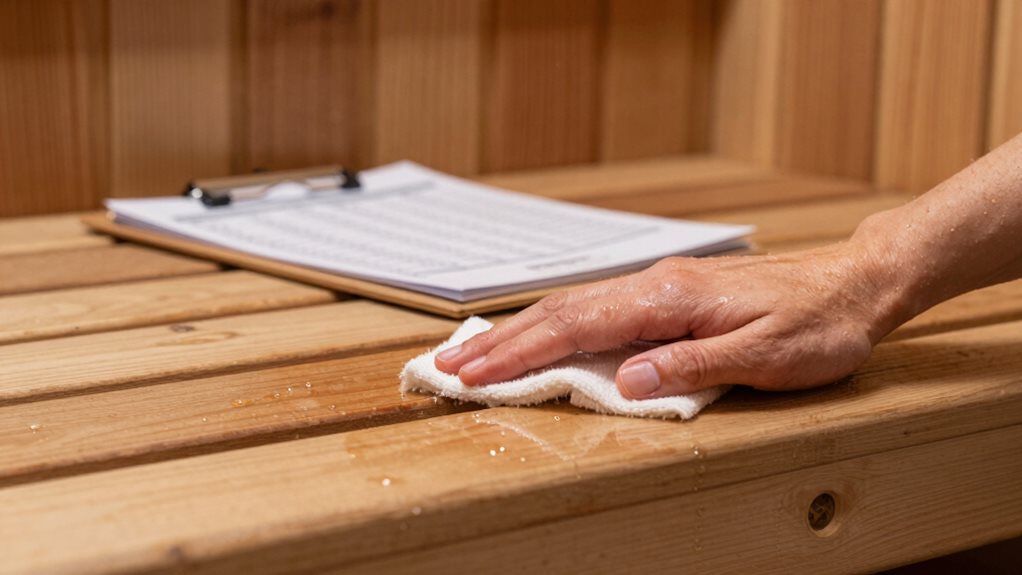
Regular inspections and a solid maintenance checklist are the backbone of keeping your sauna in top shape.
Start by examining the structural wood, looking for cracks, splits, or warping. Don’t forget to check for loose fastenings or corroded hardware.
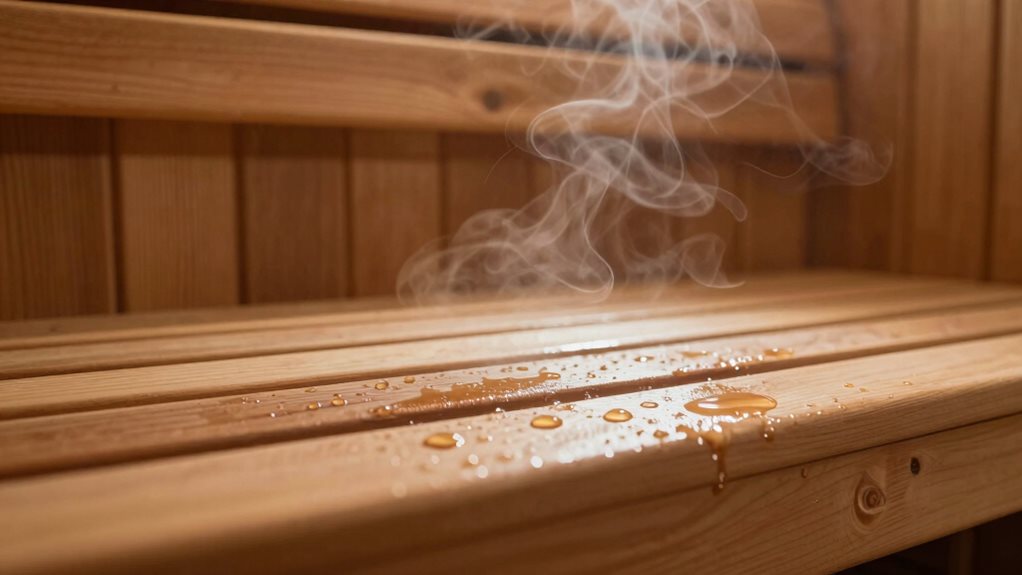
Next, inspect your floorboards for signs of water pooling or soft spots—these can lead to bigger issues.
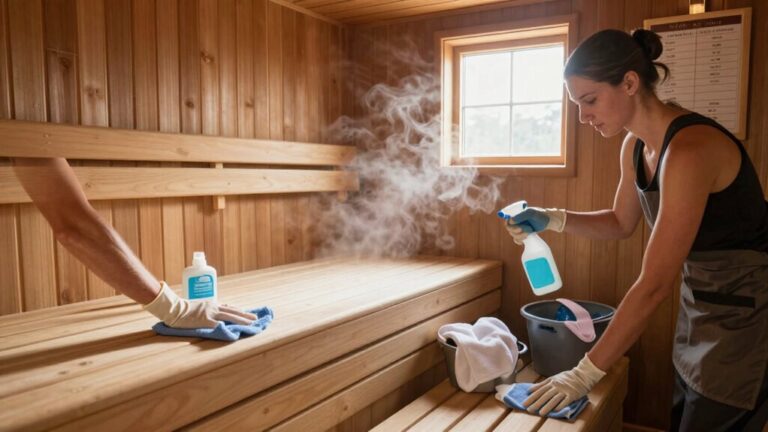
After each session, wipe down benches with a damp cloth to eliminate sweat residue.
Make certain vents are clear and operate easily for proper airflow. Incorporating a fireproof sauna ventilation system can further enhance safety and efficiency.
Monthly checks, along with detailed inspections every six months, will help you catch problems early.
Treat any mold or mildew promptly, and keep everything clean by regularly washing removable textiles.
Consistent maintenance keeps your sauna inviting and functional!
Tips for Storing Your Sauna Properly
Once you’ve confirmed your sauna is in tip-top shape through regular maintenance, it’s time to think about how to store it properly, especially during the off-season.
Proper storage can prolong its life and keep it looking great. Here are some tips to assist:
- Leave the door slightly open after use to prevent humidity and mold.
- Verify ventilation isn’t blocked, even during summer, for airflow.
- Open air vents while heating with doors and windows closed for 30 minutes.
- Apply a breathable wood preservative yearly for moisture resistance.
Additionally, consider investing in outdoor sauna accessories that are specifically designed for weatherproofing to enhance your sauna’s durability.
These simple practices will assist in maintaining your sauna’s quality and keep you enjoying those relaxing sessions for years to come!
Frequently Asked Questions
Can Different Wood Types Affect Moisture Retention in Saunas?
Yes, different wood types impact moisture retention in saunas. Cedar resists moisture better due to its natural oils, while hemlock lacks these protections. Choosing the right wood helps maintain a balanced environment and longevity.
How Can I Identify Wood That Needs Treatment?
You can identify wood needing treatment by checking for musty odors, visible mold, swollen floorboards, or discoloration. Use a moisture meter to guarantee levels are below 20%, and monitor for any standing water.
What Are the Signs of Ineffective Ventilation?
You can spot ineffective ventilation by noticing musty odors, damp surfaces, and condensation during use. If your sauna’s warm-up time increases or your floor stays wet, these are clear signs of poor air circulation.
Do Saunas Require Special Cleaning Products?
Yes, saunas require special cleaning products. Use sauna-specific cleaners or mild natural options like diluted vinegar. Avoid harsh chemicals, as they can damage wood and release harmful fumes when heated, guaranteeing safe, effective maintenance.
How Should Sauna Wood Be Stored During Off-Seasons?
Store sauna wood raised off the ground, ideally on pallets, and cover with loose tarps for protection. Make certain there’s airflow between logs, and check periodically for moisture retention to maintain wood quality during off-seasons.
Final Thoughts
By following these tips, you’ll not just prolong your sauna’s wood life but also create a more enjoyable experience for yourself and others. Think of your sauna as a cozy retreat that thrives on care and attention. With good moisture control, ventilation, and regular maintenance, you’ll keep your sauna looking great and on track for years of relaxation. So, roll up your sleeves and get started—your sauna deserves it!