
When designing benches for relaxation and heat efficiency, height matters! Aim for 17 to 19 inches for a comfortable seat. For work benches, heights between 34 to 39 inches minimize strain. Materials like thermoplastic-coated metal or recycled plastic help manage heat, keeping surfaces cooler. Plus, think about the layout—placing benches in shaded spots can improve comfort. Want to discover more tips on bench design and heat management? Keep going!
Understanding Ideal Bench Height for Comfort
Have you ever wondered why bench height can make or break your comfort level while working? The perfect height not only improves your productivity but also protects your body from strain.
Bench height plays a crucial role in your comfort and productivity, helping to prevent strain while you work.
Standard workbenches generally measure between 34 to 38 inches tall, which is suitable for most tasks. If you’re woodworking, a height of 36 to 39 inches is perfect. The Dash-Board’s optimal height of 35.5 inches is designed to minimize physical strain and maximize task efficiency.
But don’t forget about sitting: for woodworking, aim for 22 to 24 inches, while electronics benefit from even lower heights. Proper height is essential as it promotes a natural, neutral body position.
Think about your specific needs; if you’re doing precision work, you’ll want your bench just above elbow level.
Adjustability is a game changer—consider a bench like the Dash-Board that lets you customize height for ultimate comfort during projects.
The Importance of Ergonomics in Bench Design
While you mightn’t think about it often, ergonomics plays a crucial role in bench design, guaranteeing comfort and efficiency during your projects.
When designing benches, you should consider these key principles:
- Neutral Spine Alignment: Keep your ears, shoulders, and hips aligned. This helps reduce strain during long projects.
- Adjustable Features: Height adjustability and interchangeable components let everyone find their perfect fit, making it easier to maintain good posture. Ergonomic improvements can significantly enhance user comfort and productivity. Additionally, implementing ergonomic principles in design not only promotes health but also supports long-term well-being.
- Pressure Distribution: Choose designs with comfortable contours and cushioning to avoid pressure points, allowing for longer, more enjoyable seating.
Materials That Enhance Durability and Heat Management
Choosing the right materials for your bench isn’t just about looks; it’s about guaranteeing your bench can withstand the elements and maintain comfort, especially during hot weather.
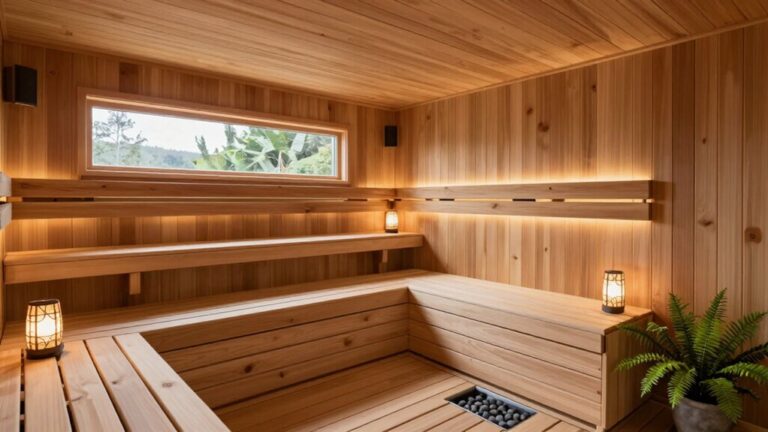
For durability and heat management, consider thermoplastic-coated metal. This material resists corrosion and UV rays, while its even surface needs minimal maintenance. Additionally, aluminum benches are lightweight but may not withstand harsh weather conditions, making them less ideal for certain locations. When selecting materials, it’s crucial to assess the expected usage and foot traffic to ensure durability for your bench’s planned environment. A wooden sauna bench kit is a great option that combines natural aesthetics with durability and comfort.
Recycled plastic and high-density polyethylene (HDPE) are also fantastic options, resisting warping and mold. Plus, they stay cool even on sunny days!
If you’re leaning toward metal, aluminum offers lightweight support, while steel provides heavy stability.
To improve heat resistance, look for sealed metals, which create a barrier against heat.
With these materials, your bench won’t just last; it’ll keep you comfortable for years to come!
Creating Comfortable Microclimates Around Benches
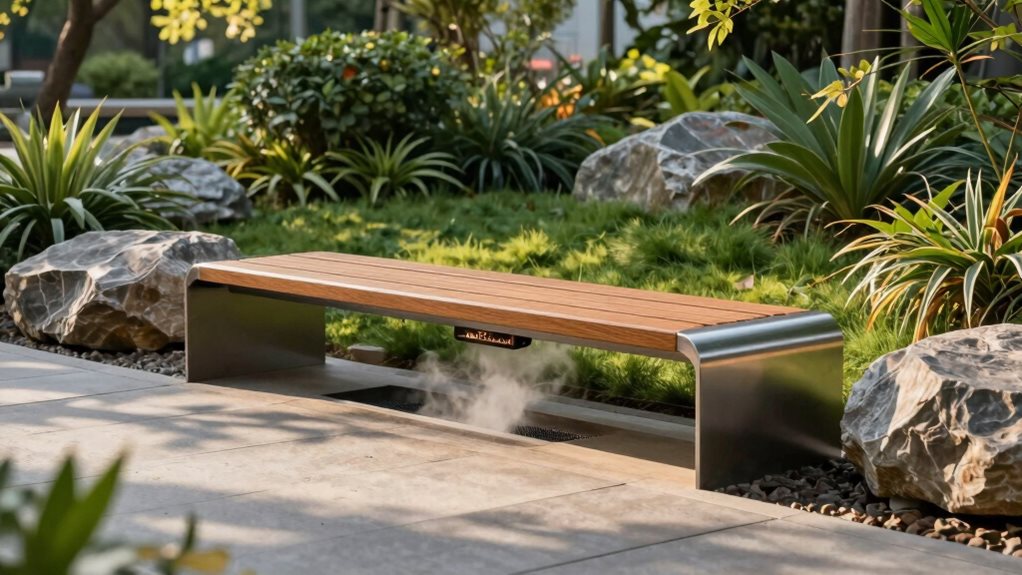
Creating a comfortable microclimate around your benches is all about smart placement and the right protection from the elements. Position your benches where they can catch both sunlight and shade, giving people choices for their comfort throughout the day. Additionally, incorporating hedges and windbreaks can keep everyone cozy, so they can enjoy the space longer without getting too hot or chilly. Considering microclimatic elements such as ambient temperature and wind patterns can further enhance the overall comfort and usability of the area.
Optimal Bench Orientation
When it comes to bench orientation, you can greatly improve the comfort and allure of your outdoor space. Here are three key tips to keep in mind:
- Sun Position: Orient your benches with the sun behind, avoiding direct glare, or face east for warm morning sun. If it’s evening, west-facing benches let you soak in gorgeous sunsets. This strategic placement can enhance overall layout for optimal sun exposure. Additionally, consider that strategically placed benches can enhance relaxation, conversation, and community connection.
- Sightline Matters: Position benches towards gardens, fountains, or playgrounds. This not merely offers pleasant views but also creates a relaxing atmosphere.
- Circulation Flow: Place benches along natural pathways. Doing so invites foot traffic, encouraging casual conversations and spontaneous interactions.
Shading and Windbreak Strategies
Finding the right balance of shade and wind protection around your benches can make all the difference in transforming your outdoor space from average to inviting.
Start by planting trees; their shade and evaporation cool the air in hot climates. To manage wind, consider mixed plantings since they reduce turbulence better than solid walls.
Canopies or overhangs can block the harsh midday sun while letting in warm morning light. Creating staggered seating can also help fine-tune comfort.
You might even add reflective pavements to lower surface temperatures. By analyzing your space with tools like ENVI-met, you can pinpoint the best strategies for your microclimate.
Accessibility Considerations for Inclusive Bench Designs

Designing benches that everyone can use is important because accessibility guarantees everyone feels welcome in public spaces.
When creating inclusive bench designs, consider these key factors:
- Appropriate Height: Keep the seat height between 17 and 19 inches to help people get on and off easily.
- Clear Space: Verify at least 30 inches of clear space around benches, so wheelchair users can approach and transfer without difficulty.
- Support Features: Include armrests and backrests on some benches to provide support and assist with transfers for those who need it.
Aesthetic Features That Enhance Functionality
When you think about benches, consider how integrated storage solutions can transform both style and function.
Imagine a sleek, upholstered bench hiding your favorite blankets or toys, making your space tidy while still looking great.
Plus, choosing harmonious materials, like blending wood and metal, not just improves the bench’s appearance but also boosts its durability and guarantees it fits beautifully in any room.
Integrated Storage Solutions
Integrated storage solutions aren’t just about keeping your space tidy; they’re also a chance to improve the aesthetics of your outdoor area.
By incorporating smart designs, you can create a stylish and functional space. Here are three key features to take into account:
- Concealed Storage: Lift-top designs hide cushions and toys, making sure your patio looks neat and inviting.
- Space Efficiency: L-shaped or U-shaped benches can maximize seating while providing hidden compartments, making every corner count.
- Durability and Style: Choose weather-resistant materials that blend seamlessly with your deck, allowing your furniture to withstand the elements while adding visual appeal.
With these integrated solutions, your outdoor oasis can be both beautiful and organized, making relaxation a breeze!
Harmonious Material Choices
Choosing the right materials for your outdoor bench not only boosts its style but also improves its durability and comfort.
If you live in a damp area, consider using teak or ipe hardwoods; they resist rot, making them last longer with little upkeep.
In urban spaces, powder-coated steel or aluminum offers strength and protects against the elements.
For a wood-like look without the hassle, try composite materials or HDPE plastic, which stand up to UV rays and moisture.
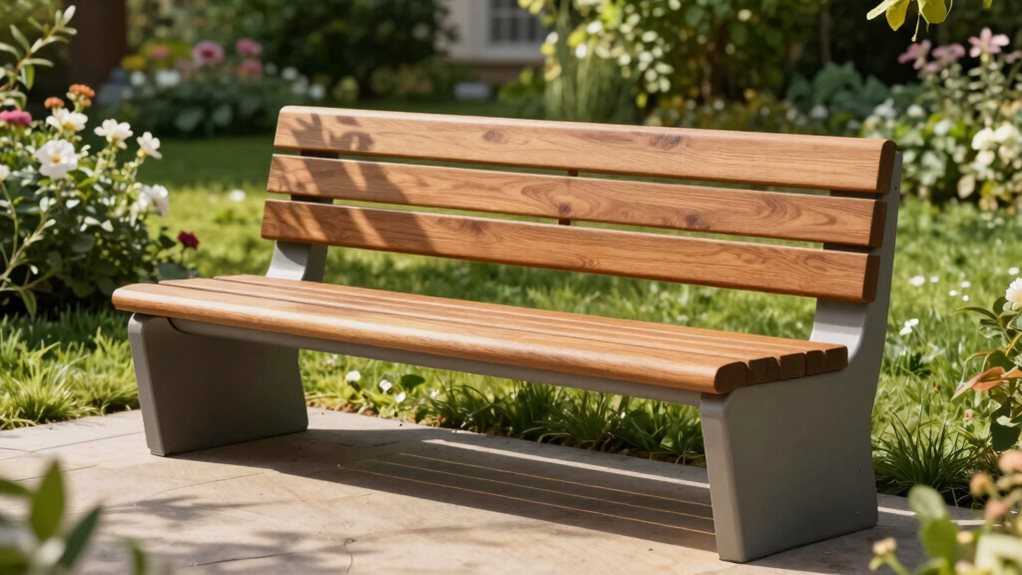
Pairing metal frames with wooden seats creates a cozy feel in cold weather, while breathable slatted designs keep temperatures comfortable.
Whichever materials you choose, make sure they suit your climate and improve your bench’s functionality.
Your outdoor space will thank you!
Innovative Design Strategies for Heat Reduction
Innovative design strategies for heat reduction can make a huge difference in how comfortable outdoor spaces feel, especially during hot summer months.
Here are three effective approaches you can use:
- Passive shading: Plant shade trees or add permanent structures like pergolas to block the harsh sun while keeping winter warmth in.
- Smart materials: Choose low-thermal-conductivity materials and light colors for surfaces. These choices help keep areas cooler and more inviting.
- Water features: Position shallow pools or misters near seating to create a cooling breeze and improve the outdoor experience.
Frequently Asked Questions
What Are the Common Materials Used for Bench Seats?
You’ll often find bench seats made from hardwoods like teak and ipe, softwoods like cedar and pressure-treated pine, as well as metals like steel, and durable composites or recycled materials designed for outdoor use.
How Do Seasonal Changes Affect Bench Design Considerations?
Seasonal changes affect your bench design by requiring you to choose weather-resistant materials, adjust placement for sun or shade, and swap decorations to improve comfort, usability, and aesthetics throughout the year. Keep it inviting!
Can Bench Design Adapt Easily to Changing Outdoor Environments?
Yes, you can adapt bench design to changing outdoor environments. Modular elements and interchangeable components allow easy relocation and reconfiguration, guaranteeing your seating remains functional and comfortable regardless of shifting sun, wind, or usage patterns.
What Maintenance Is Required for Different Bench Materials?
You’ll need to clean, inspect for damage, and apply protective finishes regularly. Each material demands specific care; hardwoods benefit from oil, softwoods need stains, metals require rust prevention, and composites need mild cleansers for upkeep.
How Do Cultural Factors Influence Bench Height Preferences?
Cultural factors shape your bench height preferences by reflecting societal norms about comfort and usability. In some cultures, shorter benches might evoke relaxation, while others favor heights that promote social interaction or traditional practices in public spaces.
Final Thoughts
To sum up, designing a bench isn’t just about height; it’s about creating a comfy and inviting spot. By paying attention to ergonomics, using the right materials, and considering everyone’s needs, you can make benches that not only look great but also keep you cool. Whether you’re relaxing in a park or enjoying a quiet moment on your porch, the right bench design improves your experience. So, let’s get creative and build the perfect spot to unwind!