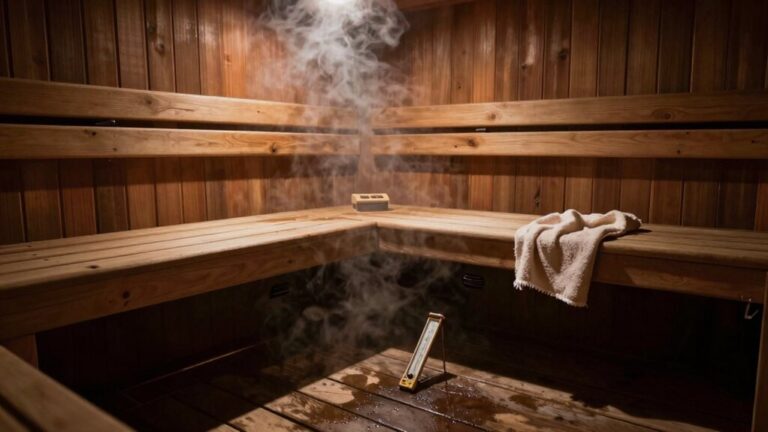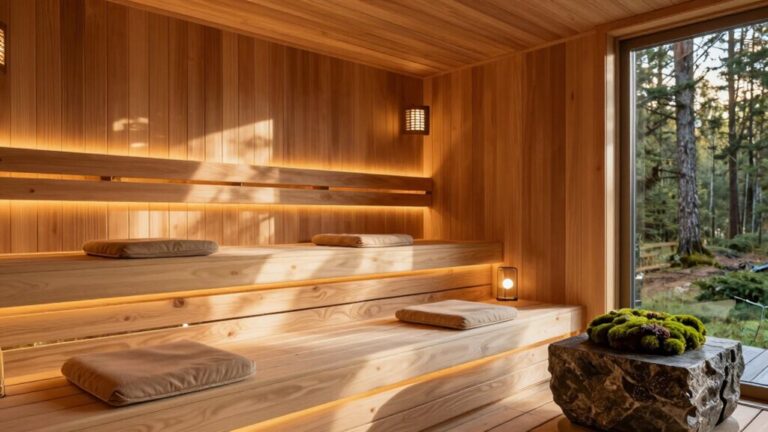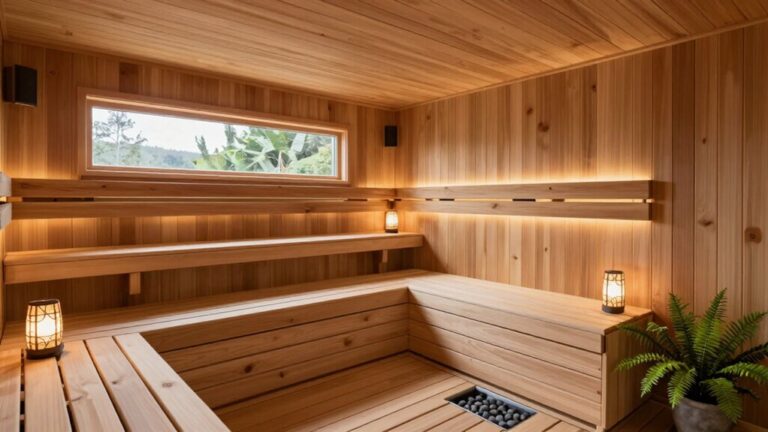
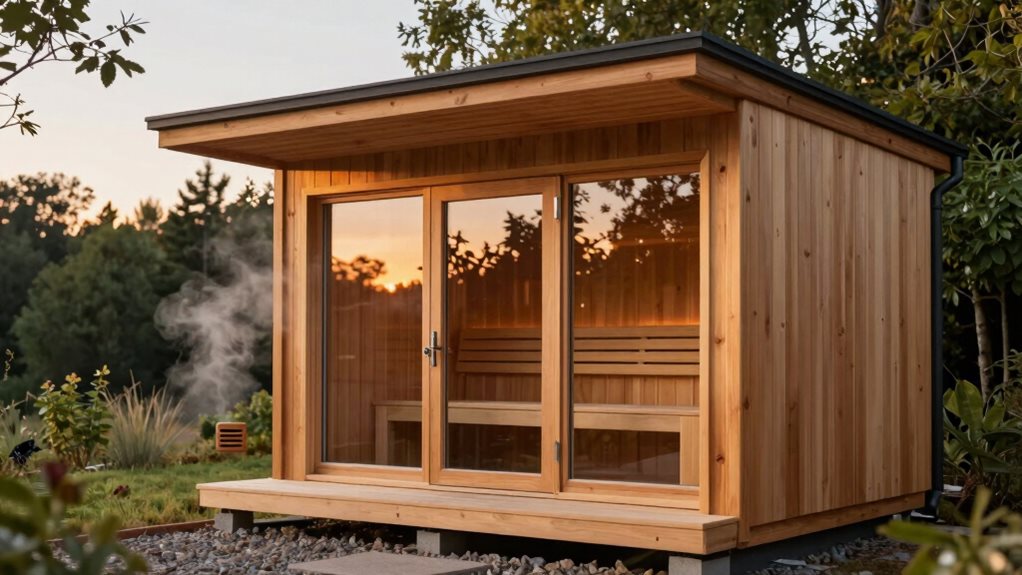

To create the perfect sauna exterior while keeping heat efficacy in mind, start with durable, weather-resistant materials like Thermowood or Western red cedar for cladding. Choose breathable finishes that let moisture escape and apply UV-resistant products for long-lasting protection. Insulate walls and ceilings properly and use continuous vapor barriers to manage moisture. Don’t forget about window placement—go for fixed models to minimize drafts. Stick around to discover more tips for maintaining your sauna’s longevity!
Selecting Weather-Resistant Cladding Materials
When it comes to selecting weather-resistant cladding materials for your sauna, you’ll want to contemplate options that not merely stand up to the elements but also look great.
Thermally modified wood, or Thermowood, excels in durability, lasting around 20 to 35 years. It fights warping and cracking, plus its low resin content means no sticky surprises during sunny days. Additionally, thermowood’s resistance to moisture makes it ideal for outdoor durability. This material is also an environmentally friendly alternative to tropical hardwoods, making it a sustainable choice for your sauna. Thermowood’s thermal properties further enhance its effectiveness by minimizing heat loss.
If you prefer something natural, Western red cedar offers rot resistance and a lovely aroma that adds to your sauna’s charm.
For an easy-maintenance choice, engineered claddings like fiber-cement are strong against weather while needing less upkeep than wood.
No matter what you choose, prioritize materials that will keep your sauna looking fabulous and performing well for years to come!
Choosing the Right Exterior Finishes
How do you make sure your sauna looks great while standing up to the elements? Choosing the right exterior finishes is key. Here are some tips to keep your sauna stylish and durable:
- Opt for breathable finishes that allow moisture to escape, preventing rot and mold. Using weatherproofing techniques can significantly enhance the longevity of your sauna’s appearance.
- Choose UV-resistant products to protect against sun damage. A fresh coat every 1–3 years can keep it looking sharp. Regularly applying water-repellent sealants ensures that your sauna remains protected from moisture-related issues.
- Consider thermal compatibility with your climate. Look for finishes that can handle temperature changes without peeling. Additionally, using weather-resistant materials helps to maintain exterior integrity and prolong the lifespan of your sauna.
- If your sauna’s near the coast, use marine-grade materials to resist salt and corrosion. This ensures that your sauna remains visually appealing and structurally sound even in harsh coastal environments.
Proper Insulation Strategies for Optimal R-Value
Protecting your sauna from the cold starts with proper insulation. To keep the heat in, you’ll want walls with an R-value between 13 and 15, while the ceiling needs a minimum of R-26 to R-30—it’s where most heat escapes. Investing in a quality sauna insulation kit can simplify the process and ensure you meet these R-value requirements.
If you’re building an outdoor sauna, aim for R-19 or higher in the walls. Materials matter too! Mineral wool is fire-resistant and breathable, typically offering R-3.0 to R-3.5 per inch. Proper insulation also plays a key role in reducing energy consumption by preventing heat loss, ensuring a cozy experience. Additionally, ensuring a continuous vapor barrier can effectively prevent moisture damage and enhance overall insulation performance.
If you want a boost, consider foil-faced boards, which can deliver R-5.0 to R-8.0 per inch, speeding up heating. For best results, fill gaps with spray foam, overlap vapor barriers, and guarantee any seams are taped tight.
Your sauna deserves the best insulation for cozy, warm sessions!
Effective Vapor Control and Moisture Management
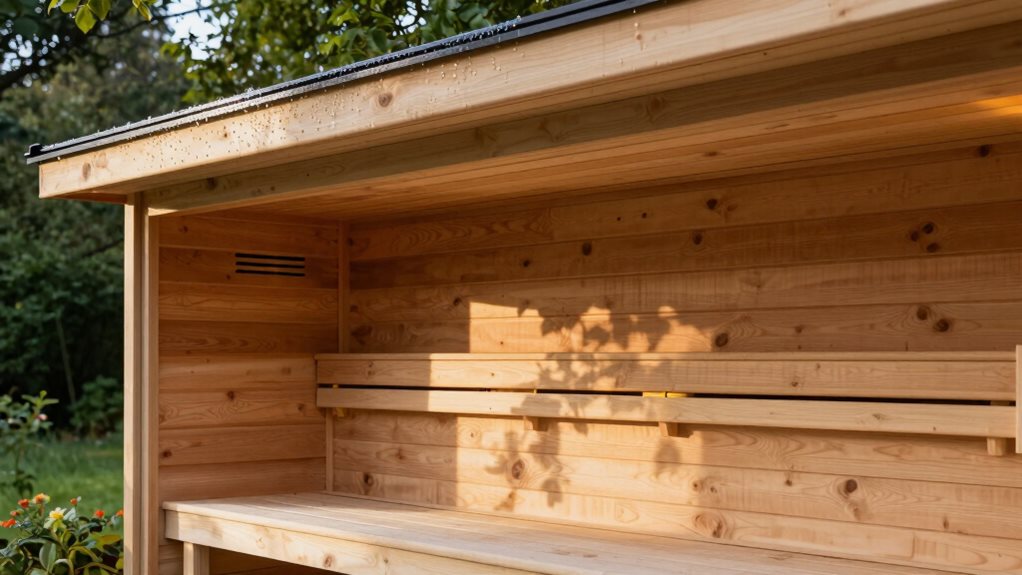
When it comes to your sauna, managing vapor and moisture is super important for keeping everything in great shape. You’ll want to install a continuous vapor barrier to keep warm, moist air from sneaking into your walls, along with a smart ventilation system to whisk away humidity during and after your sessions. Think of it like a cozy raincoat for your sauna—protecting it from moisture while guaranteeing it stays nice and dry inside! Additionally, remember that a well-insulated sauna minimizes the risk of dampness, mold, and rot to ensure long-lasting durability and performance. Proper insulation minimizes heat loss, allowing your sauna to reach and maintain the desired temperature efficiently. Investing in quality sauna moisture protection products can further enhance your sauna’s resilience against moisture damage.
Continuous Vapor Barriers
To guarantee a sauna stays cozy and comfortable, you’ll want to focus on using continuous vapor barriers that effectively manage moisture.
These barriers play a vital role in keeping your sauna inviting while avoiding unwelcome dampness. Here are some key points to take into account:
- Use high-quality materials like aluminum foil or foil-faced rigid boards for superior vapor control. The pure aluminum foil is recommended for traditional sauna room construction, and selecting a waterproof sauna floor membrane can enhance overall moisture management.
- Seal seams with high-temperature foil tape to prevent moisture leaks.
- Install the barrier on the warm side of the insulation to minimize condensation issues. Proper installation is crucial as a vapor barrier prevents all moisture penetration.
- Ensure continuity by overlapping seams and paying special attention to areas around fixtures.
When done right, these barriers not only improve comfort but also protect insulation, keeping your sauna’s performance exceptional for years to come!
Controlled Ventilation Systems
While you may not think about ventilation when enjoying a sauna, controlled ventilation systems are crucial for keeping the air fresh and comfortable.
The key is to balance supply and exhaust air placement properly. Place the supply vent near the heater, so incoming air warms quickly, while the exhaust vent should be on the opposite wall to create a nice cross-room flow.
You want to avoid chilly drafts on you and guarantee that humid air rises and exits efficiently. Using inline fans and adjustable controls can improve airflow, making everything operate seamlessly.
Additionally, investing in a high-quality sauna ventilation system can significantly enhance your overall sauna experience.
After your sauna session, remember that good ventilation helps lower indoor humidity, preventing moisture damage and keeping your sauna in top shape for years to come!
Addressing Thermal Bridging and Air Sealing Techniques
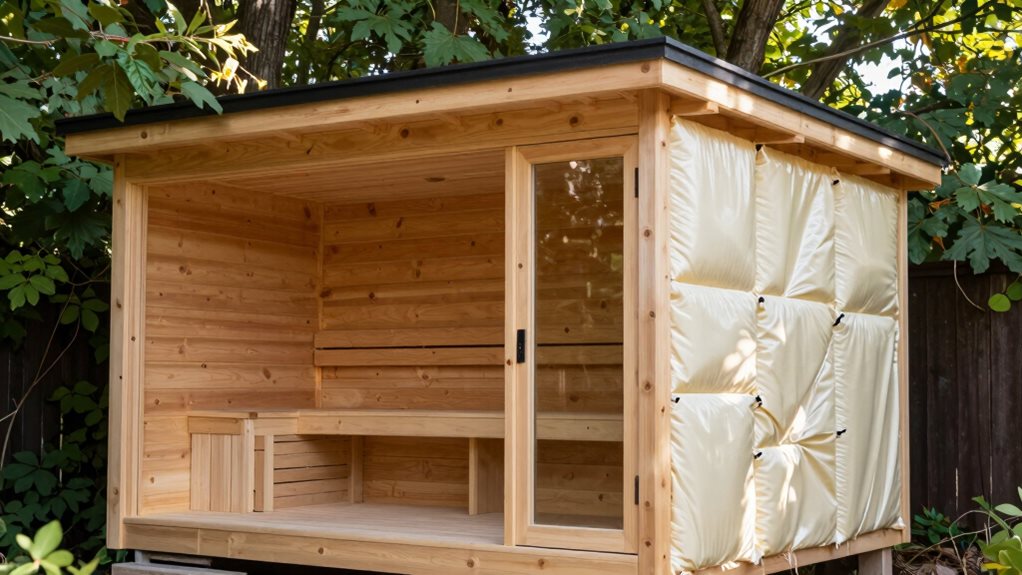
When building the perfect sauna exterior, addressing thermal bridging and air sealing is key to keeping the heat in and the cold out.
You can use continuous exterior insulation to break those sneaky connections that let heat escape, while also sealing up any gaps to prevent drafts.
Minimizing Thermal Bridging
Minimizing thermal bridging is vital for keeping your sauna cozy and energy-efficient, and it’s easier than you might think. Here are four key strategies to help you out:
- Choose Continuous Insulation: Cover your structure entirely to stop heat from escaping through studs.
- Keep Insulation Untouched: Avoid compressing insulation, as this weakens its effectiveness and allows heat to slip away.
- Stagger Seam Placement: When layering insulation, offset the seams. This technique further reduces thermal bridging.
- Add an Air Gap: Use a tiny air gap between layers to aid moisture escape and improve insulation performance.
Additionally, investing in a premium sauna insulation kit can significantly enhance your sauna’s heat retention and overall efficiency.
Effective Air Sealing Techniques
Creating a warm and inviting sauna involves more than just insulation; effective air sealing is key to maintaining that cozy atmosphere.
Start by installing an aluminum-faced vapor barrier on the interior side, as it reflects heat and blocks steam. Tape overlaps with high-temperature aluminum tape to avoid leaks. Seal any holes, like light fixtures or heater flues, using heat-resistant mastic.
Don’t overlook door and vent areas—fit the sauna door with foam strips and leave a gap for air. For vents, make sure they’re sealed tightly to prevent unwanted air paths.
Finally, use stainless-steel fasteners and high-temp sealants to keep everything airtight. Additionally, consider integrating a sauna moisture control system to further enhance the effectiveness of your air sealing efforts. With these techniques, your sauna will feel relaxing and warm every time you step inside!
Strategic Exterior Design for Heat Retention
Strategic exterior design plays a crucial role in guaranteeing your sauna retains heat effectively, which is critical for a comfortable and enjoyable experience.
Effective exterior design ensures your sauna retains heat, providing a cozy and enjoyable experience.
To achieve this, consider the following key elements:
- Insulation Materials: Use mineral wool or fiberglass for your walls and guarantee higher R-values for ceilings to minimize heat loss.
- Vapor Barriers: Install an aluminum or foil-faced vapor barrier on the warm side of insulation to keep moisture out and protect thermal performance.
- Weatherproof Cladding: Choose water-resistant materials like cedar or durable composites to safeguard your sauna from the elements.
- Air Sealing: Prioritize continuous air barriers and well-sealed door frames to keep drafts at bay and maintain that cozy warmth inside.
Additionally, incorporating a fireproof sauna ventilation system is essential to ensure safe airflow without compromising heat retention.
Make these smart choices, and you’ll enjoy a sauna that stays toasty and inviting!
Impact of Window Placement and Size
When choosing windows for your sauna, placement and size really matter for keeping the heat inside.
Bigger windows can lead to more heat loss, which means you’ll need a stronger heater to keep things cozy, while strategic placements can help you stay comfortable by reducing those hot and cold spots.
Optimal Window Placement
Ideal window placement can greatly improve your sauna experience, both in comfort and efficiency.
When you think about where to put windows, consider these four key points:
- Avoid leaning: Place windows so that you don’t have to lean into them while sitting, keeping comfort in mind.
- Use fixed windows: They seal better and trap more heat compared to operable ones, preventing drafts.
- Strategic positioning: Position windows behind benches, so you maintain a comfortable space without hot surfaces nearby.
- Framed views: Corner or rear placements can provide scenic views without compromising your seating position.
Size Considerations for Glazing
Choosing the right size and type of glazing for your sauna is crucial for both comfort and efficiency, since poorly sized windows can lead to heat loss and extra strain on your heater.
If you’re installing smaller windows, stick to 1/4-inch tempered glass. However, for larger openings like floor-to-ceiling windows, double or triple glazing is a requirement. This type not only minimizes heat loss but also lowers the required heater capacity, making your sauna more efficient.
Remember, larger windows mean heavier glass—standard glass doors can weigh up to 150 pounds! So, verify your sauna structure can handle the weight.
Ultimately, the right glazing size helps maintain the perfect sauna experience without sacrificing heat. Additionally, selecting a natural wood sauna heater can further enhance the overall warmth and ambiance of your sauna.
Efficient Heat Retention
To keep your sauna cozy and warm, you’ll want to pay special attention to how you place and size your windows. Proper window design can greatly impact heat retention!
- Use double- or triple-pane glass to minimize heat loss.
- Position windows higher on the wall to preserve warm air around benches.
- Opt for smaller windows instead of one large pane to limit heat escape.
- Install fixed windows, as they seal tighter than operable ones and reduce thermal bridges.
Selecting the Right Heater for Your Sauna
When you’re ready to heat your sauna, selecting the right heater is key to creating a perfect atmosphere for relaxation.
You can choose between electric, wood-burning, gas, or infrared heaters. Electric heaters are popular in cities, offering easy control and quick heat. If you prefer the authentic experience, wood-burning heaters fill your space with a lovely aroma.
Choose from electric, wood-burning, gas, or infrared heaters to create your ideal sauna experience. Enjoy quick heat or an authentic aroma!
Gas heaters work well for larger saunas, heating up efficiently. Infrared heaters directly warm your body, which is great for smaller spaces but lacks the traditional steam experience.
Make sure to match the heater’s power to your sauna’s size, considering your preferences, location, and maintenance levels.
No matter your choice, you’ll soon enjoy soothing warmth!
Operational Considerations for Energy Efficiency
Creating an energy-efficient sauna doesn’t just save you money; it also improves your overall experience.
By making smart operational choices, you’ll enjoy your sauna more while reducing your energy bill. Here are some effective strategies:
- Insulate Properly: Use high R-value insulation and seal gaps to maintain heat.
- Size Smartly: Match the sauna size to the number of users to prevent unnecessary heating.
- Control Usage: Install programmable timers and encourage users to keep door openings short.
- Optimize Ventilation: Use adjustable vents to maintain air quality without losing heat.
These operational considerations help keep your sauna cozy and energy-efficient, guaranteeing you get the best experience for every session!
Maintaining Your Sauna Exterior for Longevity
Maintaining your sauna’s exterior is just as important as enjoying it; after all, a well-cared-for sauna can last for many years.
Start by soft washing surfaces with mild soap and water to remove dirt and mildew, using a soft brush to protect the wood. Annual low-pressure rinsing helps clear grime without damaging the wood.
Soft wash surfaces with mild soap and water, using a soft brush to maintain the wood’s integrity. Annual low-pressure rinsing keeps grime at bay!
Don’t forget to spot-treat mold or mildew in corners and seams. Regularly clear debris from the roof and gutters to prevent moisture buildup.
Consider applying breathable sealers to protect the wood while allowing it to breathe.
Finally, check fasteners and seals often; tight seals keep moisture out, guaranteeing your sauna remains a cozy retreat for the long haul!
Frequently Asked Questions
What Are the Best Practices for Sauna Landscaping?
To improve your sauna landscaping, prioritize flat, well-drained areas, add privacy with natural barriers, and select native plants. Incorporate features like outdoor showers and cozy seating for relaxation, while guaranteeing easy access and sun exposure.
How Does Sauna Orientation Affect Sun Exposure?
Sauna orientation greatly impacts sun exposure. You’ll gain morning warmth while avoiding harsh afternoon rays by positioning it east-facing. This balance minimizes heat loss and protects your sauna materials from excessive UV damage.
Can I Use Recycled Materials for Exterior Cladding?
Yes, you can use recycled materials for exterior cladding. Reclaimed wood, upcycled metal, and sustainable options improve your sauna’s appeal while reducing environmental impact, guaranteeing you create an eco-friendly, efficient space for relaxation.
What Should I Consider for Sauna Lighting Design?
Consider safety, humidity, and warmth in your sauna lighting design. Use LED fixtures rated for high temperatures, position lights for indirect illumination, and opt for warm tones to create a relaxing atmosphere without disturbing bathers.
How Do Outdoor Temperatures Influence Sauna Performance?
Outdoor temperatures considerably influence sauna performance by affecting heat retention and circulation. In cold weather, effective insulation retains warmth; in heat, increased steam from evaporating water improves humidity, optimizing your sauna experience for recovery and endurance.
Final Thoughts
In crafting the ideal sauna exterior, you’re balancing beauty and functionality. By choosing weather-resistant materials, guaranteeing proper insulation, and managing moisture well, you can create a warm haven. Remember, it’s not only about how it looks; energy efficiency and maintenance play key roles too. So, whether you’re adding a touch of style or fine-tuning heat retention, each choice counts. With your sauna skills, you’ll enjoy a perfect retreat that lasts for years to come!