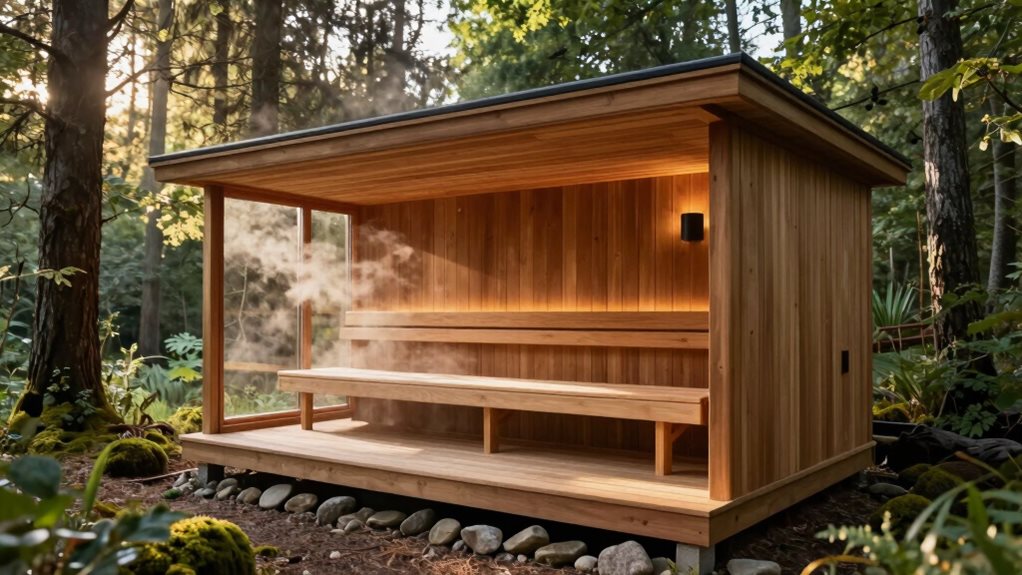

Natural wood saunas blend stunning beauty with high performance, giving you the perfect escape to unwind. Choosing the right wood, like Western Red Cedar or thermally modified options, guarantees both durability and comfort. Insulation and ventilation are key for heat retention and air quality, while various heating options cater to your preferences. Regular sauna use offers fantastic health benefits too! Curious about how to maintain your sauna and improve its design? There’s more to discover!
Selecting the Right Wood Species for Your Sauna
When you’re choosing the right wood species for your sauna, it’s important to contemplate how different types of wood perform in a hot, humid environment.
For instance, Western Red Cedar excels with its rot resistance and low resin content, making it perfect for high-heat settings. Additionally, selecting high-performance woods for your sauna will ensure durability and comfort in the long run. Moreover, opting for materials like Western Red Cedar’s natural antiseptic properties helps maintain a hygienic sauna environment over time. Furthermore, using sauna heater cedar wood can enhance the overall aesthetic and performance of your sauna.
If you’re leaning toward something modern, thermally modified woods like Thermo-Aspen or Thermo-Spruce offer better stability and lower moisture absorption. Also, consider Canadian Hemlock for its fine grain and good heat radiation, or Nordic Spruce for a traditional vibe.
If you want to avoid burns, look for low thermal conductivity woods like aspen or alder.
Insulation Techniques for Optimal Thermal Performance
To achieve ideal thermal performance in your sauna, using the right insulation techniques is crucial. The right materials keep the heat in, making your sauna cozy and energy-efficient.
Here are some key techniques to take into account:
- Choose Effective Insulation: Mineral wool or natural fiber like wool can help manage humidity while providing great thermal resistance. Using insulated walls is recommended for superior thermal performance. Additionally, investing in a quality sauna insulation kit can greatly enhance your sauna’s energy efficiency.
- Install Vapor Barriers: Use aluminum vapor barriers to prevent moisture from sneaking in, guaranteeing that heat stays put.
- Seal It Up: Tape seams with heat-resistant aluminum tape and verify continuous insulation without gaps to minimize heat loss. Additionally, effective insulation minimizes heat loss and reduces energy consumption, allowing saunas to reach desired temperatures quickly.
With these techniques, you’ll enjoy a warm sauna experience that’s efficient and relaxing, allowing you to soak in the benefits of heat therapy without the worry of drafts.
Understanding Different Heating Options for Saunas
When you’re choosing a heating option for your sauna, you’ve got some exciting choices ahead!
Whether you prefer the authentic feel of a wood-fired stove, the efficiency of an electric heater, or the quick warmth from infrared panels, each brings something unique to the table. Electric saunas are particularly popular for their practicality and quick heating capabilities, allowing you to enjoy your sauna experience in no time. Additionally, opting for a high-quality electric sauna heater can enhance durability and performance. Understanding these options can help you create the perfect sauna experience customized just for you, especially considering that different types of sauna heaters can significantly affect user experience and satisfaction.
Wood-Fired Stove Benefits
Though many options exist for heating a sauna, wood-fired stoves stand out for their unique benefits and traditional appeal. They create a cozy, natural atmosphere that many find soothing. Additionally, using a natural wood sauna heater enhances the overall experience by providing consistent and even heat distribution.
Here are three key advantages:
- Authentic Experience: You’ll enjoy the delightful wood aroma and warm crackling sounds, making every session feel genuine.
- High Heat and Steam Quality: Wood stoves can reach peak temperatures of around 110°C (230°F), giving you long-lasting, dense steam that adds to the relaxation. This is because higher temperatures are achievable compared to electric heaters, and they deliver higher heat output that enhances overall comfort.
- Off-Grid Capability: Since they don’t need electricity, you can place your sauna in remote locations, perfect for a get-away from modern life.
With a wood-fired stove, you’ll not just heat your sauna but also improve your overall experience in a truly unique way!
Electric Heater Advantages
While wood-fired stoves bring warmth and charm to your sauna sessions, electric heaters offer a modern twist with their convenience and reliability.
Imagine stepping into a sauna that heats up quickly—no waiting around! With simple buttons to control the temperature and timer, you can adjust everything easily. Plus, these heaters run quietly, creating a peaceful retreat. Proper installation is crucial because it ensures optimal safety and performance for your electric sauna heater. Additionally, you can finance your purchase through options like Bread Pay™, making it easier to enjoy the benefits of a sauna. Choosing the right electric heater can greatly enhance your sauna experience, making it essential to explore various indoor sauna heater kit options.
They’re designed for harmony with your space, whether wall-mounted or free-standing, fitting well even in smaller areas.
Safety is a huge perk, too; there are no open flames, making them safer for homes with kids or pets. Regular maintenance is minimal, requiring just some stone checks.
With all these advantages, electric heaters provide a cozy, efficient sauna experience you won’t forget.
Infrared Heating Insights
Imagine stepping into a sauna that feels like a warm hug right from the start.
Infrared heating offers unique options customized to your comfort. Here’s a quick breakdown of the types:
- Carbon-fiber panels: They emit gentle, far-infrared heat that’s perfect for long sessions, keeping temperatures around 140–150°F.
- Ceramic emitters: These give off stronger mid- to far-infrared heat, allowing quicker warming and deeper tissue penetration.
- Quartz/halogen elements: Operating at higher temps (about 750°F), they deliver intense, localized heat but with deeper tissue penetration.
With their lower heat needs, infrared saunas can be more comfortable for heat-sensitive users, allowing you to enjoy the benefits without being overwhelmed. Additionally, many users appreciate the health benefits of infrared therapy, which can include improved circulation and detoxification.
Enhancing User Experience Through Design and Comfort
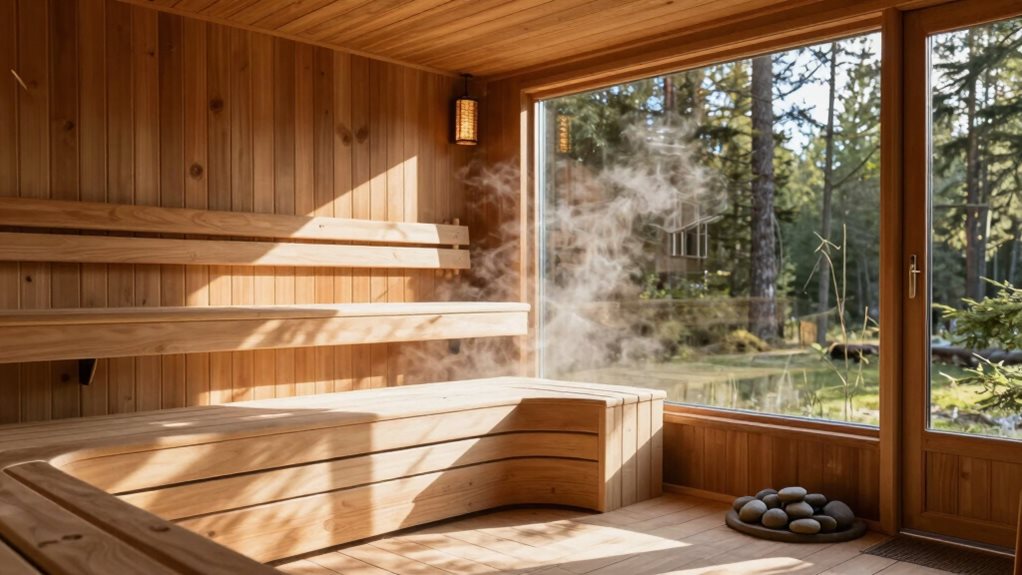
When you step into a well-designed sauna, it’s like entering a cozy retreat that wraps you in warmth and comfort.
You’ll instantly notice materials like softwoods, including cedar and spruce, which create an inviting atmosphere. Cedar not only combats moisture but also exudes a pleasant aroma.
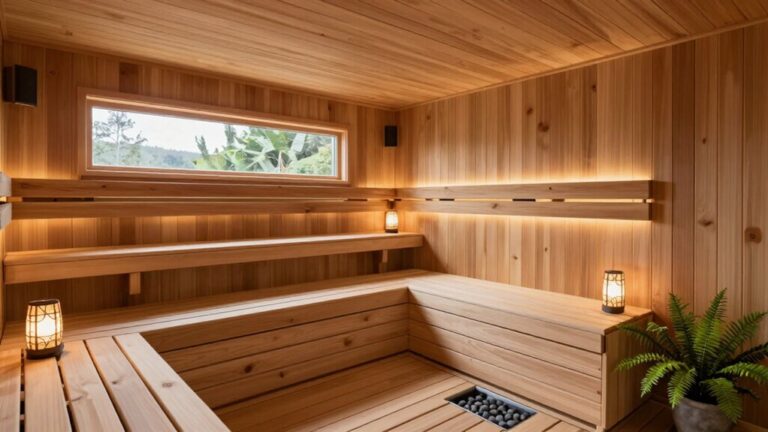
Imagine relaxing on tiered wooden benches that let you choose your perfect heat level. The gentle warmth radiates evenly, especially with hemlock’s inviting scent.
Relax on tiered wooden benches, choosing your ideal heat level as the gentle warmth and soothing hemlock scent envelop you.
Plus, features like spacious changing areas improve your experience. With natural ventilation, the sauna feels revitalizing, keeping connections to nature alive.
The choice of high-quality materials, such as cedar sauna bench kits, enhances durability and aesthetic appeal, making your sauna experience even more enjoyable.
It’s this perfect blend of design and sensory delight that transforms your sauna visit into a memorable escape, making every moment truly enjoyable.
Health Benefits of Regular Sauna Use
Sauna use offers a treasure trove of health benefits that can considerably elevate your well-being. When you step into a sauna, you’re not merely relaxing; you’re positively impacting your health.
Here are three incredible benefits you can enjoy:
- Heart Health: Regular sessions can lower risks of heart-related issues and improve your cardiovascular fitness, particularly when combined with exercise.
- Metabolism Boost: Saunas can mimic some advantages of moderate exercise, aiding in better glucose regulation and improving your cholesterol levels.
- Respiratory Relief: Enjoy better breathing, as the heat can temporarily improve airway function and even help lessen the severity of respiratory illnesses.
Additionally, investing in a home sauna kit can make it easier to incorporate this health-enhancing experience into your daily routine.
With regular sauna use, you’re treating yourself to a delightful, health-enhancing experience that your body will thank you for!
Maintenance Practices for Longevity and Safety
To keep your natural wood sauna in top shape, regular maintenance is essential.
Start by wiping down wooden surfaces with a soft brush or cloth to remove dust after each use. It’s best to use special sauna cleaners rather than household products, as they can harm your sauna’s wood.
Deep clean every few months, using natural cleaners for sweat and grime. Apply breathable wood preservatives yearly to resist moisture, and avoid painting or staining the wood to let it breathe. Additionally, consider incorporating sauna moisture protection products to further enhance the durability of your sauna’s wood.
Regularly check for wear or mold, and inspect the heater and sauna stones for issues. Following these practices guarantees your sauna remains safe and enjoyable for years to come, just like a well-loved pet that requires care!
Creating Aesthetic Appeal With Wood Finishes and Layout
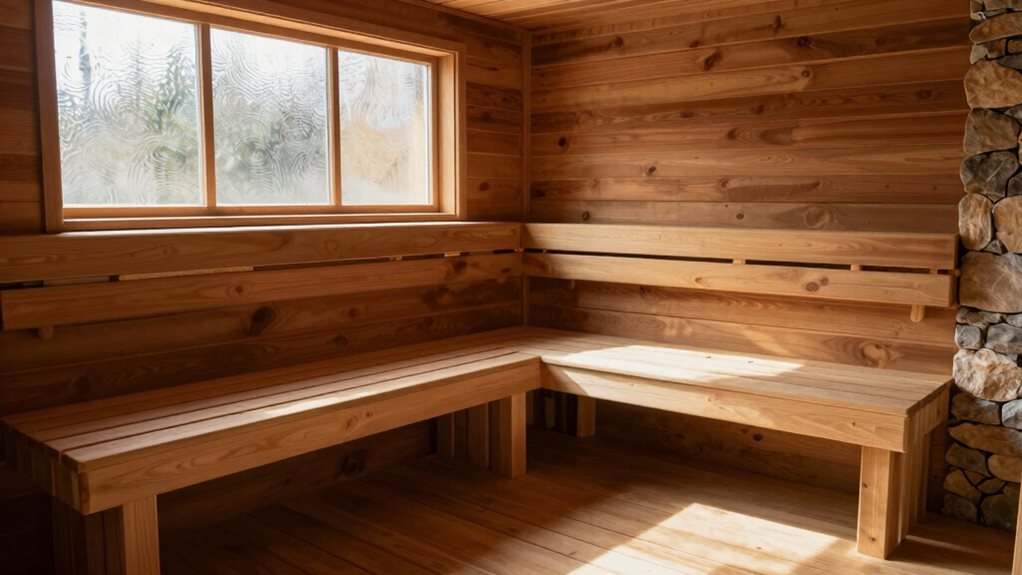
When you choose the right wood finishes and layout for your sauna, you’re not only creating a space; you’re crafting an experience.
The wood species you select sets the mood with its colors and patterns, while thoughtful arrangements of benches and surfaces invite relaxation and connection.
With the right touches, like contrasting textures and clever layouts, your sauna can feel like a cozy retreat customized just for you. Additionally, using proper sauna insulation building materials ensures that your sauna maintains optimal temperature and energy efficiency.
Wood Finish Selection
Choosing the right wood finish can make a huge difference in your sauna’s aesthetic appeal and comfort. The finish you select not only affects the looks but also the overall experience. Here are some key factors to take into account:
- Avoid harmful fumes: Unfinished, natural wood is often recommended for interiors to keep the air clean and safe.
- Opt for the right oils: If you do use a finish, stick to food-grade paraffin or sauna oils for non-heated surfaces to improve hygiene without off-gassing.
- Contrast and color: Light woods create an open feel, while darker tones offer a more dramatic vibe. Contemplate mixing species for a unique look!
With the right choices, your sauna can be both beautiful and functional!
Optimal Layout Design
While it might seem simple, the layout design of your sauna plays an essential role in creating an inviting and functional space.
Start with a minimum footprint; 5′ x 4′ is cozy for 2-3 users, but if you have more friends, aim for around 7′ x 8′.
Consider bench tiering—two tiers not only offer extra seating but also let users choose their comfort level through temperature variations.
For safety and comfort, maintain clearances around the heater and keep your ceiling height between 6’11” and 7’6″.
Functional choices like angled backrests and rounded edges make lounging more enjoyable.
Finally, think about door placement and window sizing to improve heat distribution while inviting a bit of natural light inside.
Ventilation Strategies for Humidity Control
To keep humidity in check while you enjoy your sauna, effective ventilation strategies are crucial. Proper air flow not only assists you in breathing easier but also improves your sauna experience.
Here are three key strategies to contemplate:
- Supply Air Pipe Placement: Position this near the stove, guaranteeing it’s at least 16 inches high for ideal heating. This allows incoming cooler air to warm up effectively.
- Exhaust Air Pipe Configuration: Place exhaust vents in the opposite corner, about six inches below the ceiling, to remove hot, moist air efficiently, especially in electric saunas.
- Gravity-Based Ventilation: For smaller saunas, a simple gap under the door can serve as an intake, creating natural circulation and keeping the air fresh without extra fuss.
With these strategies, you’ll have the perfect sauna experience!
Integration of Saunas Into Outdoor Spaces and Landscapes
Integrating a sauna into your outdoor space can improve both your relaxation experience and the overall beauty of your surroundings.
Start by placing your sauna on level, well-drained ground to avoid moisture issues. Position it to offer stunning views, whether of a garden or a tranquil water feature.
Choose a level, well-drained spot for your sauna, ensuring breathtaking views of nature enhance your relaxation experience.
Use natural materials like timber and stone to blend your sauna with the setting, making it look like it belongs there. Pair it with cooling features, like a cold plunge or outdoor shower, for a delightful contrast.
Don’t forget about comfortable resting areas nearby, where you can cool off and socialize.
With a little planning, your sauna can become a stunning focal point that invites relaxation and enjoyment year-round.
Frequently Asked Questions
How Does Sauna Wood Choice Affect Allergy Sensitivities?
Your choice of sauna wood affects allergy sensitivities considerably. Opting for hypoallergenic options like basswood or aspen minimizes risks, while aromatic woods like cedar may trigger allergies. Always consider wood properties to guarantee a comfortable experience.
What Are the Fire Safety Codes for Sauna Installations?
You need to follow specific fire safety codes for sauna installations, including using non-combustible materials, maintaining clearances from walls, and guaranteeing proper electrical compliance. A qualified electrician’s inspection is essential for your safety.
How Does Climate Impact Sauna Wood Performance Over Time?
Climate affects your sauna’s wood performance by causing moisture fluctuations, leading to swelling and warping. Protect untreated lumber from humidity and temperature changes to maintain structural integrity and extend the sauna’s lifespan.
Can Sauna Designs Accommodate Varying User Mobility Needs?
Yes, sauna designs can accommodate varying user mobility needs. By guaranteeing proper dimensions for wheelchair access, installing handrails, and providing compliant bench space, you create an inclusive environment for everyone to enjoy the sauna experience comfortably.
What Is the Cost Difference Between Wood-Fired and Electric Sauna Heaters?
Wood-fired heaters generally range from $700 to $2,300, while electric heaters cost between $600 and $2,700. You’ll also face additional installation and operating costs, making wood options often more economical over time.
Final Thoughts
Choosing the right materials and design for your wood sauna can raise your experience and improve your well-being. By focusing on the right wood species, insulation, and heating options, you’ll create a cozy retreat that balances beauty and performance. With proper ventilation and maintenance, your sauna can be a long-lasting haven. So, whether you relax after a long day or enjoy time with friends, a well-designed sauna can transform your space into a peaceful escape.