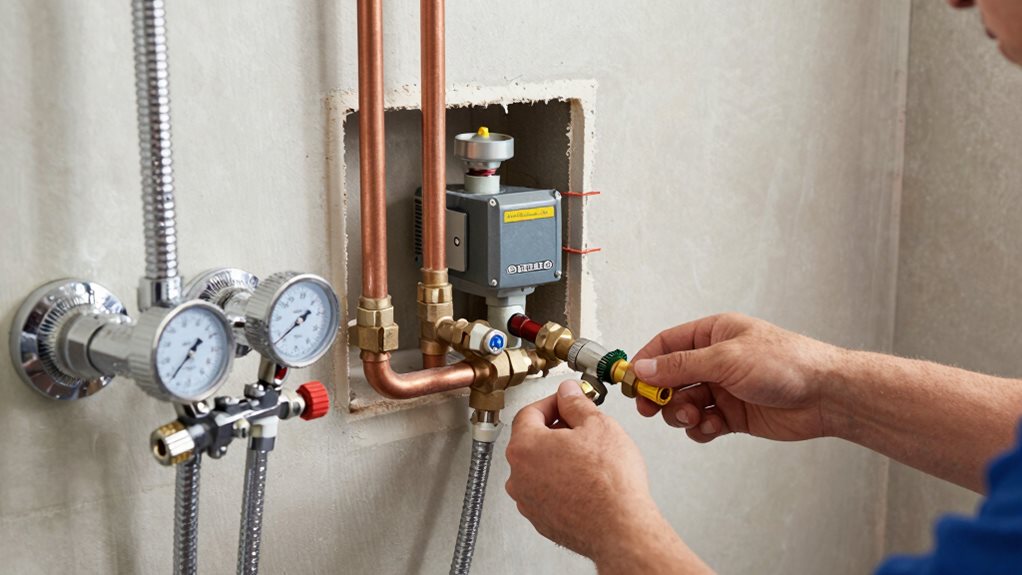

Yes, steam showers require specialized plumbing. You’ll need dedicated cold-water lines with pressure regulation (15-20 PSI), copper pipes for steam lines (never PVC), proper drainage systems with P-traps, and accessible installation points for maintenance. Steam lines must be pitched correctly to prevent condensate pooling, while water supply requires proper filtration, especially in hard water areas. These requirements guarantee your steam shower functions properly, prevents damage, and complies with building codes. Proper installation makes all the difference in performance and longevity.
Water Supply Requirements for Steam Generators
When installing a steam shower, you’ll need to pay careful attention to the water supply that feeds your steam generator. Most residential units connect to your cold-water line using 3/8″ copper tubing or a compression fitting, which should be easily accessible for maintenance.
For peak performance, you’ll want to reduce your home’s water pressure to about 15-25 psi at the generator using a pressure-reducing valve (PRV). This helps prevent leaks and improves operation. Always use high-quality brass or copper pipes to ensure durability and prevent premature failure.
If you have hard water, consider installing a water softener, as mineral buildup can greatly shorten your generator’s lifespan.
Don’t forget to install a dedicated shutoff valve and use threaded unions or compression fittings. These simple additions make future servicing much easier, saving you headaches when maintenance is needed down the road. PVC or PEX piping should be avoided as steam line materials since they can’t withstand the high temperatures generated by the steam system.
Steam Line Specifications and Materials
Unlike standard bathroom plumbing, the steam line that connects your generator to the shower requires specific materials and installation techniques to handle intense heat and pressure.
Steam shower plumbing isn’t standard bathroom work—it demands specialized materials and techniques to manage extreme temperature conditions safely.
You’ll need to use a 1/2″ copper pipe exclusively—PVC or PEX simply can’t withstand the high temperatures involved.
Keep your steam line as short and straight as possible to minimize condensation buildup. The copper pipe should be properly insulated and include threaded unions for future maintenance access.
When the line passes through your wall, use insulated copper to prevent heat loss.
Your steam head placement is equally critical—position it 6″ to 12″ from the shower floor, on the wall opposite from controls, and away from where you’ll be standing. Qualified professionals should handle all plumbing and electrical work to ensure proper installation and code compliance.
This guarantees safe, even steam distribution throughout your shower enclosure.
The plumbing contractor will help determine the best location for your steam generator, which should be within 25 feet of the shower for optimal performance.
Drainage Systems for Steam Shower Enclosures
Beyond the visible luxury of your steam shower, proper drainage plays a crucial behind-the-scenes role in its functionality and longevity. Your steam generator requires dedicated drain lines to handle condensate and emergency overflow, typically using corrosion-resistant materials like copper or brass.
When installing your steam shower drainage system, remember these key requirements:
- Include at least one dedicated drain line (often 1/2″ diameter) that connects to your home’s DWV system with a proper P-trap to block sewer gases.
- Route drain lines to avoid horizontal runs that could trap hot water, promoting reliable gravity flow.
- Install serviceable connections like threaded unions to make future maintenance and flushing easier.
If your generator has an auto-flush feature, make sure your drain system can handle these periodic discharges without backing up into the generator pan. Most modern steam generators, like those from ThermaSol, utilize pressurized tanks for improved drainage performance and reduced scale buildup. The shower floor should incorporate a slight slope toward the drain to prevent water pooling that can lead to slippery surfaces and potential water damage.
Pressure Regulation and Water Control Considerations
Proper pressure regulation and water control serve as the foundation of a reliable steam shower system that delivers consistent performance and longevity.
You’ll need to maintain incoming water pressure between 15-25 PSIG, with most manufacturers recommending 15-20 PSIG as ideal. If your home water pressure exceeds these levels, install a pressure-reducing valve to protect the generator’s components.
Your water feed line should typically use 3/8″ compression or copper tubing, while steam outlet piping requires 1/2″ to 3/4″ copper or brass with no inline valves that could obstruct flow.
Always pitch steam lines at 1/4″ per foot to prevent condensate pooling, and install threaded unions on both water and steam lines for easy servicing.
Don’t forget to include an accessible shutoff valve and sediment filter upstream of the generator.
Plumbing Connections and Service Access
Your steam shower requires a dedicated water supply with specific connections to function properly and maintain longevity.
You’ll need to install 3/8″ copper or brass tubing for the water inlet, with a compression fitting at the generator and a strainer upstream to catch debris.
Always include threaded unions at all connections, which allow you to easily disconnect plumbing lines for maintenance or repairs without having to cut pipes or damage surrounding fixtures.
Dedicated Water Supply Requirements
Installing a steam shower demands dedicated water supply requirements that differ considerably from standard shower plumbing. Your steam generator needs specific connections to function properly and safely in your bathroom.
- You’ll need a dedicated 3/8-inch cold water supply line running directly to your steam generator, and this line must be made from brass or copper pipe only—PVC and PEX materials aren’t suitable for this application.
- Your incoming water pressure must be regulated to 15-25 PSI using a pressure reducing valve (PRV), with ideal supply pressure between 2.5-3.0 bar and flow rate of 16-18 liters per minute.
- If you have hard water, you’ll need to install either a whole-house water treatment system or a ScaleX filtration system to protect your generator from damaging mineral buildup. Proper installation should include service access to the generator for monthly flushing and maintenance to ensure optimal performance and longevity. It’s important to note that the generator can be installed up to 60 feet away from the steam room in suitable locations like closets or heated attics, which gives you flexible placement options.
Unions for Easy Maintenance
While dedicated water supply lines form the foundation of your steam shower system, the connections that join these lines deserve equal attention.
Threaded unions are crucial components that make future maintenance dramatically easier.
You’ll need brass or copper unions at strategic points: where water enters the generator, at drain lines, and especially at steam line connections. For optimal functionality, always ensure you have balanced water pressure above 2 bar throughout your steam shower plumbing system.
These simple fittings allow you to disconnect pipes without cutting them apart, making repairs straightforward.
Install unions at every steam line connection from the generator to the steamhead. The steam generator must be installed in an accessible location for proper servicing and to ensure unions can be reached when maintenance is required.
Compliance With Plumbing Codes for Steam Installations
Finding your way through the maze of plumbing codes for steam shower installations can seem intimidating, but it’s absolutely essential for safety and functionality.
Most local building departments have specific requirements that you’ll need to follow for proper steam shower installation.
Here are three important code compliance areas to take into account:
- Water and steam lines – Use ⅜” copper tubing for water supply and minimum ¾” copper or brass pipe for steam outlets, never black iron or galvanized materials.
- Drainage requirements – Install two separate drain lines (one from the generator tank and one from the emergency pan) that connect to approved locations.
- Material standards – Verify all materials meet permeability ratings below 0.5 perms and that waterproofing membranes comply with ANSI A118.10 standards.
Frequently Asked Questions
Can Existing Shower Plumbing Be Retrofitted for a Steam System?
Yes, your existing shower plumbing can be retrofitted, but you’ll need a plumber to add brass/copper pipes, install a PRV to reduce pressure, and create the required water, steam, and drain connections.
How Does Hard Water Affect Steam Generator Performance?
Hard water causes limescale buildup in your steam generator, reducing efficiency by up to 25%, damaging heating elements, clogging jets, and shortening equipment life. You’ll face higher energy costs and premature system failure.
Is Outdoor Installation of Steam Generators Possible in Mild Climates?
Yes, you can install steam generators outdoors in mild climates if you protect them with weather-tight, ventilated enclosures that prevent rain exposure and guarantee proper ventilation. However, this contradicts manufacturer recommendations and may void warranties.
Do Steam Showers Require Additional Waterproofing Beyond Standard Shower Installations?
Yes, you’ll need improved waterproofing for steam showers. They require full vapor barriers with permeance below 0.5 perms on all surfaces, unlike standard showers, to prevent moisture damage to surrounding structures.
Can Steam Generators Share Water Lines With Other Bathroom Fixtures?
No, you shouldn’t share water lines. Your steam generator requires a dedicated 3/8″ brass or copper supply line with specific pressure requirements (15-25 PSI). This separation guarantees proper functioning and easier maintenance of your steam system.
Final Thoughts
You’ll need special plumbing for your steam shower, including proper water supply lines, heat-resistant steam pipes, and efficient drainage. Don’t forget about maintaining correct water pressure and guaranteeing easy access for maintenance. Always check local building codes before installation, as steam systems have specific requirements. While installing a steam shower requires more planning than a regular shower, the luxurious spa-like experience you’ll enjoy makes the extra plumbing considerations worthwhile.