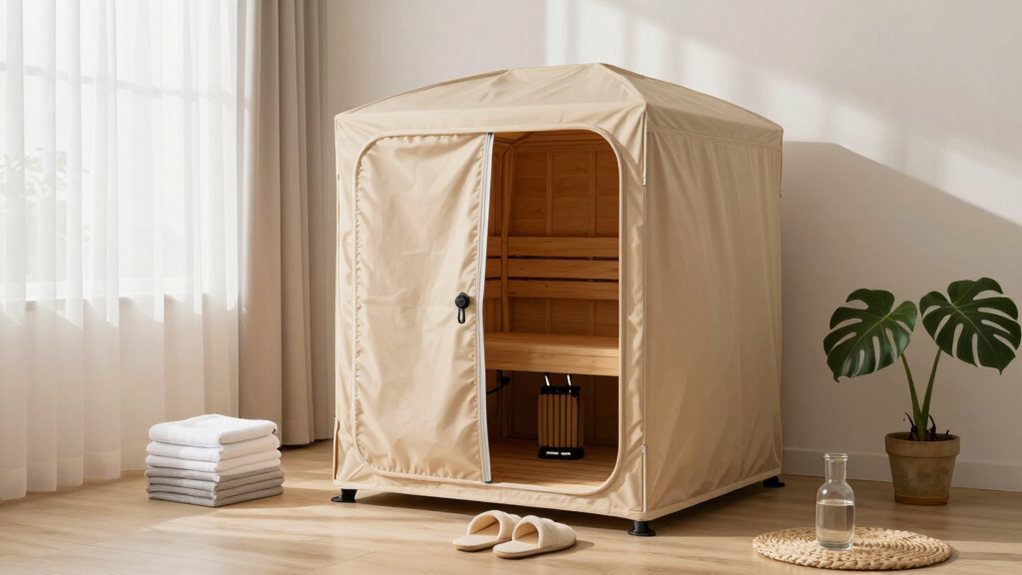

When you shop for a home steam sauna, you’ll choose between traditional heat (150°F–195°F, 10–20 minutes) or gentler infrared (110°F–140°F, 20–45 minutes). Your budget needs two numbers: upfront costs run $1,500–$12,000, plus $10–$30 monthly for electricity.
You’ll measure inside space carefully. A 4×4 foot area fits one person, while two people need 5×7 feet. Ceiling height matters too: stick to 7–8 feet so heat stays where you sit.
Pick indoor for harsh winters, outdoor for that retreat vibe, and always check your home’s electrical capacity before buying. There’s more to getting this right than meets the eye.
Choose Your Sauna Heat: Traditional or Infrared
Before you start comparing brands or browsing prices, you’ll need to decide what kind of heat actually feels right for your body, because traditional and infrared saunas deliver warmth in completely different ways.
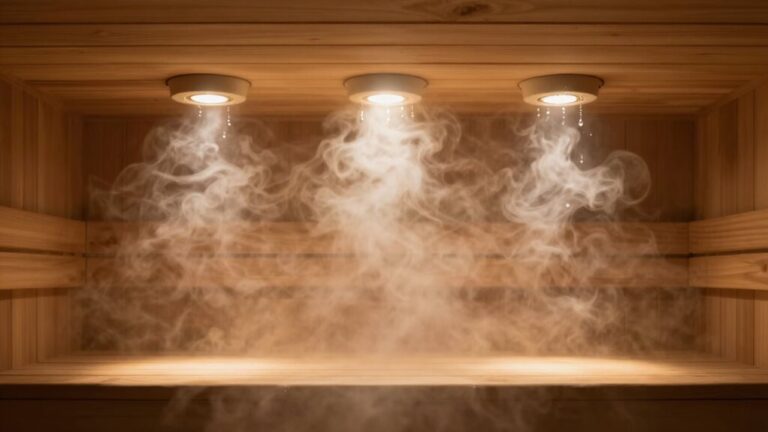
Traditional saunas work like a summer day in Arizona, heating the air around you to 150°F–195°F using stoves or hot rocks. You’ll sweat fast, but sessions usually last just 10–20 minutes. Pouring water over the hot rocks creates steam and raises humidity to 40% or more, giving you that classic sauna atmosphere.
Infrared saunas act more like sunshine warming your skin directly, running cooler at 110°F–140°F while penetrating your muscles. You can stay in longer, often 20–45 minutes, and still drip with sweat.
Think of it this way: traditional heat wraps around you like a thick wool blanket, while infrared beams target you like a heat lamp on a lizard’s rock.
Traditional heat wraps around you like a thick wool blanket, while infrared beams target you like a heat lamp on a lizard’s rock.
Both ease stress and aid recovery, though traditional saunas boast stronger research for heart health. Infrared saunas may offer advantages for your skin, with studies linking deeper infrared penetration to improved collagen production and clearer pores.
Pick whichever keeps you coming back.
Budget for Your Sauna: Two Numbers You Need
Whether you’re picturing a sleek corner cabin or a rustic barrel in your backyard, you’ll need to nail down two numbers before you swipe your credit card: what you’re paying today and what you’ll keep paying every month.
Your upfront cost swings wildly based on choices. Infrared cabins start around $1,500, while premium outdoor units can top $11,000. Traditional barrel saunas usually run $5,000–$12,000.
DIY builds offer savings at $1,400–$4,500, but don’t forget electrical work: 240V circuits often need professional installation. For a traditional 2 person sauna, you’ll want to follow the 1 kW per 50 cubic feet rule of thumb when sizing your heater to ensure proper heating performance. Sauna kits that include pre-cut lumber and pre-wired controls can significantly reduce both material waste and costly installation errors.
Now, the second number: electricity. Infrared saunas sip power, costing roughly $10–$20 monthly for three weekly sessions. Traditional heaters gulp more energy, running $10–$30 monthly.
Think of it like choosing between a hybrid and a truck: both get you there, but one’s lighter on your wallet long-term.
Measure Your Sauna Space: Floor Plan Checklist
Before you buy, you’ll want to grab a tape measure and check your available floor area, since even a cozy one-person sauna needs at least 3×4 feet to fit comfortably.
Don’t forget to look up, too. Your ceiling height matters just as much as the footprint, because you’ll need enough headroom above the benches to sit upright without bumping your head. For optimal heat exposure, your upper bench should sit about 18 inches below the ceiling. When planning your layout, remember that bench length should provide around 600 mm per person to ensure everyone has adequate seating space.
Taking these measurements now saves you from the headache of realizing your dream sauna won’t fit through the door later.
Floor Area Basics
Getting your sauna’s floor area right is like laying the foundation for a house, everything else builds on top of it, and you’ll thank yourself later when you’re not bumping elbows or squeezing past the door.
Start by measuring the inside clear dimensions, not the finished walls. A cozy 1–2 person infrared sauna needs at least 36 by 36 inches, while personal steam saunas work best with 4 by 4 feet.
Got family? Aim for 6 by 8 feet or more.
Remember to factor in 3–6 inches clearance on any exposed sides of the sauna for proper airflow and to allow access to the panels when needed.
Before finalizing your measurements, verify that your chosen location offers structural support capable of handling the sauna’s full weight, especially if you’re installing on an upper floor.
Ceiling Height Needs
How high should your sauna ceiling actually be? You want to measure from your finished floor to your finished ceiling, aiming for 84–96 inches.
This sweet spot keeps heat right where you need it.
Picture your ideal sauna:
- Steam hugs your shoulders, not the rafters above your head
- Your upper bench sits 43–48 inches below the ceiling, placing you in the hottest zone
- A compact 7-foot room warms faster, saving energy and money
Taller ceilings above 8 feet waste heat, forcing your generator to work harder. If your space is too lofty, consider a drop ceiling to bring that warmth back down. Research shows that an 8-foot ceiling can leave bathers experiencing 20 degrees cooler temperatures at the bench and head levels compared to a properly sized 7-foot space.
Ceilings higher than 96 inches may require a larger steam generator and/or additional insulation to keep proper temperature.
Check your height first, then plan your benches and heater size.
You’ll build a cozier, more efficient steam retreat.
Pick Your Sauna Location: Indoor or Outdoor
You’ll need to think about how much room you’ve got and what your weather’s like before picking a spot for your sauna.
Indoor setups usually work great when space is tight or winters get brutal, since you’re not battling snow or rain just to enjoy a session.
Outdoor saunas give you more wiggle room for size and style, but you’ll want to assess how much maintenance you’re ready to handle when storms roll through.
Space Requirements
Whether you’re envisioning a cozy corner in your basement or a backyard retreat surrounded by trees, picking the right spot for your home sauna starts with one simple question: how much room do you actually have?
Start by measuring your footprint. A single-person sauna squeezes into 4 x 4 feet, while two people need roughly 5 x 7 feet.
Envision this: 1) a phone booth-sized nook for solo sessions, 2) a walk-in closet for couples, or 3) a small bedroom for family gatherings.
Don’t forget height, aim for 7-foot ceilings so you’re not ducking. Add 3–6 inches around the sides for airflow, plus space for the door to swing outward.
You’ll also want solid, water-resistant flooring and nearby electrical access. Plan smart, and you’ll sweat in style!
Climate Considerations
Before you pick a spot for your sauna, take a moment to think about the weather outside your window. Your local climate shapes whether an indoor or outdoor sauna fits your life.
If you live where winters bite hard, an indoor sauna keeps you cozy without trudging through snow. Your home’s steady temperature helps the heater work less, too.
Outdoor saunas shine in milder places, offering that retreat feeling, but they demand tougher materials and more upkeep against rain and sun.
Hot, humid climates usually push you indoors, where you control humidity and ventilation better.
Either way, you’ll need smart moisture management, think of it like a raincoat for your walls.
Match your choice to your weather, your habits, and how much maintenance you’re willing to handle.
Choose Your Sauna Interior: Wood, Seats, and Lighting
Step inside your future sauna, and you’ll quickly realize the interior does far more than look pretty. It shapes every moment you spend unwinding in the heat.
Your wood choice sets the foundation: basswood keeps things hypoallergenic and odorless, cedar fights moisture like a champ, and hemlock offers budget-friendly comfort.
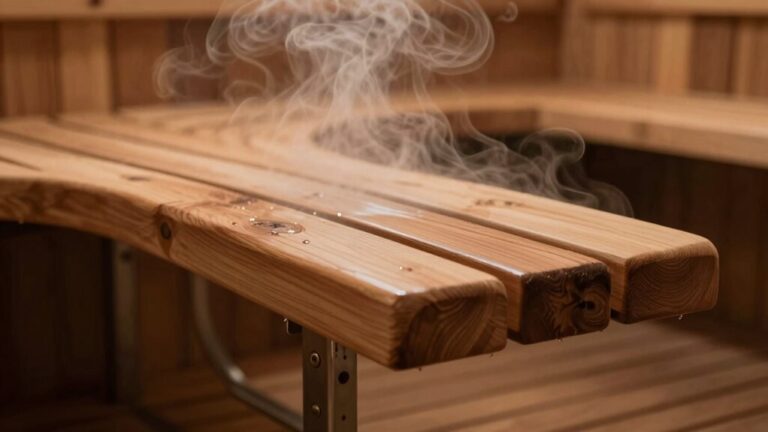
For benches, you’ll want sleek, knot-free boards that stay cool against your skin. Think of them as your personal heat-friendly lounge chair.
Picture this interior:
- Pale, even-grained basswood walls glowing softly in the lamplight
- Contoured cedar benches, sanded silky, for bare-skin comfort
- Hidden LED strips casting warm, shadow-free illumination overhead
Skip resinous pines and treated lumber. They’ll ooze, warp, or off-gas when heated. Choose low-resin, dimensionally stable woods instead.
Add concealed, heat-rated lighting to complete your calming retreat without harsh glare interrupting your zen.
Prep Your Home: Electrical and Ventilation Requirements
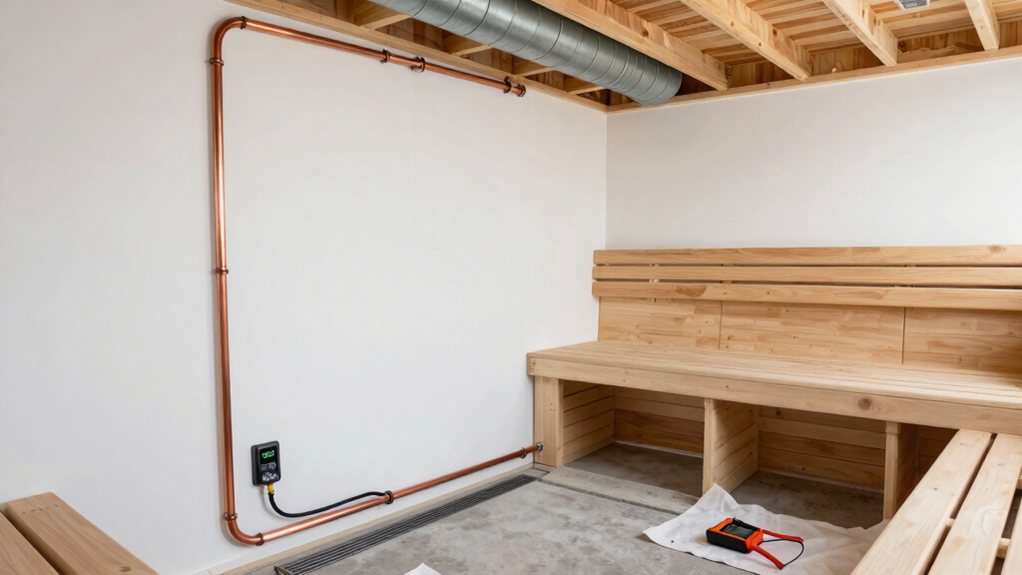
Now that you’ve pictured your perfect sauna interior, it’s time to make sure your home can actually handle the heat.
Start by checking your electrical panel, think of it like a power budget.
Most homes have 100A to 200A service, and you’ll want to stay below 80% of that capacity.
Small infrared saunas plug into standard 120V outlets, but traditional steam saunas need 240V hardwiring on dedicated 30A to 50A circuits, like giving your sauna its own private highway instead of sharing traffic.
You’ll need separate pathways too: one circuit for the heater, another for lights and controls.
Wire size matters, 10/2 copper works for shorter runs, but go 8/2 if the heater sits over 30 feet away.
Finally, make sure proper ventilation and clearance around your unit for safety.
Size Your Heater: The 1 kW Rule Explained
Because you’ve already mapped out where your sauna will live, it’s time to figure out what actually keeps it hot. You’ll size your heater using the 1 kW per 45–50 cubic feet rule. Measure your sauna’s inside length, width, and height, then multiply to get cubic footage.
A 4 × 6 × 7 ft room equals 168 cubic feet, pointing you toward roughly 4.5 kW.
Picture this:
- A cozy phone booth sauna humming with 3 kW
- Your standard home setup glowing at 6 kW
- A spacious cabin blazing with 9 kW
Glass windows or doors? Add about 1 kW per 10 square feet since they leak heat like a sweater with holes. Under-insulated builds need 10–20% more power too.
When in doubt, round up. You’ll heat faster and stay toastier.
Check Sauna Safety and Warranty Coverage
Before you get swept up in visions of steamy relaxation, you’ll want to make sure your sauna won’t turn into a safety hazard or money pit.
Think of safety features like a car’s seatbelt, unseen until you need them most.
Check that your sauna has reliable temperature controls keeping heat between 165-203°F, quality materials that won’t off-gas chemicals, and proper ventilation to manage moisture.
Verify heating elements meet safety standards, and confirm cleaning protocols are straightforward.
Your warranty matters too.
A solid guarantee covers structural defects, heating components, and electronics, typically 1-5 years.
Ask what’s excluded: water damage, improper installation, or wear items?
Request documentation in writing, just like keeping a receipt for a major appliance.
You’re investing in years of wellness, so protect that investment with coverage that actually backs its promises when issues arise.
Test Before You Buy: Where to Try Saunas
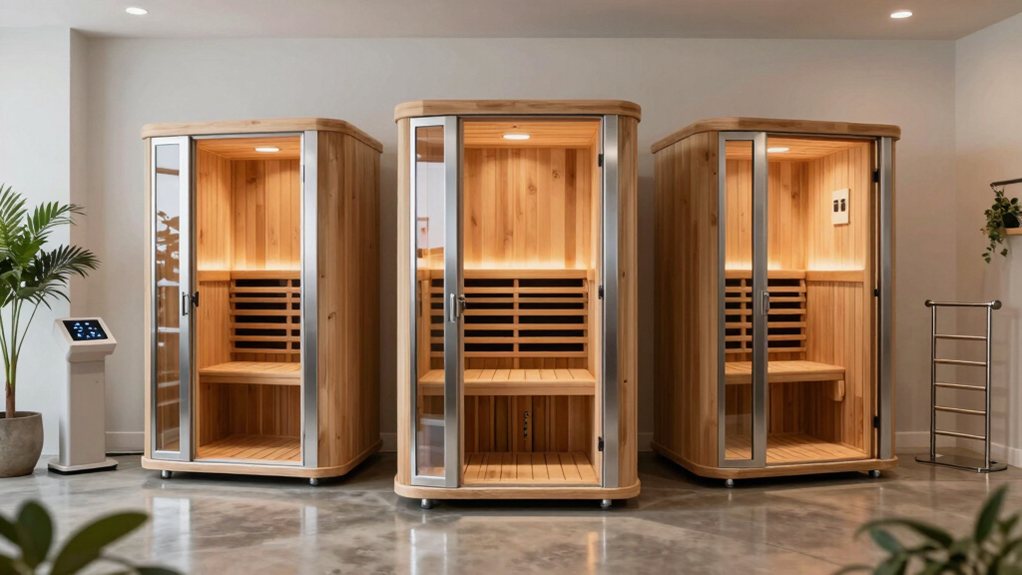
If you’re going to spend thousands on a home sauna, you’ll want to make sure you kick the tires first, just like you wouldn’t buy a car without a test drive.
Start at sauna specialty showrooms, where you can compare infrared and traditional models side-by-side. You’ll feel the heat difference, test the controls, and judge comfort firsthand.
Next, visit home improvement stores to check dimensions, bench layout, and power needs. Call ahead since displays vary.
Finally, try local spa showrooms for assembled units you can actually sit in, evaluating wood quality, door fit, and whether space feels cramped or cozy.
For real-world testing, consider:
- Gym saunas for quick heat-style trials
- Short-term rentals for extended session testing
- Wellness centers for comparing temperature preferences
These steps help ensure your sauna matches your routine before you commit.
Frequently Asked Questions
How Long Should a Typical Sauna Session Last?
Start with 5 to 10 minutes if you’re new, then work up to 15 to 20 minutes once you’re comfortable. You’ll want to listen to your body, stay hydrated, and step out if you feel dizzy or overheated.
Can Children Safely Use Home Saunas?
Yes, your children can securely use home saunas with proper precautions. Keep sessions brief, 5 to 10 minutes for ages 4–12, and supervise constantly.
Use lower temperatures around 100–140°F, seat them on lower benches, and make sure they stay hydrated. Consult your pediatrician first if they have health conditions.
What’s the Best Wood for Humid Environments?
You should choose teak, ipe, or white oak for humid environments. These woods naturally resist moisture and decay.
Engineered options work best for flooring since they’re more stable than solid hardwood in changing humidity.
Do Saunas Require Regular Maintenance or Cleaning?
Yes, you’ll need to clean your sauna regularly. Wipe benches after each use, ventilate the space, and deep clean monthly.
Inspect hardware and heater stones periodically to keep everything safe and long-lasting.
Can I Install a Sauna Myself or Need Professionals?
You can install simple sauna kits yourself, but you’ll need professionals for electrical work, custom builds, or complex moisture control.
DIY works best for small indoor projects with prebuilt components and straightforward layouts.
Final Thoughts
You’ve got everything you need to find your perfect home sauna! Remember, start with your heat type and budget, then match the size to your space and power needs. Don’t skip the safety checks or warranty details, and try before you buy when you can.
Your relaxing, steamy retreat is closer than you think, happy sauna hunting!