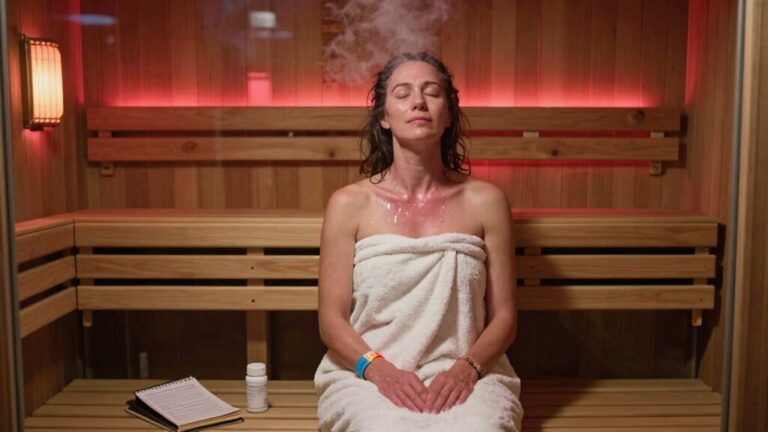
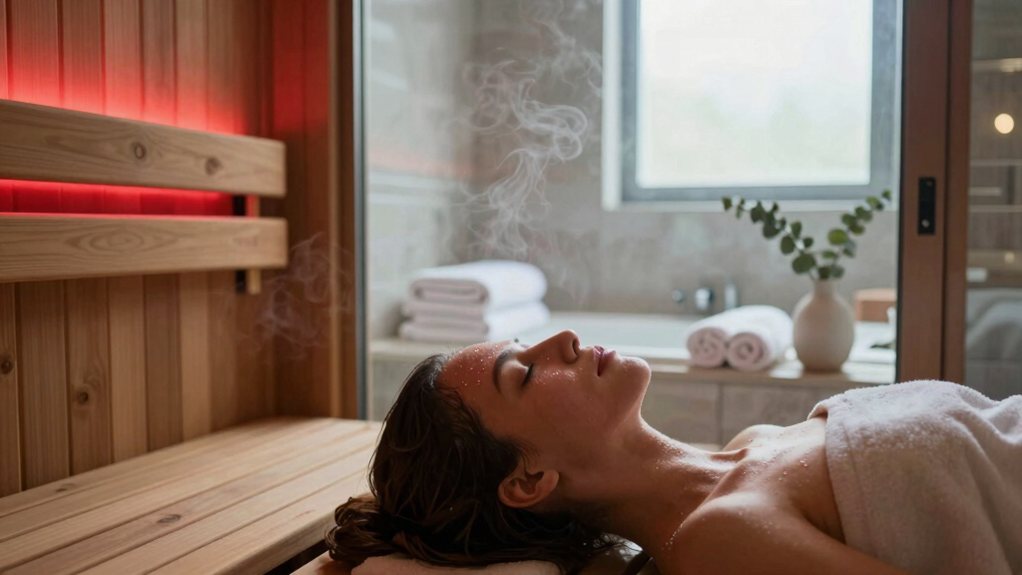

If you’re battling exhaustion and wondering about “adrenal fatigue,” here’s the deal: doctors don’t actually recognize this condition, but infrared sauna can still help your real symptoms.
Regular sessions lower your stress hormone cortisol by 20–35%, help you sleep deeper, and support genuine recovery, just not by fixing glands that aren’t actually burned out. Start slow with 10–15 minute sessions at 110–120°F, and you’ll soon discover how heat therapy fits into a bigger wellness picture.
What “Adrenal Fatigue” Really Is (And Why Doctors Disagree)
Although you’ve probably heard someone blame their exhaustion on “adrenal fatigue,” you might be surprised to learn that most doctors won’t write that phrase on a prescription pad. The term describes common complaints: fatigue, sleep troubles, body aches, and brain fog, but it isn’t a real diagnosis recognized by major medical groups like the Endocrine Society, Mayo Clinic, or Cleveland Clinic.
Here’s the sticking point: the theory suggests your adrenal glands get “burned out” from chronic stress, but blood tests can’t detect this supposed small drop in function. It’s like claiming your car battery is “kinda tired” when the gauge shows nothing wrong. The Endocrine Society specifically warns that using the adrenal fatigue label may delay proper diagnosis of the actual underlying condition causing your symptoms.
Real adrenal problems, such as Addison’s disease, look different and are medically verifiable. Your vague symptoms likely signal other conditions, depression, sleep apnea, or thyroid issues, that deserve proper investigation instead. The term was coined in 1998 by James Wilson, a PhD who proposed that intense stress and chronic infections could lead to this controversial syndrome.
How Infrared Sauna Affects Cortisol, Sleep, and Fatigue Recovery
When you’re dealing with constant exhaustion, you might wonder if sitting in a heated box could actually help your body bounce back. Here’s what actually happens with your stress hormones.
During your first few infrared sauna sessions, your cortisol might spike briefly, like a mini fire drill for your body. But stick with it, and something interesting occurs.
Your first few sauna sessions spike cortisol briefly—like a fire drill—but persistence unlocks something interesting.
Research shows 20–30 minute sessions at 55–60°C can actually drop your cortisol by 20–35% within an hour afterward, once you’ve adapted. Repeated use helps decrease serum cortisol concentrations, supporting your body’s ability to shift from fight-or-flight into genuine relaxation.
Think of it like training a muscle: initially stressful, then beneficial.
After about six weeks of regular use, your stress response typically normalizes rather than staying ramped up.
For sleep, timing matters. Late afternoon or early evening sessions work best, riding your body’s natural cortisol decline like surfing a wave downward. The streaming render setting allows for smooth, uninterrupted delivery of these benefits to your system.
Pair your sauna with proper hydration and rest, and you’ve got a recovery tool, not a magic fix, but a helpful teammate.
Why Infrared Sauna Can Stress or Relax You: and How to Tell
Since your body can’t exactly send you a text message, you’ll need to learn its signals to figure out whether that infrared sauna session is helping you unwind or secretly revving your engine.
Your infrared sauna uses light to warm you directly, creating deep heat at lower air temperatures: think 110°F to 135°F, like a gentle summer day rather than a scorching desert.
This warmth can shift your nervous system toward relaxation, releasing muscle tension and boosting feel-good endorphins. You’ll feel calm breathing, loose muscles, and pleasant ease afterward. Infrared sauna sessions can also improve sleep quality by promoting relaxation for deeper rest, making the benefits extend well beyond your time in the heat.
But here’s the catch: heat is still a controlled stressor. Push too hard, and your body hits panic mode: dizziness, nausea, or headaches mean exit immediately.
Hydration matters enormously; without enough fluids, you’re asking for trouble.
Research from the Cleveland Clinic confirms that heat-based therapy stimulates the parasympathetic nervous system, reinforcing that calm state you’re seeking—when you respect your body’s limits.
Safe Infrared Sauna Protocols: Temperature, Time, and Frequency
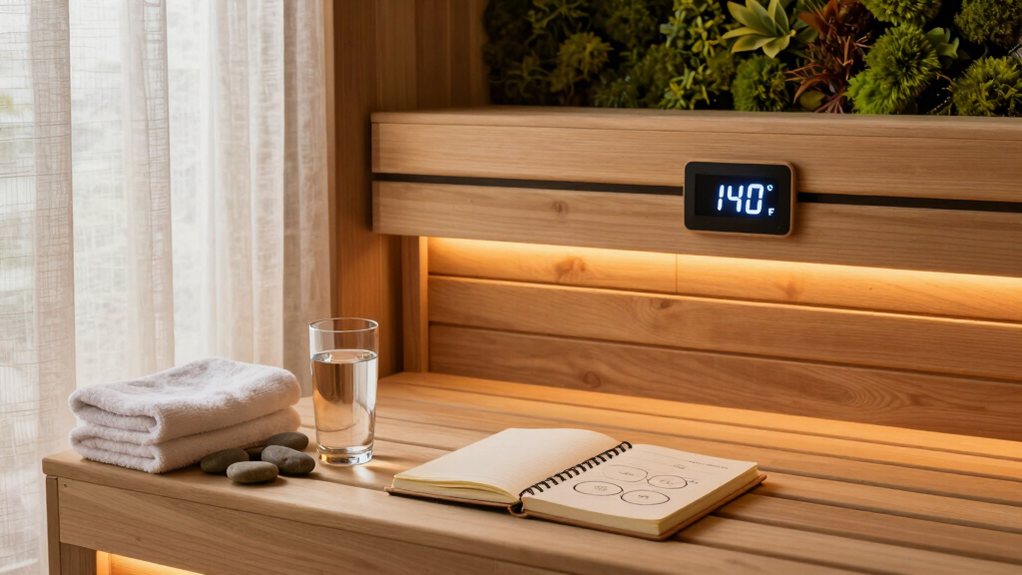
If you’re ready to step into that warm, glowing cabin, you’ll want a roadmap that keeps you safe while your body learns the ropes. Think of your first sessions like dipping your toes into a pool: start at 110–120°F (43–49°C) for just 10–15 minutes, two or three times weekly. Your body needs time to adapt, just like breaking in new shoes. Once you’ve built some tolerance, aim to settle into 115–125°F for your regular sessions, as this range keeps the infrared panels operating continuously for optimal effectiveness.
As you grow comfortable, gradually bump sessions toward 20–30 minutes, maybe reaching 120–135°F. Some experienced users stretch to 30–45 minutes, but there’s no prize for rushing. Infrared saunas work by using specific wavelengths of light that heat your body directly from the inside out, rather than warming the air around you like traditional saunas.
Stay hydrated, listen for dizziness or nausea as warning bells, and cool down slowly when finished. You’re building a sustainable habit, not sprinting a marathon. Patience now prevents setbacks later.
Warning Signs: When to Pause Infrared Sauna and See Your Doctor
Although infrared saunas feel like a warm hug for tired muscles, your body sometimes waves a red flag instead of giving a thumbs-up.
Watch for dizziness, chest discomfort, or feeling drained rather than refreshed: these signals mean stop immediately.
If your heart races, you feel weak, or morning fatigue worsens, your body isn’t adapting.
Think of it like a phone battery that won’t hold charge; pushing harder breaks it faster.
Skip sessions if you have unstable angina, recent heart attack, or severe adrenal fatigue.
Elderly? Get medical clearance first.
Stay hydrated, replace minerals, and listen when symptoms persist.
When in doubt, pause and check with your doctor, your recovery depends on knowing when to step out.
For those with chronic fatigue, be aware that toxic overload symptoms such as skin rashes, infections, or foul body odor may temporarily increase during treatments, which some practitioners describe as a potential sign of healing rather than worsening condition.
Those with adrenal insufficiency should be particularly cautious, as their glands may struggle to regulate the cardiovascular demands of heat therapy.
Frequently Asked Questions
Can Infrared Sauna Replace Adrenal Medications?
No, you can’t replace adrenal medications with infrared sauna.
You may use it as a supportive wellness tool for stress relief, but you must keep taking prescribed treatments and consult your doctor first.
Does Morning or Evening Sauna Work Better?
Morning sauna boosts your energy and routine, while evening sauna helps you relax and sleep better. Choose based on your goals: energy or recovery, and finish evening sessions 1–3 hours before bed.
How Long Until I Feel Adrenal Benefits?
You’ll likely feel relaxation benefits immediately, but meaningful fatigue improvements typically take 15–25 sessions over 2–4 weeks.
Start with 5–15 minutes, stay hydrated, and stop if you feel dizzy or drained.
Should I Sauna During an Adrenal Crash?
Skip the sauna during a crash. Heat stresses your already-depleted system and can worsen symptoms.
You’ll risk dehydration, electrolyte loss, and deeper fatigue. Rest, hydrate, and recover first. Return only when you’re stable.
Can Children Use Infrared Sauna for Fatigue?
You shouldn’t rely on infrared sauna as a primary treatment for your child’s fatigue. Consult a pediatrician first to identify underlying causes.
Only consider supervised, short, low-heat sessions if medically cleared.
Final Thoughts
You’ve explored how infrared sauna affects your body, and now you can make smart choices. Remember, it’s a tool, not a cure: listen to your body’s signals, start slow, and stay hydrated.
When used wisely, you’ll likely find relaxation and better sleep, but if symptoms worsen, pause and check with your doctor. Your health trip is unique, so trust what feels right for you.