

Your body handles heat differently after fifty, but saunas can still boost your heart health and calm your mind. Start with lower temperatures around 140°F, limit sessions to 10 minutes, and sip water often since your thirst signals aren’t as sharp.
Your blood vessels stiffen with age, so ease in gradually and skip the sauna if you have uncontrolled blood pressure or recent heart issues. With smart adjustments, you’ll unlock stress relief and better circulation. Here’s exactly how to begin safely.
Is Sauna Safe for Seniors? How Your Body Changes After 50
How exactly does your body handle heat when you’ve crossed the fifty-year mark?
Your blood vessels stiffen like old garden hoses, making it harder for your heart to pump efficiently. Your heart rate responds more slowly to temperature changes, while your sweat glands take longer to activate, like a car with a delayed cooling fan. Vascular function naturally declines with age, reducing your body’s ability to widen blood vessels for heat release and circulation improvement.
Your thirst signals also grow quieter, so you mightn’t notice dehydration creeping up. These changes mean your internal thermostat becomes less reliable, raising risks of overheating, blood pressure swings, and heart strain. Conditions like heart disease, COPD, or diabetes amplify these dangers.
Understanding these shifts helps you adapt rather than abandon the sauna entirely. Diminished sweat production can make outdoor infrared sauna sessions particularly ineffective at cooling your body, leaving you vulnerable to heat buildup without the relief proper sweating would normally provide.
Sauna Benefits for Seniors: What Science Says About Heart Health and Stress
Your body’s changing, but that doesn’t mean you can’t still reap some serious rewards from regular sauna sessions. Science shows your heart gets a workout without lifting a finger: your pulse climbs to 100-150 beats per minute, like taking a brisk walk while you simply sit and sweat. Over time, this heat exposure can improve arterial flexibility, making your cardiovascular system more resilient as you age.
Your heart gets a workout without lifting a finger: pulse climbs to 100-150 beats per minute, like a brisk walk while you simply sit and sweat.
Here’s what regular sauna use does for you:
- Protects your heart: Four to seven weekly sessions cut sudden cardiac death risk by 63% and fatal heart attacks by 48%
- Lowers blood pressure: Heat opens blood vessels, improving flow and reducing strain on your cardiovascular system
- Melts stress away: Sessions reduce stress hormones and inflammation, giving your heart a break from daily pressures
Think of it as training your heart with warmth instead of weights, efficient, effective, and surprisingly relaxing.
German craftsmanship takes center stage in material selection and construction, ensuring that every sauna element is built with meticulous attention to detail for your safety and comfort.
Who Should Avoid Saunas? Condition-Specific Risks Doctors Check First
Saunas aren’t for everyone, and knowing when to skip the heat is just as important as knowing the benefits. If you have uncontrolled high blood pressure, a recent heart attack, or unstable chest pain, the heat can strain your heart dangerously. Blood disorders like hemophilia or clotting issues also rule out sauna use, since heat changes your circulation and bleeding risk. Recent stroke survivors should also avoid saunas until cleared by their physician, as heat exposure can complicate recovery.
Nerve conditions matter too: multiple sclerosis, Parkinson’s, or diabetes with neuropathy can shut down your body’s cooling system, like a broken thermostat on a summer day. Anticholinergic medications such as amitriptyline may also impair your ability to sweat, creating dangerous heat-related risks. Open wounds, severe eczema flares, or uncontrolled asthma also mean waiting.
Pregnancy, especially early on, requires your doctor’s okay. Finally, skip the sauna if you’re running a fever, taking blood thinners, or have been drinking, your judgment and heart response won’t be reliable.
Sauna Safety for Seniors: Exact Temperature, Time, and Hydration Rules
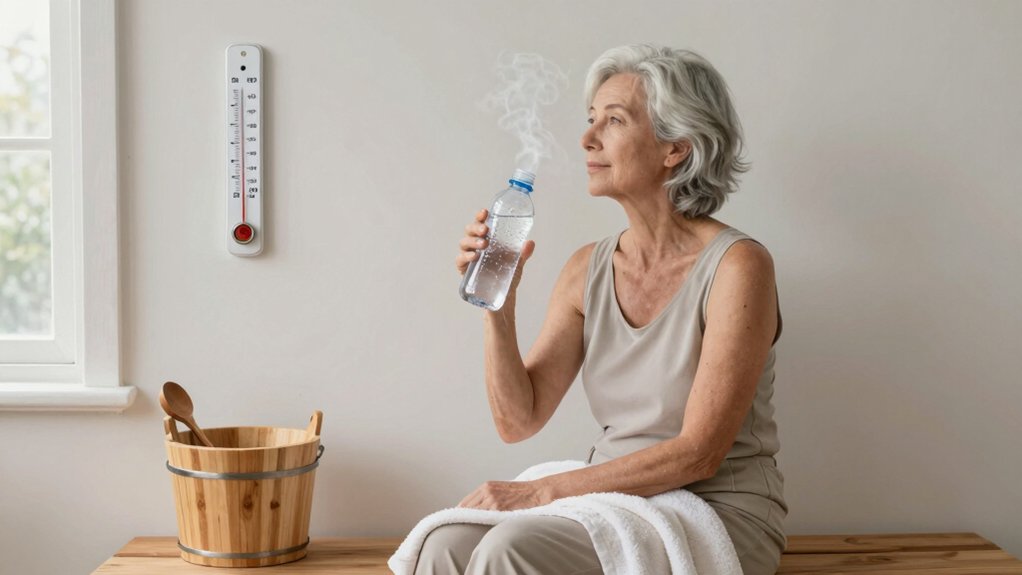
What exactly should the numbers look like when you’re stepping into that wooden room after 50? You’ll start cooler than younger folks, and that’s perfectly fine.
For traditional saunas, begin at 140–160°F, like a warm summer day, not a blazing oven. Infrared feels gentler, so start at 120–135°F. Think of it like easing into a hot bath rather than jumping into a scalding one. Temperature tolerance is not universal, and seniors should pay particular attention to how their individual body responds rather than comparing themselves to younger sauna users.
Time matters just as much as heat:
- First sessions: Limit yourself to 8–10 minutes, even if you feel great
- Building up: Gradually reach 15–20 minutes over several weeks
- Hydration: Sip water every 5–10 minutes inside, and drink before and after
Your heart works harder in heat, so watch for dizziness or racing pulse. When in doubt, step out. Your body knows best.
As you age, your sweat response diminishes, making it harder to cool down naturally and increasing your risk of overheating without obvious warning signs.
Your First Senior Sauna: From Setup to Exit in 5 Steps
How do you turn that intimidating wooden room into your personal wellness retreat? Start with a thorough shower using mild soap, then dry completely, dry skin heats faster, like a towel fresh from the dryer versus one still damp. Remove all jewelry; metal becomes a tiny branding iron in the heat. Skip heavy meals and alcohol, but sip water to prepare your body. Sweating helps eliminate toxins, including the environmental pollutants that accumulate in our bodies over decades of exposure.
Preheat your sauna to 150°F (65°C), letting it cure for thirty minutes while you gather your supplies: water bottle, towel to sit on, and flip-flops. Think of the lower bench as the shallow end of a pool, start there. Enter quickly, shutting the door behind you like you’re sneaking into a warm blanket fort.
Begin with just five minutes, practicing slow breathing. Listen to your body; dizziness means exit immediately. Sitting on lower benches keeps you in milder temperatures as you build tolerance. Cool down with a cold shower from feet up, then rest ten minutes, hydrated and proud.
Frequently Asked Questions
Can I Use Sauna With My Prescription Medications?
You must consult your physician first. Saunas interact with many medications, diuretics, beta-blockers, antidepressants, and blood thinners pose particular risks.
Heat alters how drugs work in your body, so always check labels for heat warnings before using.
Should I Eat Before or After Sauna Sessions?
Eat a light snack 30–60 minutes before, or wait 30 minutes after. You’ll avoid sluggishness and digestive discomfort while supporting your body’s natural cooling and detoxification processes.
Hydrate first post-sauna.
Is Infrared or Traditional Sauna Better for Seniors?
Infrared suits you better. You’ll tolerate lower temperatures more comfortably, enjoy longer sessions without strain, and benefit from easier installation.
Choose traditional only if you’re healthy and crave that intense, steamy heat experience.
How Soon After Surgery Can I Sauna?
You should wait until your stitches are removed and your wound is fully healed, anywhere from 48 hours for minor procedures to 2-3 months for major surgeries.
Always consult your doctor first, as healing times vary.
Can Sauna Help With Arthritis Joint Pain?
Yes, sauna can help your arthritis joint pain. You’ll experience reduced inflammation, improved blood flow, and decreased stiffness as heat therapy clears inflammatory byproducts and promotes healing in your joints.
Final Thoughts
You’ve got this! Sauna time after 50 can boost your heart, melt stress, and help you feel fantastic. Just remember: start low, stay hydrated, listen to your body, and check with your doctor first.
Think of it like easing into a warm bath, you wouldn’t jump straight into scalding water. With smart safety steps, you’re set to enjoy this relaxing, healthy habit for years to come. Your wellness itinerary starts now!