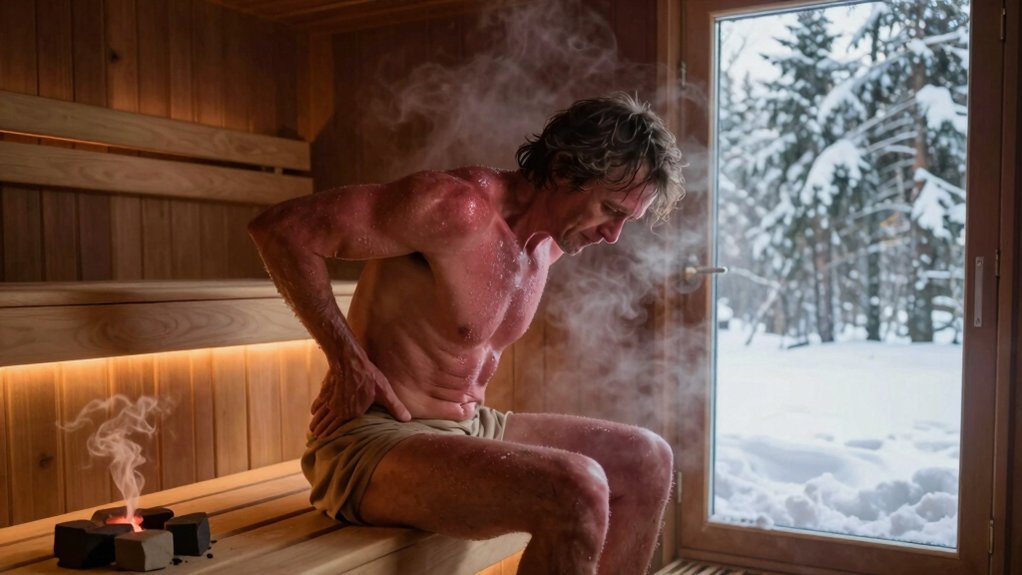

Research shows you can cut your back pain by nearly 40% in just five days using sauna therapy. Both dry and infrared saunas help by boosting blood flow, loosening tight muscles, and triggering your body’s natural painkillers.
You’ll want sessions of 10–15 minutes, building up to 3–5 times weekly for lasting relief. Saunas beat heating pads for stubborn, chronic pain because they warm deeper into your tissues like a gentle internal massage.
Ready to turn up the heat and discover which sauna type fits your life best?
Clinical Proof: Sauna Cuts Back Pain by 40% in 5 Days
If you’ve ever dealt with a nagging backache that just won’t quit, you’re probably wondering what actually works. Here’s some promising news: a recent study shows dry sauna therapy can cut your pain by nearly 40% in just five days.
Researchers followed 37 people with chronic low back pain through ten 15-minute sauna sessions, two per day at a toasty 90°C. Your pain scores could drop from a 5 to a 3 on the standard scale, and 65% of participants saw at least 30% improvement. That’s like turning down the volume on your discomfort! Infrared sauna therapy creates a potent anti-inflammatory effect, further reducing pain by targeting inflammation at its source.
Your daily activities get easier too. Disability scores improved markedly, with most participants rating their experience as excellent or good.
Best of all, you’ll face no side effects, just soothing heat working its magic on those stubborn muscles. This rapid relief likely stems from vasodilation and improved circulation, which floods oxygen-rich blood into ischemic tissues and helps interrupt the pain-spasm cycle that keeps muscles locked in tension.
Dry vs. Infrared Sauna: Which Relieves Back Pain Better?
You’re probably wondering which sauna type actually reaches those achy muscles in your back, and whether the scorching dry heat or gentle infrared warmth wins the pain relief battle.
Dry saunas crank up to 90°C and hit your skin hard, while infrared waves slip past the air to warm your tissues directly at cooler temperatures, like the difference between standing near a campfire versus feeling sunlight through a window.
Both approaches have solid science behind them, so let’s look at how deeply each one penetrates and what the clinical results really show for your sore spine.
Traditional sauna heat stimulates blood vessel dilation and improves circulation throughout the body, which can help deliver oxygen and nutrients to damaged tissues while flushing inflammatory byproducts from sore joints and muscles.
Clinical research specifically supports infrared sauna for significant pain reduction in conditions like fibromyalgia and osteoarthritis, with measurable decreases in inflammation markers such as IL-6 and TNF-alpha.
Heat Penetration Depth
How deeply does heat really need to reach to soothe that aching lower back? When you step into a traditional dry sauna, you’re essentially baking in hot air, like standing near an open oven. The warmth hugs your skin but barely kisses your muscles, penetrating only surface layers.
Now picture infrared heat as sunlight through a window: it travels 1.5 inches directly into your body, reaching fat cells, joints, and deep tissues. That’s five times deeper than traditional heat! Your back muscles finally get the attention they crave.
While traditional saunas rely on roasting the air around you (and only 20% of that heat actually reaches you), infrared’s electromagnetic radiation delivers 93% of its energy straight to where pain lives. You’re not just sweating, you’re healing from the inside out.
This direct body heating means infrared saunas can operate at lower temperatures while still providing effective relief, making sessions more comfortable for those with chronic back pain or heat sensitivity.
Infrared saunas are designed for indoor use only, limiting placement options compared to traditional saunas which can be installed outdoors for a more versatile backyard wellness retreat.
Clinical Outcome Comparison
That deeper heat sounds promising, but you’re probably wondering which sauna actually wins where it counts, your pain levels.
Let’s look at the scoreboard.
Dry sauna studies show your pain scores dropping from 5 to 3 on average, with 70% calling treatment successful.
Infrared boasts up to 70% pain reduction after just one session for some patients.
Here’s the twist: nobody’s put them head-to-head yet. Research has yet to directly compare infrared and traditional saunas for pain relief, with most studies focusing on one type in isolation rather than pitting them against each other.
Dry sauna dominates low back pain trials with rock-solid ODI improvements, while infrared shines for arthritis stiffness and broader chronic conditions.
Think of it like choosing between two painkillers, both work, but one’s slightly better for headaches, the other for muscle aches.
Both prove safe with zero serious side effects.
Your best bet? Pick the option you’ll actually use consistently, because regular sessions beat perfect theory every time.
What matters most is finding a routine you can stick with, since sauna frequency shows an inverse correlation with inflammatory markers like C-reactive protein, meaning the more consistently you sauna, the greater your potential anti-inflammatory benefit.
How Sauna Heat Heals: Circulation, Muscle Relaxation, Recovery
When you step into a sauna, your body kicks into high gear, your heart pumps faster, your blood vessels widen, and warmth floods your muscles like a wave of relief.
This surge of circulation loosens tight tissues, eases stubborn knots in your back, and jump-starts your body’s natural repair systems.
You’re fundamentally giving your joints and spine a therapeutic boost, all while sitting back and letting the heat do the heavy lifting.
During this process, blood flow increases to nearly double per minute, delivering oxygen-rich blood deep into stiff tissues and accelerating the healing process.
Research suggests these effects mirror moderate exercise, with heat therapy triggering vascular dilation that lowers blood pressure and reduces inflammation throughout the body.
Boosted Blood Flow
Ever wonder why your muscles feel so loose and limber after stepping out of a sauna? Your heart kicks into high gear, pumping 60-70% more blood throughout your body. That’s like swapping a garden hose for a fire hose!
Your heart rate climbs to 100-150 beats per minute, similar to a brisk walk, while your blood vessels widen like relaxed garden hoses. Half to two-thirds of your blood rushes to your skin, delivering oxygen and nutrients to sore muscles and achy joints. Picture rush hour traffic suddenly flowing freely on an eight-lane highway instead of a two-lane road.
This surge reaches even deep tissues, helping flush out inflammatory compounds that cause pain. The enhanced circulation continues working for 30 minutes after you leave, giving your back and joints extended relief.
Muscle Tension Release
Your blood’s already doing the heavy lifting, but now let’s look at what happens to your muscles when that warmth really sinks in. As the heat penetrates deep into your tissues, it works like a gentle massage from the inside out, coaxing tight muscles to loosen their grip. Your blood vessels widen, flooding stiff areas with fresh circulation that washes away tension you’ve been carrying.
That warmth triggers your brain to release endorphins, your body’s natural painkillers, so post-workout soreness fades faster. Steam therapy’s moist heat is especially effective, opening vessels even wider than dry heat alone.
Deep heat softens muscle knots, much like warming clay makes it pliable. Regular sessions keep tissues limber, reducing injury risk and preparing your body to move freely without that familiar stiffness holding you back.
Accelerated Tissue Repair
How exactly does a heated room help rebuild what you’ve strained? When you step into an infrared sauna, your blood vessels expand like highways opening extra lanes, delivering oxygen and nutrients to damaged back muscles and joints. Your body temperature climbs, activating heat-shock proteins: tiny repair crews that protect cells and accelerate healing.
Think of mTOR signaling as your body’s construction manager, directing muscle rebuilding where it’s needed most. Research shows 30 minutes at 73°C boosts these proteins by nearly half. Meanwhile, inflammation markers drop while healing compounds rise.
Your sore tissues receive fresh supplies, jump-starting recovery faster than rest alone. Regular sessions amplify these benefits, helping you bounce back from strain and overuse. You’re essentially turning up your body’s natural repair dial.
How Often to Sauna for Lasting Back Pain Relief
When you’re dealing with persistent back pain, finding the right rhythm for sauna therapy can feel like tuning an instrument: too little and you miss the benefits, too much and you risk burnout. Research points to 3-5 sessions weekly as your sweet spot for lasting relief, though you can start with 2-3 and build from there.
Finding your sauna rhythm is like tuning an instrument—3-5 weekly sessions hit the sweet spot for lasting back pain relief.
Want faster results? Try the intensive approach: twice daily for five days dropped pain scores from 5 to 3 in one study. That’s like hitting the gym hard before settling into a maintenance routine.
Your sessions should last 10-15 minutes at first, gradually stretching to 20-30. Think of it like training for a race: you wouldn’t sprint the full distance on day one.
Stay consistent, listen to your body, and you’ll likely notice improvements sticking around for months.
Sauna or Heating Pad? Choosing Your Heat Therapy
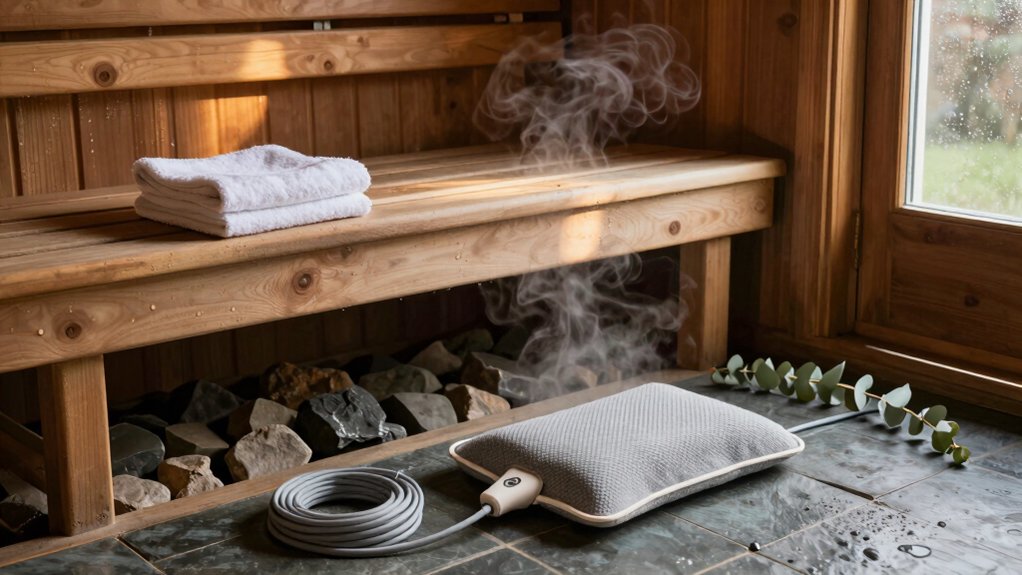
You’ve figured out how often to hit the sauna, but now you’re staring at your options and wondering: should you commit to the full experience, or just grab that heating pad from the closet?
Here’s the deal: your choice depends on what you’re treating. If you’ve got stubborn, chronic back pain that’s been camping out for weeks, the sauna’s your winner. It cranks up to 80–90°C, dives deep into your muscles, and can slash your pain by nearly a third after four weeks.
Think of it like a full-body reset button.
But if yesterday’s workout left you sore and stiff? Grab that heating pad. It’s perfect for targeted, convenient relief, boosting blood flow right where you need it. Just don’t fall asleep with it: safety first!
5 Safety Rules for Sauna Back Pain Relief
Before you crank up the heat to tackle that nagging back pain, you’ll want to know the ground rules that keep you safe while getting relief. Start with 10-15 minutes if you’re new, and don’t push past 25 minutes. Your body’s like an engine that overheats without breaks.
Take 30-minute rests between sessions, and keep water handy before, during, and after. Skip the sauna entirely if you’ve got swelling from a fresh injury. Ice works better for the first 48 hours.
Check with your doctor if you have heart issues, high blood pressure, or you’re pregnant. Think of hydration like refueling a car. You wouldn’t drive on empty.
Follow these steps, and you’ll turn up the heat without burning out.
Getting Started: Home Sauna Options for Chronic Back Pain
Now that you’ve got the safety basics down, it’s time to pick the right sauna for your space and your sore back. You’ll find several home options that can ease your chronic pain without leaving your house.
- Infrared saunas penetrate deep into your muscles, heating your body internally to speed recovery and reduce inflammation.
- Traditional dry saunas relax tense muscles and boost circulation, helping with stiffness and daily discomfort.
- Portable infrared units fit smaller spaces and budgets while still delivering targeted heat therapy for conditions like sciatica or arthritis.
Start with shorter sessions, maybe 15 minutes, and build up as your body adjusts. Pair your sauna time with gentle stretching afterward. You’ll likely notice your heart rate dropping as you relax, a sign your body is responding.
Always check with your doctor first, though.
Frequently Asked Questions
Can Sauna Replace Physical Therapy for Back Pain?
You cannot replace physical therapy with sauna alone. Sauna reduces chronic pain by up to 33%.
But you’ll still need targeted exercises, manual therapy, and movement correction for structural issues and lasting recovery.
Does Sauna Help Herniated Discs Specifically?
Yes, sauna helps your herniated disc. You’ll experience reduced sciatic pain, improved mobility, and lower disability scores.
Infrared heat increases blood flow, relaxes tense muscles, and softens fascia around your spine.
Should I Stretch Before or After Sauna?
Stretch both times, but differently. Do dynamic stretches before to warm up your muscles. After sauna, your heated muscles stretch deeper, so hold static poses for 30 seconds to maximize flexibility gains safely.
Can Pregnant Women Use Sauna for Back Pain?
You should avoid saunas entirely during your first trimester. After that, you’ll need your doctor’s approval first, then keep temperatures below 102°F and sessions under 15 minutes with proper hydration and monitoring.
Does Insurance Cover Sauna Therapy for Pain?
Traditional insurance won’t cover your sauna therapy, but you can use HSA or FSA funds if you get a Letter of Medical Necessity from your doctor. You’ll save 30-40% with pre-tax dollars.
Final Thoughts
You’ve got solid options for tackling back pain with heat, and now you know what actually works. Whether you choose a traditional sauna, infrared setup, or even just start with heating pads, you’re taking real steps toward relief.
Remember: start slow, stay hydrated, and listen to your body. Your back will thank you for the consistent care, and you’ll feel the difference sooner than you might expect.