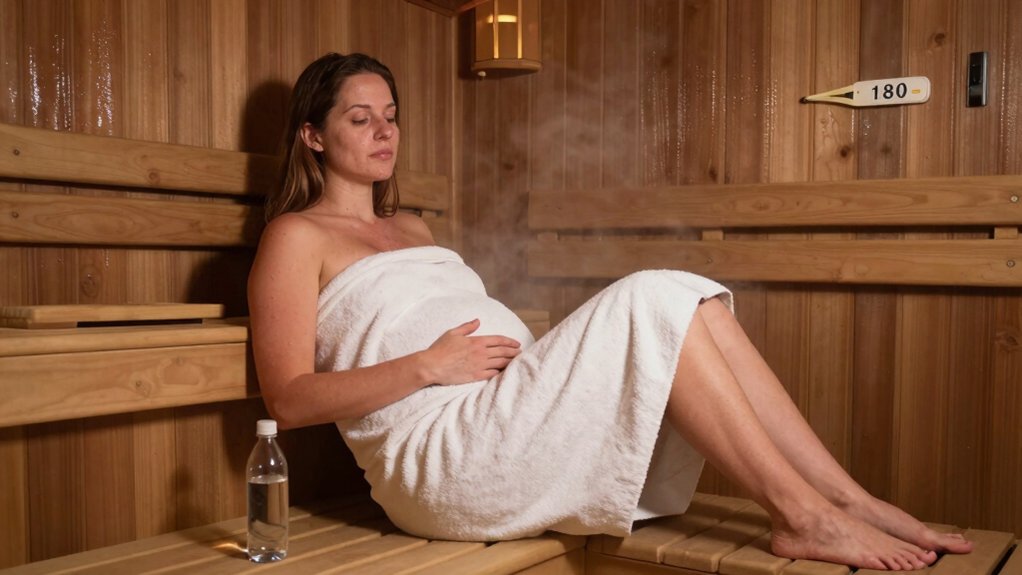

You should skip saunas and steam rooms during pregnancy, especially in your first trimester. Your blood vessels widen in the heat, which can drop your blood pressure and make you dizzy.
Meanwhile, your baby can’t sweat to cool down, so overheating poses real risks, particularly when your core temperature climbs above 39°C. Finnish studies suggest short sessions might be okay later on with doctor approval, but caution matters most.
The details below explain why your body struggles to regulate heat now, and what safer alternatives can ease those pregnancy aches instead.
Why Does Pregnancy Make Sauna Use More Dangerous?
How exactly does carrying a baby turn a relaxing sauna session into something risky? Your body transforms into a busy construction zone, and heat throws a wrench into the works.
Picture your blood as delivery trucks. Pregnancy reroutes most trucks to the baby, leaving fewer for cooling you down. When you enter a sauna, your blood vessels widen dramatically, causing your blood pressure to plummet like a dropped elevator. You might faint before realizing you’re overheating. Cardiovascular strain increases significantly as your heart works harder to compensate for both the pregnancy and heat exposure.
Meanwhile, your baby can’t sweat or cool off independently. Think of a phone without a protective case, your body is that case. If you overheat, your baby overheats directly, especially during the first trimester when tiny organs are forming.
Your delayed heat warnings, combined with your baby’s complete dependence on you, create genuine danger. Research indicates that core temperatures above 102.2°F pose the greatest concern for birth defect risk.
What Core Temperature Puts Your Baby at Risk?
When exactly does your body’s internal thermometer cross into the danger zone for your baby? Research shows that once your core temperature hits 39°C (102°F), you enter the risk zone. Think of it like a fever that won’t break, except you’re creating it yourself. Staying well hydrated is essential when facing any heat exposure, as proper hydration helps your body regulate temperature more effectively.
During your first 12 weeks, temperatures above 39.2°C become especially concerning. That’s when heat can disrupt protein production in your developing baby, potentially causing cell damage. It’s similar to how a delicate soufflé collapses when the oven’s too hot. Over-exerting yourself in hot conditions can push your body into this dangerous temperature range more quickly than you might expect.
Later in pregnancy, your body actually becomes better at staying cool. Studies found women in their second and third trimesters maintained safe temperatures even while exercising in 90°F heat for 45 minutes.
Your body works hard to protect your baby, but sauna heat can overwhelm these natural defenses quickly.
What Does Finnish Research Say About Saunas in Pregnancy?
You’ve learned how your body handles heat, but here’s where things get interesting. Finnish women practically grew up in saunas, and over 90% keep visiting throughout pregnancy, stopping only when labor starts.
Researchers initially worried back in the 1970s, linking heat exposure to birth defects like anencephaly. However, later studies flipped that narrative entirely. Finnish scientists found no elevated rates of neural tube defects despite widespread sauna use, and birth defect patterns matched control groups perfectly. ACOG still cautions that overheating in a sauna is not recommended in pregnancy, reflecting ongoing professional concerns even in light of Finnish findings.
A massive American study of 23,000 people confirmed these findings fell within normal margins of error. By 1982, teratology research concluded mild sauna hyperthermia poses zero hazard to embryos.
Finland’s general consensus? Sauna bathing remains safe during pregnancy, especially when you’re experienced, hydrated, and know your personal limits. Data on CNS defects remains inconclusive, reinforcing the overall safety profile for expectant mothers who follow sensible precautions.
Which Sauna Type Is Safer: Dry, Steam, or Infrared?
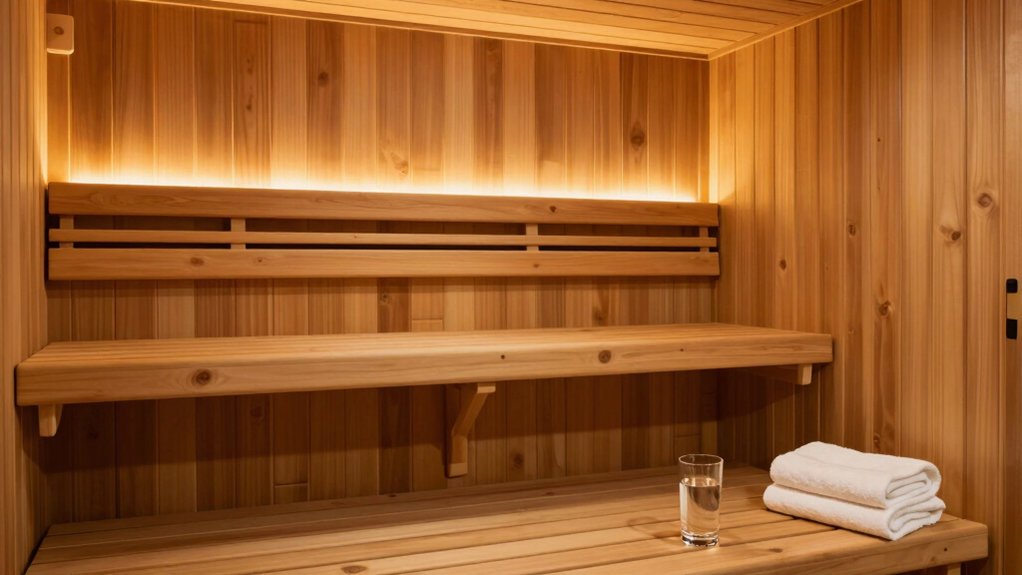
So you’re wondering which sauna type might be safest for your pregnancy, and honestly, it’s not a simple answer. Dry saunas win by a small margin, since lower humidity lets your sweat actually cool you down, think of it like a breeze helping water evaporate off your skin.
Steam rooms trap that moisture, blocking your body’s natural AC system and pushing your temperature up faster. Infrared saunas feel gentler, but they beam heat directly into your tissues, which can sneakily raise your core temperature before you notice. Health experts have not reached a consensus on complete safety for infrared saunas in pregnancy, despite their reputation for being milder. The typical 180–195°F temperature range of traditional dry saunas still poses significant overheating risks for fetal development.
None are truly “safe,” though dry sauna at moderate temps shows slightly better evidence. Your best bet? Skip all three in the first trimester, keep any session under 15 minutes if your doctor approves, and stay hyper-hydrated.
How Can You Ease Pregnancy Pain Without Overheating?
Why risk the heat when you’ve got plenty of safer ways to tackle those pregnancy aches? Acetaminophen works as your go-to pain reliever throughout pregnancy, starting with 650 mg and maxing out at 3,000 mg daily. Skip NSAIDs like ibuprofen after 20 weeks, as they can cause heart problems for your baby. Low-dose aspirin may be used for specific preventive reasons under medical supervision, though it’s less effective for general pain relief. Physical therapy offers another safe, non-heat approach to managing persistent pelvic, hip, or back pain during pregnancy.
For muscle soreness, try menthol creams or lidocaine patches instead of oral meds, but avoid methyl salicylate products, especially near delivery. Non-medical tricks work wonders too. Relaxation breathing cuts migraine pain, and warm (not hot!) baths soothe tension without raising your core temperature.
During labor, you’ve got epidurals for serious relief or nitrous oxide for taking the edge off. These options keep you and your baby comfortable without the sauna risks.
Frequently Asked Questions
Can I Use a Sauna During the Second Trimester?
You can use a sauna cautiously in your second trimester if your doctor approves. Keep sessions brief, 10-15 minutes at most, stay well-hydrated, and stop immediately if you feel dizzy or uncomfortable.
How Soon After Delivery Can I Resume Sauna Use?
You can resume sauna use a few weeks after uncomplicated delivery, but you should consult your doctor first.
Start with short sessions and increase gradually as your body recovers.
Does Sauna Use Affect Breastfeeding Milk Supply?
Sauna use can temporarily reduce your milk supply if you don’t rehydrate properly, but it won’t transfer toxins to your breast milk.
You’ll want to drink plenty of fluids before and after sessions.
Can I Wear a Heart Rate Monitor in the Sauna?
Yes, you can wear a heart rate monitor in the sauna.
Chest straps work best, maintaining accuracy up to 158°F. Wrist-based monitors may struggle with sweat and heat dilation affecting readings.
Are Essential Oils Safe in Steam Rooms While Pregnant?
You shouldn’t use essential oils in steam rooms while pregnant. Steam inhalation concentrates oils and poses risks, especially in your first trimester.
Stick to well-ventilated diffusion of pregnancy-safe oils like lavender if your provider approves.
Final Thoughts
You want what’s best for your baby, so skip the sauna for now. Your changing body can’t cool itself like it used to, and overheating puts your little one at risk.
Instead, try a warm (not hot) bath, prenatal massage, or gentle stretching to ease those pregnancy aches.
Nine months feels long, but your healthy, happy baby will make the wait worthwhile. Stay cool, stay safe, and save the steam for after delivery!