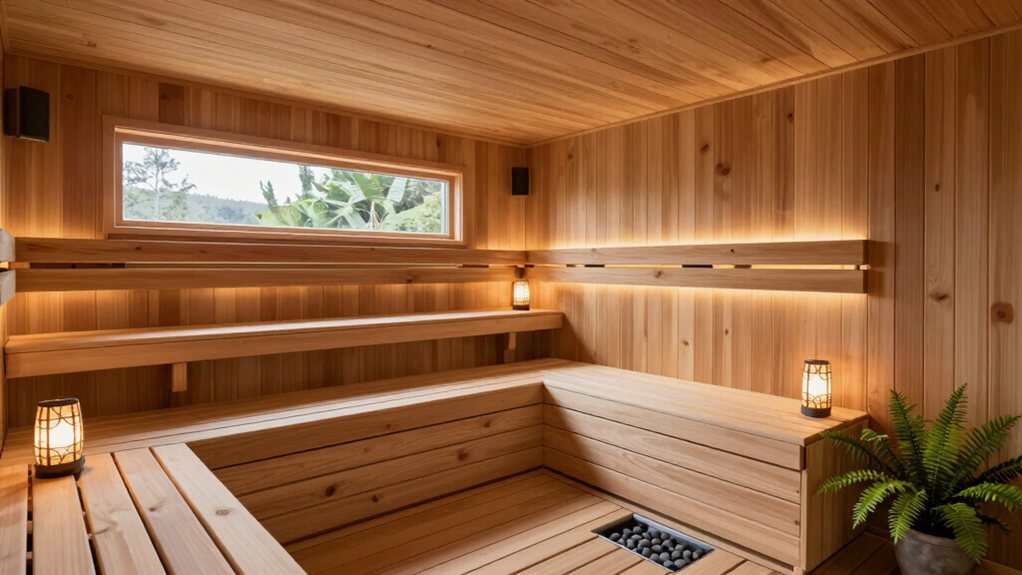

If you want to design a compact home sauna, think smart! Use corner layouts to save space and fit L-shaped benches for comfort. Slide doors help minimize swing space while built-in storage keeps things tidy. Choose light colors and moisture-resistant materials for a fresh look. For ventilation, proper airflow prevents unwanted humidity and helps maintain a cozy environment. Adding soft, ambient lighting can totally transform the atmosphere. Stick around to uncover more helpful tips for your sauna!
Key Considerations for Your Sauna Setup
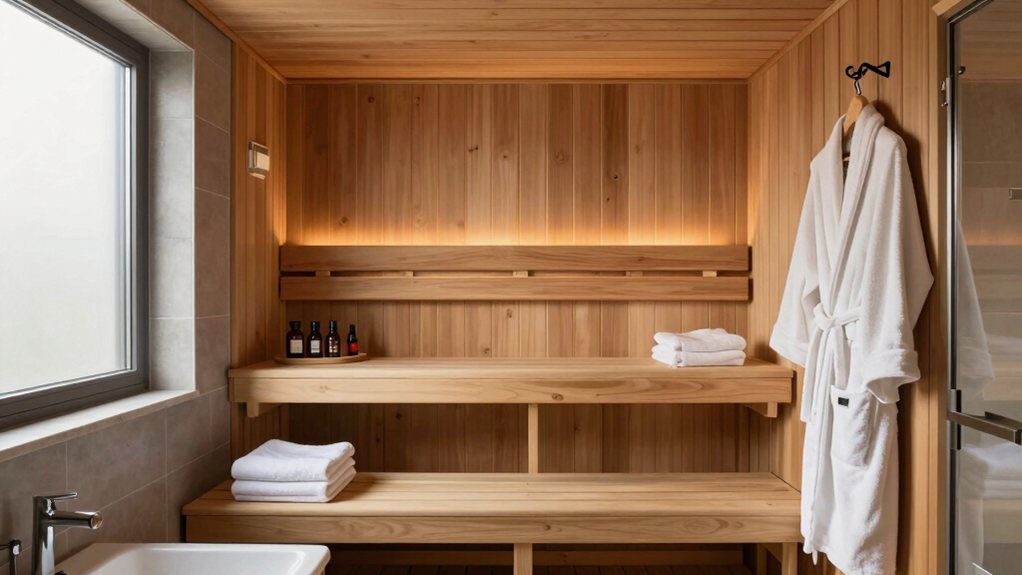
When you’re thinking about setting up your compact sauna, what should you keep in mind to create the best experience possible? First, make certain you have a 110V outlet, as traditional saunas need more power. Check the wattage by adding the sauna’s dimensions in feet and multiplying by 200. It’s crucial to maintain proper clearances around heaters to ensure safety and optimal performance in your sauna environment. It’s also wise to install GFCI outlets for safety in high-humidity areas. For ventilation, position supply vents low and exhaust vents high to improve airflow. Additionally, compact saunas deliver wellness benefits by improving circulation and stress relief. Flooring matters too; opt for waterproof materials, avoiding carpet and standard wood. Finally, consider insulation: fiberglass or rock wool keeps heat in while a vapor barrier stops moisture damage. Following these tips will help you enjoy a cozy, inviting sauna experience!
Maximize Space With Smart Layout Choices
Creating the perfect sauna experience involves more than just choosing the right equipment; it’s also about how you arrange your space. Start by fitting your sauna into alcoves or under-stair nooks to make the most of every inch. Consider placing it in your home gym or master bathroom for easy access after a workout or shower. Opt for corner saunas that don’t overwhelm the room yet provide comfort for two or three people. Don’t forget to measure carefully to ensure everything fits just right! Also, think about ventilation; fresh air near the heater and an exhaust vent higher up will keep things comfortable. Dry saunas require proper insulation and vapor barriers to maintain their efficiency and comfort levels. Additionally, indoor units can complement your existing home design while saving space. With a little planning, your compact sauna can be a gorgeous, functional addition to your home!
Create Functional Bench Configurations for Your Sauna
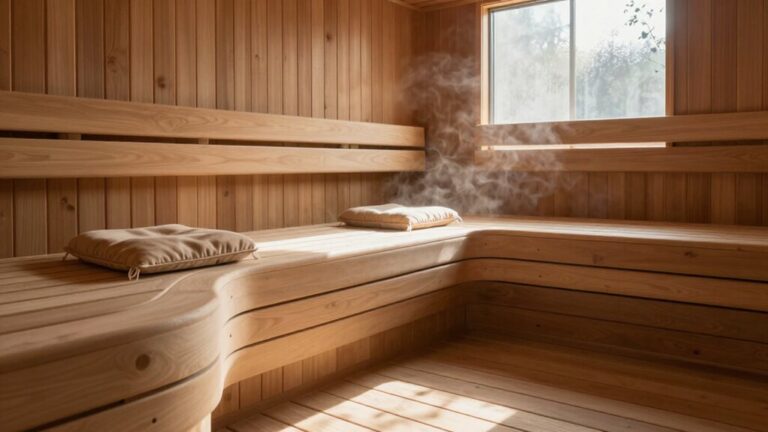
How can you make the most out of your sauna benches? Designing functional configurations can transform your sauna experience. Start by considering lengths and heights that allow for various seating arrangements. Aim for a cozy L-shape, maximizing space and utility.
Maximize your sauna experience by designing benches in cozy configurations, like an L-shape, for comfort and utility.
- Choose the right materials: Western red cedar or basswood adds comfort and durability while smelling great. Clear wood is preferred for a better sauna experience, so make sure to avoid knotty wood that may cause discomfort. Proper heat distribution across the benches will enhance the overall relaxing experience.
- Opt for thoughtful dimensions: Lower benches at 16 inches and upper ones at 32 inches create perfect relaxation spots.
- Incorporate footrests: They guarantee you stay comfy and warm, keeping cold floors at bay.
With these hacks, you’ll enjoy a sauna that feels both practical and inviting!
Keep Your Sauna Fresh With Proper Ventilation?
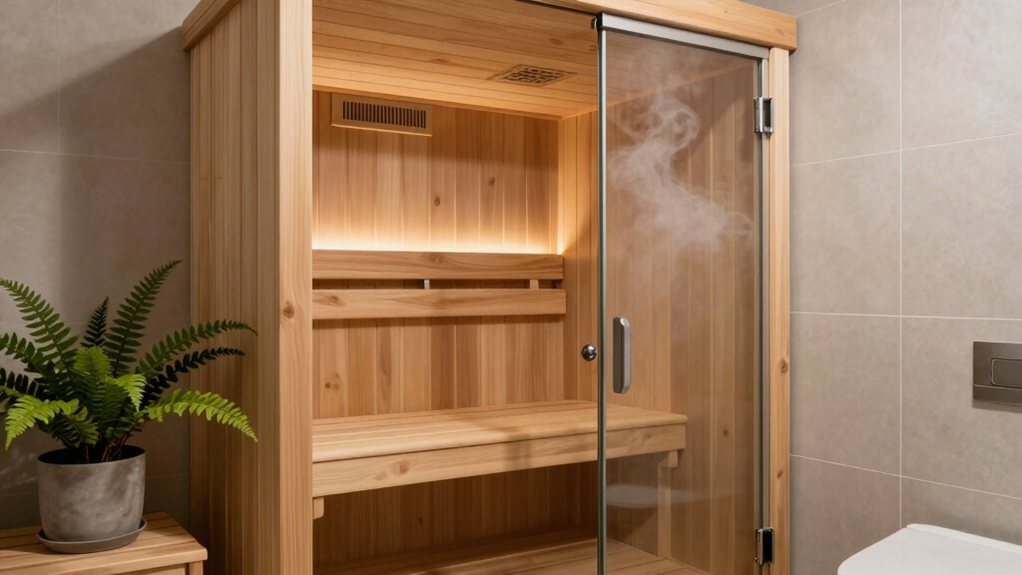
Ever wonder why fresh air is crucial for your sauna experience? Proper ventilation keeps your compact sauna fresh and free from mold, which can make it smell funky. To avoid moisture buildup that can wreck wooden walls, you need to design airflow wisely.
An intake vent near the heater and an exhaust vent high up on the opposite wall work wonders. This setup guarantees a good exchange of oxygen and prevents heat stratification. For most saunas, you’ll want 4 square inches of intake for every person, and 5 square inches of exhaust. A well-placed exhaust fan can easily pull out moist air post-session, making each sauna trip more invigorating. Additionally, insufficient ventilation can lead to mold and poor air quality, making it essential to ensure your sauna design includes these critical airflow components. Despite the benefits of passive systems, they may not adequately remove CO2, which can impact the overall experience when the sauna is crowded.
Essential Accessories for a Comfortable Sauna Experience
To truly improve your sauna experience, investing in vital accessories can make all the difference in comfort and enjoyment. These items not just add functionality but raise your relaxation time.
Enhance your sauna experience by investing in essential accessories that boost comfort and elevate relaxation.
Consider these necessities:
- Bucket and Ladle: Control the steam to your liking—no one likes a sauna that’s too stuffy. A thermometer monitors the sauna temperature within a safe range to ensure your comfort while using the steam.
- Comfort Supports: Backrests and headrests make long sessions comfy, so you can lounge without aches. Proper head protection with a sauna hat allows for 20–30% longer session duration.
- Floor Protection Mats: These prevent slips and keep your feet safe on hot surfaces while looking good too!
With the right accessories, you can create a sauna oasis where every session feels like a mini-vacation.
Enhance Your Sauna Ambiance With Mood Lighting
What makes a sauna experience truly memorable? One key element is the mood lighting. Opt for warm light tones between 2000K and 3000K, as they mimic a sunset and promote relaxation.
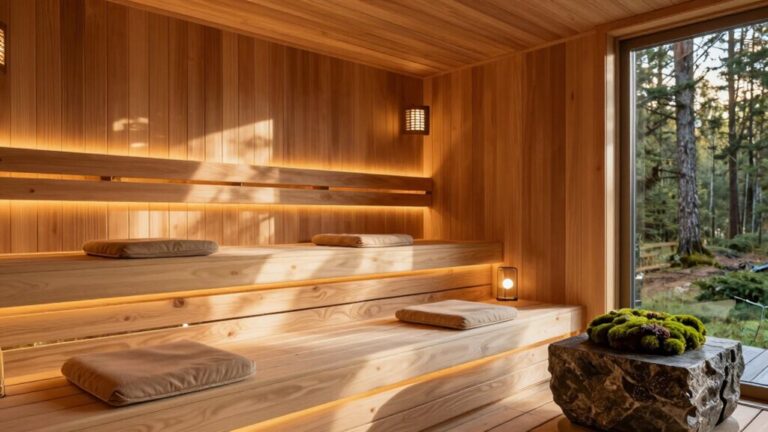
Using soft, indirect lighting, like LED strips hidden under the bench, creates a cozy atmosphere without blinding you. Avoid harsh white or blue light, which can disrupt the natural feel of wood and make the sauna feel harsher.
Dimmer switches are your best friends, letting you adjust brightness for everything from reading to unwinding. A layered approach, mixing safety, indirect, and accent lighting, guarantees your sauna feels spacious and inviting.
With the right lighting, your sauna can transform into a calming retreat where you truly escape the world.
Choose the Right Installation Location for Your Sauna
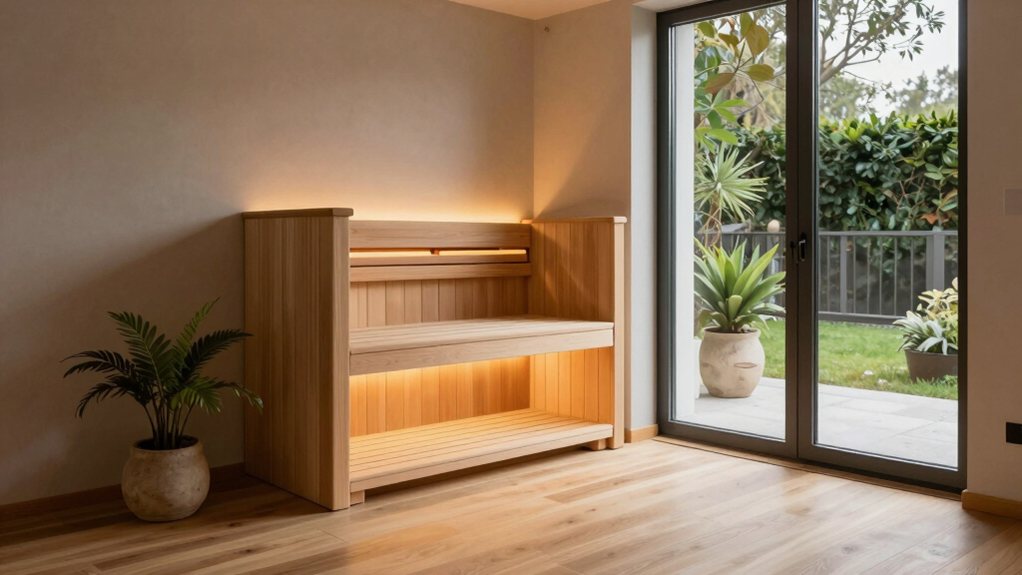
Choosing the right spot for your sauna can make all the difference in your overall experience.
Think about where you’ll feel most relaxed and enjoy the benefits.
Here are some great options to contemplate:
- Basements offer privacy and easy access to power while hiding unused space.
- Garages can be transformed into wellness areas, turning clutter into comfort!
- Bathrooms let you enjoy quick, convenient sauna sessions with immediate access to showers.
Frequently Asked Questions
What Are the Best Materials for Sauna Walls and Ceilings?
The best materials for sauna walls and ceilings are Western Red Cedar, Hemlock, Aspen, and Alder. Each offers unique benefits like moisture resistance, durability, and attractive aesthetics, guaranteeing a comfortable and relaxing sauna experience.
How Can I Insulate My Sauna for Energy Efficiency?
To insulate your sauna for energy efficiency, use moisture-resistant materials like fiberglass or PIR boards, install a foil vapor barrier, and guarantee complete coverage to minimize heat loss and maximize warmth retention during use.
Can I Install a Sauna Outdoors in Winter?
Yes, you can install a sauna outdoors in winter. Just make sure you prepare the site properly, use adequate insulation, and protect it from snow accumulation. This setup allows for enjoyable, warm sauna sessions even in colder months.
What Are the Safety Considerations When Using Essential Oils?
When using indispensable oils, make certain they’re properly diluted to avoid irritation. Test for allergies, avoid toxic oils, limit your sauna sessions, and clean surfaces afterward to maintain safety and effectiveness in your environment.
How Do I Properly Maintain the Sauna Heater?
To maintain your sauna heater, turn off the power and cool it completely. Clean dust, inspect for damage, monitor stones for wear, and replace faulty parts as needed. Regular cleaning keeps everything functioning well.
Final Thoughts
By following these interior design hacks for your compact home sauna, you can create a cozy and functional space that improves your relaxation experience. Focus on smart layouts, functional bench designs, and proper ventilation to make the most of your limited area. With the right accessories and mood lighting, your sauna can transform into a personal oasis. So, get ready to unwind and enjoy some well-deserved me-time in your beautifully designed sauna!