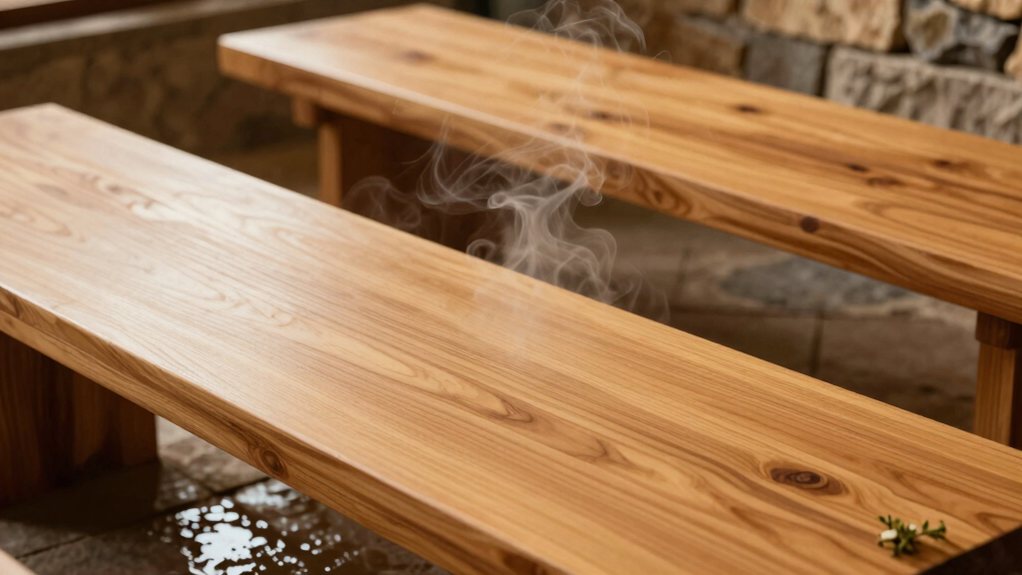

When picking materials for your sauna, think about longevity and enjoyment. Cedar is a popular choice for its warm aroma and durability, lasting 15–30 years. However, Thermowood outperforms it, resisting moisture and heat while lasting 20–35 years. Basswood is great for budgets, as it’s hypoallergenic and stylish. Avoid hemlock, which can warp and splinter. You might also explore eco-friendly options like hempcrete or tropical hardwoods for their lasting benefits. Keep reading to uncover more valuable insights!
Why Material Choice Matters for Sauna Longevity
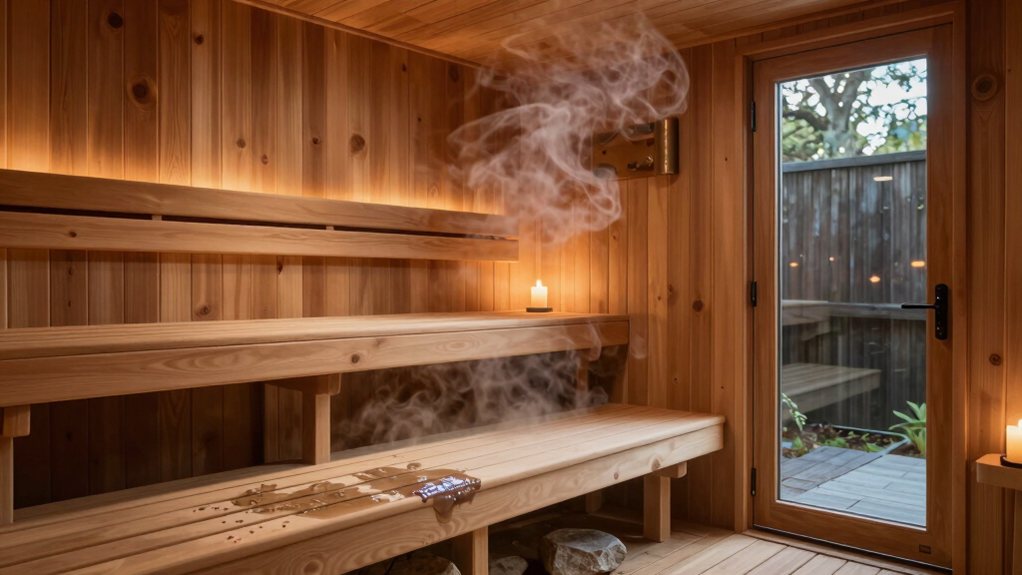
When you’re choosing materials for your sauna, you mightn’t realize just how important this decision is for its longevity. The right materials can withstand the intense heat and humidity, guaranteeing your sauna remains mold-free and durable. For instance, premium woods, like cedar, resist moisture and don’t crack under temperature changes, keeping your sauna cozy and safe. Thicker wood panels used in custom saunas help with heat retention, lasting much longer than thinner options found in prefab units. Additionally, custom saunas typically utilize higher-grade lumber, which enhances durability and performance over time. Moreover, using quality materials like Thermowood contributes to moisture resistance, improving stability and reducing maintenance headaches in the long run. You’re investing in comfort, enjoyment, and the lifespan of your sauna, so choose wisely! After all, who wouldn’t want a sauna that lasts decades?
Comparing Thermowood and Cedar: Which Is Best?
Choosing the right material for your sauna is essential, especially when considering the strengths of Thermowood versus cedar. Cedar’s natural beauty and pleasant aroma provide a classic sauna experience, lasting 15–30 years with upkeep. Additionally, cedar has excellent insulation capabilities, which enhances warmth during sauna sessions. However, Thermowood outshines cedar in durability, boasting a lifespan of 20–35 years and better resistance to moisture and cracking—ideal for high-use settings. Plus, Thermowood heats up faster and requires less maintenance, saving you effort and costs over time. While cedar might charm with its warm tones, Thermowood’s sleek look fits modern designs perfectly. With its enhanced durability due to heat treatment, Thermowood’s ability to resist warping makes it a wise investment for long-term sauna enjoyment.
Ultimately, if longevity and low maintenance are your top priorities, Thermowood might just be the best choice for your sauna enjoyment!
Why Basswood Is a Budget-Friendly Choice for Saunas
While Thermowood and cedar offer fantastic options for a sauna, Basswood stands out as a budget-friendly choice that doesn’t skimp on quality. This wood is affordable as well as bringing several fantastic benefits to your sauna experience:
- Hypoallergenic Properties: It’s perfect for allergy sufferers, minimizing irritation in sensitive individuals.
- Heat and Durability: It performs well under high temperatures, resisting warping and cracking. Additionally, Basswood has moderate moisture resistance, which aids in maintaining the wood’s integrity over time. Its natural antifungal properties also promote hygiene, ensuring a clean and pleasant sauna environment.
- Aesthetics: With its light coloring and silky texture, Basswood creates a bright, inviting atmosphere.
What’s Wrong With Using Hemlock for Saunas?
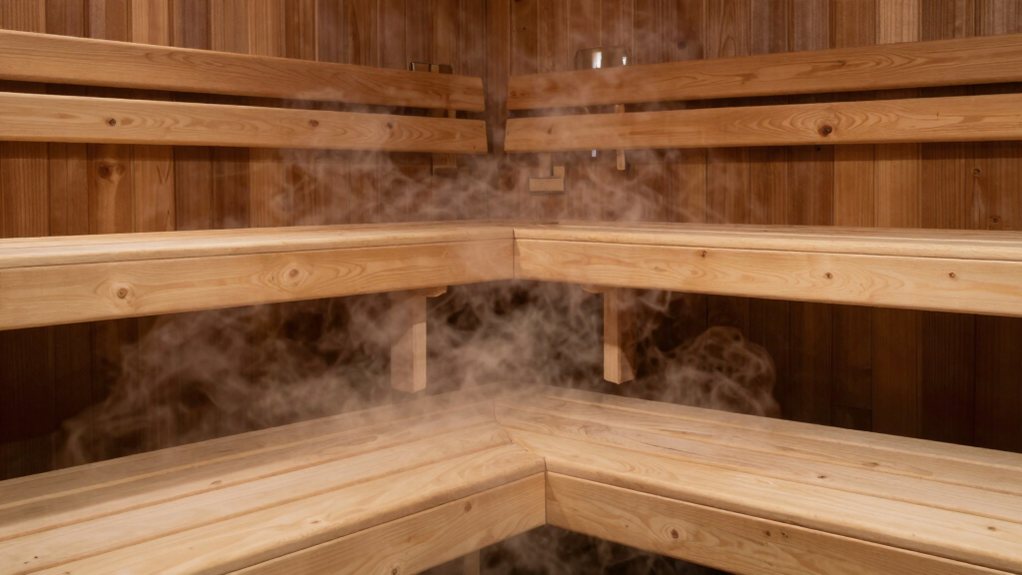
Have you ever wondered why hemlock isn’t the best choice for sauna construction? Well, hemlock tends to splinter due to its straight grain, creating rough, uncomfortable surfaces for benches. Imagine sitting on a rough edge during your relaxing sauna session—ouch! It also warps and cracks with heat, making you worry about its durability over time. While it might look nice, its lack of natural insect resistance means you could face mold or rotting issues. Plus, hemlock isn’t as great at insulating warmth compared to cedar, leaving you feeling cooler than you’d like. Although it might seem budget-friendly at first, the extra maintenance costs can quickly add up. Additionally, its low-quality wood nature contributes to potential long-term issues in sauna environments, especially since high humidity can lead to mold growth in wood that isn’t suited for sauna conditions. Trust me, a sauna built with hemlock isn’t a fantastic long-term investment!
How Does Hempcrete Enhance Sauna Longevity?
When it comes to building a sauna that lasts, hempcrete might just be your secret weapon. This innovative material offers several advantages that can help guarantee your sauna stands the test of time.
Its unique properties may improve your sauna experience in various ways:
- Thermal insulation: Hempcrete keeps your sauna warm and cozy, making every session enjoyable. Additionally, its high thermal resistance superior insulation properties ensures that the heat is retained efficiently for an optimal sauna experience.
- Moisture regulation: It helps manage humidity levels, so you won’t have to worry about mold ruining your relaxing retreat. Furthermore, its ability to absorb and release moisture contributes to a more comfortable environment.
- Sustainability: Made from natural hemp, it’s an eco-friendly choice that also reduces your carbon footprint.
While more research is needed specifically for saunas, the general benefits of hempcrete support its use as a long-lasting material that can improve your relaxation space.
Exploring the Benefits of Tropical Hardwoods for Saunas
As you consider the best materials for your sauna, tropical hardwoods stand out for their unique benefits that improve both functionality and enjoyment. These woods absorb only 12% humidity, guaranteeing they won’t warp or rot as readily as other materials.
Their impressive durability means they’ll last twice as long as cedar, maintaining their strength even in extreme weather. Plus, their natural resistance to pests and mold means you won’t need harsh chemicals.
With options that look sleek and perform well regarding heat insulation, tropical hardwoods make your sauna experience both cozy and stylish. Choosing these materials not merely boosts your enjoyment but also supports sustainability—so you’re helping the planet while creating your perfect retreat!
Essential Maintenance Tips for Your Sauna Materials
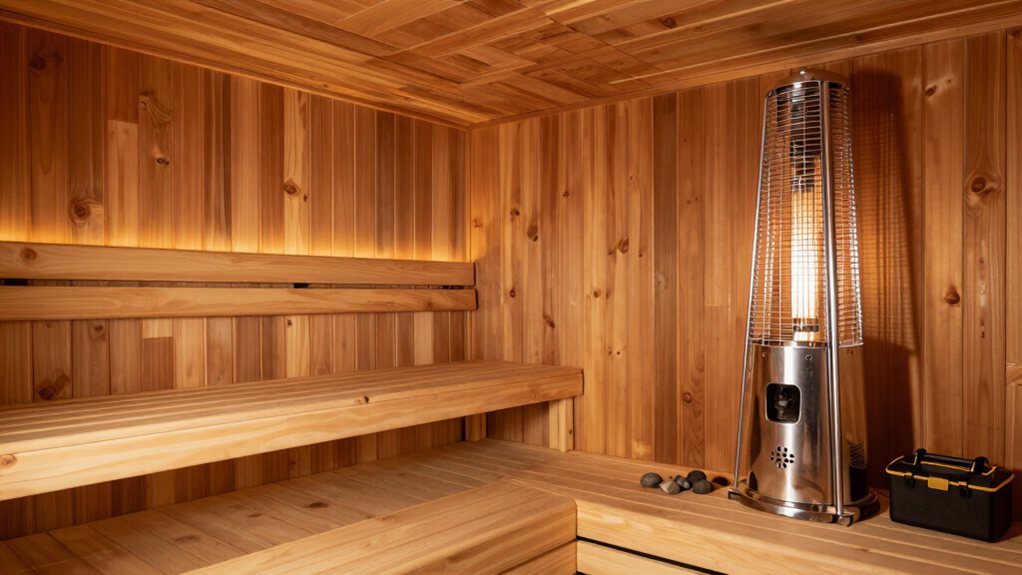
Maintaining your sauna materials is vital for guaranteeing a cozy and enjoyable experience.
Proper maintenance of your sauna materials ensures a warm, inviting atmosphere for relaxation and enjoyment.
Regular upkeep keeps your sauna in top shape, so follow these necessary tips:
- After each use, lightly scrub benches and walls with a hand brush dipped in plain water, and wipe surfaces to remove sweat.
- Inspect the wood monthly for damage, and apply cedar or teak oil every few months for protection.
- Check vents regularly to prevent moisture buildup, and prop the door open post-use to air out completely.
Frequently Asked Questions
How Does Sauna Material Affect User Comfort and Experience?
Sauna material directly impacts your comfort and experience. Choosing hypoallergenic, low-resin woods guarantees gentle skin contact, and selecting those with favorable thermal properties keeps surfaces at comfortable temperatures, improving your overall enjoyment during sessions.
Are There Sustainable Sourcing Options for Tropical Hardwoods?
Yes, you’ve got sustainable options for tropical hardwoods. Look for FSC-certified suppliers, choose reclaimed woods, or consider lesser-known species. Each option helps reduce environmental impact while still providing beautiful, functional materials for your projects.
Can Sauna Materials Impact Air Quality Inside the Sauna?
Yes, sauna materials can greatly impact air quality. Using untreated woods and non-toxic adhesives helps reduce harmful emissions, guaranteeing a healthier environment. Avoiding synthetic materials improves your sauna experience and promotes better air purity while you relax.
What Factors Influence the Choice of Sauna Flooring Materials?
When choosing sauna flooring materials, consider heat resistance, moisture resistance, durability, safety, and maintenance. You want materials that can withstand high temperatures, prevent warping, and guarantee a comfortable, safe environment for your sauna experience.
How Do Different Woods React to High Humidity and Heat?
Different woods react to high humidity and heat by exhibiting varying degrees of moisture absorption, stability, and durability. Cedar and thermally modified wood resist warping best, while aspen and basswood offer comfortable surfaces under intense conditions.
Final Thoughts
Choosing the right materials for your sauna can make all the difference in how long it lasts and how enjoyable it is. From the warmth of cedar to the budget-friendly basswood, every option has its perks. Don’t forget to take into account unique choices like hempcrete or tropical hardwoods for added longevity. With a little maintenance, your sauna will become a cozy retreat you can cherish for years to come. So, pick wisely, relax, and enjoy the heat!