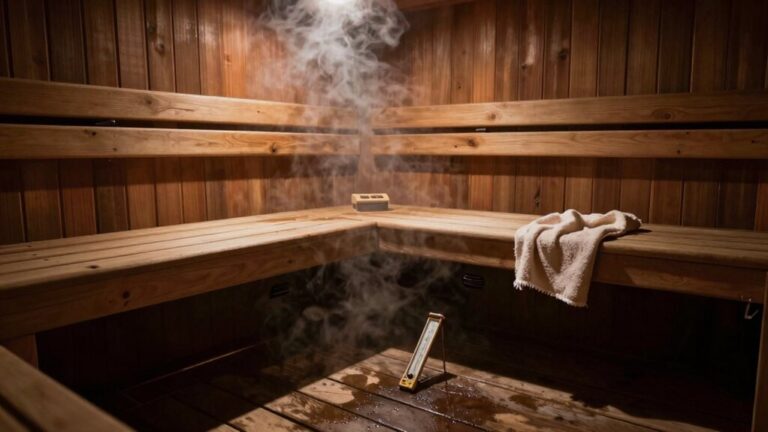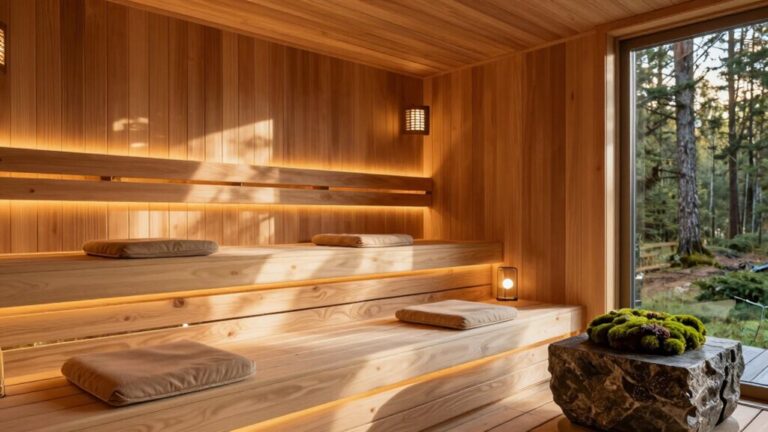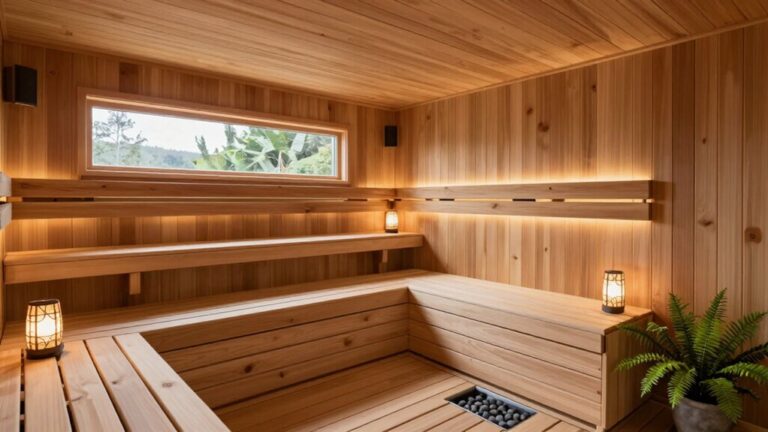
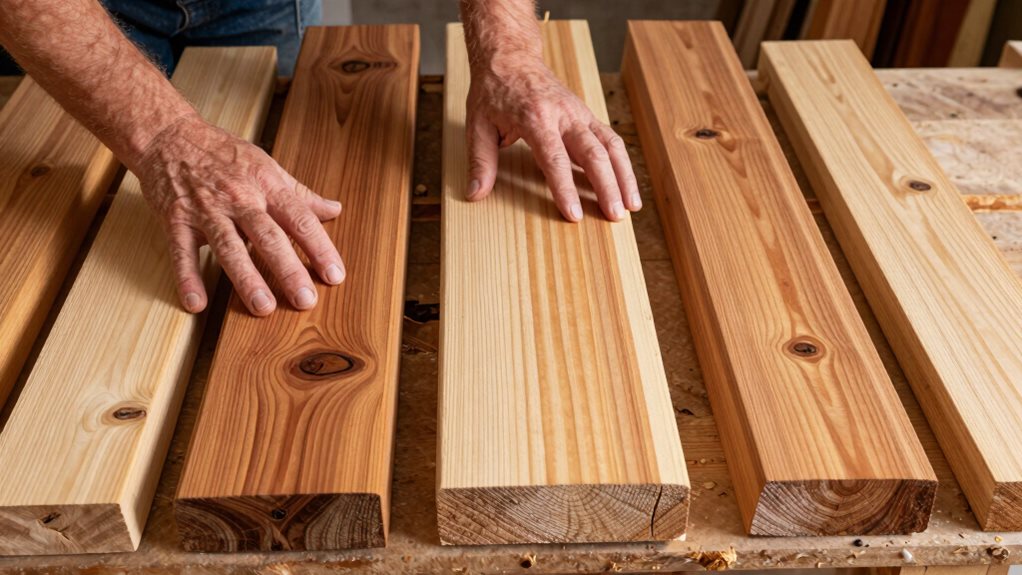

When selecting sauna wood, consider both performance and appearance. Western Red Cedar offers premium durability with aromatic benefits, while Thermally Modified Wood provides excellent stability without chemicals. Basswood works best for those with sensitivities, and Hemlock offers good value for indoor use. For traditional appeal, try Aspen or Hemlock. Your choice affects not only the look but also heat retention, maintenance needs, and the overall sauna experience. The perfect wood awaits your discovery.
Western Red Cedar: The Premium Aromatic Choice
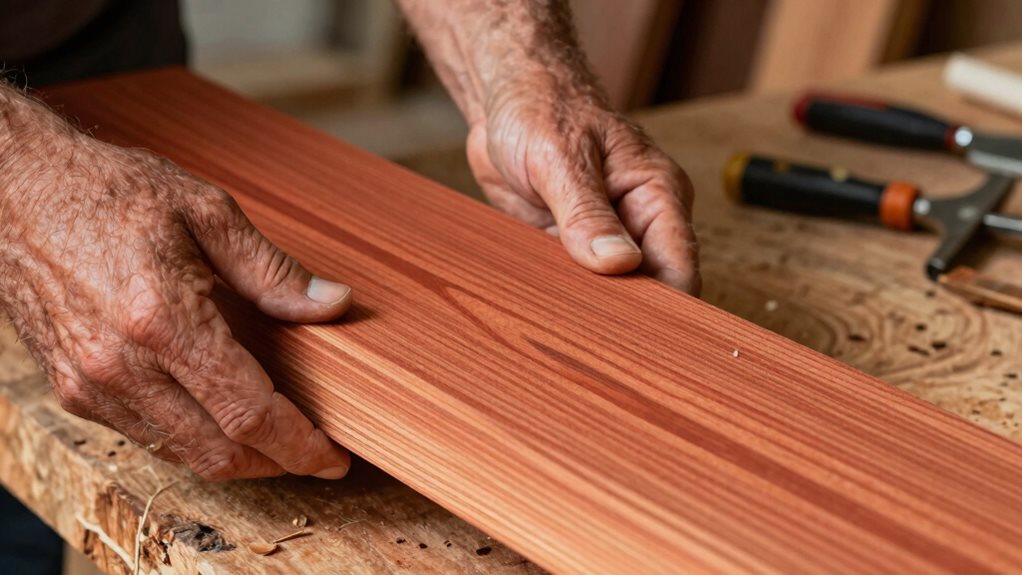
When you’re looking for the ultimate wood for your sauna, Western Red Cedar stands as the premium choice among sauna enthusiasts worldwide. Its distinctive spicy aroma intensifies when heated, creating a therapeutic environment that clears your airways and reduces stress naturally.
You’ll appreciate Cedar’s remarkable thermal properties – it heats up quickly yet stays comfortable to touch even at 195°F, saving you about 15% on energy costs compared to denser woods.
The wood’s natural oils contain thujaplicins, which act as preservatives against rot and insects, extending your sauna’s life to 30-50 years with basic care. Known traditionally as the Tree of Life by indigenous Pacific Northwest Coast nations, this remarkable wood has been valued for centuries.
Cedar’s stability is unmatched, maintaining its shape through temperature fluctuations without warping or cracking.
Its reddish-brown hues and unique grain patterns create a luxurious aesthetic that ages beautifully, requiring just minimal maintenance to preserve its charm.
Thermally Modified Wood: Stability Meets Sustainability
As you explore sustainable options for your sauna, thermally modified wood stands out as a revolutionary alternative that’s changing how enthusiasts build their heat havens. This innovative process uses only heat and steam to transform ordinary wood into a superior sauna material.
You’ll appreciate how this wood resists warping and swelling in your sauna’s humid conditions, maintaining its shape through countless steam sessions. Unlike untreated wood, it won’t expand or contract dramatically with temperature changes.
The thermal modification process also removes organic compounds that attract insects and fungi, making it naturally resistant to rot and decay without chemicals. Quality thermally treated wood undergoes carefully controlled heating to at least 419°F when intended for outdoor sauna applications. This technique dates back centuries and was masterfully utilized by ancient Vikings for constructing ships that could withstand harsh maritime conditions.
Nature’s own preservation method—heat transforms wood into a pest-resistant material without harsh chemicals.
For eco-conscious builders, it’s a win-win choice—sourced from sustainable forests, chemical-free, and fully recyclable when your sauna eventually reaches the end of its extended lifespan.
Basswood: The Hypoallergenic Option for Sensitive Users
If you’re sensitive to wood odors or have allergies, basswood offers you a truly gentle sauna experience.
You’ll appreciate its odorless nature, which won’t irritate your respiratory system even at high temperatures.
Its sleek, light-colored surface stays comfortable against your skin, making it perfect for benches and backrests where direct contact occurs.
The moderate moisture resistance of basswood means you’ll need to ensure proper ventilation and regular cleaning to maintain its quality over time.
Gentle on Skin
For sauna enthusiasts with sensitive skin, basswood stands as the premier hypoallergenic choice in wood selection.
You’ll appreciate its silky-smooth texture that remains comfortable even at high temperatures, without the rough burrs found in other woods. The fine fibers create a surface that’s gentle against your body during sauna sessions.
Unlike other sauna woods, basswood contains virtually no resins or fragrant oils that might trigger allergic reactions.
When heated, it doesn’t release irritating gases or compounds that could affect your respiratory system. This makes it perfect if you have chemical sensitivities or breathing concerns. Being most hypoallergenic wood in North America further validates its suitability for those with allergies.
North American basswood, with its light, consistent coloring and minimal knots, is commonly used in food-grade applications like tongue depressors—a proof of its non-irritating properties.
It’s the ideal choice when comfort meets health considerations.
Odorless Sauna Experience
While most traditional saunas feature woods that emit distinctive aromas, basswood provides a truly neutral sensory experience for sauna users.
You won’t encounter the strong scents typically associated with cedar or other aromatic woods, making basswood ideal if you’re sensitive to smells or simply prefer an odor-free environment.
This nearly scent-free quality means you can enjoy your sauna session without any sensory distractions.
The wood’s extremely low volatility guarantees no irritating odors are released, even when heated to high temperatures.
Many health clinics choose basswood specifically for this reason, as it creates a comfortable, neutral atmosphere for all users, particularly those with chemical sensitivities.
With basswood, you’ll appreciate the clean, distraction-free sauna experience that lets you focus entirely on relaxation and wellness benefits.
Hemlock: Budget-Friendly Performance in High Humidity
Although many premium woods command attention in sauna construction, hemlock stands out as a practical, budget-friendly option that doesn’t compromise on performance in high-humidity environments.
You’ll appreciate its excellent dimensional stability, which prevents warping even when exposed to continuous heat and moisture cycles.
What makes hemlock particularly suitable for your sauna project:
- Very low resin content means no sticky surfaces or harmful fumes when heated
- Natural insulating properties help maintain consistent temperature and quick heat-up
- Straight grain and uniform texture offer light color that adds natural elegance
Hemlock’s hypoallergenic features provide an irritation-free environment, making it ideal for those with sensitivities. However, it requires ongoing maintenance to preserve its structural integrity, especially in consistently humid sauna conditions.
When treated properly, it resists decay while requiring minimal maintenance compared to other woods.
Hemlock works best when combined with other woods for optimal sauna construction, particularly for seats and doors where its excellent endurance and distinct pattern can be showcased.
Aspen: Traditional Scandinavian Sauna Material
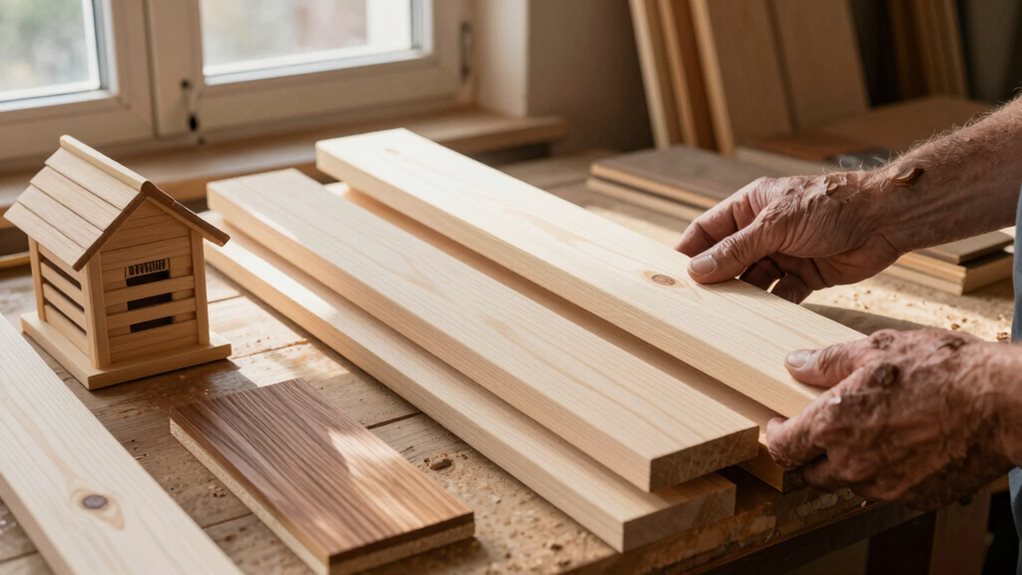
When seeking authentic sauna materials, you’ll discover that aspen has earned its reputation as a traditional Scandinavian choice for good reason. Its natural resilience thrives in moist, warm environments without warping, while thermal treatment minimizes cracking in high-heat conditions.
You’ll appreciate aspen’s excellent thermal properties—it stays cool to the touch even during intense heat sessions. The sleek, knot-free surface with a creamy-white color creates a bright, modern aesthetic that amplifies natural light in your sauna space. Aspen’s non-resinous quality makes it an ideal choice for sauna enthusiasts seeking materials that won’t emit unwanted substances when heated.
Health-conscious sauna users value aspen’s hypoallergenic qualities, as it contains no resins or sap that might trigger respiratory issues. It’s often doctor-recommended for detoxification programs.
Plus, aspen offers these benefits at a more affordable price than cedar, making it an excellent balance of quality and value.
Mahogany: Luxury Hardwood for Long-Term Investment
Mahogany’s rich, reddish-brown tones create a premium sauna experience that’s worth every penny of its higher price tag.
You’ll appreciate how this luxury hardwood naturally resists moisture and decay, maintaining its dimensional stability even after years of exposure to humid sauna conditions.
For those with wood sensitivities, mahogany offers an allergy-friendly alternative that combines stunning aesthetics with exceptional durability for your long-term sauna investment. Its naturally occurring oils and resins provide built-in protection against the elements, minimizing the need for chemical treatments. While more expensive than Appearance Grade Cedar, mahogany provides the same knot-free appearance as premium CVG Cedar with a distinctly luxurious character.
Rich Color, Premium Feel
The rich reddish-brown color of mahogany instantly transforms an ordinary sauna into a luxurious retreat.
You’ll notice its warm tones create a sophisticated atmosphere that darkens beautifully over time, developing a distinctive patina that only boosts its appeal.
The wood’s fine grain pattern adds visual elegance that you won’t find in standard sauna materials.
What makes mahogany’s premium feel so special:
- Its gorgeous, noble grain provides striking aesthetics that raise the entire sauna experience
- The sleek finish creates an inviting atmosphere that feels comfortable against your skin
- Its elegant texture enhances the luxury perception, making your sauna feel like a high-end spa
Despite its light weight, mahogany’s hard texture and natural oils prevent swelling in humid environments, making it perfect for your sauna’s long-term durability.
Superior Moisture Resistance
Unlike many wood options, mahogany stands out for its remarkable ability to resist moisture—a critical feature for any sauna environment.
Its tight grain structure and natural oils prevent the swelling and shrinking that plague softer woods when exposed to steam and humidity.
You’ll appreciate how mahogany’s dense texture rivals red cedar in resisting decay, making it perfect for your sauna’s long-term performance.
The wood naturally repels termites through its distinctive odor, an added bonus if you’re building in insect-prone areas.
When comparing maintenance requirements, mahogany outperforms many alternatives, including red cedar.
You’ll only need occasional oiling to maintain its integrity, with simple wipe-downs after use.
This minimal upkeep, combined with its exceptional durability in humid conditions, makes mahogany a premium investment for your sauna project.
Allergy-Friendly Luxury Option
For allergy-sensitive sauna enthusiasts, mahogany offers a luxurious alternative without the respiratory irritants common in other woods. Unlike cedar’s strong aroma that can trigger reactions, mahogany releases a mild, pleasant scent that improves your experience without overwhelming sensitive users.
Its natural oils and dense structure minimize mold growth in humid conditions, further reducing allergen risks.
Consider these mahogany advantages for allergy-friendly saunas:
- Emits a gentle odor that repels insects without irritating sensitive respiratory systems
- Contains natural properties that resist mold and decay, preventing common sauna allergens
- Lacks the aggressive aromatic compounds found in cedar and other traditional sauna woods
You’ll appreciate mahogany’s hypoallergenic qualities while enjoying its rich, reddish-brown elegance that darkens beautifully over time.
Comparing Wood Types: Heat Resistance and Thermal Properties
When selecting the perfect wood for your sauna, understanding heat resistance and thermal properties becomes vital for both comfort and efficiency. Each wood type offers distinct thermal advantages worth considering.
Western Red Cedar stands out with twice the stability of other softwoods and superior insulation, allowing heat to flow evenly while staying cool to touch.
Luxuriate in Western Red Cedar’s unmatched stability and insulation, delivering even heat distribution while remaining comfortably cool against the skin.
Nordic Spruce excels with 20-25% lower thermal conductivity and remarkable humidity reduction.
Hemlock provides excellent heat retention, keeping temperatures consistent even after the heater turns off.
For improved performance, Thermowood delivers 30% better insulation through its chemical-free modification process, while Thermally Modified Aspen remains comfortable to touch even at high temperatures.
Both options offer exceptional dimensional stability and greatly reduced moisture absorption, making them virtually maintenance-free choices for your sauna investment.
Aesthetic Considerations: Colors and Grain Patterns
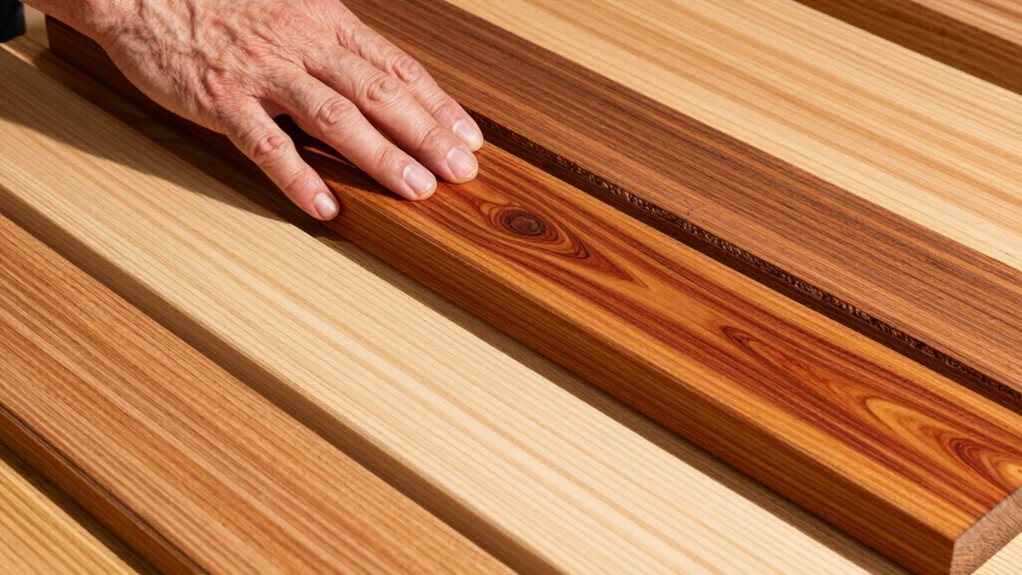
When choosing sauna wood, you’ll find that grain variations create unique visual interest, with options ranging from the tight knots of Nordic Spruce to the sleek consistency of Alder.
The natural aging process transforms wood colors over time, with untreated varieties developing authentic patinas while thermally modified woods maintain their rich tones longer.
Your sauna’s visual texture, whether featuring the rustic appeal of knotted cedar or the elegant simplicity of Thermo Aspen, will greatly affect the overall atmosphere and experience of your space.
Grain Variations Matter
The beauty of your sauna experience isn’t just about temperature and steam – it’s greatly influenced by the visual appeal of the wood surrounding you. Grain patterns create distinctive personalities for each wood type, affecting both aesthetics and functionality.
When selecting your sauna wood, consider these grain characteristics:
- Tight grain patterns in aspen and alder resist moisture while providing comfortable contact with your skin.
- Minimal grain in thermo aspen creates a uniform, elegant appearance with consistent coloring.
- Straight grain in spruce and radiata pine offers stability in humid conditions, preventing warping.
Fine-grained woods like alder deliver a luxury feel with their uniform texture, while thermal modification improves natural patterns in radiata pine, emphasizing its texture for modern designs.
Your choice of grain will define your sauna’s visual signature for years to come.
Natural Color Aging
Beyond the intricacies of grain patterns lies another fascinating aspect of sauna woods—their natural color evolution over time. Each wood type tells its own aging story, with Western Red Cedar evolving from rich reddish-brown to a distinguished silver-gray patina.
You’ll find Aspen starts lighter and maintains its appeal longer in residential saunas, while resisting resin secretion better than cedar in commercial settings.
Alder develops a beautiful reddish-brown character with a subtle honey scent as it ages.
Hemlock and Pine vary in their weathering patterns, with thermal treatments extending color stability for decades.
You can slow the aging process with oils like paraffin or tung oil, applied every 6-12 months.
For outdoor saunas, choose UV-protected treatments to preserve that natural luster against sun damage.
Visual Texture Considerations
Visual appeal stands at the forefront of sauna wood selection, where colors and grain patterns create the atmosphere you’ll enjoy for years to come.
Consider how different woods transform your space – from light-colored Nordic Spruce with small knots that create an authentic Scandinavian feel to the rich, reddish-brown luxury of Thermally Modified Alder.
When evaluating texture options, focus on:
- Color intensity – ranging from Aspen’s creamy paleness to Finnleo’s Black Taika’s dramatic charcoal tones
- Knot patterns – choose clear, uniform grains for modern aesthetics or knotty varieties for rustic charm
- Visual consistency – thermal modification creates even coloration, while natural woods offer more variation
The grain direction also impacts your sauna’s visual appeal, with vertical grain creating a sleek, elongated appearance that can make smaller spaces feel larger.
Maintenance Requirements Across Different Wood Types
Maintaining your sauna’s wood properly isn’t just about cleanliness—it’s essential for guaranteeing longevity and performance of your investment.
Different woods demand varying levels of care to stay in prime condition.
Cedar stands out as low-maintenance, with natural oils that resist decay, mold, and bacteria. You’ll only need gentle cleaning to preserve these protective qualities.
In contrast, pine benches require frequent washing as they readily absorb sweat. Thermowood offers excellent resistance to cracking and mold without much upkeep.
For any wood type, avoid pressure washers and flowing water that can damage the structure. Instead, use a damp cloth between sessions and apply breathable wood preservatives along the grain.
Best Woods for Different Sauna Environments and Uses
Selecting the right wood for your sauna depends greatly on where you’ll install it and how you plan to use it.
Indoor traditional saunas typically benefit from Nordic Spruce or Western Red Cedar, while outdoor models require the weather resistance of Cedar or Thermo Radiata Pine.
For different sauna types, consider these ideal pairings:
- Indoor Traditional – Western Red Cedar offers superior heat resistance and a pleasant aroma that improves your experience.
- Outdoor Barrel – Cedar excels with its natural moisture resistance and antibacterial oils that combat decay.
- Infrared – Basswood provides consistent performance with low resin content, making it ideal for the lower temperatures of infrared heating.
Your choice should balance durability requirements with aesthetic preferences and budget constraints for the best long-term satisfaction.
Frequently Asked Questions
How Often Should Sauna Wood Be Refinished or Resealed?
You’ll need to sand sauna wood annually and apply natural wood oil every 6-12 months. Check for warping yearly and reseal benches regularly with paraffin oil.
Can Different Wood Types Be Combined in One Sauna?
Yes, you can combine different wood types in one sauna for unique aesthetics and varied benefits. Cedar or Basswood trim works well with most panels, and all sauna-safe woods can be mixed.
Will Sauna Wood Scent Diminish Over Time With Regular Use?
Yes, your sauna wood’s scent will diminish over time with regular use as sweat and oils soak into the grain and heat cycles deplete natural aromatic compounds. You’ll need periodic maintenance.
How Does Wood Age Affect Infrared Heating Efficiency?
Wood aging doesn’t directly affect infrared heating efficiency. Your heater panels, not the wood, generate infrared radiation. However, well-maintained wood helps preserve overall sauna insulation and heat retention properties.
Are Sustainably Harvested Options Available for All Sauna Wood Types?
Yes, you’ll find sustainably harvested options for all major sauna wood types. Cedar, Hemlock, and various Thermo-treated woods are available from certified suppliers with responsible forestry practices.
Final Thoughts
You’ve now explored the best woods for your sauna project, each offering unique benefits. Whether you prioritize cedar’s aromatic qualities, thermally modified wood’s stability, or hemlock’s value, your choice will affect both performance and aesthetics. Remember to take into account your specific needs—humidity levels, allergies, and maintenance preferences. With proper selection and care, your sauna will provide years of relaxation and wellness benefits.