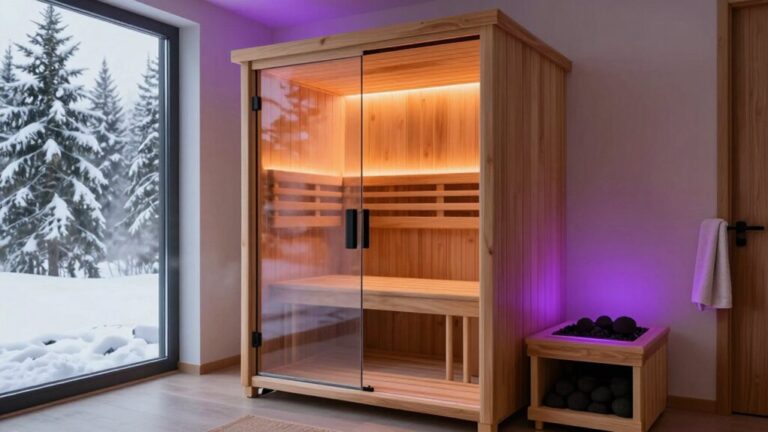
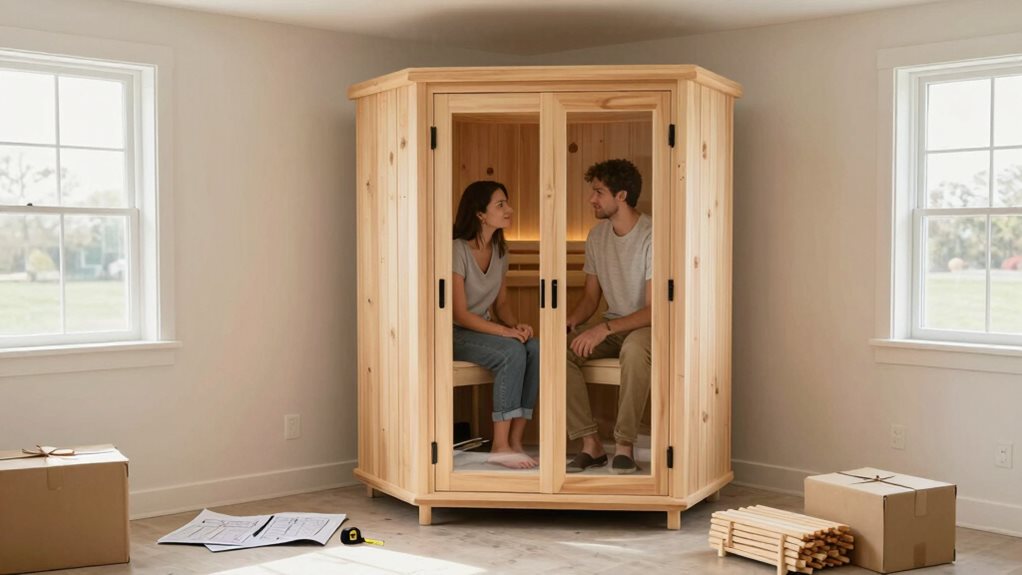

Before buying a home sauna kit, you’ll need to evaluate your available space (25-30 square feet minimum), heater type (electric for convenience or wood-burning for tradition), wood material (cedar for durability, hemlock for allergies), and budget ($1,100+ for basic models). Factor in installation costs, whether DIY or professional, and crucial safety features like proper ventilation and overheat protection. The right customization options can transform your sauna into a personalized wellness retreat.
Space Requirements and Size Selection
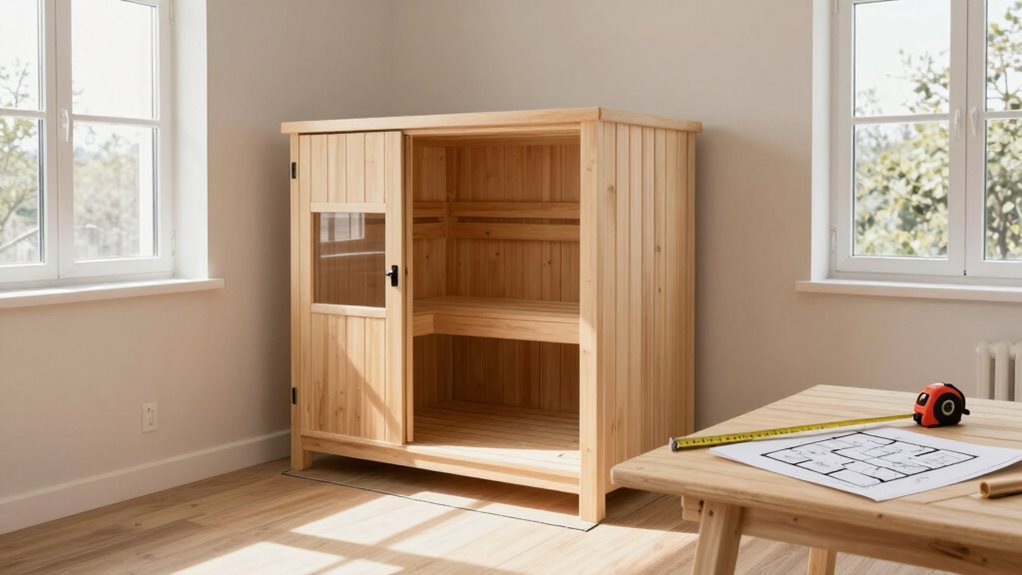
When choosing the right home sauna kit, understanding space requirements and size options is crucial to your overall satisfaction. Most compact saunas need at least 25-30 square feet of floor space, with a minimum dimension of 3’x3′ for single-person use.
For two people, you’ll want to evaluate models between 40″-60″ wide, while family-sized options for 3-4 users typically require a 5’x7′ footprint.
Remember to allow 6″ clearance on sides and back, plus 12″ overhead for proper ventilation. The door needs 32-36″ of swing space unless you opt for a space-saving sliding design. Experts recommend maintaining at least 24 inches of clearance in front of your sauna door to ensure comfortable and safe entry and exit.
Height matters too—aim for at least 7′ ceilings for comfortable airflow. Compact home saunas have the advantage of heating up faster than traditional models, typically reaching optimal temperature in just 10-15 minutes.
Square shapes distribute heat more evenly than long rectangles, making options like 6’x6′ or 5’x7′ ideal for most homes.
Electric vs. Wood-Burning Heater Options
After selecting the perfect size for your home sauna, you’ll face another important decision: choosing between electric and wood-burning heater systems.
Each offers distinct advantages that affect your sauna experience.
Electric heaters provide precise temperature control through thermostats or apps, creating steady, even heat. They heat quickly, reaching desired temperatures in 30–45 minutes compared to wood-burning options. Wood-burning stoves can reach higher temperatures of up to 240°F compared to electric heaters’ 200°F maximum.
Modern electric heaters deliver consistent warmth at the touch of a button, ensuring your sauna experience is perfectly calibrated every time.
They’re convenient but require professional 240V installation and may cost more to operate, especially in areas with high electricity rates.
Wood-burning stoves, meanwhile, heat up faster (20-30 minutes versus 45+ for electric) and cost less per session at $5-7 for firewood.
They create that authentic sauna atmosphere with crackling sounds and woody aromas that many enthusiasts love.
However, you’ll need proper venting, a chimney, and space to store firewood.
Your choice ultimately depends on your preference for convenience or tradition.
Wood Types and Their Benefits
Selecting the right wood for your home sauna isn’t just about aesthetics—it’s vital for creating the perfect sauna experience. Different woods offer unique benefits to improve your relaxation time.
Cedar remains a top choice, with Western Red Cedar providing excellent insulation, decay resistance, and a pleasant aroma.
If you’re sensitive to scents, consider Hemlock—it’s hypoallergenic, budget-friendly, and radiates heat evenly.
Nordic Spruce, used in 90% of worldwide saunas, delivers superior steam absorption and consistent temperatures, though it requires regular maintenance. It releases natural insect-repelling terpenes that enhance the overall sauna environment.
For those concerned about allergies, Aspen offers a non-toxic, lightweight option with subtle aroma and excellent moisture resistance.
Alder provides a comfortable touch with low heat conductivity, but you’ll need to protect it against pests with special treatments.
Pine can be a cost-effective option for budget-conscious sauna builders, though it’s important to note it’s less heat-resistant than other wood types.
Price Points and Budget Considerations

Before diving into your sauna purchase, understanding the various price points will help you match your dream sauna with your budget reality.
Smart sauna shopping starts with budget awareness—the bridge between your wellness dreams and financial reality.
Budget-friendly indoor kits start around $1,154 for a one-person model, while family-sized options range from $2,000-$2,400.
Mid-range saunas ($2,500-$6,500) offer notable upgrades like chromotherapy, better audio systems, and higher-quality woods with stronger warranties.
You’ll find these often include 240V heaters for more efficient heating.
Premium and custom models exceed $6,500, with many high-end options surpassing $10,000, especially for outdoor or barrel designs.
If you’re tight on space or budget, consider alternatives like the $699 infrared sauna blanket or the $449 SmartSteam Kit Pro.
Don’t forget to factor in installation costs—a dedicated circuit from a licensed electrician can add $500-$1,500 to your project.
DIY Installation vs. Professional Setup
When you’ve finally selected your perfect home sauna kit, you’ll face a crucial decision: tackle the installation yourself or hire professionals to do the job. The choice depends on your skills, time, and budget considerations.
If you’re handy with tools and enjoy projects, DIY installation offers considerable savings. However, professional setup brings expertise and efficiency that can’t be overlooked.
Consider these factors before deciding:
- Skill requirements – You’ll need basic carpentry skills, ability to handle insulation properly, and some electrical knowledge for DIY installation. For safety and optimal performance, you must correctly install a vapor barrier to protect your home’s structure from moisture damage.
- Time investment – DIY takes multiple days spread across various stages versus professional completion in less time.
- Risk assessment – Electrical and moisture issues can arise from improper installation. Always ensure your setup includes RCD protection for all circuits except possibly the sauna heater, as safety regulations require.
- Cost comparison – Weigh labor savings against potential tool purchases and mistake corrections.
Essential Features and Accessories
Your home sauna isn’t complete without crucial safety features like automatic shutoffs, temperature sensors, and proper ventilation systems that protect your health while you relax.
You’ll want to invest in wellness-enhancing accessories such as ergonomic benches, quality stones for steam generation, and lighting that creates the right atmosphere for your sauna sessions.
These components not just improve your sauna experience but also guarantee you’re getting the most therapeutic benefits from your investment.
Crucial Safety Components
Safety stands at the forefront of any home sauna purchase, with crucial components that protect both your health and property. When selecting your sauna kit, verify it includes proper electrical specifications requiring professional installation with a dedicated 220-240V circuit by a licensed electrician.
Four critical safety features to prioritize:
- Overheat protection with automatic shutoff to prevent fire hazards
- Proper ventilation paths to reduce moisture buildup and maintain air quality
- Heater guards or clearance zones to prevent accidental burns
- UL, ETL, or CE certified components that meet recognized safety standards
Don’t compromise on moisture-resistant flooring options like concrete, tile, or treated wood subfloors.
Wellness-Enhancing Add-ons
Modern sauna experiences extend far beyond basic heat therapy, with wellness-improving add-ons transforming your home unit into a complete health sanctuary.
You’ll find chromotherapy systems that use colored LED lights to improve your mood and relaxation while you bask in the heat. Aromatherapy options deliver vital oils through steam, supporting muscle relaxation and respiratory health.
For extensive benefits, consider full-spectrum infrared panels that penetrate deep tissue at lower temperatures, ideal if you’re sensitive to intense heat.
Many models now include audio entertainment systems with Bluetooth compatibility, letting you enjoy music while managing heat settings through digital controls.
Red light therapy, often integrated with infrared saunas, offers impressive benefits for skin rejuvenation and can even reduce dementia risk with regular use.
These add-ons create a customized wellness experience designed to your needs.
Frequently Asked Questions
How Much Will a Sauna Increase My Monthly Utility Bills?
You’ll see roughly $3-9 monthly increases for typical usage. Traditional saunas cost $9-12/month (4-9kW), while infrared models run $3-5/month (1-3.5kW). Local electricity rates affect your total.
Can Home Saunas Be Installed in Basement or Garage Spaces?
Yes, you can install home saunas in basements and garages. You’ll need proper ventilation, moisture control, level flooring, and adequate electrical capacity. Make sure you’ve got at least 7-foot ceilings.
Do Saunas Require Special Ventilation or Humidity Control Systems?
Yes, you’ll need proper ventilation with intake and exhaust vents for 4-8 air changes hourly. Indoor saunas require heat-resistant ducts connected to HVAC systems with vapor barriers.
How Often Does Sauna Wood Need Maintenance or Replacement?
You’ll need to maintain your sauna wood annually with sanding and oiling. High-use areas require yearly treatment, while walls need care every 2-3 years. Complete replacement is rarely necessary with proper maintenance.
Are There Health Conditions That Make Sauna Use Unsafe?
Yes, you shouldn’t use saunas with cardiovascular issues, respiratory disorders, epilepsy, multiple sclerosis, open wounds, pregnancy, or if you’re taking certain medications like blood thinners or diuretics.
Final Thoughts
You’re now equipped to make an informed sauna kit decision that fits your space, budget, and needs. Whether you choose an electric model for convenience or a wood-burning option for authenticity, the right wood type and features will improve your experience. Remember, proper installation is essential for safety and longevity. With careful planning, you’ll soon be enjoying the health benefits of your own home sauna retreat.