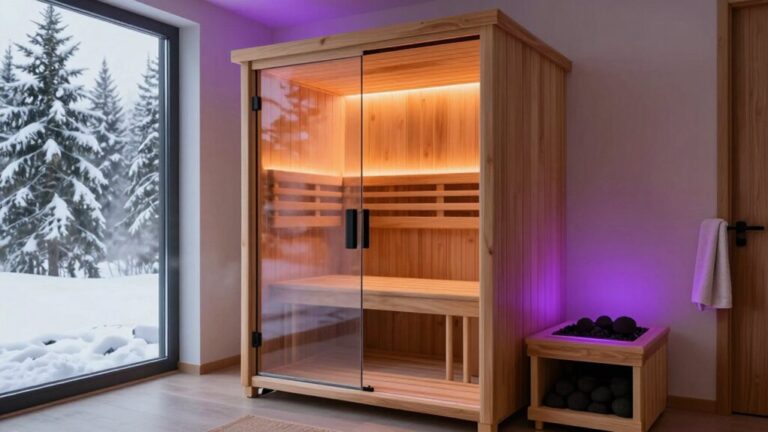
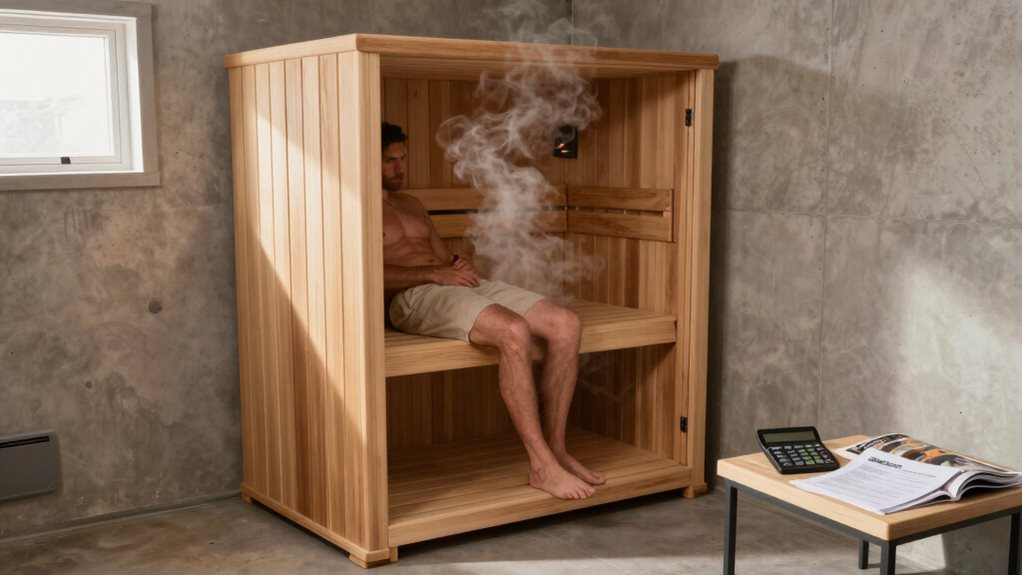

A home sauna isn’t just a luxury—it’s a smart investment that can boost your property value by $4,000-$20,000 while reducing your time on the market by 10-20%. You’ll enjoy considerable health benefits, including 47% reduced hypertension risk with regular use. Choose infrared models for lower energy costs ($10-20 monthly) or traditional options for authentic experiences. With financing options available and the market growing at 6-7% annually, your wellness investment pays dividends beyond dollars.
The Rising Popularity of Home Saunas: Market Growth Trends
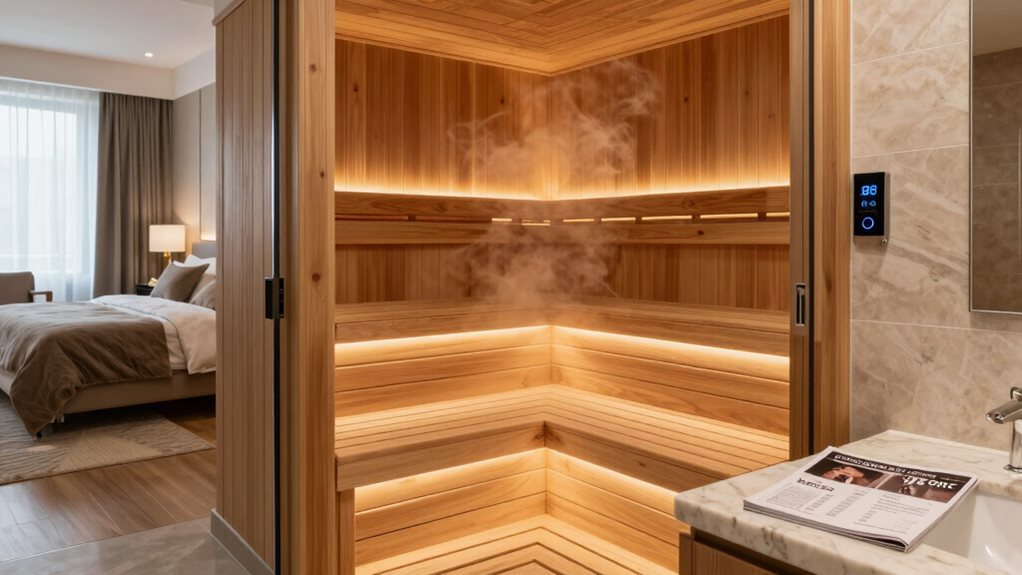
As wellness becomes increasingly central to modern lifestyles, the home sauna market is experiencing remarkable growth worldwide.
You’ll find the global market is projected to reach $2,500 million by 2025, with impressive annual growth rates between 6.3% and 7.4% continuing through 2033.
This surge isn’t happening by accident. More people like you’re recognizing the health benefits of saunas, including stress reduction and detoxification.
With rising disposable incomes, many homeowners are prioritizing self-care within their own walls rather than relying on external facilities.
North America and Europe currently lead the market due to established wellness cultures, but don’t overlook Asia Pacific, where urbanization and a growing middle class are creating new opportunities for market expansion.
Financial Investment Analysis: Costs vs. Benefits
Investing in a home sauna represents both a notable upfront cost and a long-term wellness strategy for homeowners.
Adding a sauna to your home balances immediate investment with lasting health benefits that pay dividends for years.
You’ll initially spend between $2,500 and $8,500 for most models, with infrared options starting around $1,000 and traditional units beginning at $2,000.
Your ongoing costs will vary greatly by type. Infrared saunas run efficiently at $10-$30 monthly, while traditional models consume more energy at $25-$35 per month. Regular use of two to three sessions per week is ideal for achieving cardiovascular health benefits without excessive utility costs.
Don’t forget installation expenses, which can add $500-$1,200 for traditional saunas requiring electrical upgrades.
The smart money is on quality construction with non-toxic materials. Cheaper units often fail within 2-5 years, forcing you to buy twice.
When you consider that a good sauna eliminates spa membership costs and lasts decades, the investment becomes much more appealing.
Home Value Enhancement: ROI and Resale Considerations
You’ll see your sauna investment reflected in your home’s resale value, with well-installed models potentially boosting your asking price immediately.
Your property’s appeal increases substantially in markets where wellness features are in high demand, particularly in colder climates or among younger, health-conscious buyers.
Beyond the aesthetic and lifestyle benefits, energy-efficient infrared saunas that use 30-50% less power can attract cost-conscious buyers who value both luxury and sustainability.
Immediate Equity Boost
Adding a sauna to your home delivers an immediate boost to your property’s equity, making it a smart investment beyond just the wellness benefits.
You’ll typically see a $4,000 to $20,000 increase in your home’s value, depending on the quality and type of installation you choose. Custom saunas yield the highest returns, often recouping 60-80% of your initial investment.
Your property won’t just be worth more—it’ll sell faster too. Homes with saunas spend 10-20% less time on the market, particularly in luxury segments.
Today’s health-conscious buyers are willing to pay premium prices for wellness features, especially in mid-to-upper-tier properties.
With the global sauna market projected to reach $5.6 billion by 2031, your investment is likely to appreciate even further in coming years.
The long-term value is enhanced by the superior construction techniques found in custom builds, which typically last 15-25 years compared to prefabricated options.
Buyer Appeal Premium
When selecting a home with a sauna, today’s buyers are increasingly willing to pay a premium, reflecting the growing market value of wellness features in residential properties.
This trend is particularly strong in North America, where the residential sauna market is projected to grow at 5-7% annually over the next decade.
Your sauna becomes most valuable to potential buyers when you:
- Match local preferences – Install types and styles that appeal to your specific real estate market
- Target the right demographics – Highlight benefits for wellness-focused, luxury, or athletic buyers
- Maintain documentation – Keep warranty information, professional installation records, and maintenance history
While you shouldn’t expect to recoup 100% of costs, a quality sauna installation can potentially add thousands to your home’s value, especially in luxury markets where spa-like amenities create meaningful differentiation.
Energy Efficiency Value
Three critical factors determine how your sauna’s energy efficiency impacts home value: technology type, insulation quality, and operating costs.
Infrared models, which dominate 45% of the market, use one-third the electricity of traditional saunas while heating up faster. This translates to considerable savings—only 120 kWh monthly versus 225-270 kWh for traditional models. Proper heater selection can significantly affect long-term energy expenses for homeowners.
Quality insulation makes a dramatic difference, with well-insulated saunas performing 30% more efficiently. Initial heating phase typically lasts 30-40 minutes at full power before reducing to maintain temperature.
When showing your home to potential buyers, highlight these savings: at $0.17/kWh, a traditional sauna session costs $1.00-$1.50, while infrared sessions cost substantially less.
Smart features like Harvia’s thermostats and consumption-tracking apps add contemporary appeal while demonstrating your sauna’s efficiency.
As the sauna market grows at 6.3% annually, energy-efficient models increasingly attract eco-conscious and budget-minded buyers.
Health and Wellness Returns: Beyond Monetary Value

Investing in a home sauna delivers remarkable health benefits that far exceed its monetary value. When you step into your sauna regularly, you’re not merely enjoying a pleasant experience—you’re making a considerable investment in your long-term health and wellness.
Consider these powerful health returns:
- Heart health protection – Regular sauna use (4-7 times weekly) can reduce your risk of hypertension by 47% and stroke risk by up to 62% compared to once-weekly use.
- Natural pain relief – The heat increases blood flow to sore muscles and joints, easing chronic pain and improving mobility, especially for back pain and arthritis.
- Mental wellness boost – Your sauna sessions trigger the release of feel-good endorphins, reducing stress and potentially lowering your risk of dementia by more than 60%. For safety and optimal results, always limit your sauna sessions to 15-20 minutes and properly rehydrate afterward. Different options like infrared saunas operate at lower temperatures between 110-135°F while providing effective therapeutic benefits.
Energy Efficiency and Operating Expenses
Your sauna’s operating expenses will largely depend on the type you choose, with infrared models costing around $15 monthly versus traditional models at $27 for similar usage patterns.
When calculating long-term costs, consider that traditional saunas consume nearly twice the electricity of infrared options, making energy efficiency an important factor in your investment decision.
You’ll find additional savings by implementing simple strategies like proper insulation, scheduling back-to-back sessions, and using timers to control preheating, which typically accounts for 60-70% of total electricity consumption.
Energy Bills Compared
When considering a home sauna investment, understanding the energy cost implications can greatly impact your long-term satisfaction and budget planning.
The type of sauna you choose dramatically affects your monthly electricity bills.
Here’s how the options compare:
- Traditional saunas consume 6-13 kWh per hour, adding $8-30+ to monthly bills with regular use (at average U.S. electricity rates).
- Infrared saunas use 1-4 kWh per hour, typically adding just $10-20 to monthly bills – about 75% less than traditional models.
- Portable or 1-person units draw only 1.0-1.5 kW, making them the most economical choice for budget-conscious sauna users.
Remember that insulation quality, outdoor versus indoor installation, and session frequency all impact your actual costs.
Back-to-back sessions are more efficient than spreading them throughout the week.
A 2-person infrared sauna offers an optimal balance of space and efficiency with 2.0 kW per hour consumption.
Long-term Savings Analysis
Looking beyond monthly utility costs reveals a more complete picture of sauna ownership expenses. Your annual maintenance will typically run about $250, with infrared models costing less ($100-$250) than traditional ($150-$350) or hybrid saunas ($200-$400).
Indoor saunas generally require less upkeep than outdoor ones, which need additional weatherproofing and foundation adjustments.
You’ll spend about $100 yearly on routine maintenance for electric models, plus $50-$100 for cleaning supplies to prevent bacteria buildup.
Component replacements represent predictable expenses: $50-$150 for heater inspections, $60-$180 for ventilation work, and $20-$100 for stones or bulbs.
Well-insulated designs with timers greatly reduce energy consumption over time. When properly maintained, your sauna’s efficiency remains high and unexpected repair costs stay low, adding only about $6 monthly to your budget.
Traditional vs. Infrared Saunas: Comparing Long-term Value
Choosing between traditional and infrared saunas represents a considerable investment decision with long-term implications for your home wellness space.
When evaluating which option offers better value over time, you’ll need to reflect on both upfront costs and ongoing expenses. Infrared models typically deliver greater energy efficiency, requiring less electricity and warming up in just 15-20 minutes compared to the 30-60 minutes traditional saunas need.
For your decision-making process, contemplate these key value factors:
- Installation simplicity – Infrared units arrive pre-assembled with plug-and-play setup, while traditional saunas need complex ventilation and heating systems.
- Maintenance requirements – Traditional saunas demand regular rock and heater care, while infrared units need minimal upkeep.
- Space efficiency – Infrared models fit into smaller spaces, making them more versatile for most homes.
Overcoming Initial Cost Barriers: Financing and Alternatives
Despite the substantial upfront investment of $2,000 to $10,000 for home saunas, you don’t need to let sticker shock prevent you from enjoying the wellness benefits of sauna ownership.
Multiple financing options make this wellness investment more accessible. Many sauna retailers partner with financing companies like Affirm, Klarna, and Bread to offer payment plans ranging from 12 to 36 months.
You’ll find interest rates from 0% to 29.99% APR, depending on your credit score. For example, a $1,000 purchase at 9.99% APR would cost about $32.26 monthly for three years.
If financing through retailers doesn’t suit you, consider alternatives like personal loans offering up to $100,000, traditional bank loans with fixed rates, or even credit cards for immediate purchases with reward benefits.
Future-Proofing Your Investment: Technology and Market Projections
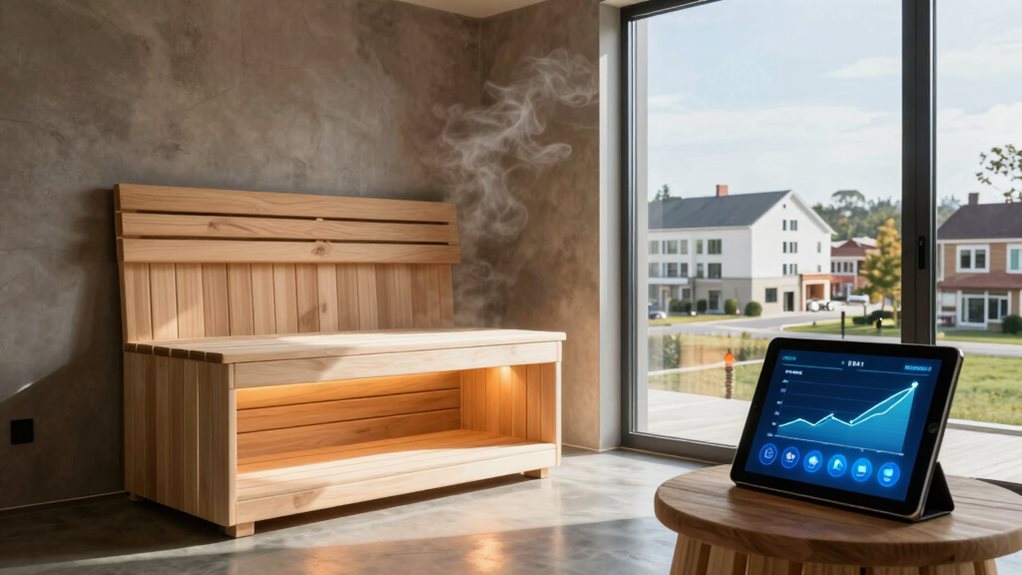
When you invest in a home sauna today, you’re not merely buying current technology—you’re stepping into an evolving wellness revolution.
The sauna market is rapidly advancing with smart features and sustainable designs that guarantee your purchase remains relevant for years to come.
The most future-proof sauna technologies include:
- Smart connectivity with app integration and voice commands, allowing you to control temperature and humidity remotely
- Hybrid heating systems that combine traditional and infrared technology, offering versatile wellness benefits
- Sustainable designs like Solaris, TIME’s Best Invention 2025, which operates completely off-grid with solar power
With industry reports showing a 30% surge in demand for efficient heating systems, your home sauna investment aligns with market trends while providing lasting health benefits and potential property value improvement.
Frequently Asked Questions
How Does Climate Affect Sauna Installation and Maintenance Requirements?
Your climate determines foundation requirements, insulation needs, ventilation design, and heater sizing. You’ll need frost protection in cold regions, moisture resistance in humid areas, and corrosion-resistant materials in coastal zones.
Are There Zoning or Permit Restrictions for Installing Home Saunas?
Yes, you’ll need building permits, electrical permits, and must comply with zoning laws regarding setbacks, size limits, and placement. HOA rules may impose additional restrictions on your sauna installation.
What Safety Features Should I Prioritize When Selecting a Sauna?
Prioritize temperature controls with automatic shut-offs, proper ventilation systems, emergency exits, non-slip flooring, and quality materials that resist moisture. Don’t forget visible thermometers and accessible emergency call buttons.
How Do Saunas Affect Home Insurance Premiums and Coverage?
Your sauna will increase premiums due to fire and liability risks. You’ll need to notify your insurer before installation, or you’ll face coverage limitations for sauna-related damage and injuries.
Can Saunas Be Installed in Small Spaces or Apartments?
Yes, you can install compact infrared saunas in apartments using just 25-30 square feet. They fit in closets, bathrooms, or bedroom corners and only need a standard outlet.
Final Thoughts
You’ve now got all the information you need to make a smart decision about a home sauna. Whether you choose traditional or infrared, this investment can boost your property value while delivering daily health benefits. Though the upfront costs might seem high, the long-term wellness returns and potential energy savings make it worthwhile for many homeowners. Consider your space, budget, and health goals to determine if a sauna is right for you.