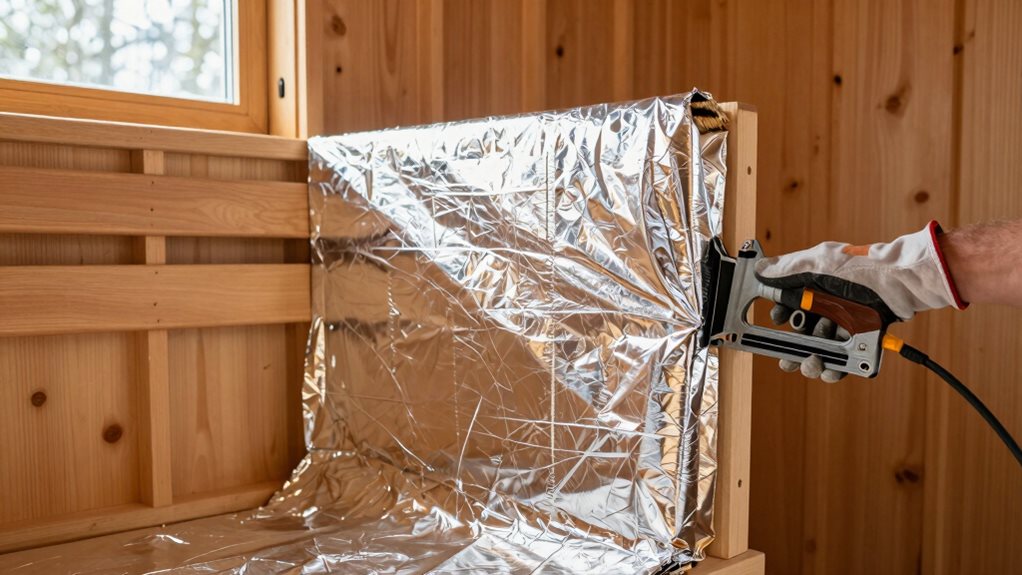

For ideal sauna insulation, choose moisture-resistant materials like mineral wool (R-13 to R-19 for walls, R-22 to R-30 for ceilings). Install a reflective foil vapor barrier on the warm side, facing inward, with 6-inch overlapping seams sealed using aluminum tape. Proper insulation creates faster warm-ups, consistent temperatures, and lower energy costs while protecting your structure from moisture damage. The right thermal envelope makes all the difference between an average and exceptional sauna experience.
Understanding Sauna Insulation Materials and Their Properties
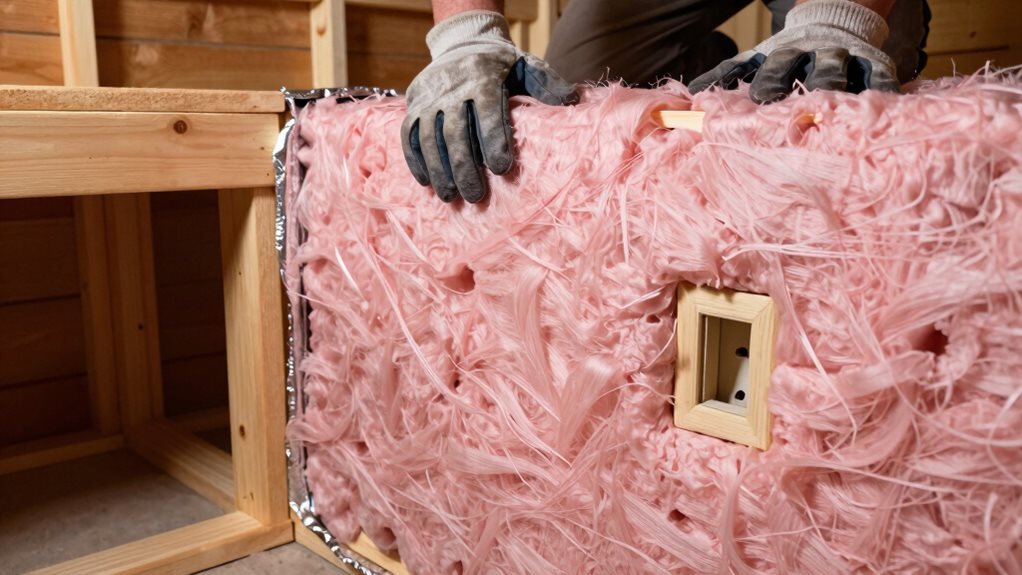
When selecting materials for your sauna’s insulation, understanding the properties of each option will help you make the best choice for your specific needs.
Mineral wool offers excellent fire resistance up to 2,000°F and works well for sound dampening, making it popular in European saunas.
Fiberglass is lightweight and easy to install, though it can lose effectiveness if it absorbs humidity over time.
For improved performance, consider adding reflective foil, which bounces heat back into your sauna while creating a vapor barrier.
If you’re environmentally conscious, natural options like sheep’s wool and hemp provide good insulation while regulating moisture naturally.
Cellulose insulation made from recycled paper delivers excellent thermal performance while providing additional soundproofing benefits for your sauna space.
For maximum insulation value, polyisocyanurate boards offer an impressive R-value of 6.0-6.5 per inch, though they’re pricier and require temperature rating verification.
Proper installation with a minimum thickness of 4-6 inches ensures optimal heat retention and energy efficiency in your sauna.
Essential Ceiling Insulation Techniques for Maximum Heat Retention
The heat in your sauna naturally rises, making your ceiling the most critical area for proper insulation. For maximum efficiency, aim for R-values between R-22 and R-30, using materials that can withstand high temperatures and moisture.
Heat rises! Insulate your sauna ceiling properly with R-22 to R-30 materials that can handle intense heat and moisture.
Always install a continuous foil vapor barrier on the warm side, taping all seams with high-temperature aluminum tape. This reflective barrier will redirect radiant heat back into your sauna space while preventing moisture damage. Installing effective thermal containment ensures your sauna maintains consistent temperatures throughout your session.
- Double your ceiling insulation thickness compared to walls (4-8 inches vs. 2-4 inches) to trap the rising heat that would otherwise escape!
- Choose mineral wool or rockwool for superior moisture and heat resistance that won’t degrade over time!
- Avoid compression of insulation materials which creates thermal bridges and reduces effectiveness!
- Seal every penetration and junction to prevent moisture from entering and causing rot!
Wall Insulation Strategies for Different Sauna Types
Your sauna’s walls need different insulation materials based on whether you’re building a traditional or infrared model, with each material requiring specific seam sealing techniques for maximum heat retention.
For traditional saunas, mineral wool or fiberglass paired with aluminum foil vapor barriers works best, while infrared saunas benefit from foil-faced insulation that reflects heat back toward users.
You’ll need to carefully seal all seams with high-temperature aluminum tape, guaranteeing there are no gaps where heat can escape or moisture can penetrate the wall structure. Barrel saunas require more flexible insulation materials due to their curved design and may need custom-cut panels to achieve proper coverage.
Material-Type Pairings
Selecting the right insulation materials for different sauna types isn’t just about R-values—it’s about creating effective pairings that address each sauna’s unique environment.
When designing your sauna, match materials with specific locations for maximum efficiency.
- Rock or glass wool (R-value 3.0-3.5 per inch) pairs perfectly with outdoor stud walls, offering fire resistance and moisture protection—you’ll feel safer knowing it withstands temperatures up to 2150°F.
- Fiberglass (minimum R-11 walls) works best for indoor saunas when combined with a foil vapor barrier—your wallet will thank you!
- Foil-faced insulation reflects heat back into small infrared saunas—imagine all that warmth bouncing back to you!
- Natural fibers provide eco-friendly options for moderate-use saunas—breathe easier knowing you’ve chosen sustainable materials. For high-efficiency installations, consider adding a 100mm thickness of mineral wool to achieve optimal thermal performance.
Seam Sealing Techniques
Properly sealing the seams of your sauna’s insulation creates an impenetrable thermal envelope, which dramatically improves heat retention and prevents moisture damage.
When working with aluminum vapor barriers, overlap all seams and secure them with heat-resistant tape, pressing firmly for a tight seal. For optimal moisture management, use only pure aluminum radiant barriers and avoid plastic bubble wrap varieties that can trap moisture leading to wall damage.
For foil-backed insulation, fasten the overlaps between wooden strips to create solid connections.
Don’t forget to pay special attention to corners and ceiling-wall joints—these vulnerable areas need 8-inch wide tape strips for complete protection.
If you’re using rigid foam boards, fill any gaps with spray foam before taping seams.
With foil bubble wrap, always tape where sheets meet over studs.
Vapor Barrier Installation: A Critical Component for Longevity
Although often overlooked during sauna construction, the vapor barrier stands as one of the most critical components for confirming your sauna’s structural integrity and longevity.
Neglect the vapor barrier at your peril—this unsung hero safeguards your sauna’s structure for years to come.
You’ll want to install professional-grade aluminum foil on the warm side of your sauna walls and ceiling, with the reflective side facing inward. This installation method adds 1R insulation efficiency by reflecting heat back into the sauna room. The vapor barrier regulates water diffusion, preventing condensation that could damage your structure. Choose 54-inch rolls for better coverage, and always avoid plastic barriers that can deteriorate in high heat.
For proper installation, follow these critical steps:
- Confirm walls are completely dry before applying your vapor barrier
- Overlap seams by at least 6 inches for an effective moisture seal
- Secure with minimal staples (just 3 for a 4-foot section)
- Seal all joints with high-temperature foil tape, leaving no open seams
Traditional vs. Infrared Sauna Insulation Requirements
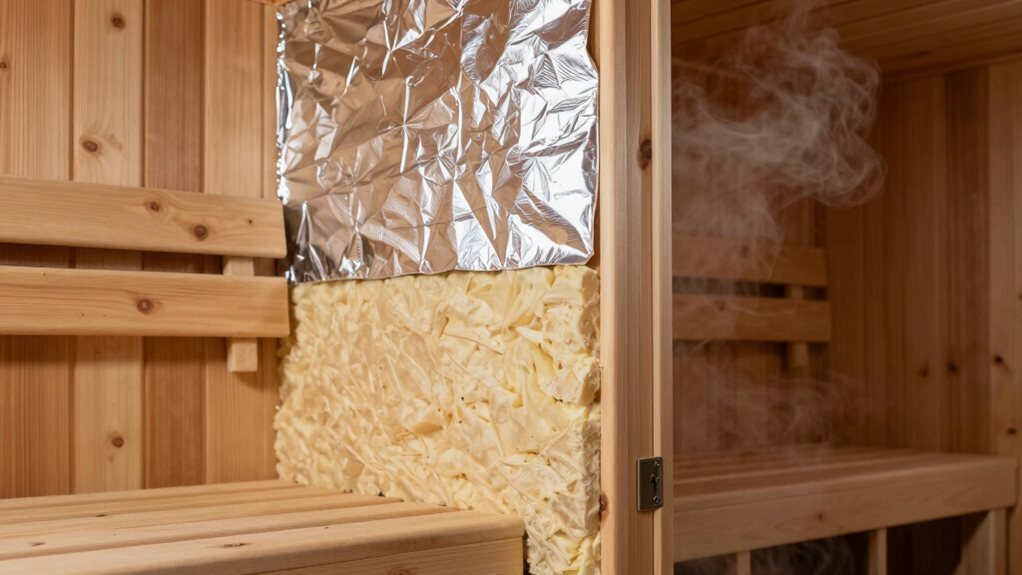
Your traditional and infrared sauna will need dramatically different insulation approaches to maximize their heat efficiency.
Traditional saunas require thicker insulation (4-6 inches) with high R-values because they heat the entire air space, while infrared saunas can use thinner, reflective materials since they directly warm your body instead of the surrounding air.
You’ll want to match your insulation strategy to your sauna type—using mineral wool or fiberglass with proper vapor barriers for traditional builds, or reflective foil-faced materials for infrared cabins. For traditional saunas, installing a paper-backed aluminum barrier provides additional structural support and helps reflect radiant heat back into the sauna space.
Heat Retention Differences
The fundamental difference in heat retention between traditional and infrared saunas stems from their operating temperatures and heating methods.
While traditional saunas operate at 150°F-195°F and heat the entire air mass, infrared units run cooler at 120°F-140°F and directly warm your body instead of the air.
- Your traditional sauna’s higher temperature (up to 195°F!) creates greater heat loss through walls and ceiling, making quality insulation essential for your comfort and wallet.
- Your infrared sauna uses about 1.6kW of electricity compared to traditional sauna’s 4-6kW, saving you money on every session.
- When you insulate properly, your traditional sauna’s heat-storing benches and rocks maintain temperature between uses.
- Your sauna’s insulation quality directly affects warm-up time, so better insulation means less waiting before you can relax!
Distinct Material Needs
When choosing insulation materials for your sauna, understanding the distinct requirements of traditional versus infrared models becomes crucial for ideal performance and longevity.
Traditional saunas, reaching temperatures up to 200°F, need highly heat-resistant materials like mineral wool with its impressive 2150°F melting point and R-value of 2.8 for a 4-inch layer. You’ll want non-flammable options that won’t off-gas in extreme heat.
Infrared saunas, operating at lower temperatures, work well with standard fiberglass insulation (minimum R11 for walls, R13 for ceilings).
Both types require proper vapor barriers, typically aluminum foil that reflects heat while blocking moisture. While foam insulations are usable, they’re not ideal choices due to potential off-gassing concerns.
Measuring Insulation Performance: R-Values and Energy Efficiency
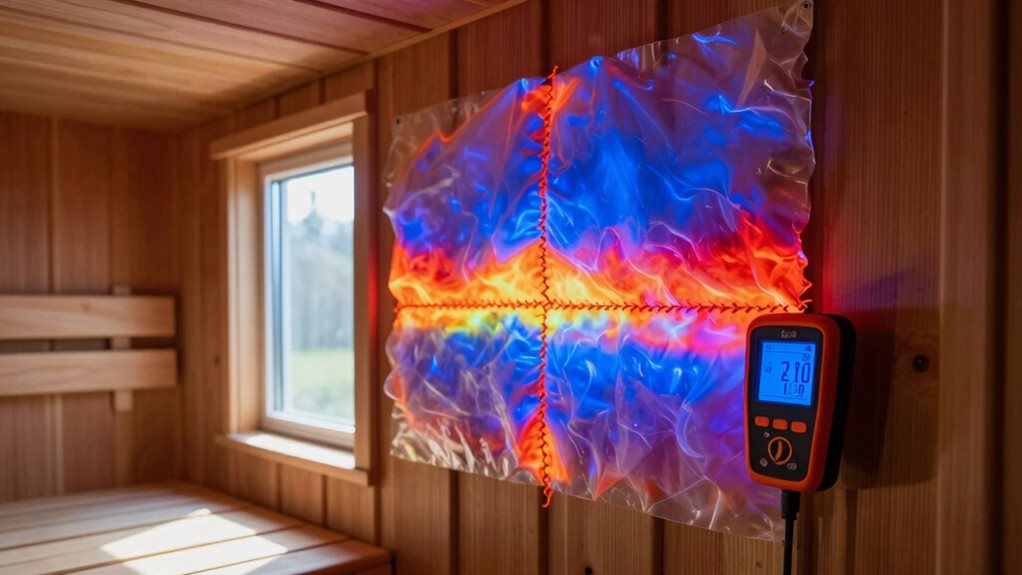
Understanding insulation performance becomes critical when designing an efficient sauna that retains heat while minimizing energy costs.
R-values measure how well materials resist heat flow, with higher numbers indicating better insulation. For sauna walls, aim for R-13 to R-19, while ceilings need R-26 to R-30 since heat rises.
- Save money! Proper insulation can reduce your energy costs by preventing thousands of BTUs from escaping hourly.
- Enjoy faster warm-ups! Well-insulated saunas reach temperature quicker, giving you more relaxation time.
- Protect your investment! Moisture-resistant insulation with proper vapor barriers prevents rot and extends sauna life.
- Feel consistent heat! Good insulation maintains even temperatures throughout your sauna session, improving the experience.
Frequently Asked Questions
How Does Insulation Affect Sauna Heat-Up Time?
Good insulation cuts your sauna’s heat-up time dramatically by trapping warmth, preventing cold air infiltration, and reducing energy waste. You’ll enjoy your sauna faster with proper thermal barriers.
Can I Reinsulate My Existing Sauna Without Complete Rebuilding?
Yes, you can reinsulate your existing sauna by accessing wall cavities through removable panels. Simply remove interior cladding, install new insulation with foil vapor barrier, then reassemble the panels.
Does Insulation Impact the Authentic Sauna Experience?
Yes, insulation affects your experience. While it improves efficiency, traditional saunas rely on thermal mass for that “soft heat” feel. You’ll need thicker wood cladding to replicate authentic sensation in insulated builds.
How Frequently Should Sauna Insulation Be Inspected or Replaced?
Inspect your sauna insulation annually for moisture damage or gaps. You’ll need to replace it every 10-15 years, or sooner if you notice declining heat retention or visible deterioration.
Are There Eco-Friendly Insulation Alternatives for Health-Conscious Sauna Owners?
You’ll find sheep’s wool, hempcrete, cellulose, and cork insulation excellent eco-friendly options. They’re non-toxic, moisture-regulating, and energy-efficient—perfect for health-conscious sauna owners seeking sustainable alternatives.
Final Thoughts
You’ve now learned how proper insulation transforms your sauna experience. By selecting appropriate materials, installing effective ceiling and wall insulation, and adding a proper vapor barrier, you’ll create a space that retains heat efficiently. Whether you’ve chosen a traditional or infrared sauna, understanding R-values helps you measure your success. Your well-insulated sauna will provide years of enjoyment while saving energy costs. Time to enjoy the perfect sweat!