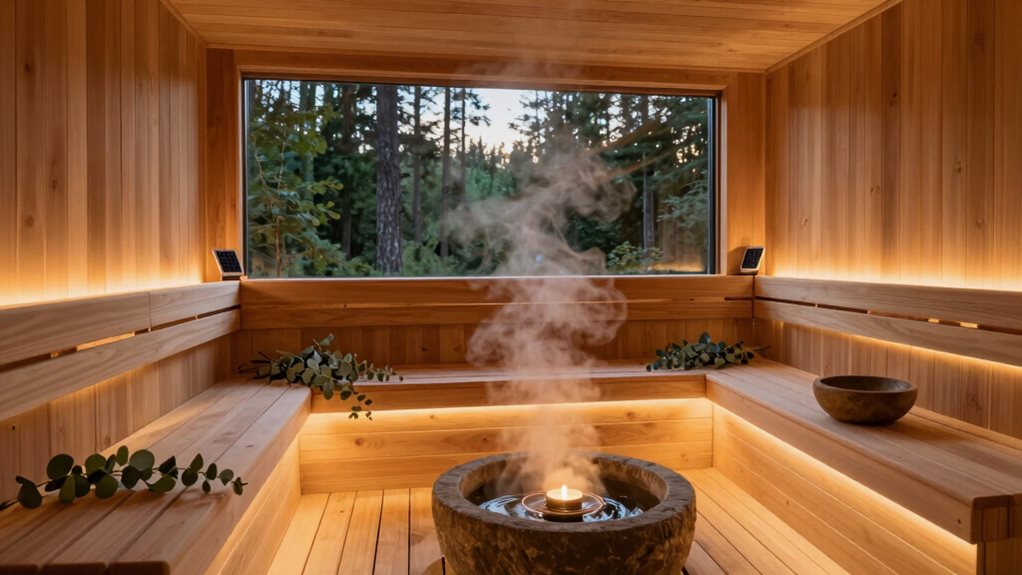

Modern spa and sauna lighting now blends sustainability with wellness benefits. You’ll find energy-efficient LEDs that save 75-90% on power while offering therapeutic advantages like chromotherapy, where specific colors promote relaxation and healing. Smart control systems allow customized lighting scenes while automatically conserving energy. However, you’ll face challenges like selecting moisture-resistant fixtures and proper installation in humid environments. The initial investment pays off through lower energy bills, extended lifespans, and improved guest experiences.
LED Technology: Energy Efficiency Meets Therapeutic Benefits
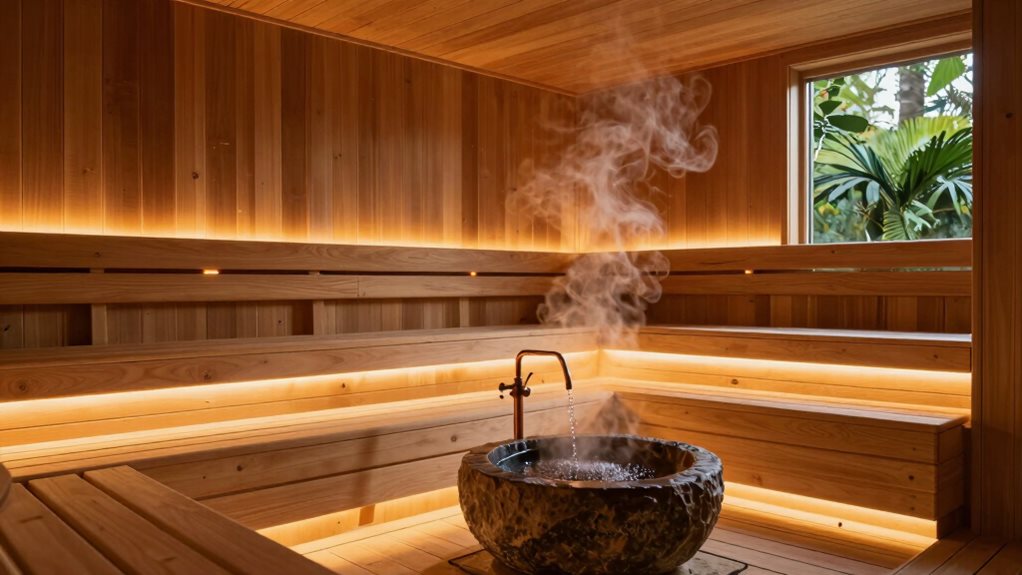
While traditional sauna lighting has often been an afterthought, LED technology is revolutionizing how we experience these therapeutic spaces.
You’ll enjoy 75-90% energy savings when you switch to LEDs in your sauna, all while benefiting from their remarkable heat resistance in temperatures up to 130°F.
These innovative lights don’t just save money; they’re transforming wellness experiences too.
Blue LEDs reduce inflammation and fight bacteria, while red light therapy boosts circulation and improves your skin’s natural glow. Near-infrared LED therapy at specific intensities enhances your mood and even lowers heart rate.
The best part? You’ll never worry about burns or skin damage since LEDs eliminate the hazards of conventional lighting.
With their extended lifespan in demanding conditions, you’re making a smart, sustainable choice for your wellness routine.
Chromotherapy: The Science of Color Healing in Spa Environments
Colors can powerfully influence your wellness through specific wavelengths that affect both your mind and body, making chromotherapy a natural fit for eco-friendly spa designs.
You’ll notice thoughtful integration of colored lighting in modern spas, where programmable LEDs create therapeutic environments that shift from energizing reds in morning sessions to calming blues for evening relaxation.
When combined with natural elements like water features or fundamental oil diffusers, chromotherapy creates a multi-sensory experience that improves your treatment’s effectiveness while maintaining energy efficiency.
Color Impacts Wellness Science
Although the scientific community remains divided on chromotherapy’s efficacy, understanding how colored light influences our wellbeing can help you make informed decisions for your spa environment.
Colors work through multiple pathways – some scientifically validated, others less so. Blue light affects your circadian rhythm and can alter alertness, while red and orange tones might make your sauna feel warmer through psychological association. These effects happen through your eyes’ photoreceptors and learned color associations, not through mysterious “color energies.”
When designing your space, consider that green typically promotes relaxation, while yellow may improve mental clarity.
Lighting Integration Methods
Integrating chromotherapy lighting into your spa or sauna involves both technical expertise and thoughtful design considerations to maximize wellness benefits.
You’ll want to select narrow-band LEDs that deliver specific therapeutic wavelengths without generating excess heat, perfect for sauna environments. RGBW fixtures offer versatility, allowing you to create customized color programs across the full visible spectrum. Each color produces distinct therapeutic effects that can be tailored to client needs, from energizing red light to calming blue tones.
For effective implementation, consider programmable controllers with preset protocols that guarantee consistent, reproducible sessions for your clients. These systems can be synchronized with other spa elements through DMX or wireless technologies.
Remember that all fixtures must be waterproof and IP-rated to withstand high-humidity environments.
When designing your setup, balance therapeutic efficacy with safety by including exposure limits, particularly for blue wavelengths that might affect melatonin production or cause eye strain if overused. Research strongly suggests implementing green light options for clients seeking natural pain relief benefits.
Multi-Sensory Experience Design
Light therapy’s ancient wisdom meets modern science in chromotherapy, transforming ordinary spa visits into profound healing adventures.
You’ll notice specific colors trigger distinct physiological and psychological responses – red wavelengths stimulate and energize, while blue tones promote calmness and relaxation.
When you visit a chromotherapy-augmented spa, you’re experiencing carefully calibrated light environments designed to work alongside other treatments.
The blue lighting in relaxation areas isn’t just aesthetic; it’s actually helping lower your heart rate and blood pressure.
Meanwhile, red and near-infrared panels support tissue repair and healing during recovery sessions.
Modern spas often integrate customizable LED systems, allowing you to select your preferred color sequence.
This personalization improves your overall experience and creates a multi-sensory expedition that combines visual stimulation with other therapeutic elements like aromatherapy and guided breathing.
Sustainable Material Selection for Fixture Construction
When selecting materials for your eco-friendly spa and sauna lighting fixtures, sustainability should be a top priority alongside durability.
Choose recycled aluminum or post-consumer plastics for fixture frames to greatly reduce embodied carbon compared to virgin materials. For high-heat environments, opt for glass fiber optics that withstand extreme sauna temperatures better than standard plastics.
Look for fixtures with FSC-certified wood trim or recycled glass components to lower environmental impact.
Stainless steel (AISI 316 or 304) provides excellent corrosion resistance in humid conditions while being recyclable.
Select products with powder-coated finishes instead of solvent-based paints to minimize VOC emissions.
The best eco-friendly fixtures also feature modular designs that you can easily repair rather than replace, extending their lifespan and reducing waste.
Smart Controls: Balancing Automation With Energy Conservation
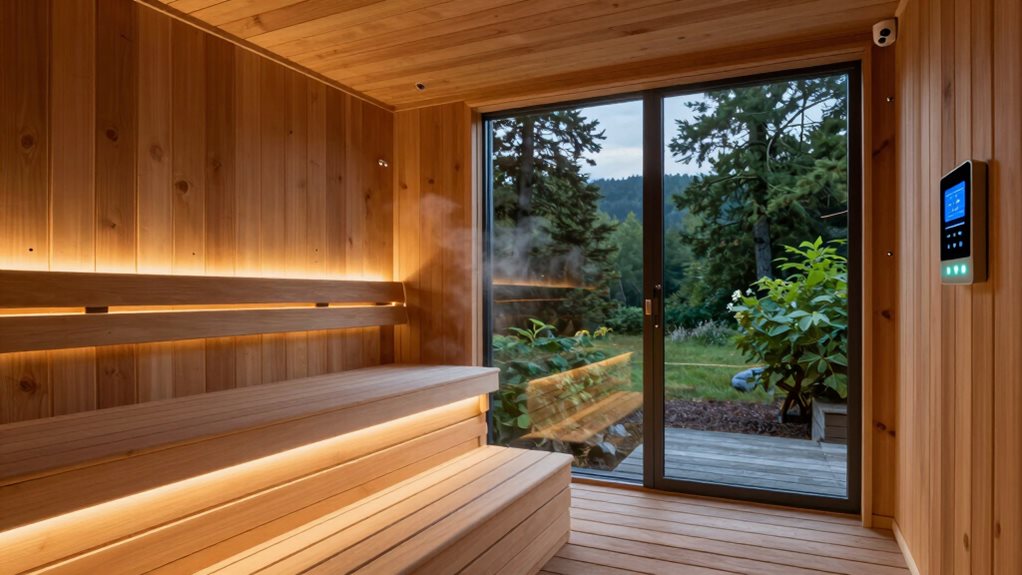
You’ll conserve energy and improve your spa experience with smart lighting controls that adjust automatically based on occupancy and pre-programmed scenes.
Modern systems let you schedule different lighting moods throughout the day, dimming lights during relaxation periods and brightening them for cleaning or entry.
With user-friendly interfaces accessible from your smartphone or wall panels, you can effortlessly balance energy efficiency with the perfect ambiance for your sauna or spa space.
Efficient Energy Management
Although modern spas and saunas deliver luxurious relaxation experiences, they don’t need to consume excessive energy in the process.
Today’s smart systems offer impressive efficiency solutions that you can control with a tap on your phone.
Wi-Fi-enabled panels and the SmartTub® app let you monitor energy usage remotely, so you’re always in control, even when away from home.
You’ll appreciate the convenience of programmable timers that automatically shut down heaters after reaching your desired temperature, preventing unnecessary operation.
Many systems now include energy-saving modes that maintain lower temperatures during non-use periods, typically around 95°F, which greatly reduces power consumption.
The smartest feature might be user pattern optimization—your system actually learns when you typically use your spa and adjusts heating schedules accordingly, saving energy without sacrificing comfort.
Multi-user profiles enhance energy efficiency by storing personalized settings for each family member, eliminating the need to reheat or adjust temperatures between uses, which contributes to sustainable energy practices.
Investing in advanced control panels allows you to set precise preheating schedules that minimize energy waste while ensuring your sauna is ready exactly when you want it.
Intelligent Scheduling Systems
Intelligent scheduling systems transform ordinary spa and sauna lighting into responsive, energy-efficient experiences that adapt to your needs throughout the day.
These systems automatically shut off lights minutes after you leave a room, preventing wasted energy while maintaining safety.
When you book a session, pre-programmed lighting scenes activate at precisely the right moments—bright and invigorating when you enter, perfectly balanced during your treatment, and softly dimmed as you relax.
Different zones like benches and pathways can operate independently, so only the areas you’re using consume power.
For added comfort, these systems can match lighting to your body’s natural rhythms, with cooler, energizing light in mornings and warmer, calming tones in evenings.
They’ll even respond to power grid demands, reducing consumption during peak times while preserving crucial safety lighting.
User-Friendly Control Interfaces
How can spa and sauna facilities provide eco-friendly lighting that’s both easy to use and energy efficient? The answer lies in thoughtfully designed control interfaces that balance functionality with simplicity.
The best systems feature clear, minimal touch interfaces with only crucial controls—power, temperature, lighting, and timers—reducing errors in wet environments. High-contrast displays with large fonts help older users and improve visibility in low-light settings.
For practical operation with damp hands, waterproof buttons or physical controls are ideal.
Smart controls now offer guest modes that prevent misuse in commercial settings while still providing vital functions. When connected to building management systems, these interfaces can automatically dim lights during unoccupied periods or high-energy-cost times.
This combination of user-friendly design and energy awareness creates spa experiences that are both luxurious and environmentally responsible.
Biophilic Lighting Design: Harmonizing With Natural Elements
When you step into a truly restorative spa environment, the lighting often feels “just right” without you necessarily knowing why.
The art of spa lighting lies in creating an atmosphere that calms your senses before you even recognize its influence.
That’s biophilic lighting at work—design that mimics natural light patterns to support your body’s rhythms and promote relaxation.
To create this harmonious effect in your spa or sauna space:
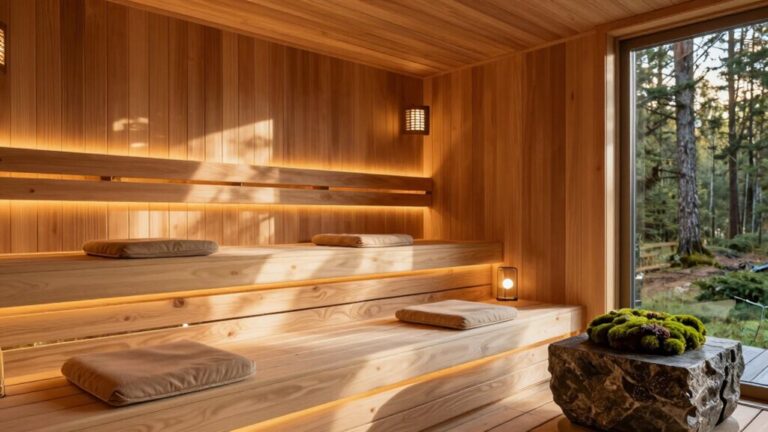
- Incorporate large windows that frame views of nature, allowing daylight to become the primary light source.
- Layer lighting with warm amber tones for morning and evening, switching to cooler blue-white midday.
- Install dimming controls in all guest areas so visitors can adjust brightness to their comfort.
- Pair lighting with complementary elements like plants, flowing water, and natural materials.
This approach doesn’t just look beautiful—it actually reduces stress and supports your natural sleep-wake cycle.
Hidden Lighting Solutions for Minimalist Aesthetics
The beauty of minimalist spa design lies in what you don’t see—particularly when it comes to lighting. When you tuck LED strip lights beneath floating vanities or inside ceiling coves, you’ll create a gentle ambient glow without revealing the source. This concealed approach transforms your spa space, making it feel larger and more serene.
Try installing undercabinet lighting that washes walls with warm light (2700K-3000K), giving your space depth without harsh brightness. Recessed fixtures in shower enclosures provide illumination while maintaining clean lines.
For the ultimate minimalist effect, consider programmable scenes that adjust based on natural light levels.
The most successful hidden lighting solutions combine functionality with tranquility—lighting your way without drawing attention to itself, allowing the architecture and materials of your spa to take center stage.
Overcoming Installation Challenges in High-Humidity Settings
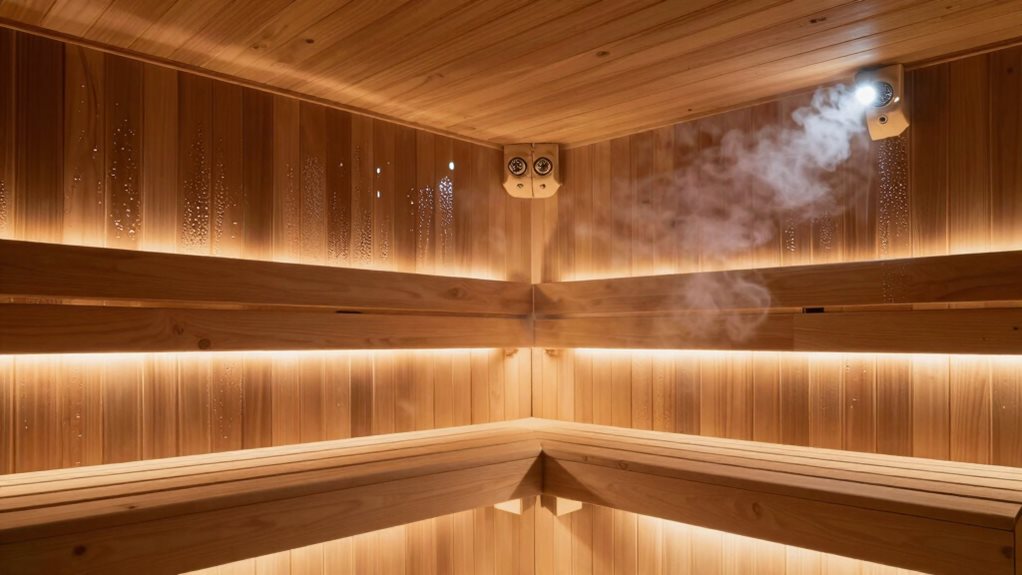
Installing proper lighting in high-humidity environments presents unique challenges that require careful planning and specialized materials.
Navigating the complexities of high-moisture spaces demands thoughtful design choices and moisture-resistant components for effective illumination.
When tackling a sauna or spa lighting project, you’ll need to take into account both safety and functionality while protecting against moisture damage.
To guarantee successful lighting installation in high-humidity settings:
- Select fixtures specifically rated for wet environments, with LED options being ideal due to their low heat emission and extended lifespan.
- Carefully seal all penetrations where lighting fixtures pass through the vapor barrier using appropriate moisture-resistant materials.
- Position lights away from the roofline to minimize exposure to the highest concentration of heat and humidity.
- Install fixtures after the vapor barrier is properly in place, confirming the 6-mil polyethylene sheeting maintains its continuity around all openings.
Improper lighting installation can lead to dangerous conditions and potential electrical hazards, especially with traditional saunas requiring 240V service for operation.
Regularly monitor the relative humidity levels with a digital hygrometer to ensure your lighting system remains within safe operational parameters.
Balancing Initial Costs With Long-Term Sustainability Gains
Making the shift to eco-friendly lighting in your spa or sauna often means steering a delicate balance between upfront investments and long-term rewards.
While LED lighting systems and infrared saunas come with higher initial price tags, they deliver considerable operational savings over time.
You’ll notice your utility bills decreasing as these eco-friendly options consume less electricity per session. The payback period shortens further when you incorporate programmable timers or pair your system with solar panels.
Think of it like investing in a fuel-efficient car—more money upfront but less spent at the pump.
Beyond financial benefits, you’re reducing your carbon footprint.
For maximum ROI, consider regular maintenance and insulated panels that prevent heat loss.
The combination of energy savings and reduced replacement costs makes sustainable lighting a smart long-term investment for your wellness space.
Frequently Asked Questions
How Do Sauna Lighting Systems Impact Water Consumption?
Your LED sauna lights directly impact water usage by reducing electricity needs, which lowers water consumed in power generation. They’ll also minimize maintenance activities that require cleaning with water.
Can Eco-Friendly Lighting Affect Sauna Session Duration?
Yes, your sauna sessions will likely last longer with warm-toned (2700K-3000K) eco-friendly LEDs at low brightness. Green or blue chromotherapy can also extend your tolerance through improved relaxation effects.
Do Lighting Trends Vary by Geographic Region?
Yes, you’ll find Finland emphasizes natural wood with indirect lighting, Asia blends cultural traditions with modern LEDs, while North America incorporates flashy designs with customizable RGB systems in home installations.
How Often Should LED Sauna Lighting Be Maintained?
You should wipe sauna LED fixtures weekly for home use or 2-3 times weekly for intensive use. Check components every few months and perform deep cleanings quarterly in humid conditions.
Are There Certification Standards Specifically for Eco-Spa Lighting?
No specific eco-spa lighting certifications exist, but you’ll need ENERGY STAR, DLC, ENEC+, and EcoDesign/ERP certifications for energy efficiency claims in eco-spa marketing and rebate eligibility.
Final Thoughts
You’ve seen how eco-friendly spa lighting combines energy efficiency with therapeutic benefits. By integrating LED technology, thoughtful color choices, and sustainable materials, you’re creating environments that heal both people and planet. Though challenges like humidity and initial costs exist, the long-term benefits are clear. As you design your spa space, remember that smart controls and biophilic elements will help you balance beauty, function, and environmental responsibility.