

Regular sauna and steam therapy sessions do more than relax you—they offer serious health benefits. Your heart gets a workout similar to moderate exercise, with frequent users showing lower cardiovascular disease risk. The heat helps your muscles recover faster after workouts, reduces inflammation, improves breathing, and may even protect your brain from dementia. Whether you choose traditional, infrared, or steam methods, you’ll find different advantages for your unique health goals.
The Science Behind Heat Therapy: How Saunas Affect Your Body
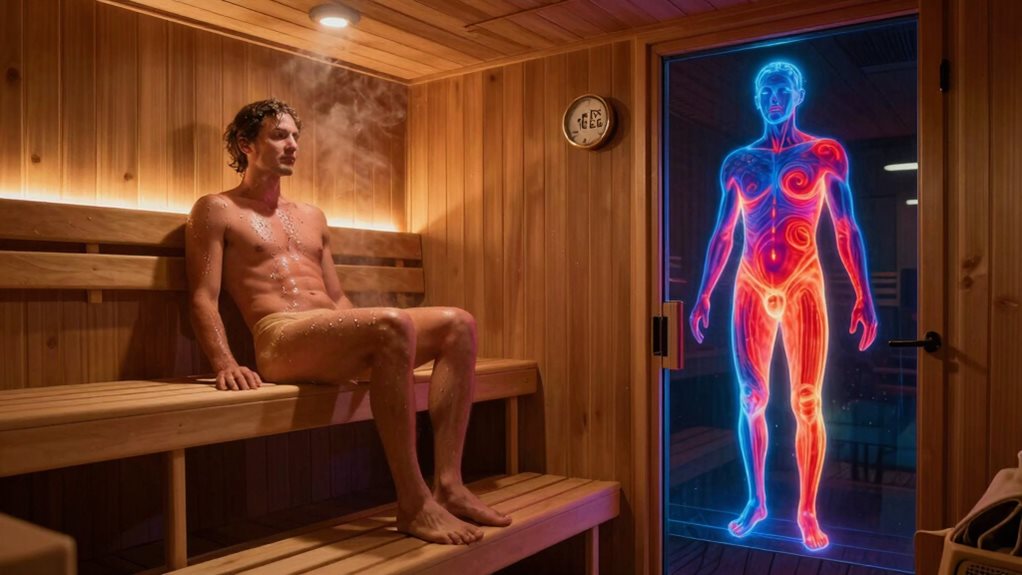
Imagine your body as a sophisticated machine that responds dramatically to heat. When you enter a sauna, your internal thermostat kicks into high gear, raising your core temperature by up to 2.6°C. Your heart pumps faster—between 100-150 beats per minute—similar to moderate exercise, while your blood vessels dilate, improving circulation throughout your body. Regular sauna bathing mimics low to moderate exercise on cardiovascular function.
At the cellular level, heat triggers protective mechanisms. Your cells produce heat shock proteins that act like shields against damage, while Nrf2 pathways activate to fight oxidative stress. Regular sauna sessions have been linked to reduced dementia risk, with studies showing significantly lower rates in frequent users.
Heat also prompts your body to release feel-good chemicals like beta-endorphins and growth hormone, which can improve your mood and metabolism. Meanwhile, your sweat glands work overtime, releasing up to a pint of sweat during a short session, helping to flush out toxins.
Cardiovascular Benefits: Protecting Your Heart One Session at a Time
While many people think of saunas as just a relaxing treat, regular heat therapy sessions actually provide remarkable benefits for your heart health.
Research shows that frequent sauna use (4-7 times weekly) can greatly reduce your risk of cardiovascular disease and even sudden cardiac death.
Regular sauna sessions aren’t just relaxing—they’re a powerful tool for protecting your heart and extending your life.
When you sit in a sauna, your heart rate increases by 20-50 beats per minute, similar to moderate exercise, while blood vessels expand and blood pressure often decreases.
This improved blood flow boosts your endothelial function—the health of the inner lining of your blood vessels—by increasing nitric oxide production.
For those with heart failure, regular sauna sessions may even improve heart function and exercise capacity.
The cardiovascular benefits appear to follow a dose-response relationship: more frequent sessions yield greater protection.
Metabolic Boosts and Weight Management Through Heat Exposure
Heat therapy offers impressive benefits beyond relaxation, particularly when it comes to your metabolism and weight management.
During a typical sauna session, your body burns between 100-300 calories as your heart rate increases—a phenomenon often called “passive cardio.” You’ll also experience temporary weight reduction, losing about 0.5 kg of water weight during just 15 minutes at 80°C. This weight change is entirely due to fluid loss and will be reversed upon rehydration.
Regular sauna use can improve your insulin sensitivity, making your body more efficient at processing sugars. This happens as heat exposure reduces inflammation markers while activating beneficial stress responses similar to exercise.
Your hormonal balance benefits too—saunas can lower cortisol (a stress hormone linked to weight gain) while boosting growth hormone levels up to 16 times normal.
The improved circulation from heat therapy helps distribute nutrients more effectively, supporting your body’s natural calorie-burning processes.
Post-Exercise Recovery and Pain Relief Applications

You’ll notice dramatic improvements in your post-workout recovery when you include sauna or steam therapy in your routine.
The heat penetrates deep into your muscles, accelerating repair processes while reducing soreness and joint pain that often follows intense exercise. Specifically, infrared sauna sessions have been shown to significantly reduce post-workout muscle soreness and enhance overall recovery.
Timing your sessions strategically, such as immediately after workouts, can optimize these benefits and prepare your body for your next training session more effectively.
Muscular Repair Acceleration
After intense exercise, your muscles often protest with soreness and stiffness, but thermal therapies offer a powerful solution for faster recovery. Infrared saunas greatly reduce muscle soreness compared to passive recovery, allowing you to bounce back quicker from strenuous workouts.
When you use an infrared sauna for 15-30 minutes post-exercise, the deep-penetrating heat increases blood flow to tired muscles, clearing edema and speeding repair. Your body responds by producing heat shock proteins that activate muscle growth pathways.
Studies show that regular sauna sessions can increase muscle mass by nearly 8% over time. You’ll notice improved jump performance and sprint speed with consistent use.
The benefits aren’t just physical—athletes report higher perceived recovery after sauna therapy, letting you train more effectively and maintain performance during busy competitive periods.
Joint Pain Reduction
Persistent joint pain can transform from a minor nuisance into a debilitating condition, but thermal therapies offer remarkable relief through multiple physiological pathways.
When you step into an infrared sauna, the penetrating heat dilates your blood vessels, increasing circulation to painful joints by up to 50% after just two weeks of regular use. This improved blood flow delivers oxygen-rich nutrients while reducing inflammation markers like C-reactive protein (CRP). Infrared saunas operate at lower temperatures of 110-135°F compared to traditional saunas, making them more tolerable for those with pain conditions.
If you struggle with rheumatoid arthritis or fibromyalgia, you’ll be pleased to know that studies report 40-70% pain reduction after sauna sessions. A Japanese study demonstrated that pain levels dropped nearly 70% after just one infrared sauna session.
The heat also decreases synovial fluid viscosity in your joints, which means less stiffness and better mobility. Even chronic back pain and post-exercise soreness respond well to sauna therapy’s ability to relax muscles and modulate inflammatory pathways.
Recovery Timing Optimization
Timing your thermal therapy sessions can transform your post-workout recovery from good to exceptional. After exercising, wait 10-15 minutes to let your body cool down before entering the sauna. This prevents overheating and guarantees a safer experience.
For best results, limit post-workout sauna sessions to 15-20 minutes, which maximizes muscle recovery benefits without adverse effects. If you’re new to saunas, start with just 5-8 minutes at 150°F, gradually adding 1-2 minutes each session until reaching the ideal duration.
Finish your sauna with a 1-2 minute cool shower to close pores and improve relaxation.
Don’t forget to hydrate before, during, and after your session. The heat increases blood flow to damaged muscles, delivering nutrients while flushing out lactic acid that causes soreness.
Respiratory Health and Immune System Support
Sauna and steam therapies offer remarkable benefits for your respiratory system and immune function, working through several complementary mechanisms.
Heat dilates your blood vessels, improving circulation to your lungs and sinuses, while the warm environment loosens stubborn mucus that might be blocking your airways. Steam rooms are particularly effective at clearing congestion by helping break down phlegm in the respiratory tract.
When you sit in a sauna regularly, you’re actually strengthening your immune defenses. Research shows impressive results: people using saunas 2-3 times weekly experienced 27% fewer respiratory illnesses, while those enjoying 4+ sessions saw a 41% reduction compared to occasional users.
During allergy season, you’ll appreciate how steam helps clear congested nasal passages and reduces inflammatory responses to allergens like pollen.
The warm, humid environments in saunas can be especially beneficial for those with respiratory issues as they help loosen chronic mucus that may be causing breathing difficulties.
Just remember to consult your doctor first if you’re pregnant or have heart conditions, high blood pressure, or acute infections.
Mental Wellness and Cognitive Protection
The powerful impact of thermal therapies on your brain health may surprise you, as research reveals extraordinary cognitive protection benefits.
Regular sauna use (3+ times weekly) has been linked to remarkably lower dementia risk in long-term studies, with some research showing up to 66% reduced incidence in frequent users.
The remarkable brain-protective power of frequent sauna bathing may cut dementia risk by nearly two-thirds.
When you enjoy a sauna session, your brain experiences measurable changes—increased alpha and theta waves that promote relaxation, while also improving reaction times on cognitive tasks.
The heat triggers protective mechanisms at the cellular level, including heat shock proteins that help prevent harmful protein buildup associated with Alzheimer’s disease.
Additionally, saunas boost brain blood flow and reduce inflammation, creating conditions that support long-term neurological health and potentially safeguard your cognitive function as you age.
Studies from the University of Eastern Finland involving healthy men found that moderate sauna use of 2-3 sessions/week was associated with a 22% reduced risk of dementia.
Comparing Traditional, Infrared, and Steam Sauna Modalities

When choosing your ideal thermal therapy experience, understanding the distinct characteristics of each sauna type can help you select the option that best matches your health goals and comfort preferences.
Traditional saunas heat the entire room to high temperatures (70-110°C), creating whole-body heat through hot air and optional steam when water hits the stones.
Infrared saunas, operating at lower temperatures (40-60°C), use special lamps that penetrate your skin directly, heating tissues without making the air as hot.
Steam rooms offer a different experience with 100% humidity at lower temperatures that still feel intensely hot.
Your choice matters for specific benefits: infrared provides deeper tissue heating for muscle and joint pain, traditional saunas create stronger cardiovascular effects, and steam therapy offers excellent respiratory benefits.
Each type delivers unique advantages while sharing core health-promoting properties.
Safe Practice Guidelines and Precautionary Measures
You’ll need to monitor your hydration and session time carefully to guarantee safe thermal therapy experiences.
Drink plenty of water before, during, and after your sauna or steam session, while keeping your visits limited to recommended durations—generally 15-20 minutes for saunas and up to 30 minutes for steam rooms. Always be vigilant for signs of overheating including dizziness, rapid heartbeat, or difficulty breathing, and exit immediately if these occur.
If you have any medical conditions like heart disease or diabetes, or if you’re pregnant, you must consult with your doctor before beginning thermal therapy to prevent potential complications.
Hydration and Duration
Proper hydration practices and session duration guidelines form the foundation of safe thermal therapy experiences.
You’ll need to drink 16-20 ounces of water 30 minutes before your session, with two extra glasses a few hours prior. During your sauna time, sip water when thirsty, especially in high heat.
After sweating it out, immediately replenish with 1-2 glasses (16-24 oz) of water. For deeper rehydration, try coconut water or electrolyte drinks that replace vital minerals.
Remember, you’ll lose between 0.5-1.5 liters of fluid during a typical 15-30 minute session, varying by sauna type.
Different saunas create different hydration needs – steam saunas increase sweating through humidity, while infrared causes deeper sweating at lower temperatures.
Your water bottle is your best friend in this healing heat!
Monitoring Medical Conditions
Consulting your healthcare provider before using thermal therapies is essential if you have pre-existing medical conditions, as certain health issues can make saunas and steam rooms risky rather than beneficial.
Avoid saunas if you have unstable heart conditions, severe aortic stenosis, uncontrolled blood pressure, or active infections. These conditions can worsen with heat exposure. If you’ve recently had a heart attack, wait until your cardiologist gives clearance.
People with COPD or severe asthma need individual assessment, as steam may help or harm depending on your stability.
Monitor yourself during sessions—exit immediately if you experience chest pain, dizziness, or breathing difficulties.
If you’re pregnant or have seizure disorders, it’s best to steer clear until medically approved.
Frequently Asked Questions
How Do Saunas Affect Fertility and Reproductive Health?
Regular sauna use temporarily reduces your sperm count and quality through testicular heating. Effects are fully reversible within 3-6 months after you’ve stopped sauna exposure, but can impact your fertility efforts.
Can Sauna Use Help With Skin Conditions Like Eczema or Psoriasis?
Yes, saunas can help with eczema and psoriasis by improving skin hydration, increasing blood flow, reducing inflammation, and promoting healing. You’ll need brief sessions followed by immediate moisturizing.
Is Sauna Bathing Beneficial During Pregnancy?
No, you should avoid sauna bathing during pregnancy, especially in your first trimester, as raised temperatures can increase birth defect risks. Even later, strict time and temperature limitations are crucial.
How Do Medications Interact With Regular Sauna Use?
Medications like diuretics, beta-blockers, antihypertensives, and sedatives can interact dangerously with saunas. You’ll need your doctor’s approval, as they may worsen dehydration, blood pressure drops, or impair your heat regulation.
Can Sauna Therapy Help With Environmental Toxin Elimination?
Yes, saunas help you eliminate environmental toxins. You’ll sweat out heavy metals like mercury and lead more efficiently than through urine, especially with infrared saunas that penetrate deeper tissues.
Final Thoughts
You’ve discovered how heat therapies offer remarkable benefits for your body and mind. From boosting heart health to improving recovery, saunas and steam rooms provide natural ways to enhance your wellbeing. Remember to start slow, stay hydrated, and respect the recommended time limits. Whether you choose traditional, infrared, or steam methods, regular sessions can become a valuable part of your health routine, helping you feel better both physically and mentally.