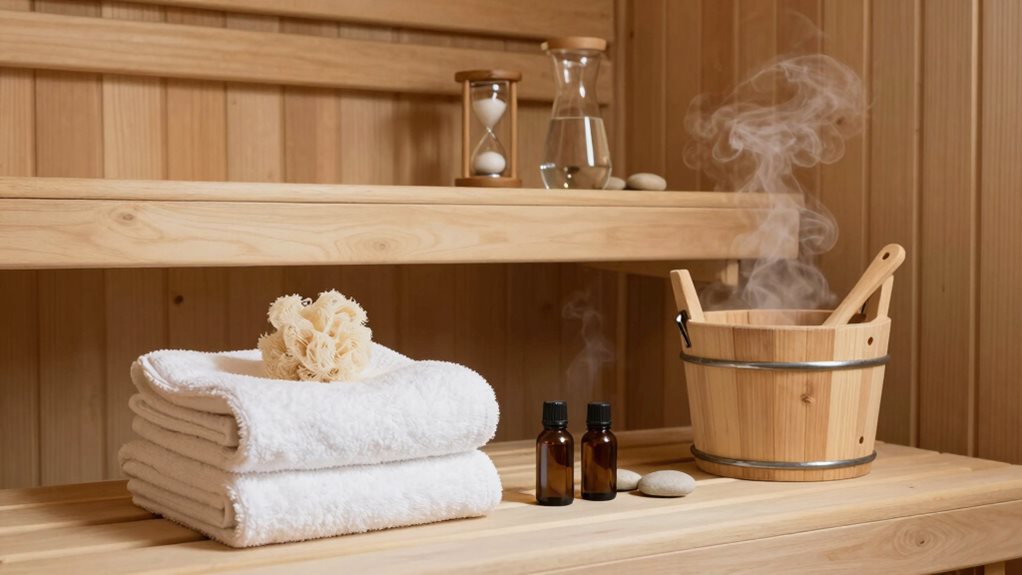

Crucial amenities for modest spa users include private changing areas, clear privacy policies, and gender-separated facilities. You’ll want two-tier bench arrangements in saunas with ample circulation space to maintain personal zones. Look for spaces with privacy screens, modest swimwear options, and thoughtfully designed passage areas between treatments. Temperature settings should respect cultural preferences, ranging from cooler Turkish hammam environments (104-122°F) to hotter Finnish saunas (140-200°F). These considerations create a comfortable experience for everyone’s comfort level.
Modesty-Focused Sauna Design and Layout Options
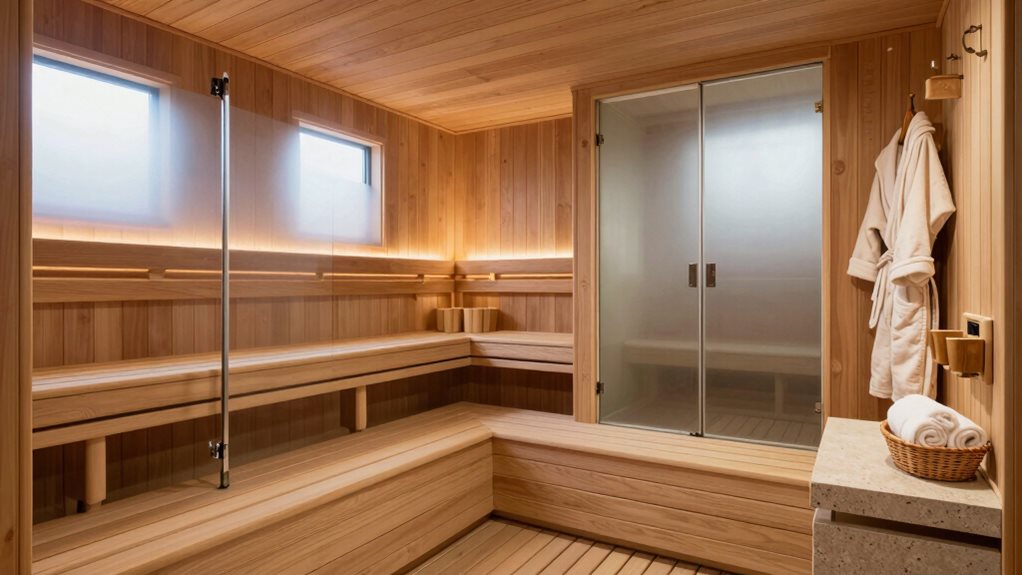
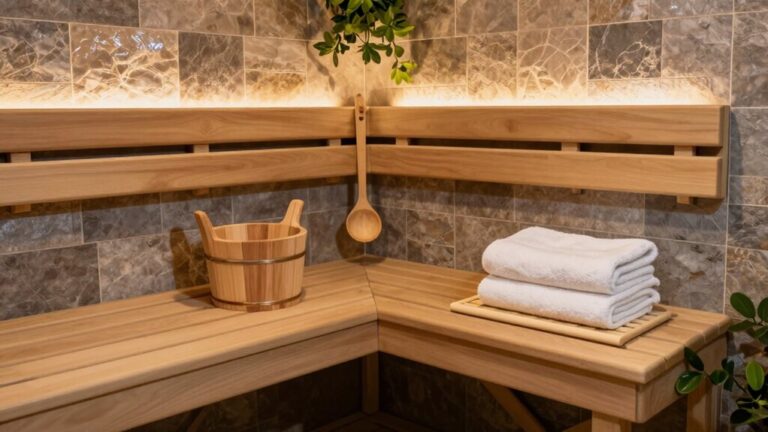
When designing a sauna with modesty in mind, the layout and configuration of benches play an important role in creating comfortable spaces for all users.
Consider installing a single long bench along one wall with ample circulation space opposite, allowing people to enter and exit without crossing others’ personal zones.
A well-designed single bench configuration creates natural personal boundaries while maintaining smooth traffic flow throughout the sauna space.
Door placement is vital—position it adjacent to the heater to maximize bench continuity while minimizing direct sightlines from changing areas. You’ll want to make certain doorway swing patterns protect privacy during entry and exit.
For mixed-use facilities, locate your sauna next to rinsing and changing areas so users can move between spaces with minimal exposure. Traditional wooden interiors using cedar wood provide natural antimicrobial properties while maintaining a warm, inviting atmosphere that enhances the comfort of modest users.
Two-tier bench arrangements offer both privacy and choice—users can select upper (hotter) or lower (cooler) positions based on their comfort level and desired heat experience. Small 4×4 layouts with two-tier benches provide intimate spaces that naturally enhance privacy while accommodating couples or close friends comfortably.
Privacy-Enhancing Features for Conservative Spa Guests
Privacy considerations extend beyond sauna layouts to include features that specifically address the comfort levels of conservative spa guests.
Like the 77% of consumers comfortable sharing some personal preferences but not browsing history, spa-goers have varying privacy boundaries that deserve respect.
- Private changing areas – Similar to how 41% of people protect their passwords by writing them down, many guests prefer individual changing spaces where personal items remain secure.
- Clear opt-in policies – Just as 85% of adults want more control over their data, guests appreciate transparent communication about services.
- Gender-separated facilities – Reflecting how 64% use tools to protect online privacy, separate spaces create comfort zones.
- Privacy screens – Much like the 29% who change default privacy settings, movable dividers allow guests to customize their exposure level.
Culturally-Sensitive Temperature and Humidity Settings
Temperature and humidity settings must be carefully calibrated to honor the diverse cultural traditions that shape heat experiences worldwide.
You’ll find Finnish saunas operate between 140-200°F with initially low humidity that increases when water hits the hot stones. If you’re designing for American preferences, aim for slightly higher temperatures (150-195°F) with mainly dry heat.
For guests accustomed to Russian banyas, you’ll want lower temperatures (140-158°F) but considerably higher humidity (50-70%), creating that distinctive steamy environment that supports traditional venik treatments.
Turkish hammam enthusiasts expect much cooler settings (104-122°F) with near-total humidity.
Remember that preferences vary by age and gender too—many women and elderly users prefer temperatures below 176°F, while accommodating Nordic traditions means providing options for dry heat at 80-100°C.
Modest Swimwear and Coverage Solutions for Spa Environments
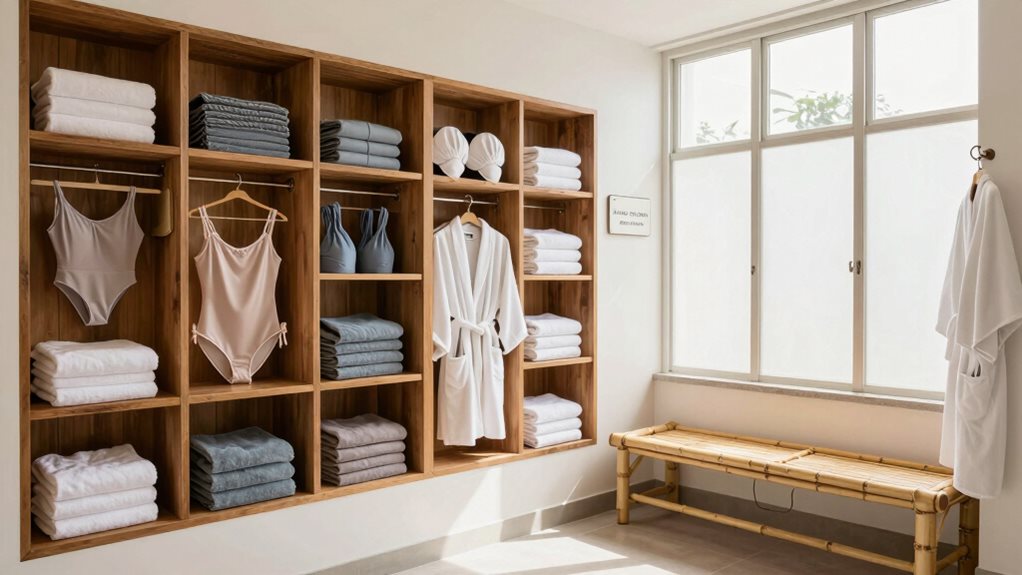
Choosing the right swimwear for spa environments guarantees you’ll feel comfortable and confident while honoring personal modesty preferences.
One-piece designs with full coverage protect your privacy while UPF 50+ fabrics shield your skin from harmful rays. Mix-and-match options let you customize your look based on personal comfort levels and activity plans.
- Full-coverage options – Look for swim dresses with A-line silhouettes, high-waist bike shorts, or long-sleeve tunics that dry quickly after water activities.
- Sun protection features – Choose UPF 50+ materials that block 98% of harmful UV rays while remaining chlorine-resistant.
- Versatile separates – Pair tankini tops with high-waisted bottoms or rash guards with swim shorts for personalized coverage.
- Comfort-focused details – Seek ruched fabrics, supportive straps, and breathable materials for all-day comfort.
Creating Comfortable Transition Spaces Between Treatment Areas
Thoughtfully designed changeover areas between spa treatments contribute greatly to your overall wellness experience, creating a seamless passage from one therapeutic space to another.
These transition zones guide you naturally through your spa experience without confusing signage or crowded pathways.
Intuitive pathways and subtle wayfinding nurture your wellness journey from one therapeutic moment to the next.
You’ll notice subtle cues like flooring changes or gentle lighting shifts that help you maneuver between treatment areas. Comfortable seating, sound-absorbing materials, and privacy screens create peaceful waiting spaces where you can relax between experiences.
Thermal comfort is carefully managed too—you won’t feel chilled when moving from a warm treatment room to another area.
Look for thoughtful touches like conveniently placed towel stations, slip-resistant flooring near wet areas, and soothing focal points like small water features that help you maintain that sense of calm as you move through your spa day.
Frequently Asked Questions
How Can Religious Requirements Be Accommodated in Sauna Scheduling?
You can offer single-gender time blocks, private sessions, and gender-segregated facilities to accommodate religious modesty requirements. Consider scheduling around prayer times and allowing modest attire alternatives.
Are Separate Ventilation Systems Available for Gender-Segregated Sauna Areas?
Yes, you can implement separate ventilation systems for gender-segregated saunas using dedicated mechanical zones, independent gravity ventilation, or shared HVAC with strict air separation to prevent cross-contamination between areas.
What Medical Conditions Might Require Special Modesty Accommodations?
Medical conditions requiring special modesty accommodations include PTSD from medical trauma, pregnancy, religious sensitivities, and psychological conditions where you’ve experienced previous dignity violations during healthcare procedures.
How Do Staff Training Protocols Address Cultural Sensitivity?
Your training protocols teach you to recognize cultural norms around touch, privacy, and gender interactions. You’ll learn through scenario-based exercises and receive tools for adapting communication styles to diverse clientele.
Can Modest Sauna Designs Incorporate Traditional Therapeutic Elements Effectively?
Yes, you can integrate traditional therapeutic elements through compact stone heaters for löyly, wood choices that release aromatics, and tiered benching that creates varied temperature zones for complete experiences.
Final Thoughts
You’ve learned that creating modest sauna and spa experiences isn’t complicated with the right approach. By incorporating privacy features, appropriate temperature settings, modest swimwear options, and comfortable passage areas, you’re able to enjoy the health benefits while honoring your personal boundaries. Remember, everyone deserves to feel comfortable while relaxing and rejuvenating—and now you have the knowledge to create or select spa environments that respect your modesty preferences.