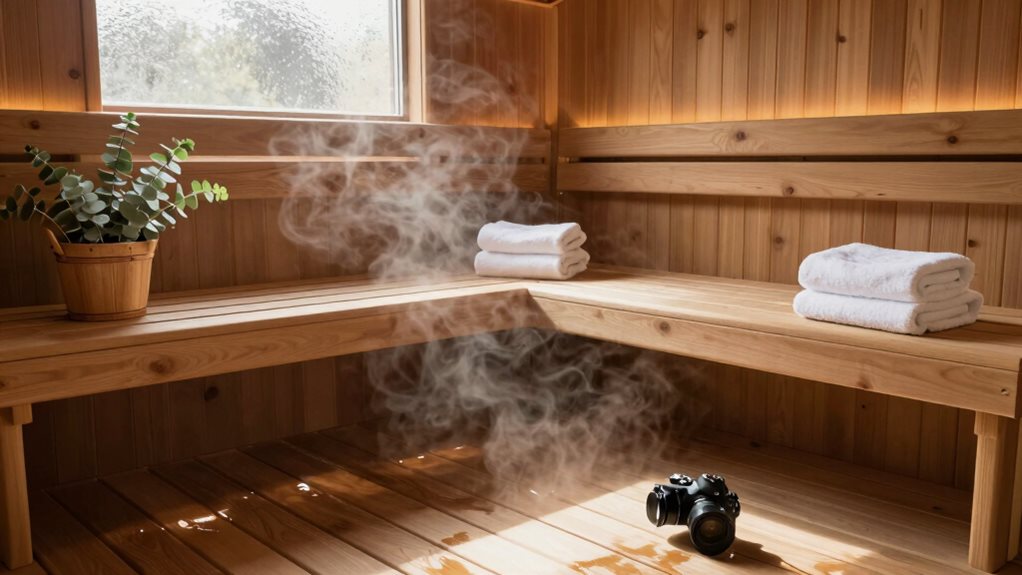

To improve your sauna facility’s upkeep, focus on hygiene and regular maintenance. Wipe down benches and floors after each use to remove sweat, and schedule deep cleans monthly. Keep vents clear for proper air circulation, which helps reduce moisture buildup. Encourage users to shower before entering and sit on towels. Don’t forget to check your heater for safety! By maintaining these practices, you’ll create a clean and inviting atmosphere that keeps guests coming back for more.
Importance of Materials and Surfaces Care
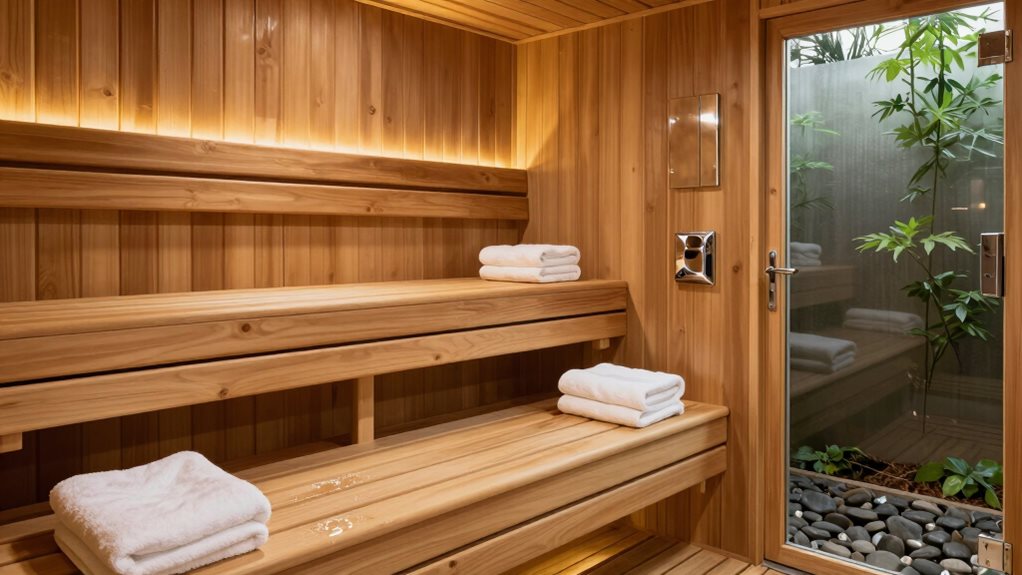
When you think about a sauna, you might imagine the soothing heat and the relaxing atmosphere it provides, but did you know that taking care of the materials and surfaces is just as important?
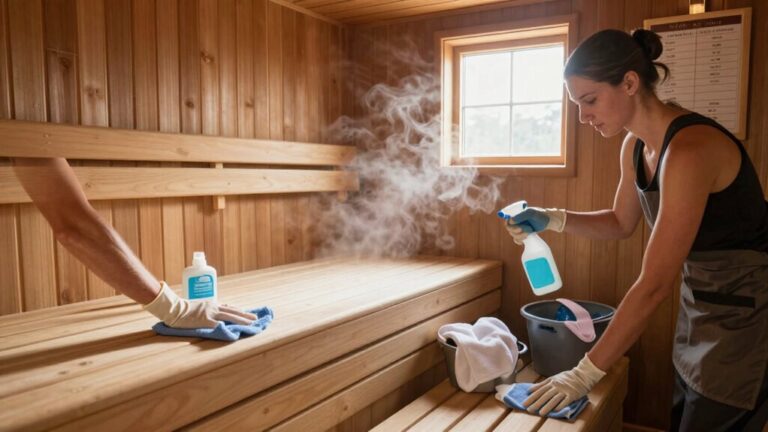
Regular maintenance prevents bacteria buildup, guaranteeing a clean environment for you and your guests. After each session, wipe the benches with a damp cloth to remove sweat and avoid stains.
Annually, give seating surfaces a deep clean with a soft brush and special cleanser. Monthly inspections help catch any damage or mold before they become serious issues.
Establishing Routine Cleaning Protocols
Keeping your sauna clean is crucial for a pleasant experience, and establishing routine cleaning protocols makes it easier.
You’ll want to implement daily cleaning habits, like wiping down benches and floors after each session, followed by a weekly deep clean to tackle dirt and grime.
Don’t forget to schedule monthly maintenance checks to guarantee everything’s in top shape, so your sauna remains a relaxing escape.
Daily Cleaning Habits
Establishing daily cleaning habits for your sauna isn’t just about maintaining a tidy space; it’s crucial for guaranteeing a safe and enjoyable experience for everyone who uses it.
Start by wiping down benches with a clean, damp cloth after each session to remove sweat and oils. Let surfaces dry by keeping ventilation active—leave the door open and lift benches if you can.
Don’t forget to vacuum floors daily to banish dirt and dust, especially around the corners and under benches. Scrub those sitting areas with warm water and mild soap to keep things fresh.
Finally, inspect for any signs of mold or dirt—it’s quick to fix if caught early! Happy cleaning!
Weekly Deep Cleaning
To keep your sauna in top shape, a solid weekly deep cleaning routine is essential, as it assures a fresh, inviting atmosphere for all users.
Start by sweeping and vacuuming the floors, benches, and corners, removing any dust and debris.
Next, clean the benches and walls with a gentle, wood-safe solution, making sure you don’t oversaturate the wood.
For glass doors, polish them with a non-ammonia cleaner, getting rid of those pesky streaks.
Don’t forget to disinfect high-touch surfaces like door handles and controls.
Inspect heater areas and sauna stones for any cracks or debris.
Finally, run the heater on low for about 30 minutes to dry everything out, keeping your sauna cozy and mold-free!
Monthly Maintenance Checks
While a weekly deep cleaning keeps your sauna fresh, monthly maintenance checks play a crucial role in guaranteeing everything is functioning as it should.
Start by inspecting benches and walls for any discoloration or cracks, noting what needs repair. Don’t forget to examine floor drains for debris; a clear drain prevents mold!
Next, check heaters and electrical systems for any issues—loose wires shouldn’t be ignored. Also, remember to clean your ventilation system to guarantee fresh air circulates properly.
Finally, give surfaces a good wipe-down using sauna-safe cleaners to maintain hygiene.
Effective Ventilation and Moisture Control
Effective ventilation and moisture control are crucial for enjoying a sauna experience that’s both comfortable and safe.
Proper ventilation and moisture control are essential for a comfortable and safe sauna experience.
Place the intake vent low near the heater, about 4 inches from the floor, to kick off a convection loop. The exhaust vent should sit high on the opposite wall, around 2 feet from the ceiling, to let hot, humid air escape. Properly positioned vents help enhance air circulation. To prevent condensation, keep these vents diagonal to promote air circulation. During heating, you can briefly close the upper exhaust for faster warm-ups but remember to open it afterward to clear out humidity. Proper ventilation supports a health-promoting environment and enhances the overall sauna experience.
Using proper insulation and vapor barriers also makes a huge difference, keeping moisture out of walls. A little planning guarantees your sauna stays inviting and fresh!
Heater and Electrical Safety Procedures
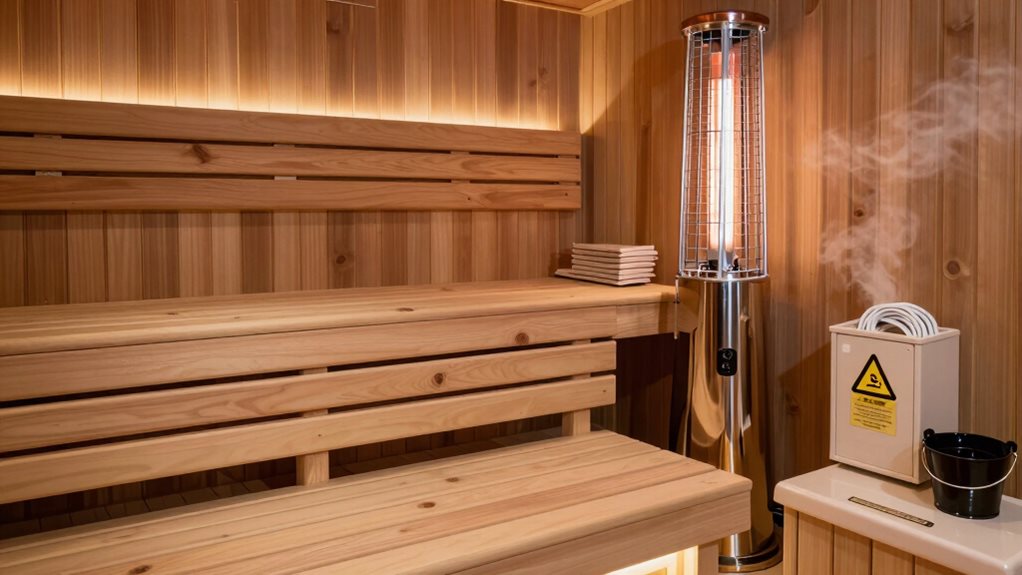
When it comes to enjoying your sauna safely, knowing the right heater and electrical safety procedures can make all the difference.
First, verify your sauna heater has a dedicated circuit to prevent overloads—think of it as your heater’s personal power lane. Said circuits should typically be 240 V, with breakers sized from 30 A to 60 A based on the heater’s kW rating. Most electric sauna heaters require significant power that 240V/1PH can provide efficiently.
Also, always check that everything’s grounded and bonded to avoid electric shocks. It’s like wearing a seatbelt for your sauna!
Don’t forget accessible disconnect switches near heaters to enable quick shut-offs during emergencies.
Finally, choose high-quality, heat-resistant wiring to withstand the sauna’s warm hug.
Following these procedures lets you focus on relaxation, not safety headaches!
Strategies for Mold and Microbial Control
To keep your sauna safe and inviting, controlling mold and microbes is a must.
Start by guaranteeing good ventilation; install vents to pull fresh air and exhaust moisture effectively. After each session, leave the door open for 30-60 minutes to promote drying. Proper ventilation disrupts fungal reproduction and prevents mold growth, making it an essential aspect of sauna maintenance. Additionally, implementing strategies to manage humidity levels ensures a drier sauna environment that helps reduce the risk of mold.
You should also keep the humidity between 10-20% with a hygrometer; too much moisture can invite unwanted growth. Wiping down surfaces daily and using natural cleaners like tea tree oil keeps things fresh, while checking for moisture in hidden spots helps catch mold early.
Finally, choose untreated wood for better airflow, and always hang damp towels to dry.
Implementing these strategies will help you enjoy a clean, mold-free sauna experience!
User Hygiene Policies and Best Practices
While enjoying a sauna can be a relaxing experience, maintaining proper hygiene is essential to guarantee it’s safe for everyone involved.
To make certain of a pleasant visit, remember these key user hygiene policies:
- Shower Beforehand: Rinse off sweat, deodorant, and lotions to keep the sauna clean and ready for everyone. Traditional saunas require a clean environment to enhance relaxation and detoxification.
- Use a Towel: Always sit on a large, dry towel to protect the benches and maintain hygiene—think of it as your sauna throne!
- Stay Healthy: Don’t enter if you’re feeling unwell, as we want to keep the sauna a sanctuary, not a sick bay.
Maintenance Management and Recordkeeping
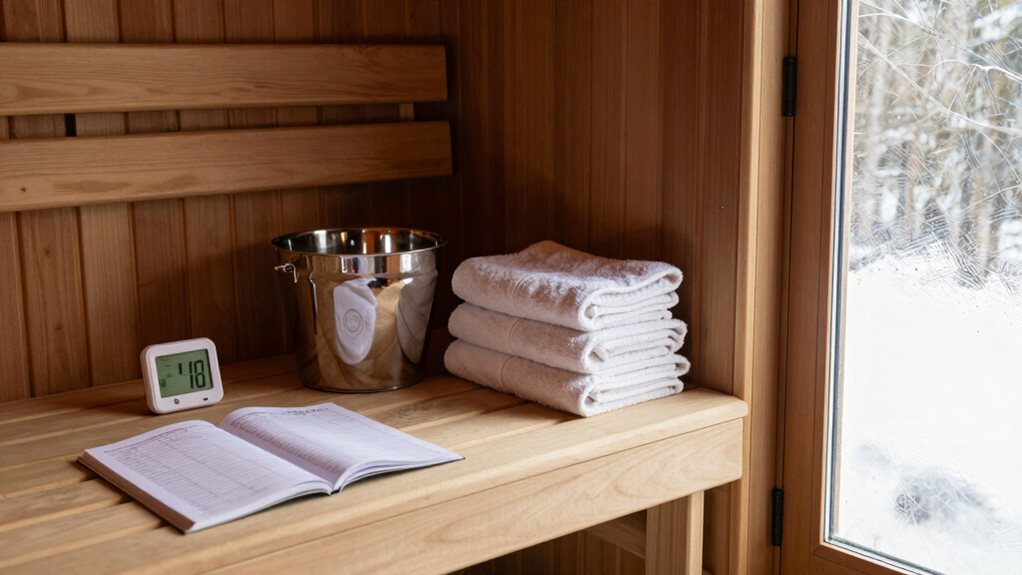
Keeping your sauna in top shape is more than a chore; it’s a crucial part of guaranteeing a safe and enjoyable experience for every visitor.
To manage maintenance effectively, set up a daily cleaning schedule. Start with disinfecting benches and mopping floors. During walk-throughs, check for cleanliness every 15-30 minutes. Don’t forget daily self-inspections by the duty manager; this helps catch issues early!
Establish a daily cleaning routine, including frequent inspections, to ensure your sauna remains inviting and well-maintained for all guests.
Record these inspections and log service intervals for heating systems to stay organized. Implement weekly deep cleans, and inspect for mold monthly.
Maintain thorough records to monitor wear and tear over time, making sure your sauna remains a welcoming retreat. After all, a well-kept sauna isn’t just cleaner—it’s happier for everyone who visits!
Staff Training for Optimal Care
A well-maintained sauna isn’t just about cleaning; it also relies on having a team that knows how to care for the space and its visitors.
Staff training plays a vital role in guaranteeing everyone’s comfortable and safe. Here’s how you can make that happen:
- Hands-On Experience: Let new hires shadow experienced staff and practice techniques to boost their confidence before interacting with guests.
- Continuous Learning: Encourage ongoing training sessions where staff can learn new skills and refresh their knowledge regularly.
- Positive Engagement: Create a welcoming atmosphere that rewards achievements, motivating your team to reach their full potential.
Budgeting for Sustainably Maintaining the Facility
Budgeting for sustainable sauna maintenance is essential if you want to keep your facility in top shape and provide a welcoming environment for guests.
Start by setting aside $150–$200 annually for regular cleaning and repairs, making sure minor issues don’t spiral into costly problems. Compare quotes from professionals for repairs, and check your warranty for eligible expenses.
Traditional saunas average $250 yearly, while infrared ones only need about $150, so choose wisely based on your budget.
Regular inspections, like heater calibration and cleaning ventilation, help maintain safety and efficiency.
Don’t forget to monitor humidity and keep your sauna clean; it’s like keeping your home tidy—everyone enjoys a spotless space!
This way, your sauna remains inviting and enjoyable for all.
Frequently Asked Questions
How Often Should Sauna Stones Be Replaced?
You should replace sauna stones every year for regular use, every six months for heavy use, or every one to two years for infrequent use. Always inspect stones regularly for signs of wear and replace immediately if necessary.
What Materials Are Best for Sauna Construction?
For sauna construction, use Western red cedar for interiors, pressure-treated wood for framing, and thermally modified woods for cladding. Select dense igneous stones for heat retention and guarantee proper insulation to improve your sauna experience.
Can Essential Oils Be Used in Saunas?
Yes, you can use vital oils in saunas, but always dilute them first. Choose high-quality oils and verify proper ventilation. Experiment with oils to improve your experience while being mindful of safety precautions.
Is It Safe to Use Bleach in Saunas?
No, it isn’t safe to use bleach in saunas. The harmful fumes and chemical reactions pose serious health risks, while bleach damages wood and metal, compromising both safety and the sauna’s integrity over time.
What Temperature Should Saunas Be Maintained At?
You should maintain saunas between 150°F to 195°F for ideal benefits. Enthusiasts prefer 158°F to 175°F, while beginners might start lower, around 140°F. Always verify temperatures don’t exceed safety limits to prevent overheating.
Final Thoughts
By prioritizing hygiene and maintenance in your sauna, you guarantee a safe and enjoyable experience for everyone. Regular cleaning, proper ventilation, and attentive care can prevent issues like mold and keep equipment in top shape. Encourage users to practice good hygiene and make certain staff are well-trained in these protocols. With the right approach, your sauna can thrive as a clean, relaxing escape that everyone loves returning to time and time again!