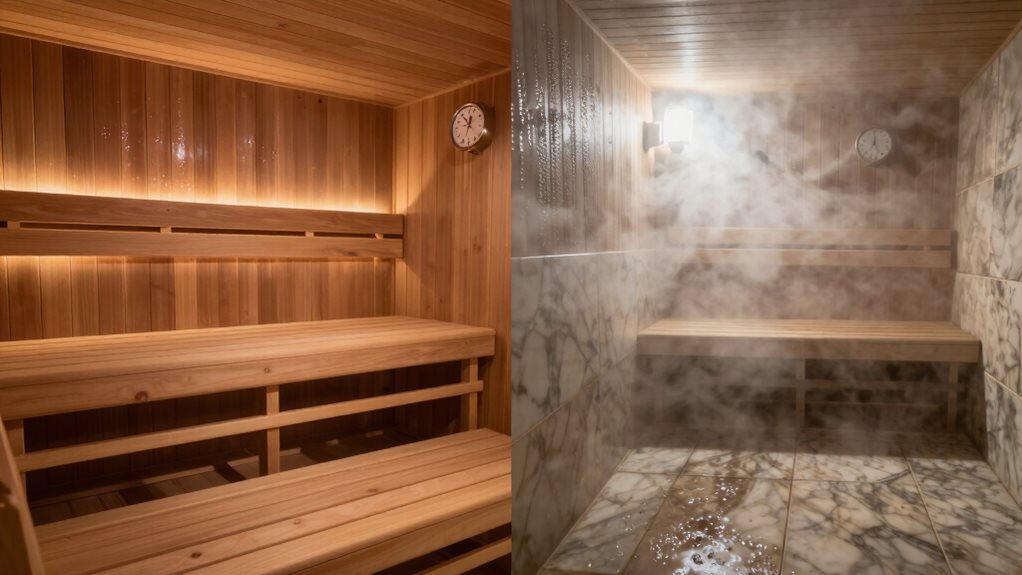

Both saunas and steam rooms offer unique health benefits. Saunas (150°F-195°F, low humidity) excel at improving cardiovascular health, promoting muscle recovery, and activating heat shock proteins that repair cells. Steam rooms (110°F-120°F, high humidity) better support respiratory health, skin hydration, and mucus clearance. Your choice depends on personal goals—cardiovascular improvement and deeper muscle relief favor saunas, while respiratory issues and skin concerns favor steam rooms. The ideal approach might combine both therapies for maximum wellness advantages.
The Fundamental Differences Between Saunas and Steam Rooms
While both saunas and steam rooms provide therapeutic heat experiences, they differ dramatically in their fundamental characteristics.
The most remarkable distinction is temperature and humidity: saunas operate at higher temperatures (150°F-195°F) with low humidity (5-30%), while steam rooms maintain lower temperatures (110°F-120°F) but extremely high humidity (95-100%).
Their heat sources also vary considerably.
Saunas use electric heaters, wood stoves, or hot rocks that radiate dry heat through conduction and radiation. In contrast, steam rooms employ steam generators that boil water, creating a moist environment where heat transfers through convection. Construction materials reflect these different environments, with saunas typically built using wooden materials like spruce, pine, or cedar. Steam rooms require non-porous materials such as ceramic tile, acrylic, or glass to prevent moisture damage.
You’ll notice different sensations in each space.
The sauna’s dry heat promotes quick sweat evaporation, while the steam room’s humid environment actually limits your sweating ability.
Curiously, steam rooms often feel hotter despite their lower temperature—that’s the power of moisture at work!
Cardiovascular Health Impacts and Blood Pressure Effects
Your heart responds differently to saunas and steam rooms, with each offering unique cardiovascular benefits worth understanding.
While both heat therapies temporarily raise your heart rate similar to moderate exercise, saunas tend to cause greater systolic blood pressure increases but provide superior long-term blood pressure improvements.
Steam rooms, though creating more physiological strain through higher heart rate increases, might be better for those seeking immediate blood vessel dilation, whereas saunas excel at improving arterial flexibility and reducing inflammation markers linked to heart disease. For optimal results, experts suggest spending 20-30 minutes in heat therapy 2-3 times per week. Frequent use of saunas (4-7 times weekly) has been associated with reduced cardiovascular risks in observational studies.
Blood Pressure Benefits Compared
Both steam rooms and saunas offer remarkable benefits for blood pressure regulation, though they achieve these effects through slightly different mechanisms.
When you’re looking to improve your cardiovascular health, understanding these differences can help you choose the right option.
- Saunas have more research backing their blood pressure benefits, with frequent use showing longer-lasting improvements.
- Steam rooms dilate your blood vessels too, but the humid environment can make cooling less efficient.
- A 15-minute sauna session after exercise, done three times weekly, improves blood pressure more than just working out.
- Weekly steam sessions for 12 weeks can notably reduce both systolic and diastolic readings.
- For cardiovascular workouts, saunas create greater core temperature rises while steam rooms excel at relieving muscle soreness.
Research shows that sauna bathing can cause heart rates to increase to 100-150 beats per minute, similar to the effects of moderate exercise.
The release of aldosterone hormone during steam room use helps support healthy blood pressure levels, particularly for those with hypertension concerns.
You’ll get blood pressure benefits from either option, but saunas edge out steam rooms for cardiovascular health enhancements.
Heart Health Performance
When it comes to heart health performance, steam rooms and saunas offer distinct cardiovascular impacts that could influence which option you choose for wellness routines.
Both environments create heart rate increases similar to light-moderate exercise, though steam rooms typically produce larger immediate spikes.
Dry saunas tend to cause higher systolic blood pressure during sessions, while steam rooms raise your core temperature faster due to humidity blocking sweat evaporation. Steam rooms can significantly lower blood pressure through their ability to dilate blood vessels throughout the body.
After either treatment, you’ll experience a pleasant parasympathetic rebound effect as your heart rate falls.
Long-term benefits appear stronger with saunas, which have more research showing reduced resting blood pressure, improved arterial function, and even lower cardiovascular mortality rates.
If you have heart failure or cardiovascular disease, steam rooms pose a higher overheating risk because you can’t cool down as effectively.
Always consult your doctor before starting heat therapy.
Circulation Improvement Differences
Circulation improvement stands at the heart of thermal therapy benefits, with distinct differences between steam rooms and saunas affecting your cardiovascular health.
Both options promote vasodilation—widening of your blood vessels—but they achieve this through different mechanisms:
- Dry saunas increase peripheral blood flow through sustained evaporative cooling, helping your muscles recover.
- Steam rooms create stronger acute circulatory stress due to their humidity blocking sweat evaporation.
- Your blood pressure typically rises during both experiences but often drops below baseline afterward.
- Steam’s higher humidity creates more intense core temperature increases and heart rate elevation.
- Regular sauna use shows promising long-term blood pressure benefits in studies, particularly with frequent sessions.
Research indicates saunas may provide cardioprotective benefits through improved blood flow and oxygenation.
The key difference? Steam delivers more immediate circulatory intensity, while saunas may provide more sustainable circulatory benefits when used regularly.
If you have cardiovascular concerns, consult your doctor before trying either option.
Sauna sessions consistently dilate blood vessels which can enhance cardiovascular health with consistent use over time.
Muscle Recovery and Joint Flexibility Benefits
After pushing your body through a challenging workout, your muscles cry out for relief—but which heat therapy answers most effectively? Research suggests both options offer unique benefits.
Steam rooms provide deeper muscle tension relief through moist heat that penetrates soft tissues more effectively than dry heat. You’ll experience better circulation as humidity loosens tight muscles and washes away exercise waste products. The moist environment activates your parasympathetic nervous system, promoting hormonal recovery while you relax.
Studies show moist heat relieves DOMS (delayed onset muscle soreness) more quickly than dry heat.
Saunas, meanwhile, activate heat shock proteins that repair muscle cells and reduce inflammation. They’ve been shown to increase growth hormone levels by 140%, supporting faster recovery.
Basketball players using saunas reported less soreness and increased explosiveness.
For joint flexibility, both therapies dilate blood vessels and improve nutrient delivery to injured areas, though steam rooms might’ve a slight edge due to their deep moist heat penetration.
Respiratory System Effects: Breathing Better With Heat
If you’ve ever wondered why steam rooms and saunas affect your breathing differently, the answer lies in their humidity levels.
Your sinuses might feel instantly clearer in a steam room’s 90-100% humidity, which loosens mucus and opens airways like a natural decongestant.
In contrast, the dry heat of a sauna (10-20% humidity) can be gentler on sensitive lungs and asthma, allowing your chest muscles to relax while improving circulation without the heavy moisture that some find uncomfortable.
Steam’s Sinus-Clearing Power
When your sinuses feel stuffed and breathing becomes a chore, steam’s remarkable ability to clear congestion might be just what you need.
Steam works as a natural expectorant, helping your body dislodge and expel the mucus that’s blocking your airways.
- Steam loosens thick phlegm, making it easier to clear your airways when you have a cold.
- Warm, humid air opens restricted breathing passages, improving your breathing pattern.
- Blood vessels dilate with steam exposure, increasing oxygen flow to your airways.
- Regular steam sessions may reduce your risk of respiratory diseases like pneumonia.
- For children with congestion, a steamy shower provides relief without scalding risks.
Studies show that people who use steam or sauna therapy 2-3 times weekly have a 27% lower risk of developing respiratory diseases compared to those who rarely use heat therapy.
Dry Heat Breathing Benefits
Many people don’t realize that dry heat environments like saunas provide substantial benefits for your respiratory system, despite their lack of moisture.
While you might think only steam helps breathing, dry heat also dilates your blood vessels, improving circulation to your lungs and boosting oxygen delivery throughout your body.
The warmth helps relax airway muscles, reducing constriction that can trigger coughing or wheezing. This is particularly helpful if you have asthma or COPD.
Regular sauna sessions may even strengthen your respiratory system over time, as your body adapts to the environment.
Though saunas don’t provide the same mucus-thinning benefits as steam rooms, the increased circulation and muscle relaxation can still make breathing easier and more comfortable, especially after exercise or during cold weather.
Skin Health and Detoxification Processes
Both steam rooms and saunas offer remarkable benefits for your skin health, though they achieve these benefits through distinctly different mechanisms.
Steam rooms excel at hydration while saunas focus on deep detoxification.
- Steam rooms create a moisture barrier on your skin, preventing water loss and making your complexion dewy and supple.
- Saunas promote cellular-level detoxification, with infrared options reaching deeper tissues to flush out impurities.
- Your skin type matters—dry or sensitive skin typically responds better to steam’s gentle moisture, while oily skin benefits from sauna’s oil-regulating properties.
- Steam rooms open and cleanse pores through warm condensation that rinses away dirt and dead cells.
- Regular use of either method stimulates collagen production, though saunas may provide stronger anti-aging benefits through increased circulation.
Chronic Inflammation Reduction and Immune Function
Beyond skin-deep benefits, the healing power of heat extends to your body’s internal battlegrounds against inflammation.
Both heat therapies tackle chronic inflammation, but with different strengths. Saunas show impressive results in scientific studies, reducing inflammatory markers like C-reactive protein by up to 1.66 mg/l over time, especially when you use them 4-7 times weekly.
Steam rooms, with their 100% humidity, excel at respiratory relief by loosening mucus and opening airways. They’re particularly effective for severe muscle inflammation, reducing pain scores by up to 35% compared to saunas’ 28%.
The moist heat activates complement proteins that help your white blood cells fight infections.
For immune function, both options increase circulation and mimic fever’s natural defense mechanism, but steam rooms are less dehydrating during recovery periods.
Stress Management and Mental Health Improvements
While your body sweats in the heat, your mind experiences a profound sense of calm during heat therapy sessions. Both saunas and steam rooms trigger endorphin release, creating a natural mood boost that can transform your mental state. The heat exposure lowers cortisol levels, helping your body physically release tension while giving your mind a much-needed break.
- Heat from either environment triggers feel-good endorphins that reduce anxiety
- Regular sessions (1-2 weekly) improve stress markers, especially for high-stress jobs
- Your brain shifts into relaxing alpha and theta waves during sauna bathing
- Steam’s soothing moisture creates a tranquil setting at a milder 110-115°F
- Both environments promote mindfulness, pulling your attention away from daily worries
Your preference may depend on comfort—saunas offer meditative dry heat, while steam rooms provide humidity that some find more soothing.
Post-Exercise Recovery Efficiency Comparison
How your body recovers after an intense workout can greatly impact your fitness progress and overall wellbeing.
Both steam rooms and saunas offer unique benefits for muscle recovery, but they work differently. Steam rooms use moist heat that penetrates soft tissues quickly, reducing muscle soreness faster than dry heat. You’ll find your skin stays hydrated thanks to the 100% humidity.
Saunas, with their dry heat, penetrate deeper into muscles and connective tissues, stimulating heat shock proteins that aid in repair. They’re particularly effective at increasing blood flow, similar to light cardiovascular exercise.
For ideal results, try steam rooms within 30 minutes post-workout to lower cortisol and boost growth hormone, or choose saunas when you’re seeking deeper muscle recovery and cardiovascular benefits.
Long-Term Health Benefits and Longevity Factors
Looking at long-term health benefits, saunas have stronger evidence for extending your lifespan through reduced cardiovascular mortality, while steam rooms offer promising but less documented protection.
Your heart health particularly benefits from regular sauna use, with studies showing decreased blood pressure, improved arterial function, and lower risks of fatal heart disease compared to the more limited research on steam rooms.
Better sleep quality can result from both heat therapies, as your body’s natural cooling process after heat exposure may trigger deeper sleep phases, though research specifically comparing sauna versus steam room effects on sleep remains incomplete.
Aging and Lifespan Effects
Research into heat therapy‘s effects on longevity has revealed remarkable findings about sauna use and aging. Regular sauna bathing appears to notably extend your healthspan through multiple biological mechanisms.
Finnish studies show that frequent sauna users (4-7 sessions weekly) enjoy a 40% reduction in all-cause mortality compared to once-weekly users.
- Frequent sauna use (4-7 times weekly) reduces dementia risk by 66% versus once-weekly use
- Heat stress triggers protective proteins that may add approximately one year to your lifespan
- Regular sauna sessions decrease Alzheimer’s disease risk by 65% over long-term follow-ups
- Your body develops resilience against aging through anti-inflammatory and antioxidant effects
- The benefits follow a dose-response pattern—more frequent sessions provide greater protection
These impressive results suggest that incorporating regular sauna bathing into your routine could be a simple yet powerful strategy for healthy aging.
Cardiovascular System Protection
The impressive longevity benefits of heat therapy extend directly to your heart and blood vessels—perhaps the most remarkable way these treatments protect your overall health.
While both options offer cardiovascular perks, saunas edge ahead by improving arterial flexibility, boosting blood flow, and lowering blood pressure more effectively when combined with exercise.
Saunas show particular strength in reducing cholesterol and inflammation markers like C-reactive protein, potentially cutting heart disease risk by 30%.
Steam rooms, however, excel at quickly dilating blood vessels and may create greater diastolic pressure decreases (up to 20 mmHg).
Both treatments raise your heart rate similarly to light exercise, but steam creates slightly higher physiological demands.
If you have a heart condition, proceed cautiously—steam’s humidity increases overheating risk, while saunas can raise heart rates to 100-150 beats per minute.
Sleep Quality Enhancement
When searching for natural ways to improve your nightly rest, both saunas and steam rooms offer compelling sleep-enhancing benefits that extend far beyond mere relaxation.
The science behind these heat therapies reveals why they’re powerful sleep aids.
- Sauna sessions trigger a natural temperature drop that mimics your body’s pre-sleep cooling process.
- Steam’s high humidity creates a cocoon-like atmosphere that promotes calm and relaxation.
- Both therapies release endorphins that reduce anxiety and prepare your mind for sleep.
- Regular use can increase your deep sleep percentage, with saunas showing stronger evidence.
- Evening heat sessions help regulate your circadian rhythm for more consistent sleep patterns.
Finnish research shows 83% of regular sauna users report better sleep quality, while steam rooms excel at clearing respiratory pathways, indirectly supporting better rest through improved breathing during sleep.
Choosing the Right Heat Therapy for Your Health Goals
Deciding between a steam room and sauna ultimately depends on your specific wellness priorities, much like choosing the right tool for a particular job.
For muscle recovery and joint flexibility, saunas offer superior benefits through deeper heat penetration that effectively reduces inflammation and stiffness. If you’re dealing with respiratory issues like congestion or bronchitis, steam rooms are your best option, as the humid environment loosens mucus and hydrates breathing passages.
For cardiovascular improvements, saunas have impressive clinical results, lowering both blood pressure and pulse wave velocity.
Your skin concerns matter too—steam rooms provide better hydration while saunas promote more intense sweating.
Consider your personal health goals, and you might even alternate between both therapies to maximize the distinct benefits each offers.
Frequently Asked Questions
How Do Medications Interact With Sauna or Steam Room Use?
Many medications interact dangerously with heat exposure. You’ll need extra caution if you’re taking diuretics, blood pressure medications, using transdermal patches, or stimulants. Always consult your physician before combining medications with sauna or steam rooms.
Can Pregnant Women Safely Use Saunas or Steam Rooms?
No, you shouldn’t use saunas or steam rooms while pregnant, especially in your first trimester. They can raise your core temperature above safe levels, potentially causing birth defects and miscarriage risks. Always consult your doctor first.
What’s the Optimal Duration and Frequency for Health Benefits?
For ideal health benefits, use saunas 15-20 minutes per session, 4-7 times weekly. Limit steam rooms to 10-15 minutes, 2-3 times weekly. You’ll maximize cardiovascular benefits while avoiding overheating risks in both.
Are There Age Restrictions for Sauna or Steam Room Use?
Yes, age restrictions apply. You shouldn’t bring infants under 3 into saunas or steam rooms. Children 3-12 need supervision with shorter sessions, while teens 13+ can typically use facilities with fewer limitations.
How Do Saunas and Steam Rooms Affect People With Autoimmune Conditions?
Both saunas and steam rooms can help your autoimmune condition by reducing inflammation, easing pain, and boosting immunity. Saunas have more clinical evidence, particularly for rheumatoid arthritis and ankylosing spondylitis symptoms.
Final Thoughts
You’ll benefit from both saunas and steam rooms, but your specific health goals should guide your choice. Saunas offer deeper heat penetration and may provide superior cardiovascular benefits, while steam rooms can be gentler on your respiratory system and skin. Consider alternating between both therapies to maximize their complementary effects. Remember to stay hydrated, start with short sessions, and consult your doctor if you have underlying health conditions before making heat therapy part of your wellness routine.