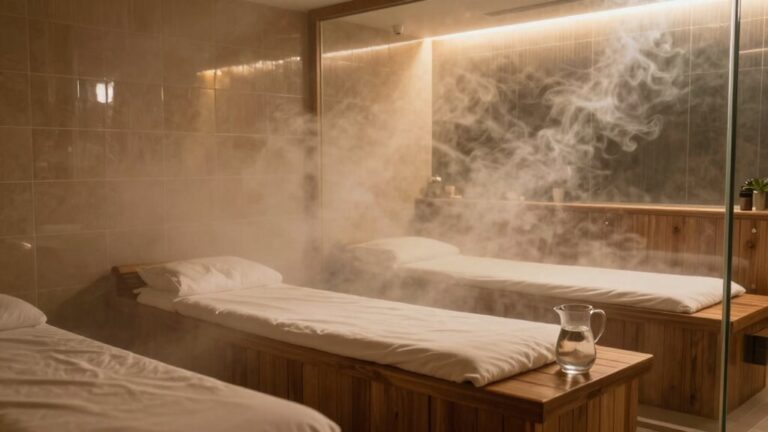
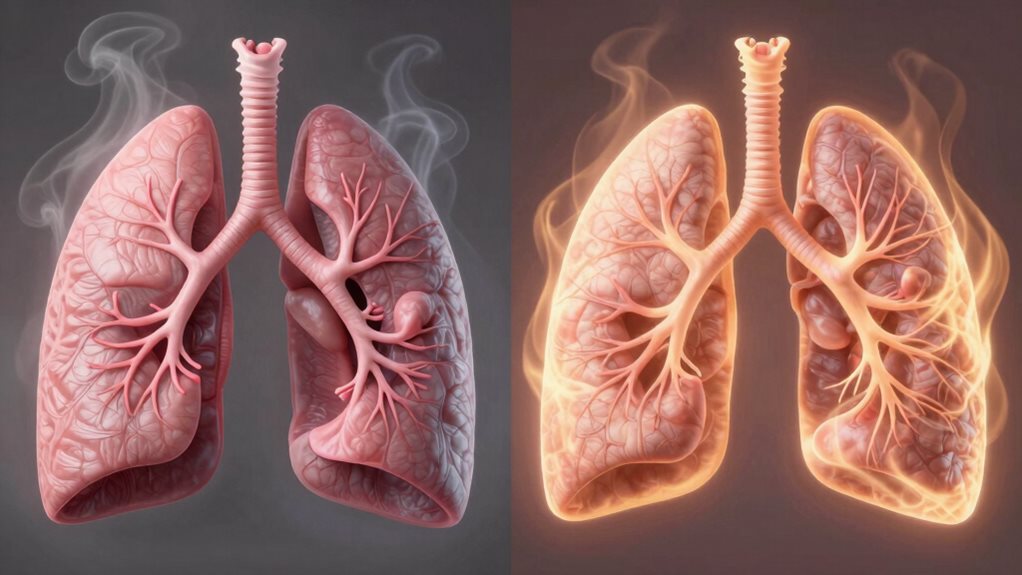

Both steam rooms and saunas benefit your lungs, but in different ways. Steam rooms excel at clearing congestion with high humidity that loosens mucus and opens airways, making them ideal during colds or for asthma symptoms. Saunas reduce inflammation and strengthen lung function through dry heat, potentially lowering your risk of respiratory diseases long-term. Your specific respiratory needs should guide your choice, and alternating between both might offer the most thorough respiratory support.
Understanding How Heat Therapy Affects Respiratory Health
When you step into a sauna or steam room, your body experiences more than just a pleasant warming sensation – your respiratory system undergoes several notable changes. The heat causes your blood vessels to widen, increasing blood flow to your lungs and boosting how much air you breathe in and out.
In dry saunas, the high temperature can make the mucus in your airways thinner and easier to clear out, which might help if you’re congested. Recent research shows that patients with obstructive pulmonary disease experienced significant improvement in their forced vital capacity measurements after sauna sessions.
Your body also responds to the heat stress by producing protective proteins and anti-inflammatory substances that could benefit lung tissues. Some studies even suggest that regular sauna sessions might improve lung function measurements and reduce the risk of respiratory conditions over time. Regular sauna bathing has been linked to a lower risk of pneumonia and chronic obstructive pulmonary disease.
Steam Room Benefits for Lung Function and Congestion
When you step into a steam room, the moist air immediately helps your breathing passages open up, allowing you to breathe more deeply.
The high humidity works to thin out thick mucus in your airways, making it easier for you to clear congestion from your nose, throat, and lungs.
You’ll notice relief from stuffiness as the warm, damp environment breaks up phlegm and encourages your respiratory system to expel it naturally.
Some studies suggest that inhaling essential oils in steam may enhance congestion relief, providing additional benefits for respiratory symptoms.
Unlike saunas that use dry heat, steam rooms specifically ease bronchitis symptoms and other respiratory conditions through their moisture-rich environment.
Moisture Eases Breathing
While struggling with congestion or breathing difficulties, you’ll find the moisture-rich environment of a steam room particularly beneficial for your lungs. The warm, humid air helps loosen stubborn phlegm and mucus that’s causing your congestion, making it easier to clear your airways.
When you breathe in steam, it directly warms your mucous membranes, breaking up congestion in your sinuses and lungs. This warming effect provides temporary relief from symptoms like stuffy nose, headaches, and throat irritation.
The moist heat is especially helpful for conditions like sinusitis, as it promotes better drainage. Regular sauna bathing has been shown to reduce respiratory disease risk in multiple studies, with more frequent sessions providing greater protection. Steam therapy promotes vasodilation and circulation, enhancing blood flow and oxygen delivery to respiratory tissues.
Remember to limit your sessions to 5-10 minutes and avoid public steam rooms when you’re sick. While steam rooms offer genuine respiratory benefits, they shouldn’t replace your prescribed medical treatments—think of them as a helpful supplement to your regular care.
Phlegm-Busting Humidity
Three key mechanisms make steam rooms exceptional for clearing congested airways and improving lung function. When you breathe in the hot, humid air, it breaks up thick mucus in your lungs and sinuses, making it easier to expel. This is why respiratory therapists often recommend steam therapy for bronchitis sufferers. The improved circulation benefits also help deliver immune cells to fight respiratory infections more effectively. Warm, humid environments are particularly beneficial for those with respiratory issues, as they help loosen chronic mucus in the respiratory system.
- The high humidity at 100-110°F works like a natural expectorant, loosening stubborn phlegm that’s causing congestion.
- Moist heat promotes vasodilation, improving blood circulation and oxygen delivery to your lungs.
- The warm, humid environment helps open mucous membranes, allowing for deeper, more comfortable breathing.
You’ll find steam rooms particularly helpful if you’re dealing with sinusitis, chronic bronchitis, or temporary cold symptoms—just limit sessions to 5-10 minutes and check with your doctor first.
Sauna Effects on Respiratory System and Immunity
Research consistently shows that regular sauna use offers remarkable benefits for respiratory health and immune function.
Studies reveal that people who enjoy 3-7 sauna sessions weekly have a 38% lower risk of developing COPD, with similar protection against pneumonia.
When you spend time in a sauna, your lungs experience increased essential capacity, better ventilation, and improved forced expiratory volume.
For COPD patients, regular heat therapy can greatly improve breathing function after just 4 weeks. The heat also helps loosen stubborn mucus, making it easier to clear your airways.
Your immune system gets stronger with consistent sauna use, while inflammation throughout your respiratory system decreases.
Even if you have allergic rhinitis, you might notice easier breathing after several weeks of sauna bathing.
Comparing Humidity Levels and Their Impact on Breathing
Two dramatically different environments emerge when comparing saunas and steam rooms, primarily due to their humidity levels. Saunas maintain dry conditions (5-30% humidity) while steam rooms operate at near-saturation (95-100% humidity), creating distinctly different respiratory experiences for your lungs.
- Evaporation dynamics: In saunas, sweat evaporates quickly from your skin, providing cooling relief, while steam rooms prevent evaporation, keeping moisture on your skin and in your airways.
- Respiratory impact: Steam rooms’ high humidity helps open airways and ease congestion, making breathing easier if you have respiratory conditions. The steam room’s consistent 100% humidity level can provide therapeutic benefits for those suffering from asthma or bronchitis. Steam rooms are particularly effective at clearing mucous membranes and providing immediate relief for those with respiratory issues.
- Temperature perception: Though saunas run hotter (150-195°F vs. 110-120°F in steam rooms), the steam room’s moisture makes it feel more intense as water vapor transfers heat efficiently to your airways.
Scientific Research on Heat Therapy for Respiratory Conditions
The scientific evidence behind heat therapy offers compelling insights into how saunas and steam rooms affect your respiratory health.
Research shows that regular sauna sessions can improve your lung function, particularly if you have conditions like COPD or asthma. In one study, patients experienced increases in forced crucial capacity and expiratory volume after sauna use.
You’ll find that heat therapy works by opening your airways, loosening mucus, and improving overall airflow.
Frequent sauna users (4-7 times weekly) even show a lower risk of developing respiratory diseases like pneumonia. The heat reduces inflammation in your airways, similar to how exercise benefits your respiratory system.
However, if you have existing lung conditions, you should consult your doctor first—dry sauna air might trigger breathing difficulties for some people, while steam rooms might provide better mucus clearance through their humidity.
Which Option Works Best for Specific Lung Issues
If you’re struggling with asthma, a dry sauna’s low humidity environment may offer more comfortable breathing compared to a steam room’s intense moisture.
For congestion and stubborn mucus, steam rooms excel by using 100% humidity to soften and break up phlegm in your sinuses and chest.
Your specific respiratory condition should guide your choice between these heat therapies, as they deliver different benefits for different lung issues.
Asthma Management Differences
Managing asthma effectively requires understanding how different heat therapies affect your specific symptoms. Your body’s response to humidity and heat can determine whether a steam room or sauna provides relief or triggers symptoms.
Steam rooms excel at loosening thick mucus and improving airflow, especially if you’re dealing with congestion.
Saunas, however, offer impressive inflammation reduction and may lower your risk of respiratory infections over time.
- Steam benefits: Hydrates airways, improves peak flow rates, and boosts sinus drainage when postnasal drip triggers your asthma
- Sauna benefits: Reduces lung inflammation, improves respiratory function, and cuts common cold frequency by half
- Key consideration: Test short sessions with your rescue inhaler nearby, watching for signs that indicate which therapy your lungs prefer
Congestion Relief Comparison
When your chest feels tight and breathing becomes a chore, choosing between a steam room and sauna could make all the difference in finding relief.
For nasal and sinus congestion, steam rooms are your best bet. The moist heat at 100% humidity loosens mucus, softens nasal membranes, and helps you clear phlegm more effectively when you blow your nose.
Adding crucial oils like peppermint can improve these benefits.
Saunas, however, excel at relieving chest tightness. The dry heat expands your lungs and melts away chest congestion, making breathing easier.
You’ll find this particularly helpful if steam’s heavy humidity feels overwhelming for your sensitive lungs.
Remember that steam works better for actively breaking up mucus during colds, while saunas might be more comfortable for general respiratory expansion and immune support.
Best Practices for Using Heat Therapy to Improve Lung Health
How can you maximize the benefits of heat therapy for your lungs? The key lies in smart usage patterns that balance effectiveness with safety.
Effective lung care through heat therapy demands a thoughtful approach—one that prioritizes both therapeutic value and respiratory safety.
For optimal respiratory improvement, you’ll want to create a consistent routine that works with your specific lung needs.
- For congestion relief, use a steam room for 10-15 minutes weekly, as the 100% humidity creates ideal conditions for loosening mucus and opening airways.
- If you have sensitive lungs, choose infrared saunas which allow longer sessions without overwhelming your respiratory system.
- Alternate between both therapies for extensive benefits—steam rooms excel at moistening airways, while saunas reduce inflammation and improve overall lung function.
Always consult your doctor before starting heat therapy if you have severe respiratory conditions.
Frequently Asked Questions
Can Heat Therapy Worsen Certain Pre-Existing Respiratory Conditions?
Yes, heat therapy can worsen your COPD, asthma during flare-ups, and active respiratory infections. Steam rooms are particularly problematic if you’ve got COPD or sensitive asthma due to their high humidity affecting breathing.
How Long Should Beginners Stay in Steam Rooms or Saunas?
As a beginner, you’ll want to limit your sessions to 5-10 minutes initially in either facility. You can gradually increase to 15 minutes maximum as your tolerance improves, but always exit if you feel dizzy.
Are Portable Home Steam or Sauna Options Effective for Respiratory Benefits?
Portable steam saunas offer meaningful respiratory benefits, though less intense than commercial units. You’ll gain airway relief if your model generates sufficient humidity. Infrared options won’t provide the same mucus-loosening effects that steam delivers.
Should You Use Heat Therapy During Active Respiratory Infections?
You should use heat therapy cautiously during respiratory infections. It can temporarily relieve congestion and loosen mucus, but don’t use it if you have severe symptoms or high fever. Always prioritize medical treatment first.
How Do Medications for Lung Conditions Interact With Heat Therapies?
Your lung medications may work better with heat therapies. Dry saunas complement controller inhalers, while steam rooms improve mucus-clearing drugs. Always check with your doctor as heat can affect medication absorption and effectiveness.
Final Thoughts
When choosing between steam rooms and saunas for your lungs, consider your specific needs. Steam rooms, with their moist heat, generally provide better relief for congestion and respiratory conditions like asthma. Saunas offer beneficial dry heat that strengthens immunity and opens airways. You’ll get the most benefit by limiting sessions to 15-20 minutes, staying hydrated, and consulting your doctor if you have existing lung issues. Both options can improve respiratory health when used correctly.