
Saunas outperform steam rooms for weight loss, burning 60-150 calories in 30 minutes (about 1.5 times your resting rate) compared to steam rooms’ 10-20% metabolic boost. Both primarily cause temporary water weight loss through sweating rather than fat reduction. For best results, use either option 3-4 times weekly for 15-30 minutes, always staying hydrated. The real benefits emerge when you combine these heat therapies with proper diet and regular exercise.
How Saunas and Steam Rooms Affect Calorie Burning
When it comes to burning calories in saunas and steam rooms, the results might surprise you.
Saunas typically boost your metabolic rate to about 1.5 times your resting level, burning roughly 60-150 calories during a 20-30 minute session.
Steam rooms, with their lower temperatures but higher humidity, increase metabolism less—only about 10-20% above resting—resulting in fewer calories burned per session.
Your heightened heart rate during these heat sessions mimics low-intensity exercise, which explains the calorie burn.
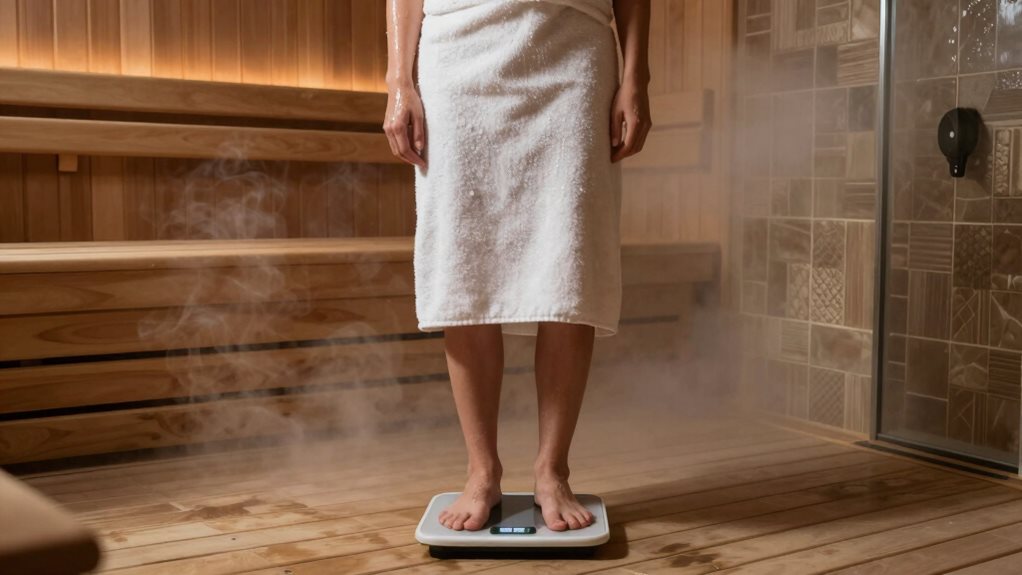
However, don’t mistake post-session weight loss for fat burning; you’re mainly losing water weight through sweating.
That 0.5-3 pound drop you might see on the scale will return once you rehydrate, usually within 24 hours.
For meaningful weight loss, these heat treatments work best as supplements to exercise and diet.
Research shows that regular sauna use may help improve insulin sensitivity, which could indirectly support weight management goals over time.
Traditional saunas operate at significantly higher temperatures of 160°F to 200°F compared to steam rooms, contributing to their greater effectiveness for passive calorie expenditure.
The Science Behind Heat-Induced Weight Changes
The physical changes you experience in a sauna or steam room reveal fascinating science at work. When you step on the scale after a session, that weight drop isn’t fat loss—it’s primarily water weight from sweating. Your body activates eccrine sweat glands to cool down, resulting in fluid loss that typically ranges from 0.3 to 2.0 kilograms per session. Recent studies have shown that regular exposure to high temperatures at 50°C for 15 minutes can contribute to meaningful weight reduction when part of a consistent routine.
Several factors determine how much weight you’ll temporarily shed: the temperature, humidity, how long you stay in, and whether you’re already dehydrated. Your body size matters too—people with higher BMI and greater surface area tend to lose more water weight.
While heat exposure does slightly increase heart rate and metabolism (similar to light exercise), these changes aren’t substantial enough to create meaningful fat loss without additional lifestyle changes. The World Health Organization confirms that a caloric deficit through proper diet and regular exercise remains the most effective approach for sustainable fat reduction.
Comparing Caloric Expenditure: Sauna vs. Steam Room
Despite popular claims on social media, both saunas and steam rooms offer modest caloric benefits that aren’t quite the weight-loss miracle many hope for.
Social media may promise sauna slimming miracles, but the actual calorie burn is modest—think brisk walk, not marathon.
In reality, a 30-minute sauna session typically burns between 100-300 calories, while steam rooms generally yield around 150 calories—comparable to a brisk walk. Infrared saunas may provide better results, burning approximately 200-600 calories in a 30-minute session.
Traditional saunas might’ve a slight edge due to their higher temperatures, which push your body to work harder at cooling down. Physiological responses to heat therapy can create effects similar to moderate-intensity cardio, though not fully replacing exercise benefits.
Your personal results will vary based on your body weight, metabolic rate, and session length. The longer you stay, the more calories you’ll burn, with expenditure increasing progressively in 10-minute increments.
Water Weight vs. Fat Loss: Understanding the Difference
Many people stepping off the scale after a sauna or steam room session feel elated by the sudden drop in weight, but what’s really happening inside your body?
When you sweat in a sauna or steam room, you’re primarily losing water, not fat. This weight loss is temporary—you’ll gain it back as soon as you drink fluids. Your body sheds water through sweat glands, which can result in losing 0.5-2% of your body weight in a single session. Saunas generally produce more intense results due to their higher temperatures of 150-195°F compared to steam rooms. Traditional infrared saunas can help with some health benefits like improved metabolism and stress reduction, but don’t expect significant fat loss.
That’s why athletes sometimes use saunas before weigh-ins!
Real fat loss requires a sustained caloric deficit over time. While heat exposure slightly increases your metabolism, it’s not enough on its own to burn notable fat.
The scale might show a quick drop, but remember: water weight comes off quickly and returns just as fast.
Cardiovascular Benefits and Metabolic Effects
Your heart works harder during both sauna and steam room sessions, with rates climbing to 100-160 beats per minute, similar to what you’d experience during moderate exercise.
The heat exposure triggers metabolic changes that can help reduce triglycerides and waist circumference, particularly when used consistently over time.
While saunas appear to offer slightly greater improvements in cardiovascular markers like pulse wave velocity, both options provide meaningful metabolic benefits that support your weight management goals.
Saunas may be more effective for calorie expenditure due to their higher temperature range, typically between 150°F to 195°F compared to steam rooms’ 110°F to 120°F.
Dry sauna sessions have been shown to create micro-stresses on the cardiovascular system that can improve vascular elasticity and potentially enhance metabolic function.
Heart Rate Comparison
How exactly do saunas and steam rooms affect your heart? When you’re sitting in either one, your heart rate increases similarly to how it would during moderate exercise, like a brisk walk or light jog.
Your heart works harder to cool your body down, pumping at rates between 60-100 beats per minute above your resting rate.
Steam rooms might push your heart rate slightly higher (up to 138 beats per minute) compared to saunas (around 126 beats per minute), primarily because the humidity makes it harder for sweat to evaporate from your skin.
After your session, your heart rate and blood pressure gradually return to normal or even dip below baseline within 30-60 minutes.
This cardiovascular workout happens without the physical exertion of traditional exercise—your heart works while your muscles rest.
Metabolic Boost Analysis
The cardiovascular effects we’ve explored directly influence another important benefit of heat therapy: the metabolic boost. When you spend time in either a sauna or steam room, your body works harder to cool itself, burning additional calories in the process. Studies show both environments can increase your metabolic rate to 1.5-2 times your resting rate.
- Your metabolism increases 5-10% for about 30 minutes after leaving the heat, giving you a modest calorie-burning advantage.
- Your body burns roughly 60 calories in a 30-minute sauna session versus 40 at rest.
- Your heart works similar to light cardio without the physical strain of exercise.
- Your inflammation levels decrease when heat therapy releases stress hormones with anti-inflammatory properties.
While saunas may edge out steam rooms for calorie burn, both provide similar metabolic benefits.
Optimizing Heat Therapy for Weight Management
Four key strategies can maximize the weight management benefits of your sauna or steam room sessions.
First, limit your time to 15-30 minutes per session, as longer exposure doesn’t notably increase calorie burn but may lead to dehydration.
Second, aim for consistency with 3-4 weekly sessions to support your metabolism and circulation enhancements.
Third, properly hydrate before, during, and after your sessions to maintain safety while supporting your body’s recovery process. The temporary water weight you lose will return once you rehydrate, which is healthy and necessary.
Finally, consider using heat therapy after workouts when your heart rate is already raised to extend your calorie-burning window.
Combining Heat Sessions With Exercise Regimens
When properly integrated into your fitness routine, heat therapy can greatly boost your weight loss results beyond what exercise alone provides.
Both saunas and steam rooms complement your workouts by extending the calorie-burning window and supporting faster recovery between sessions.
- Metabolic Boost – A 30-minute sauna session after exercise can burn up to 300 additional calories, turning your cool-down into a productive weight loss opportunity!
- Recovery Champion – Steam rooms reduce muscle soreness, helping you get back to your workouts sooner without painful DOMS.
- Heart Rate Extender – Both options keep your heart rate raised post-workout, mimicking light cardio without additional effort.
- Sweat Enhancer – You’ll experience increased fluid loss, improving the total caloric output from your combined exercise-heat session.
Health Considerations When Using Heat for Weight Loss
While combining heat with exercise amplifies your fitness expedition, understanding the health implications of sauna and steam room use for weight loss is crucial before diving in.
Dehydration is your primary concern, as you’ll lose 1-3 pounds of water weight that returns within 24 hours. Always rehydrate immediately after sessions to prevent headaches and dizziness.
Remember, the scale might show quick results, but it’s just water loss, not fat reduction.
If you have heart conditions or blood pressure issues, proceed with caution. Your heart works harder in heat environments, particularly in saunas where cardiovascular load is higher.
The calorie burn (up to 300 in saunas, 150 in steam rooms) can complement your routine but won’t replace proper diet and exercise for sustainable weight management.
Strategic Timing: When to Use Saunas and Steam Rooms
Timing your heat sessions strategically can dramatically improve your weight loss results.
You’ll burn more calories using saunas or steam rooms immediately after workouts, while evening sessions generally outperform morning sessions for fat loss.
For ideal results, try scheduling 15-30 minute sessions 3-4 times weekly, either post-exercise or during evening hours when your body responds best to heat exposure.
Post-Workout Heat Sessions
Maximizing the benefits of your workout requires strategic planning beyond just the exercise itself.
After exercising, both saunas and steam rooms can extend your calorie burn and improve recovery, but they work differently. Saunas create a more intense cardiovascular response, burning 100-150 calories in a 30-minute session, while steam rooms offer gentler recovery with less strain.
For ideal results, consider these post-workout strategies:
- Use heat therapy 3-4 times weekly to extend your fat-burning zone by keeping your heart rate at 70-80% maximum.
- Limit sessions to 15-30 minutes to balance fluid loss with recovery benefits.
- Choose steam rooms when your muscles need relief and relaxation.
- Opt for saunas when you’re targeting additional calorie burn and better circulation.
Morning Metabolism Boost
If you’re looking to maximize weight loss results, the time of day you choose for heat therapy matters greatly.
Morning sessions deliver the strongest metabolic benefits, with infrared saunas burning up to 600 calories in just 30 minutes.
Your morning sauna experience triggers multiple weight-loss mechanisms: it regulates cortisol (preventing stress-related weight gain), activates brown fat (which burns calories to generate heat), and raises your heart rate similar to a brisk walk.
Studies show heat therapy can increase your metabolic rate by 5-10% for half an hour afterward.
While both saunas and steam rooms boost metabolism 1.5-2 times your resting rate, saunas typically create a stronger cardiovascular response due to their higher temperatures.
Either option kickstarts your day with improved insulin sensitivity and improved mitochondrial function—key factors for sustained weight management.
Recovery Day Timing
When you’ve just completed a challenging workout, your body’s recovery window presents a golden opportunity to improve weight loss through strategic heat therapy. Timing matters greatly when using saunas and steam rooms to support your fitness goals.
- Immediately post-workout (0-30 minutes) – Choose steam rooms first to relax tight muscles with moist heat, but limit sessions to 15 minutes to prevent dehydration.
- Later in the recovery day (2-6 hours post-exercise) – Schedule dry sauna sessions to trigger growth hormone release and boost circulation.
- Alternating heat therapies – Start with steam to loosen tissues, cool down for 5-10 minutes, then finish with a short sauna session for optimal benefits.
- Weekly planning – Space heat sessions across 2-3 non-consecutive recovery days to support weight loss without compromising training performance.
Creating a Sustainable Heat Therapy Routine for Results
To achieve meaningful weight loss benefits from heat therapy, you’ll need a consistent, well-planned routine rather than occasional sessions. Aim for 3-4 weekly visits of 15-30 minutes each, which provides ideal calorie burn while preventing dehydration.
Structure your routine by including sessions after workouts when possible, as this extends your raised heart rate and improves recovery.
Drink water before, during, and after to replace fluid loss, understanding that any immediate weight change is just temporary water loss.
Stay hydrated throughout your heat therapy sessions—any quick weight drop is simply water, not fat.
For beginners, start with steam rooms at lower temperatures, then gradually incorporate sauna sessions as your tolerance builds.
Frequently Asked Questions
Can Heat Therapy Reduce Cellulite Appearance?
Heat therapy won’t directly reduce cellulite. While it may temporarily improve skin appearance through increased circulation and fluid loss, there’s no scientific evidence supporting long-term cellulite reduction from saunas or steam rooms.
How Does Heat Therapy Affect Muscle Mass Retention?
Heat therapy helps you retain muscle mass by inhibiting protein degradation, increasing satellite cell activation, and stimulating synthesis pathways. You’ll see reduced atrophy during immobilization and improved muscle recovery after injuries.
Do Saunas or Steam Rooms Affect Hormone Levels?
Yes, both affect your hormones considerably. Saunas increase growth hormone by up to 142% post-exercise, while both environments reduce cortisol. They also trigger aldosterone release for blood pressure regulation and endorphins for improved mood.
Are Calorie-Burning Effects Different for Men Versus Women?
No, calorie-burning effects in saunas and steam rooms don’t greatly differ between men and women. Your body size matters more than gender, with larger bodies typically burning more calories during heat exposure sessions.
Can Sauna Use Replace Cardio Exercise for Heart Health?
No, sauna can’t fully replace cardio exercise for heart health. While it offers cardiovascular benefits like lower blood pressure and mortality risks, you’ll still need traditional exercise for ideal cardiorespiratory fitness and muscle adaptations.
Final Thoughts
Neither saunas nor steam rooms offer magic weight loss solutions. You’ll primarily lose water weight in both, which returns when you rehydrate. While they burn a few extra calories and improve circulation, they’re best used as supplements to your exercise and nutrition plan, not replacements. Choose based on your comfort preference and health needs, and always stay hydrated. For true weight loss, consistent exercise and healthy eating remain your most reliable tools.